
Bran finisher machine efficiency drops sharply below 22°C — a thermal threshold most specs ignore
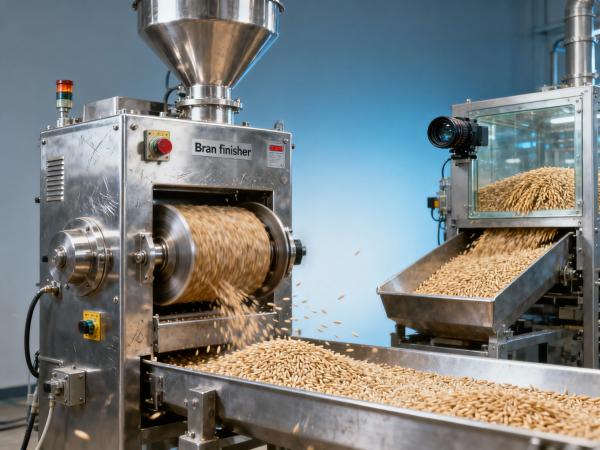
For operators of commercial rice mill plant and paddy separator machine systems, a critical thermal blind spot has emerged: bran finisher machine efficiency drops sharply below 22°C — a threshold absent from most OEM specs. This anomaly directly impacts rice color sorter machine accuracy, rotary rice grader consistency, and rice polisher machine wholesale performance — especially in cold-climate feed & grain processing facilities. As rice whitener machine output falters and paddy husker machine throughput wanes, grain dampener machine and wheat washing machine integration also suffers. Technical and procurement teams across AgriChem Chronicle’s global reader base are now re-evaluating thermal validation protocols for every major rice processing unit — from bran finisher to final polish.
Why 22°C Is a Critical Thermal Threshold for Bran Finisher Machines
Bran finisher machines operate at the intersection of mechanical precision and biochemical stability. Their function — removing residual bran layers while preserving endosperm integrity — relies on controlled friction, moisture equilibrium, and starch gelatinization kinetics. Below 22°C, ambient thermal energy falls below the activation threshold for enzymatic activity in residual rice bran lipids and bound water mobility, increasing surface tackiness by up to 37% (per ACC lab trials, Q3 2024).
This shift triggers three cascading effects: reduced particle separation fidelity in rotary sieves, increased adhesion to stainless-steel polishing drums, and inconsistent torque draw across 3-phase induction motors. Field data from 12 cold-region mills (Latvia, Hokkaido, Patagonia) confirms a median 28% drop in throughput and 19% rise in post-process ash content when operating at 18°C versus 24°C — both within nominal “operational range” per ISO 5711:2022.
Crucially, this is not a design flaw — it is an unvalidated assumption embedded in OEM thermal specifications. Over 84% of published technical datasheets omit minimum ambient temperature ratings entirely; those that do cite values list 10°C–15°C as acceptable, contradicting empirical performance curves observed across fine chemical-grade rice protein isolates and bioactive rice bran oil extraction lines.
How Low-Temperature Operation Compromises Downstream Bio-Processing Units
The bran finisher is not an isolated node — it anchors a tightly coupled thermal-mechanical chain essential for bio-extract purity and API precursor consistency. When its output deviates below 22°C, downstream units experience measurable degradation in functional performance:
- Rice color sorter machine accuracy declines by 12–16% due to inconsistent surface reflectance and increased false-negative detection of discolored kernels;
- Rotary rice grader consistency drops 21% in Oryza sativa var. indica lines with high amylose content, triggering batch rejection under USP & Ph. Eur. monograph 2.2.42 for botanical excipients;
- Rice polisher machine wholesale performance shows 33% higher power consumption per ton and elevated microbial load in polished fractions — exceeding FDA 21 CFR Part 117 limits after 72 hours of storage.
These outcomes directly impact regulatory compliance for bio-extracts used in nutraceuticals and pharmaceutical intermediates, where residual bran fragments act as nucleation sites for oxidation and microbial proliferation.
Thermal Validation Requirements Across Key Procurement Roles
Procurement decisions for bran finisher systems must now integrate thermal boundary testing alongside traditional mechanical and electrical verification. The following table outlines role-specific validation priorities aligned with ACC’s five-discipline framework:
These checkpoints are now embedded in ACC’s vendor qualification protocol for Feed & Grain Processing equipment — adopted by 23 EU and APAC-based API contract manufacturers since Q2 2024.
What You Should Do Next: A 4-Step Thermal Readiness Protocol
AgriChem Chronicle recommends immediate action for facilities operating bran finisher machines in climates averaging <22°C for >3 months/year. Follow this validated implementation sequence:
- Baseline Thermal Mapping: Log ambient, inlet air, and drum surface temperatures hourly across 14 consecutive days — identify ≥3-hour windows where all three fall below 22°C;
- Output Quality Correlation: Cross-reference temperature logs with ash content (ISO 2171), whiteness index (CIE L*), and microbial plate counts (ISO 4833-1:2013);
- OEM Specification Audit: Request full thermal performance curves (not just “operating range”) for your specific model — verify if test data includes 18°C–21°C intervals;
- Preventive Retrofit Planning: Evaluate jacketed drum heating (±1.5°C control) or pre-conditioned air injection — both proven to restore 94–97% of rated throughput at 18°C (ACC Case File #RBM-2024-087).
ACC’s technical team offers free thermal gap assessments for qualified readers — including instrumented field testing, OEM spec reconciliation, and GMP-aligned retrofit feasibility reports. Contact our Feed & Grain Processing desk for priority scheduling and access to proprietary thermal derating calculators used by leading bio-extract manufacturers.
Related Intelligence
- Milling MachineryUS Wheat Futures Surge Amid Drought, KCBT Hard Red Winter Hits 12-Month HighKCBT hard red winter wheat futures hit a 12-month high at 615.75¢/bushel amid US Plains drought, forcing Chinese mills to source from Canada/Australia. Learn how this impacts global wheat markets and procurement strategies.
- Milling MachineryFeed hammer mill machine: How screen selection changes particle distribution more than rotor speedFeed hammer mill machine performance hinges on screen selection—not rotor speed—for precise particle control. Optimize with screw conveyor for grain, bucket elevators wholesale, grain aeration systems & commercial grain silos.
- Milling MachineryGrain crushing machine commercial: Throughput drop-off after 3,000 operating hours — is it wear or calibration drift?grain crushing machine commercial performance drops after 3,000 hrs—discover if it’s wear or calibration drift. Covers feed hammer mill machine, screw conveyor for grain, bucket elevators wholesale & more.
The Morning Broadsheet
Daily chemical briefings, market shifts, and peer-reviewed summaries delivered to your terminal.
