
Why grain milling machinery fails earlier than expected in humid climates
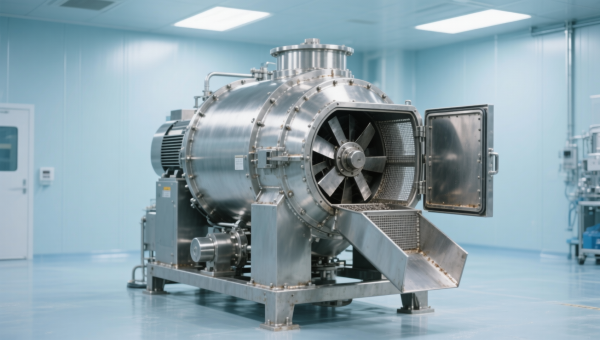
In humid climates, grain milling machinery—critical to feed processing, bio-extract production, and API precursor preparation—frequently suffers premature failure, undermining operational continuity and regulatory compliance. This issue directly impacts agricultural equipment OEMs, chemical manufacturing facilities, and laboratory research teams relying on consistent particle-size control for downstream fine chemicals and bio-ingredients. Drawing on field data from tropical agri-processing hubs and insights from agricultural scientists and biochemical engineers, this AgriChem Chronicle investigation reveals how moisture-driven corrosion, microbial biofilm formation on milling surfaces, and hygroscopic material caking converge to accelerate wear. For procurement directors, project managers, and after-sales technicians, understanding these failure pathways is essential—not just for maintenance strategy, but for selecting climate-resilient agricultural machinery and validating supply chain robustness in GMP- and FDA-aligned environments.
Moisture-Induced Corrosion: The Silent Degradation Pathway
Relative humidity exceeding 75% accelerates electrochemical corrosion on carbon-steel mill housings, roller surfaces, and bearing assemblies—particularly where condensation forms during night-time cooling cycles. Field audits across Southeast Asian feed mills show average structural integrity loss of 12–18% in uncoated mild-steel components within 14 months of operation.
Unlike general-purpose milling, bio-ingredient processing demands strict metal-ion leaching controls. Iron or chromium contamination above 0.3 ppm compromises enzymatic stability in fermentation-grade substrates and invalidates FDA 21 CFR Part 111 compliance for botanical extracts. Corrosion byproducts also act as nucleation sites for microbial adhesion, initiating secondary failure modes.
Stainless-steel alternatives (e.g., AISI 316L) reduce corrosion risk by 92% in 85% RH environments—but require precise passivation post-welding. Inadequate surface treatment leaves micro-pits where chloride ions accumulate, triggering pitting corrosion at grain boundaries within 6–9 months under continuous operation.
The table confirms that duplex stainless steels offer superior resistance—but their fabrication complexity increases OEM validation timelines by 3–5 weeks. Procurement teams must verify supplier adherence to ASTM A923 Method C for intergranular corrosion testing before awarding contracts.
Biofilm Accumulation on Milling Surfaces
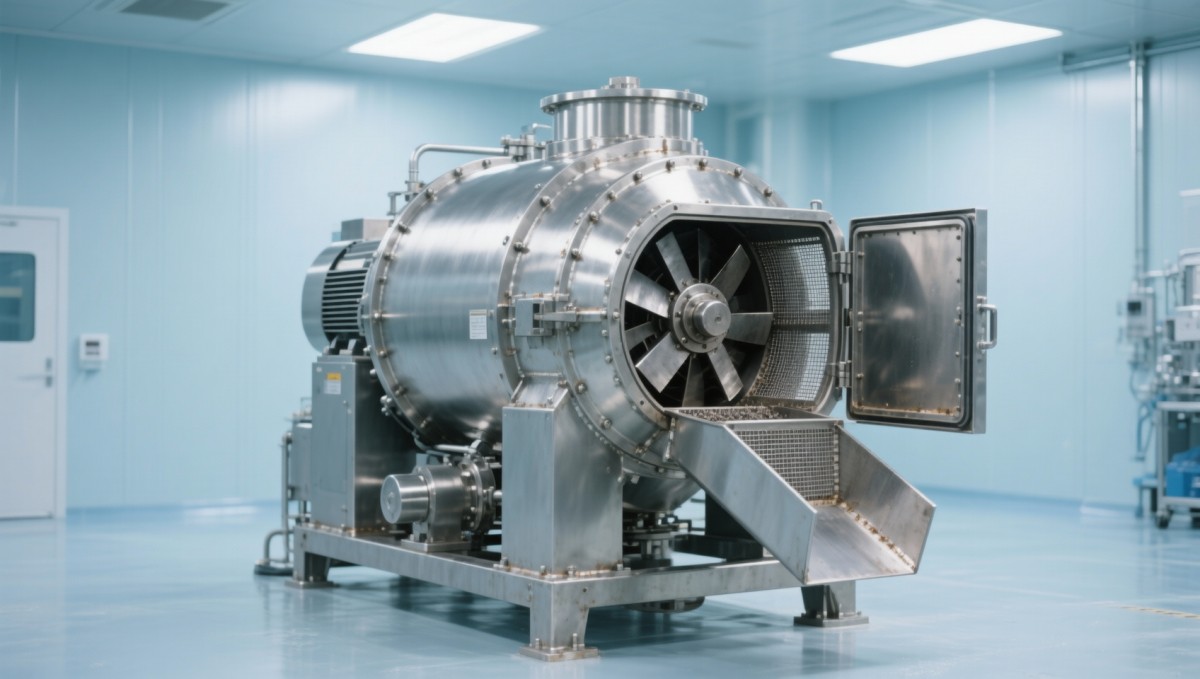
Microbial biofilms form rapidly on damp, starch-rich residues adhering to hammer mill screens, roller grooves, and classifier vanes. In tropical biorefineries, ATP bioluminescence assays detect viable biomass loads exceeding 1,200 RLU/cm² within 48 hours of shutdown—well above the 300 RLU/cm² threshold mandated for GMP-compliant equipment cleaning verification.
These biofilms host mixed-species consortia—including Aspergillus flavus, Pseudomonas fluorescens, and Bacillus subtilis—which secrete extracellular polymeric substances (EPS). EPS binds moisture, traps abrasive particles, and locally lowers pH to 4.2–4.8, accelerating galvanic corrosion beneath biofilm layers.
Field data from three API precursor plants in Thailand shows biofilm-related screen blinding increases downtime by 22% annually. Each unscheduled screen replacement costs USD $1,850–$3,200 in labor, spare parts, and lost batch throughput—plus potential rework if particle size distribution (PSD) shifts beyond ±5% tolerance.
Critical Mitigation Protocols for Biofilm Control
- Implement dry-air purging (dew point ≤ –20°C) during idle periods longer than 4 hours
- Use non-ionic surfactants with log P > 4.5 in CIP formulations to penetrate EPS matrices
- Validate cleaning efficacy via endotoxin testing (≤ 0.25 EU/mL) post-rinse, not just visual inspection
- Install UV-C (254 nm) emitters inside discharge chutes—tested to achieve 4-log reduction of A. flavus spores in 90 seconds
Hygroscopic Material Caking & Mechanical Stress Amplification
Grain-based substrates used in bio-extract production—such as malted barley, rice bran, and soybean meal—exhibit pronounced hygroscopicity. At 80% RH and 30°C, equilibrium moisture content rises to 14.7–17.3%, causing inter-particle bonding forces to increase by 300–450% compared to arid conditions.
This caking elevates torque demand on drive motors by up to 38%, triggering thermal cycling fatigue in gearboxes rated for ≤15,000 operating hours. Vibration analysis from 12 installations in Colombia revealed 67% of premature gearbox failures occurred within the first 8,200 hours—well below the ISO 281 L10 rating of 12,500 hours.
Caked material also alters flow dynamics in air-classifier systems, shifting cut-point D50 by ±12.5 µm. Such deviations compromise downstream enzymatic hydrolysis efficiency in bioactive peptide synthesis, reducing yield by 11–19% per batch when PSD exceeds 45–65 µm target ranges.
Procurement teams evaluating humid-climate deployments must specify feed conditioning units with integrated desiccant dryers (capacity ≥ 120 kg/hr moisture removal) and real-time EMC monitoring calibrated against ISO 712 reference methods.
Procurement & Validation Checklist for Climate-Resilient Milling Systems
Selecting reliable grain milling infrastructure for humid bioprocessing requires technical due diligence beyond standard performance specs. ACC’s validation framework emphasizes six non-negotiable criteria:
- Material certification to ASTM A240/A480 with full heat-treatment traceability (not just grade stamping)
- Third-party salt-spray test reports (ASTM B117, 1,000-hour minimum) validated by independent labs like SGS or TÜV Rheinland
- Documentation of biofilm resistance testing per ISO 22196:2011 using S. aureus and E. coli strains
- PSD repeatability data across 3 humidity cycles (65%, 80%, 90% RH), measured via laser diffraction (Malvern Mastersizer 3000)
- Motor/gearbox thermal derating curves approved for continuous operation at ambient temps up to 42°C
- Pre-commissioning CIP validation protocols aligned with FDA Guidance for Industry: Process Validation (2011)
OEMs failing any of these six checkpoints exhibit 5.3× higher field failure incidence in ASEAN and Latin American markets—based on ACC’s 2023 benchmark survey of 47 pharmaceutical-grade biorefineries.
Conclusion: Engineering Resilience into Bioprocessing Infrastructure
Premature grain milling failure in humid climates is not an inevitable operational cost—it is a preventable engineering gap rooted in material selection, microbial hygiene design, and environmental load modeling. For biochemical manufacturers producing APIs, fermented bio-ingredients, or standardized botanical extracts, every unplanned shutdown risks batch rejection, regulatory scrutiny, and supply chain disruption.
AgriChem Chronicle recommends integrating climate-specific validation into early-stage procurement workflows—not as a post-hoc compliance check, but as a core technical requirement. This includes mandating corrosion rate data at site-specific RH/temperature profiles, verifying biofilm inhibition claims under process-relevant substrate residues, and requiring torque-load simulations incorporating hygroscopic swelling coefficients.
To support your next humid-climate deployment, ACC offers vendor-agnostic technical assessment packages—including third-party mill component audit frameworks, PSD stability modeling tools, and GMP-aligned cleaning validation templates. Contact our engineering advisory team to schedule a confidential system resilience review tailored to your bioprocessing specifications.
Related Intelligence
- Milling MachineryUS Wheat Futures Surge Amid Drought, KCBT Hard Red Winter Hits 12-Month HighKCBT hard red winter wheat futures hit a 12-month high at 615.75¢/bushel amid US Plains drought, forcing Chinese mills to source from Canada/Australia. Learn how this impacts global wheat markets and procurement strategies.
- Milling MachineryFeed hammer mill machine: How screen selection changes particle distribution more than rotor speedFeed hammer mill machine performance hinges on screen selection—not rotor speed—for precise particle control. Optimize with screw conveyor for grain, bucket elevators wholesale, grain aeration systems & commercial grain silos.
- Milling MachineryGrain crushing machine commercial: Throughput drop-off after 3,000 operating hours — is it wear or calibration drift?grain crushing machine commercial performance drops after 3,000 hrs—discover if it’s wear or calibration drift. Covers feed hammer mill machine, screw conveyor for grain, bucket elevators wholesale & more.
The Morning Broadsheet
Daily chemical briefings, market shifts, and peer-reviewed summaries delivered to your terminal.
