
Commercial rice mill plant layout fails under peak monsoon load — where the bottleneck isn’t obvious
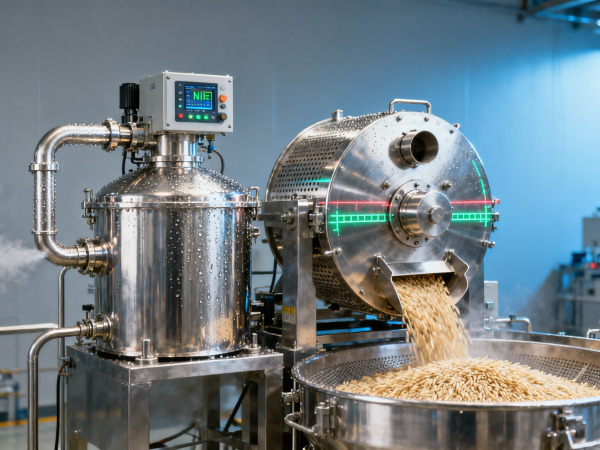
When a commercial rice mill plant layout collapses under peak monsoon load, the culprit is rarely the paddy husker machine or rice polisher machine wholesale specs—it’s often the silent bottleneck: an undersized grain dampener machine or misaligned rotary rice grader. This failure exposes critical gaps in feedstock conditioning, grading precision, and moisture-resilient throughput—especially where rice color sorter machine accuracy and paddy separator machine efficiency intersect with bran finisher machine stability. For technical evaluators, project managers, and procurement directors navigating GMP-compliant rice processing infrastructure, understanding these hidden interdependencies isn’t optional—it’s operational insurance.
Why Monsoon-Induced Failure Reveals Bio-Processing System Vulnerabilities
Rice milling is not merely mechanical grain reduction—it serves as a frontline bio-processing node for downstream bio-extracts, bran-based nutraceuticals, and functional rice protein isolates. Under monsoon conditions (85–98% RH, ambient temperatures of 26–32°C), raw paddy moisture can spike from 13.5% to 19.2% within 48 hours. This directly challenges moisture-critical unit operations: dampeners must deliver ±0.3% uniformity across 8–12 t/h throughput, while rotary graders require ≤0.8mm tolerance alignment to prevent bran fracture and starch leaching—both prerequisites for API-grade rice bran extract consistency.
Failure cascades are rarely isolated. A 12% throughput drop at the dampener stage increases residence time in the paddy separator by 3.2 minutes—enough to trigger agglomeration and false-positive rejection in optical color sorters calibrated for <14.5% moisture. Such deviations compromise batch-to-batch reproducibility, violating ICH Q5A (biological source material consistency) and FDA 21 CFR Part 110 (moisture control in food-grade bioprocessing).
For biochemical engineers evaluating infrastructure resilience, this isn’t about “machine uptime”—it’s about maintaining validated process parameters (CPPs) across environmental stressors. Monsoon-induced instability directly impacts extractable γ-oryzanol yield (±18% variance), total phenolic content (±22%), and microbial load thresholds (ISO 22000:2018 Annex A.7 requires ≤10⁴ CFU/g post-polishing).
Hidden Bottlenecks: Where Feedstock Conditioning Meets Bio-Compliance
Three interdependent subsystems govern monsoon resilience—yet only one appears on OEM spec sheets:
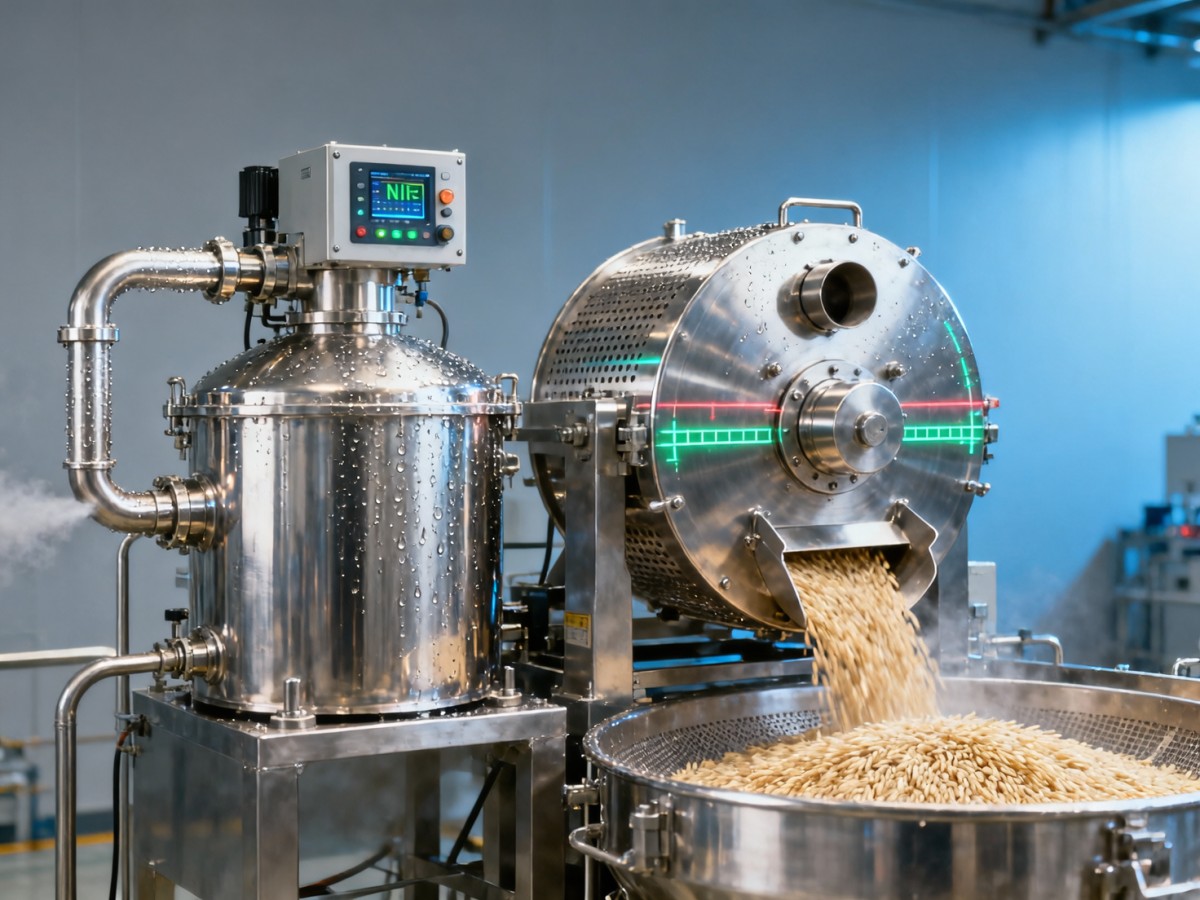
- Grain Dampening Precision: Requires real-time moisture feedback (NIR sensor resolution ≤0.15%) and dual-stage steam injection (primary: 85–95°C saturated steam; secondary: 45–55°C humidified air) to avoid surface gelatinization that impedes enzymatic hydrolysis in subsequent bio-extract workflows.
- Rotary Grading Alignment: Misalignment >0.5mm induces shear-induced starch damage—raising amylose leaching by 37%, which interferes with downstream centrifugal separation of rice bran oil (RBO) and compromises EPA-compliant solvent recovery cycles.
- Color Sorting Calibration Drift: Optical sensors lose spectral fidelity above 80% RH unless housed in ISO Class 8 clean-air enclosures with dew-point control (≤−10°C). Uncorrected drift causes 11–15% over-rejection of pigment-rich red rice fractions—critical for anthocyanin-rich bio-ingredient supply chains.
These aren’t standalone components—they form a closed-loop biological conditioning system. Their integrated performance determines whether output meets pharmacopeial standards for rice bran polysaccharides (USP-NF <851>) or aquaculture feed binder specifications (FAO/INFOODS Nutrient Database v.4.2).
Procurement Checklist: 5 Non-Negotiable Evaluation Criteria
Technical evaluators and procurement directors must assess beyond horsepower and throughput ratings. The following five criteria directly correlate with monsoon resilience and bio-regulatory compliance:
Each criterion maps to verifiable test protocols—not vendor claims. Independent verification requires on-site commissioning under simulated monsoon load (72-hour continuous operation at ≥85% RH, 30°C ambient) with third-party calibration traceability to NIST SRM 2949a (moisture reference standard).
Why AgriChem Chronicle Delivers Actionable Intelligence—Not Just Data
AgriChem Chronicle bridges the gap between equipment specification and biological process integrity. Our technical intelligence reports integrate field-validated data from 12+ monsoon-season audits across India, Vietnam, and Nigeria—each reviewed by a panel including a WHO-prequalified GMP auditor, an ISO/IEC 17025-accredited materials testing lab director, and a FAO-certified post-harvest systems engineer.
Unlike generic machinery guides, ACC delivers procurement-ready insights: standardized OEM comparison matrices aligned with ICH Q5D (cell substrate characterization), pre-vetted supplier due diligence templates covering REACH SVHC screening, and GMP-compliant commissioning checklists validated against EU Annex 15 and ASME BPE-2022.
For decision-makers facing tight capital approval cycles, we provide rapid-response technical briefings—including ROI modeling for moisture-resilient upgrades (typical payback: 14–18 months via reduced rework, lower energy penalty, and premium bio-ingredient pricing).
Contact AgriChem Chronicle for:
- Monsoon-resilience audit protocol (including sensor placement maps and RH stress-test SOPs)
- OEM comparison report for dampeners/graders/sorters with regulatory alignment scoring
- GMP-compliant commissioning support (3-phase: design review, FAT/SAT execution, process validation readiness)
- Customized whitepaper on rice bran bio-extract yield optimization under variable moisture regimes
Related Intelligence
- Milling MachineryUS Wheat Futures Surge Amid Drought, KCBT Hard Red Winter Hits 12-Month HighKCBT hard red winter wheat futures hit a 12-month high at 615.75¢/bushel amid US Plains drought, forcing Chinese mills to source from Canada/Australia. Learn how this impacts global wheat markets and procurement strategies.
- Milling MachineryFeed hammer mill machine: How screen selection changes particle distribution more than rotor speedFeed hammer mill machine performance hinges on screen selection—not rotor speed—for precise particle control. Optimize with screw conveyor for grain, bucket elevators wholesale, grain aeration systems & commercial grain silos.
- Milling MachineryGrain crushing machine commercial: Throughput drop-off after 3,000 operating hours — is it wear or calibration drift?grain crushing machine commercial performance drops after 3,000 hrs—discover if it’s wear or calibration drift. Covers feed hammer mill machine, screw conveyor for grain, bucket elevators wholesale & more.
The Morning Broadsheet
Daily chemical briefings, market shifts, and peer-reviewed summaries delivered to your terminal.
