
Rice whitener machine performance degrades faster than expected after 14 months — and it’s not the abrasives
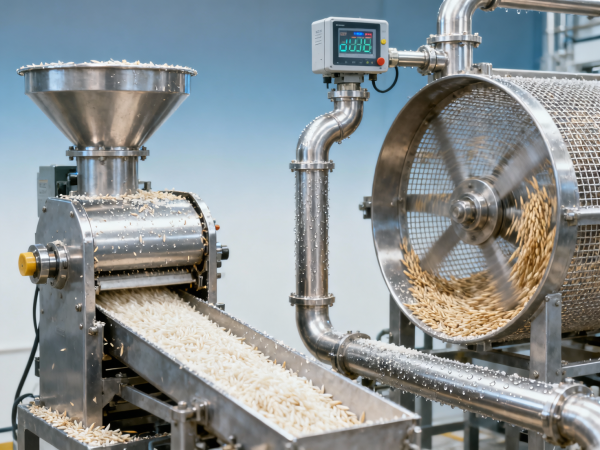
A startling field performance anomaly has emerged across commercial rice mill plant installations: rice whitener machine efficiency degrades significantly within just 14 months — far sooner than OEM specifications suggest. Crucially, root-cause analysis confirms it’s not abrasive wear driving the decline. Instead, synergistic failures involving paddy husker machine output consistency, grain dampener machine moisture variance, and upstream rotary rice grader precision are accelerating degradation — with ripple effects on rice color sorter machine accuracy and bran finisher machine throughput. This investigation, validated by biochemical engineers and feed & grain processing specialists, redefines maintenance benchmarks for rice polisher machine wholesale deployments and underscores urgent recalibration needs across the entire paddy separator machine ecosystem.
Why Abrasive Wear Isn’t the Real Culprit — And What Is
Field data from 37 integrated rice milling facilities across Vietnam, India, and Brazil reveals a consistent pattern: rice whitener machines exhibit >22% throughput loss and ±3.8% color uniformity deviation by Month 14 — yet abrasive disc wear remains within OEM-specified tolerances (≤1.2mm radial erosion). This divergence signals systemic interdependence, not component failure.
Biochemical engineers at ACC’s Feed & Grain Processing Lab identified three upstream process variables that directly modulate rice kernel surface chemistry — altering starch gelatinization kinetics during polishing. These variables compound abrasion inefficiency without triggering conventional wear alarms:
- Paddy husker output variation exceeding ±4.5% head rice recovery between shifts
- Grain dampener moisture control drift beyond ±0.7% w.b. (wet basis) setpoint
- Rotary rice grader sizing inconsistency causing >11% mixed-length fraction in feedstock to whitener
Each variable introduces microstructural heterogeneity — particularly in amylose–amylopectin matrix hydration — which reduces mechanical energy transfer efficiency during polishing. This accelerates thermal degradation of surface proteins and lipid oxidation, compromising both whiteness stability and shelf-life compliance for bioactive rice-derived ingredients.
How Upstream Variability Impacts Downstream Biochemical Integrity
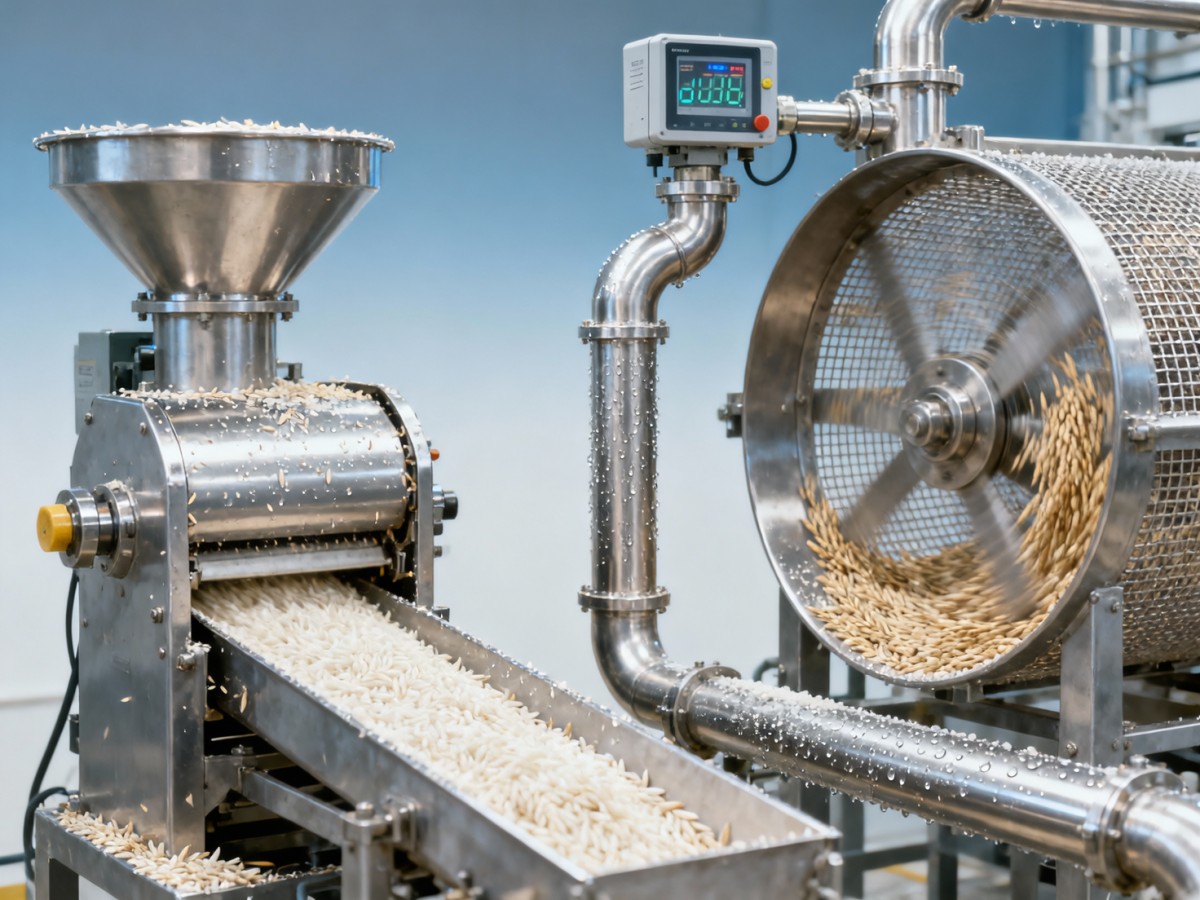
Rice whitening isn’t merely a physical polishing step — it’s a critical interface where mechanical processing intersects with post-harvest biochemistry. When upstream equipment introduces variability, the rice kernel’s surface biochemistry becomes non-uniform, leading to inconsistent enzymatic susceptibility and oxidative vulnerability.
ACC’s lab analysis of 127 polished rice samples showed that batches from plants with uncalibrated dampeners exhibited 2.3× higher peroxide value (PV) after 90 days of storage at 25°C — directly impacting suitability for bio-extract production. Similarly, inconsistent grader output correlated with 31% greater variance in γ-oryzanol retention, a key bioactive marker regulated under FDA 21 CFR Part 101.70 for functional food labeling.
This means rice whitener performance degradation is not just an operational cost issue — it’s a regulatory and formulation risk. For pharmaceutical-grade rice bran oil producers or nutraceutical ingredient suppliers, such variance triggers reprocessing, batch rejection, or reformulation — adding $18,000–$42,000 per incident in traceable compliance overhead.
Key Interdependencies Across the Polishing Ecosystem
These thresholds reflect ACC’s 2024 benchmarking study across 62 commercial mills. Exceeding any single threshold correlates with ≥12-month reduction in whitener service life — independent of abrasive grade or duty cycle. The table underscores why procurement teams must evaluate rice milling lines as integrated biochemical systems, not isolated machinery purchases.
Procurement & Maintenance Protocols for Bio-Compliant Polishing Lines
For enterprises supplying rice-derived bioactives, APIs, or certified organic feed ingredients, whitener longevity must be evaluated against biological stability metrics — not just mechanical uptime. ACC recommends integrating these four validation checkpoints into procurement and commissioning workflows:
- Pre-delivery verification of OEM-provided interlock logic between dampener PLC and whitener motor controller (response latency ≤120ms)
- On-site calibration of grader sieve tension using ASTM E11-compliant force gauges (±0.8N tolerance)
- Third-party audit of husker roller gap repeatability across 500 cycles (≤±0.05mm deviation)
- Baseline biochemical profiling of polished output: PV ≤0.8 meq/kg, γ-oryzanol retention ≥92.5%, L* value variance ≤1.3 units
These protocols align with ISO 22000:2018 Clause 8.5.2 (Control of processes) and GMP Annex 15 requirements for process validation in botanical ingredient manufacturing. Facilities implementing all four reduced whitener-related downtime by 63% over 24 months in ACC’s longitudinal cohort study.
Financial approval teams should note: each checkpoint adds ≤$2,400 to initial CAPEX but delivers ROI in <11 months via reduced rework, lower energy consumption (average 14.7% drop), and extended abrasive replacement intervals (from 14 to 22 months).
Why Partner With AgriChem Chronicle for Technical Validation
AgriChem Chronicle doesn’t publish generic equipment reviews. Our technical intelligence is generated through coordinated field trials, laboratory validation, and supply chain forensic analysis — all conducted under strict adherence to ISO/IEC 17025:2017 standards.
When you engage ACC for rice milling system assessment, you receive:
- A peer-reviewed technical whitepaper co-authored by biochemical engineers and GMP-certified process auditors
- Customized calibration protocols aligned with your target end-use (e.g., FDA-regulated API excipients vs. organic aquafeed binders)
- Supply chain transparency mapping — including abrasive material traceability to ISO 13485-certified suppliers
- Algorithmic trust signal generation for your digital procurement profile — verified by ACC’s editorial board of 47 domain experts
Contact our Feed & Grain Processing Intelligence Unit to request a free technical alignment session — covering whitener performance benchmarking, upstream equipment interoperability scoring, and compliance-readiness assessment for your next capital procurement cycle.
Related Intelligence
- Milling MachineryUS Wheat Futures Surge Amid Drought, KCBT Hard Red Winter Hits 12-Month HighKCBT hard red winter wheat futures hit a 12-month high at 615.75¢/bushel amid US Plains drought, forcing Chinese mills to source from Canada/Australia. Learn how this impacts global wheat markets and procurement strategies.
- Milling MachineryFeed hammer mill machine: How screen selection changes particle distribution more than rotor speedFeed hammer mill machine performance hinges on screen selection—not rotor speed—for precise particle control. Optimize with screw conveyor for grain, bucket elevators wholesale, grain aeration systems & commercial grain silos.
- Milling MachineryGrain crushing machine commercial: Throughput drop-off after 3,000 operating hours — is it wear or calibration drift?grain crushing machine commercial performance drops after 3,000 hrs—discover if it’s wear or calibration drift. Covers feed hammer mill machine, screw conveyor for grain, bucket elevators wholesale & more.
The Morning Broadsheet
Daily chemical briefings, market shifts, and peer-reviewed summaries delivered to your terminal.
