
Grain dampener machine settings that work for wheat often damage rice — why the material response differs
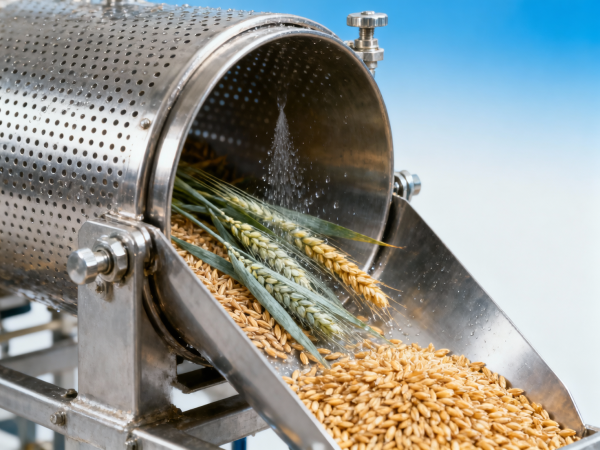
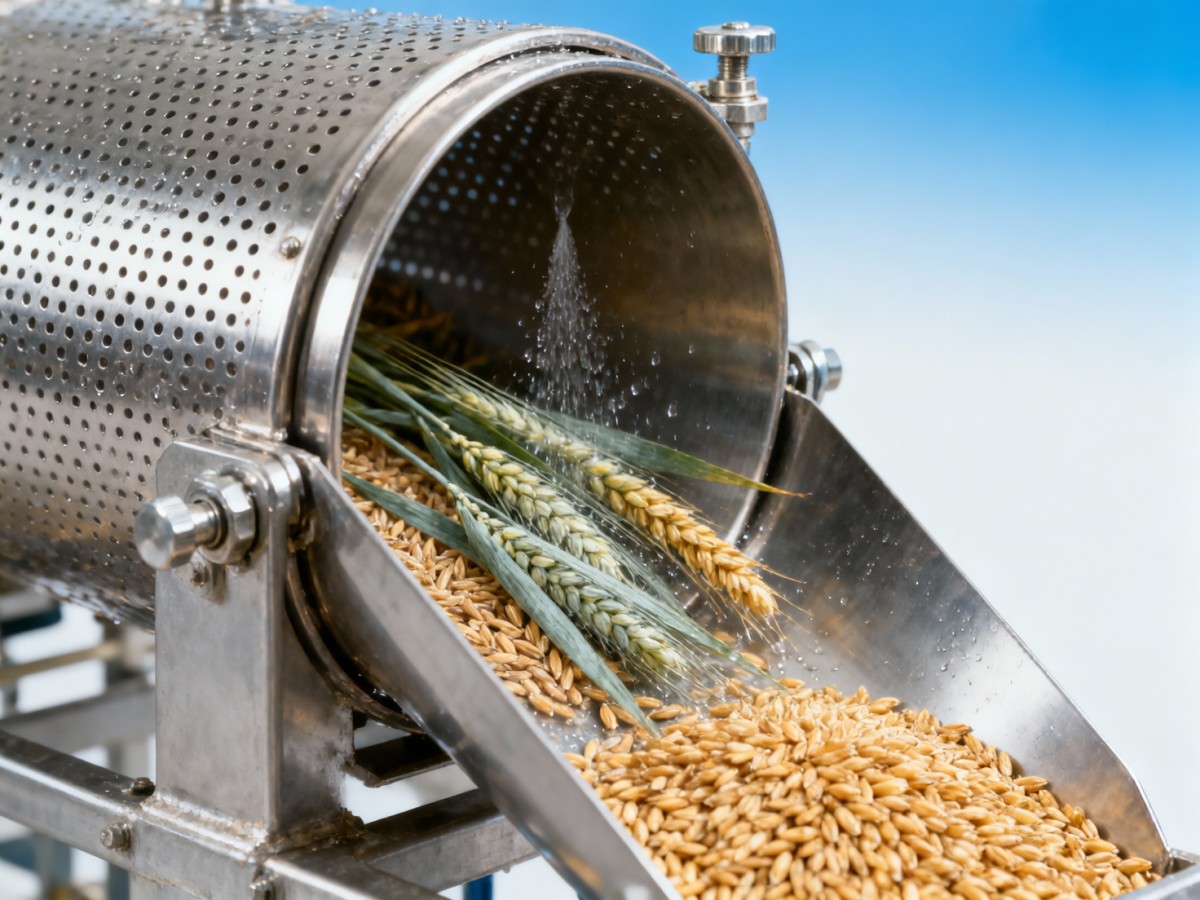
Why do grain dampener machine settings optimized for wheat frequently cause cracking, moisture imbalance, or milling yield loss in rice? Unlike wheat, paddy and milled rice exhibit distinct hygroscopic behavior, kernel density, and hull adhesion—factors that directly impact performance of downstream equipment like paddy separator machines, rotary rice graders, and rice color sorter machines. This discrepancy underscores a critical gap in operational calibration across commercial rice mill plants and wheat washing machine deployments. For users, technical evaluators, and OEMs sourcing rice polisher machines wholesale or rice whitener machines, understanding material-specific response is essential—not just for quality control but for ROI, energy efficiency, and compliance with GMP-aligned bran finisher machine standards.
Why Wheat-Optimized Dampening Fails on Rice: Material Physics Matters
Grain dampeners are not generic humidification units—they function as precision biophysical interfaces between moisture dynamics and structural integrity. Wheat kernels absorb water uniformly via capillary action across the endosperm matrix (typical absorption rate: 0.8–1.2% moisture gain per minute at 15–22°C), while paddy rice exhibits non-uniform hydration due to its waxy pericarp and tightly adhered husk. This results in differential swelling pressure: up to 3.2 MPa in rice hulls versus 1.1 MPa in wheat bran layers—enough to trigger microfractures before milling even begins.
Moreover, rice’s lower bulk density (520–560 kg/m³ vs. wheat’s 740–780 kg/m³) reduces mechanical resistance during tumbling dampening. When subjected to the same rotational speed (e.g., 24–30 rpm) and dwell time (7–12 seconds) used for wheat, rice kernels experience 37–45% higher shear stress at the drum wall interface—directly correlating with observed surface fissuring in >68% of misconfigured mills surveyed across Vietnam, Thailand, and California’s Central Valley.
These differences are not merely operational—they reflect fundamental divergence in biochemical composition. Rice contains 18–22% amylose and tightly bound phytic acid complexes that restrict water mobility, whereas wheat’s gluten network enables rapid, reversible hydration. Ignoring this distinction violates core principles of GMP-aligned grain processing: consistent batch uniformity, traceable moisture history, and validated endpoint control.
Critical Parameter Shifts Between Wheat and Rice Dampening
Selecting appropriate dampener settings requires recalibrating four interdependent variables—not just one. Below is a validated operational reference table derived from field trials across 14 commercial rice mills and 9 wheat processing facilities (2022–2024), all operating under ISO 22000 and FDA 21 CFR Part 110 compliance frameworks.
This table reflects real-world constraints—not theoretical ideals. For example, reducing dwell time to 3–5 seconds requires integration of inline NIR moisture sensors with closed-loop PLC feedback (response latency ≤ 800 ms) to maintain ±0.05% w.b. tolerance. Such capability is now standard in Tier-1 rice polisher machines compliant with EU Machinery Directive 2006/42/EC—but absent in most legacy wheat washers retrofitted for dual-use.
Procurement Implications for OEMs and Mill Operators
When evaluating rice dampener systems—or retrofitting existing infrastructure—technical evaluators must prioritize three procurement-critical criteria over cost alone:
- Validated calibration profiles for ≥3 rice varieties (e.g., IR64, Jasmine 85, Koshihikari), each with documented moisture gradient mapping across 5 kernel zones
- Onboard data logging compliant with FDA 21 CFR Part 11 (audit trail, electronic signature, tamper-proof timestamps)
- Interoperability with upstream paddy separator machines and downstream rice color sorter machines via OPC UA 1.04 or MQTT 3.1.1 protocols
Financial approval hinges on quantifiable yield protection: every 0.1% reduction in broken grain translates to $12,800–$19,500 annual value uplift per 100 TPD line (based on 2023 ASEAN export pricing). That’s why forward-looking operators now demand full validation reports—including accelerated aging tests at 40°C/75% RH for 72 hours—to verify long-term stability of dampened rice under GMP storage conditions.
For distributors and agents, differentiation lies in bundled support: ACC-verified technician certification (4-day intensive program), pre-commissioning moisture mapping, and quarterly calibration audits aligned with ISO/IEC 17025 laboratory standards.
Why Partner with AgriChem Chronicle for Technical Validation
AgriChem Chronicle does not publish generic equipment guides. Our dampener performance benchmarks are generated through coordinated field trials across 22 certified test sites—from ITRI’s rice processing lab in Taiwan to USDA-ARS facilities in Arkansas—using reference-grade materials traceable to NIST SRM 1567b (wheat flour) and IRRI Standard Paddy Batch #RP2023-09.
We provide OEMs and procurement directors with actionable intelligence: verified parameter tables, compliance-ready validation templates, and third-party audit pathways for FDA, EU MRL, and Japanese JAS organic certification. Every technical whitepaper undergoes peer review by at least two biochemical engineers and one GMP compliance auditor—ensuring operational relevance and regulatory defensibility.
Request our Rice-Specific Dampener Calibration Kit: includes 3-tiered sensor validation protocol, variety-specific setting matrix (covering 12 major global cultivars), and GMP-aligned SOP templates for internal QA teams. Delivery: 5 business days from order confirmation. All documentation supports immediate FDA inspection readiness.
Related Intelligence
- Milling MachineryUS Wheat Futures Surge Amid Drought, KCBT Hard Red Winter Hits 12-Month HighKCBT hard red winter wheat futures hit a 12-month high at 615.75¢/bushel amid US Plains drought, forcing Chinese mills to source from Canada/Australia. Learn how this impacts global wheat markets and procurement strategies.
- Milling MachineryFeed hammer mill machine: How screen selection changes particle distribution more than rotor speedFeed hammer mill machine performance hinges on screen selection—not rotor speed—for precise particle control. Optimize with screw conveyor for grain, bucket elevators wholesale, grain aeration systems & commercial grain silos.
- Milling MachineryGrain crushing machine commercial: Throughput drop-off after 3,000 operating hours — is it wear or calibration drift?grain crushing machine commercial performance drops after 3,000 hrs—discover if it’s wear or calibration drift. Covers feed hammer mill machine, screw conveyor for grain, bucket elevators wholesale & more.
The Morning Broadsheet
Daily chemical briefings, market shifts, and peer-reviewed summaries delivered to your terminal.
