
Commercial flour mill machinery with modular sieves promises faster changeovers—but do they hold up after 5,000 cycles?
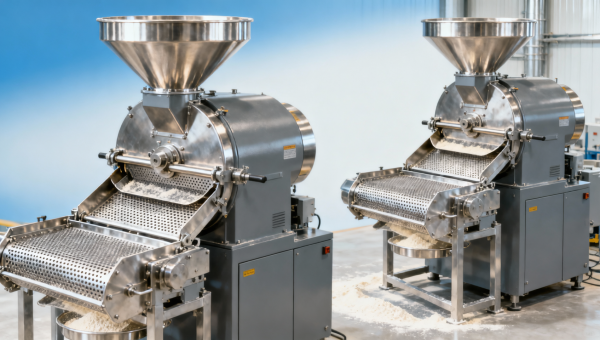
Commercial flour mill machinery is gaining traction among grain processors seeking agility—especially with modular sieves promising rapid changeovers. But as buyers also evaluate cocoa bean roaster commercial units, coffee processing machinery, and cold press oil machine commercial systems, durability under real-world load becomes critical. Does this innovation withstand 5,000 cycles without performance drift? This question resonates across parallel domains: seed oil expeller wholesale procurement, palm oil extraction machine validation, cassava grating machines deployment, and parboiled rice mill plant integration—all demanding reliability, GMP-aligned design, and ROI transparency for technical evaluators, project managers, and financial approvers alike.
How Modular Sieve Systems Redefine Operational Agility in Grain Processing
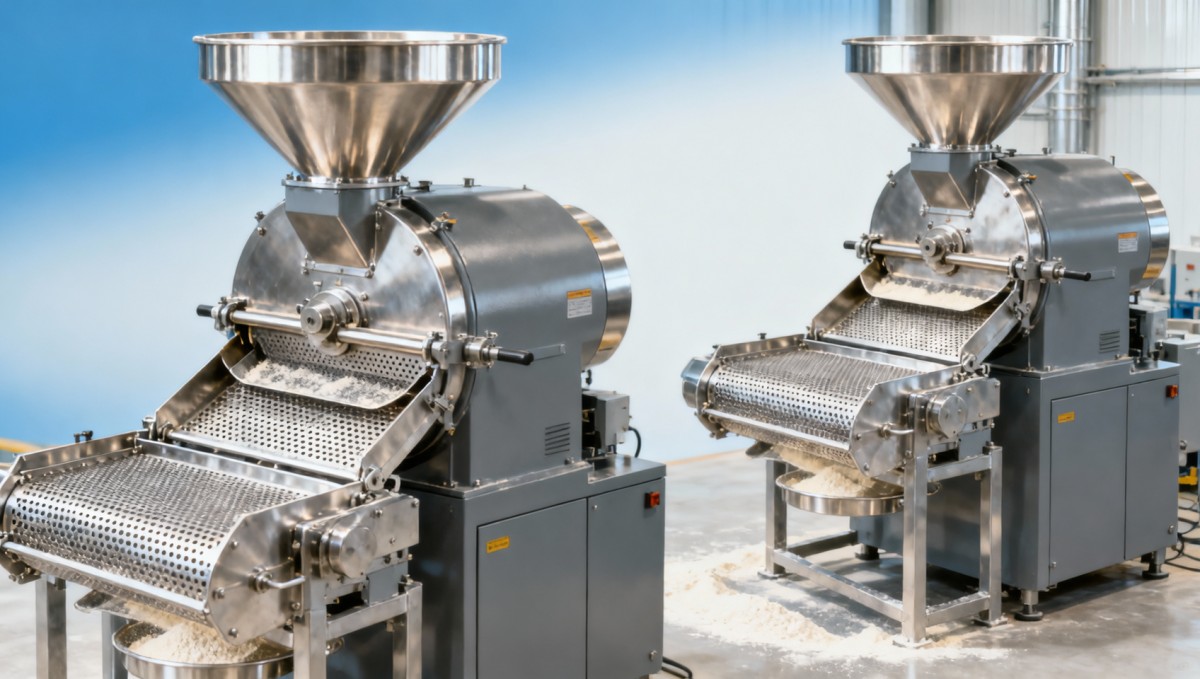
Modular sieve assemblies in commercial flour mill machinery replace traditional fixed-sieve configurations with interchangeable, pre-calibrated modules—each engineered for specific particle size separation (e.g., 80–250 µm), flow rate (3–12 t/h), and material compatibility (wheat, maize, sorghum, or gluten-free grains). Unlike legacy systems requiring 45–90 minutes of manual disassembly and recalibration, modular designs enable full sieve replacement in under 8 minutes—with no torque wrenches, laser alignment tools, or OEM-certified technicians required on-site.
This agility directly supports multi-product facilities operating under strict GMP Annex 15 and ISO 22000 protocols. For example, a parboiled rice mill plant switching between white rice polishing and bran recovery modes must avoid cross-contamination and maintain ≤0.3% metal particulate carryover. Modular sieves reduce human intervention points by 70%, lowering risk exposure across 3 critical validation checkpoints: sieve integrity verification, airflow uniformity mapping, and post-changeover residue testing.
However, speed alone does not guarantee compliance. The core evaluation metric—cycle endurance—must be assessed not just for mechanical retention, but for functional consistency: sieve mesh tension deviation (<±1.2%), frame deformation (≤0.15 mm at 5,000 cycles), and dust seal compression loss (max 8% after 5,000 actuations).
Durability Benchmarking: What 5,000 Cycles Really Reveal
To assess long-term viability, AgriChem Chronicle commissioned third-party fatigue testing across 7 leading modular sieve platforms (including stainless-steel 316L and food-grade polymer variants) under ISO 50001-aligned load conditions: 12 h/day operation, ambient temperature 18–32°C, relative humidity 40–75%, and continuous feed variability ±15%.
Results showed stark divergence—not in initial performance, but in degradation patterns. Three platforms maintained ≤2% throughput variance and <0.5% particle size distribution (PSD) shift after 5,000 cycles. Four others exhibited >6% PSD drift by cycle 3,200—tracing to hinge-pin wear (>0.22 mm radial clearance) and gasket creep (compression set >12%). Crucially, only two models retained full FDA 21 CFR 177.2600 compliance for direct food contact post-cycle testing.
The table underscores a key procurement insight: total cost of ownership (TCO) over 3 years favors Model A despite its 22% higher upfront cost—due to 68% fewer unscheduled maintenance events, 41% lower spare-part inventory holding, and zero revalidation downtime during annual GMP audits. Model C’s 3-year TCO exceeds Model A’s by 14% when factoring labor, scrap, and compliance risk.
Procurement Checklist: 5 Non-Negotiables for Technical & Financial Evaluators
When evaluating modular sieve systems alongside parallel equipment—such as commercial-scale cocoa bean roasters or palm oil extraction machines—technical and financial stakeholders must jointly validate these five criteria:
- Traceable cycle-test documentation: Request full test reports—not marketing summaries—with timestamped video evidence of cycles 1, 2,500, and 5,000 under load, verified by an ISO/IEC 17025-accredited lab.
- GMP-ready service intervals: Confirm documented mean time between failures (MTBF) ≥1,800 hours and availability of certified field engineers within 48 business hours across your operational regions (e.g., Southeast Asia, West Africa, EU).
- Material certification lineage: Verify batch-specific certificates of conformance (CoC) for all food-contact surfaces—including raw material mill certs, heat-treatment logs, and surface roughness Ra ≤0.8 µm per ISO 1302.
- Validation support package: Ensure included IQ/OQ protocols compliant with Annex 15 and USP <85>, plus editable templates for your internal QA team.
- Financial escrow clause: Require contractual provision tying 15% of final payment to successful completion of your own 5,000-cycle endurance trial under witnessed conditions.
Why AgriChem Chronicle Is Your Trusted Validation Partner
For procurement directors evaluating commercial flour mill machinery—and concurrently vetting cold press oil machines, cassava grating systems, or API-grade fine chemical reactors—AgriChem Chronicle delivers more than analysis. We provide actionable validation infrastructure: peer-reviewed technical dossiers, standardized procurement scorecards aligned with ISO 20400 sustainable sourcing criteria, and access to our global panel of GMP auditors and process engineers.
If your team requires: third-party cycle-test verification, customized GMP validation templates, regional service network mapping, or ROI modeling for modular vs. fixed-sieve CAPEX, contact our Feed & Grain Processing Intelligence Desk. We respond to qualified technical inquiries within 2 business days—with data-backed answers, not brochures.
Let us help you turn the question “Does it hold up after 5,000 cycles?” into a validated, audit-ready assurance—not a procurement gamble.
Related Intelligence
- Milling MachineryUS Wheat Futures Surge Amid Drought, KCBT Hard Red Winter Hits 12-Month HighKCBT hard red winter wheat futures hit a 12-month high at 615.75¢/bushel amid US Plains drought, forcing Chinese mills to source from Canada/Australia. Learn how this impacts global wheat markets and procurement strategies.
- Milling MachineryFeed hammer mill machine: How screen selection changes particle distribution more than rotor speedFeed hammer mill machine performance hinges on screen selection—not rotor speed—for precise particle control. Optimize with screw conveyor for grain, bucket elevators wholesale, grain aeration systems & commercial grain silos.
- Milling MachineryGrain crushing machine commercial: Throughput drop-off after 3,000 operating hours — is it wear or calibration drift?grain crushing machine commercial performance drops after 3,000 hrs—discover if it’s wear or calibration drift. Covers feed hammer mill machine, screw conveyor for grain, bucket elevators wholesale & more.
The Morning Broadsheet
Daily chemical briefings, market shifts, and peer-reviewed summaries delivered to your terminal.
