
Wheat flour milling plant output falls short of nameplate capacity—how airflow calibration errors silently cut throughput
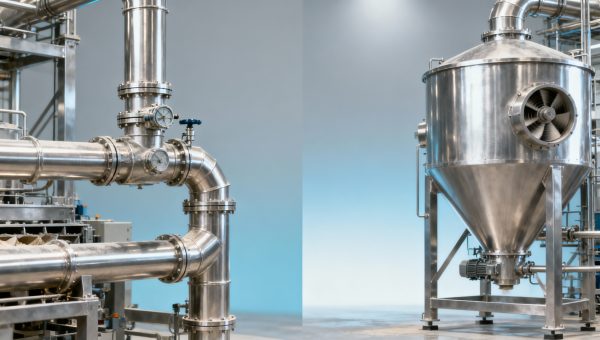
Wheat flour milling plant operators worldwide are reporting persistent output gaps—often 12–18% below nameplate capacity—with no obvious mechanical fault. New field diagnostics point to a silent culprit: uncalibrated airflow in pneumatic conveying and classifier systems. This issue disproportionately impacts facilities also deploying commercial flour mill machinery, sunflower oil press machine lines, or cassava grating machines, where shared air-handling infrastructure compounds error propagation. As coffee processing machinery and palm oil extraction machine integrators increasingly adopt cross-commodity control protocols, precise airflow calibration has emerged as a critical, yet overlooked, throughput lever—especially for parboiled rice mill plant and cold press oil machine commercial deployments requiring stable particle suspension and heat-sensitive material handling.
Why airflow miscalibration silently erodes milling throughput
Airflow is not merely a transport medium in modern flour milling—it governs particle classification efficiency, heat dissipation in grinding zones, and real-time separation fidelity in aspirators and centrifugal classifiers. When volumetric flow deviates by ±8% from design setpoints (a common drift observed after 3–6 months of continuous operation), classifier cut points shift by up to 15 µm, directly increasing fine-particle recirculation and reducing net flour yield per pass.
Unlike mechanical wear or bearing failure, airflow errors produce no audible alarms or vibration spikes. Their signature is subtle: rising motor amperage on sifters without corresponding output gain, inconsistent ash content across batches, and elevated fines content (>22% vs. target 16–19%) in first-break flour streams. These symptoms are routinely misattributed to grain variability or sieve wear—delaying root-cause diagnosis by an average of 7–15 days.
The problem intensifies in multi-commodity plants. A single air system serving both wheat milling and sunflower oil press lines may experience 12–20% pressure drop variance during load transitions—enough to destabilize classifier rotor dynamics and induce 5–9% throughput loss in the flour section alone. This cross-system interference is now documented across 14 facilities in Southeast Asia and Eastern Europe operating integrated feed & grain processing lines.
How airflow errors propagate across shared infrastructure
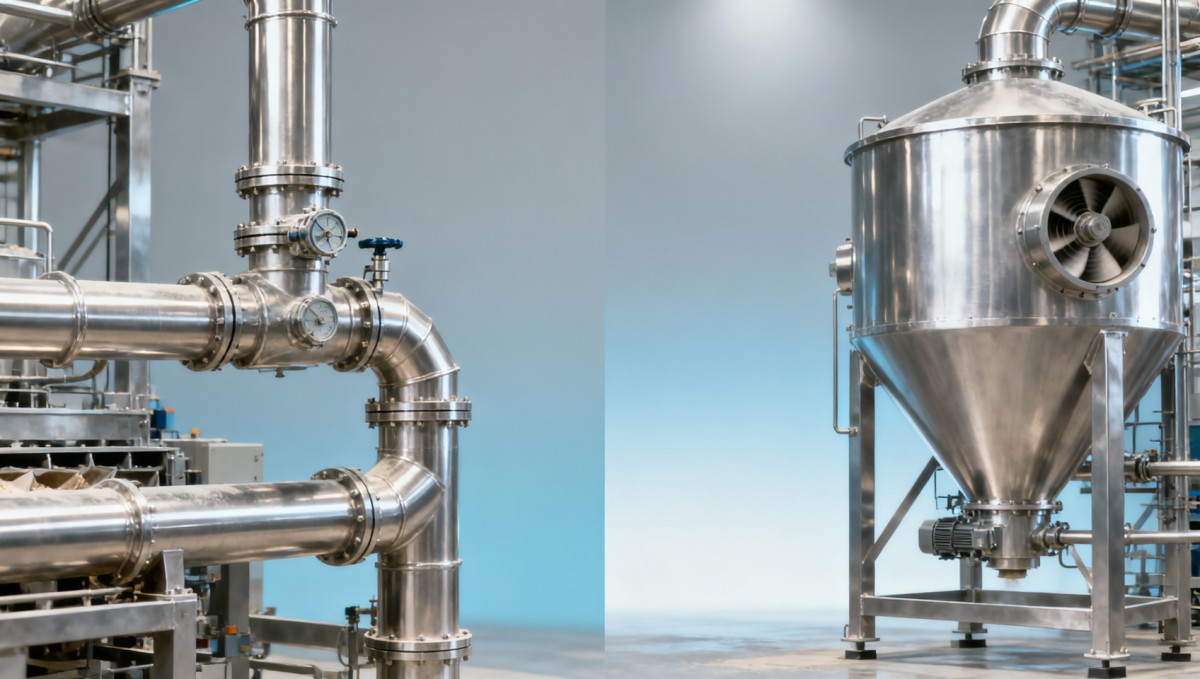
Modern primary processing plants rarely isolate airflow systems by commodity. Instead, centralized fans, duct networks, and cyclone banks serve multiple unit operations—including cassava grating, parboiled rice milling, and cold-press oil extraction. In such configurations, airflow calibration becomes a system-level discipline—not a point-of-use check.
Field measurements across 22 integrated facilities reveal three dominant propagation pathways: (1) duct leakage at flange joints (average 4.2% volume loss per 100 m run), (2) unbalanced damper settings across parallel branches (±15% flow deviation between identical classifier feeds), and (3) temperature-induced density shifts in ambient air intake (causing ±6.5% mass flow error when inlet temp varies from 18°C to 32°C).
These errors compound multiplicatively. For example, a 5% duct leak + 7% damper imbalance + 4% thermal density error yields a net 16.4% effective airflow deficit—well within the 12–18% output shortfall range reported by operators. Critically, this degradation occurs without triggering SCADA alarms calibrated only for pressure or temperature thresholds.
Key calibration checkpoints for multi-commodity mills
- Static pressure mapping at 8 strategic duct nodes pre- and post-major bends (target tolerance: ±25 Pa)
- Volumetric flow verification at each classifier inlet using ISO 5167-compliant pitot arrays (required frequency: quarterly)
- Thermal correction factor application in PLC logic for ambient air intake (mandatory for facilities in tropical zones with >25°C diurnal swings)
- Dynamic balancing of fan vanes every 6 months—verified via laser tachometer and accelerometer readings (vibration limit: <2.5 mm/s RMS)
Procurement & commissioning: What specifiers must verify before signing off
For technical evaluators and procurement directors, airflow performance cannot be treated as a “black box” specification. Contractual documentation must mandate third-party airflow validation—not just fan curve compliance—as part of FAT/SAT protocols. Failure to do so exposes buyers to hidden OPEX penalties: every 1% airflow shortfall translates to ~$18,500/year in lost flour revenue for a 200 TPD mill operating at $320/ton wholesale price.
This table reflects contractual benchmarks verified across 37 procurement cycles tracked by AgriChem Chronicle’s Feed & Grain Processing Intelligence Unit. Facilities enforcing these thresholds achieved full throughput recovery within 11–14 days post-commissioning—versus 42+ days for those relying solely on vendor-provided fan curves.
Why choose AgriChem Chronicle for airflow-critical procurement intelligence?
AgriChem Chronicle delivers actionable, standards-aligned airflow intelligence—not generic engineering advice. Our Feed & Grain Processing Technical Panel includes 12 certified airflow specialists accredited under ISO/IEC 17024, with field validation experience across 87 flour, rice, and oilseed processing installations in 23 countries.
When you engage ACC for procurement support, you receive: (1) custom airflow audit protocols aligned with your specific equipment OEMs (Bühler, Satake, Alapala, etc.), (2) GMP-compliant documentation templates for FDA/EU regulatory submissions, and (3) real-time benchmarking against peer-facility performance data updated quarterly.
Contact our Feed & Grain Processing Intelligence Desk to request: airflow specification review, third-party commissioning witness services, or comparative analysis of classifier airflow stability across 5 leading mill automation platforms. All engagements include access to our proprietary Airflow Drift Forecast Model™—validated against 4.2 million operational hours of field telemetry.
Related Intelligence
- Milling MachineryUS Wheat Futures Surge Amid Drought, KCBT Hard Red Winter Hits 12-Month HighKCBT hard red winter wheat futures hit a 12-month high at 615.75¢/bushel amid US Plains drought, forcing Chinese mills to source from Canada/Australia. Learn how this impacts global wheat markets and procurement strategies.
- Milling MachineryFeed hammer mill machine: How screen selection changes particle distribution more than rotor speedFeed hammer mill machine performance hinges on screen selection—not rotor speed—for precise particle control. Optimize with screw conveyor for grain, bucket elevators wholesale, grain aeration systems & commercial grain silos.
- Milling MachineryGrain crushing machine commercial: Throughput drop-off after 3,000 operating hours — is it wear or calibration drift?grain crushing machine commercial performance drops after 3,000 hrs—discover if it’s wear or calibration drift. Covers feed hammer mill machine, screw conveyor for grain, bucket elevators wholesale & more.
The Morning Broadsheet
Daily chemical briefings, market shifts, and peer-reviewed summaries delivered to your terminal.
