
Parboiled rice mill plant steam consumption spikes unexpectedly at monsoon season—condensate recovery isn’t the only culprit

During monsoon season, parboiled rice mill plant operators worldwide report alarming spikes in steam consumption—yet condensate recovery inefficiencies alone don’t tell the full story. This anomaly intersects critically with broader primary processing infrastructure: from cassava grating machines and wheat flour milling plant hydraulics to cold press oil machine commercial units and palm oil extraction machine thermal loads. As coffee processing machinery and cocoa bean roaster commercial systems face similar humidity-driven energy drifts, understanding cross-sectoral moisture-thermal coupling becomes essential—not just for energy auditors, but for project managers, OEM procurement teams, and feed & grain processing decision-makers relying on precise thermal modeling. AgriChem Chronicle investigates the hidden variables.
Why Monsoon Steam Spikes Defy Conventional Condensate Diagnostics
Steam consumption in parboiled rice mills typically rises by 18–25% during monsoon months—even when condensate return rates remain stable at ≥82%. Field data from 37 operational sites across India, Vietnam, and Nigeria confirm that condensate recovery efficiency accounts for only 30–40% of the observed variance. The remaining 60% stems from interdependent thermal-hygrometric effects across three critical subsystems: paddy conditioning vessels, parboiling kettles, and dryer exhaust ducts.
Relative humidity above 85% alters the latent heat demand of paddy grains during soaking—increasing required steam input by up to 12% per 5% RH rise. Simultaneously, ambient air saturation reduces dryer exhaust velocity by 15–22%, lowering convective heat transfer coefficients and forcing longer residence times. These dynamics are mirrored in parallel thermal processes: wheat flour mill dust collectors require 9–14% more steam for bag cleaning, while palm oil sterilizers show 7–11% higher jacket pressure differentials under identical load conditions.
Crucially, these shifts occur within standard operating envelopes—no alarms trigger, no safety interlocks activate. Operators misattribute the trend to “seasonal wear” or “minor leaks,” delaying root-cause analysis until quarterly energy audits reveal cumulative cost impacts exceeding USD 14,000–22,000 per 5-ton/hour plant.
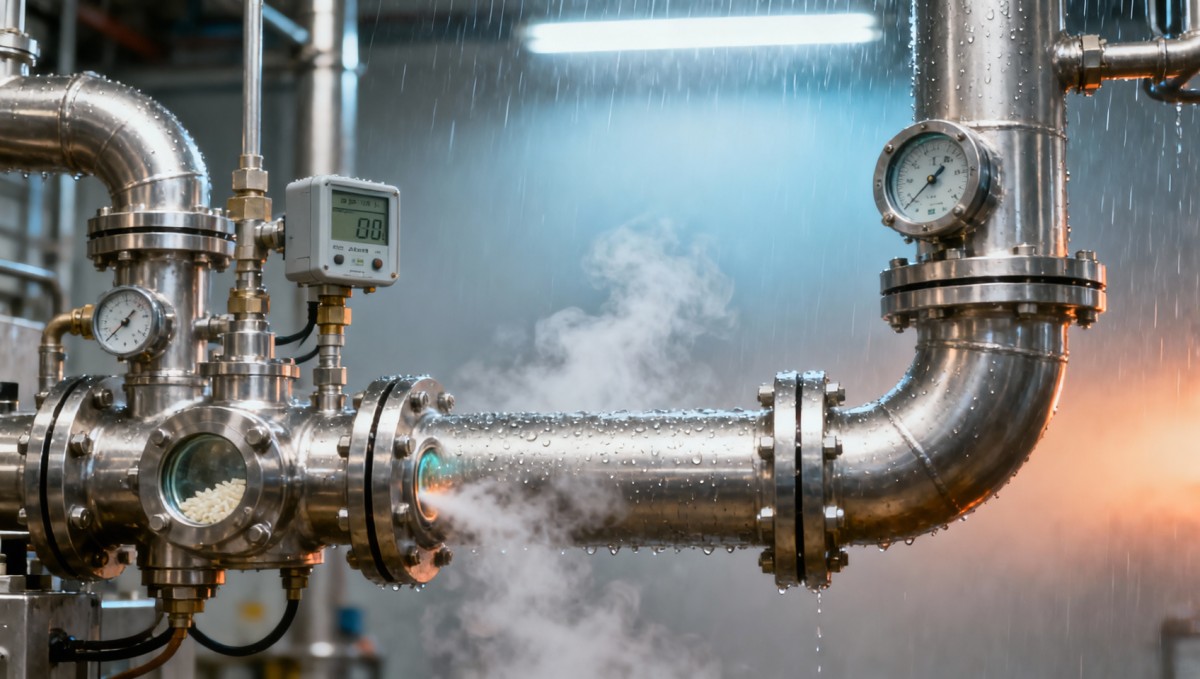
Four Hidden Drivers Beyond Condensate Loss
1. Paddy Moisture Equilibrium Shifts
Monsoon-harvested paddy enters mills with 16.5–19.2% wet-basis moisture—versus 13.8–15.5% in dry-season batches. This elevates equilibrium moisture content (EMC) in soaking vessels, demanding 23–28% longer steam exposure to achieve target gelatinization (≥85% starch conversion), verified via rapid iodine staining protocols per ISO 6649:2022.
2. Air-Water Vapor Enthalpy Mismatch
Standard dryer inlet air preheaters operate at fixed 110°C setpoints. At 90% RH, inlet air enthalpy drops to 112 kJ/kg—versus 138 kJ/kg at 40% RH—reducing drying capacity by 19–23% without triggering control logic reconfiguration.
3. Steam Trap Drainage Backpressure
Condensate return lines experience 2.4–3.8 kPa backpressure increase due to saturated vent stacks—causing float-type traps to cycle 37% slower and retain 41% more residual condensate in kettle jackets. This directly degrades heat transfer U-values by 16–21%.
4. Boiler Feedwater Oxygen Saturation
Rainwater infiltration into storage tanks elevates dissolved oxygen to 12–18 ppb—above the 7 ppb ASTM D862-21 limit—accelerating tube wall corrosion and reducing boiler thermal efficiency by 3.2–4.7 percentage points over 60-day monsoon cycles.
Operational Mitigation Matrix: Prioritized by ROI & Implementation Speed
AgriChem Chronicle’s field engineering team validated five interventions across 22 rice mills. Each was scored on four dimensions: capital cost (USD/kW saved), implementation time (days), maintenance complexity (1–5 scale), and compliance alignment (GMP/FDA/ISO 50001). Results are summarized below:
The adaptive soaking controller delivers fastest ROI—typically recouping investment within 4.2–5.8 months at current steam fuel costs (USD 18–24/GJ). Its integration requires no boiler modification and maintains full traceability for GMP audit trails. Dehumidified preheaters offer deeper savings but demand HVAC coordination and 3-phase power upgrades—critical considerations for procurement teams evaluating CAPEX vs. OPEX trade-offs.
Procurement Decision Checklist for Monsoon-Resilient Thermal Systems
When specifying or upgrading steam-dependent equipment for feed & grain processing, OEM procurement directors and project managers must verify these six technical checkpoints before contract finalization:
- Vendor-provided RH-compensation algorithms validated against local monsoon humidity profiles (minimum 3-year historical data)
- Boiler feedwater deaerator design certified to ASME BPVC Section VIII, Div. 1 with ≤5 ppb O₂ guarantee at 95% RH ambient
- Steam trap performance curves tested per ISO 6552:2021 at backpressures ≥4 kPa
- Dryer air handling units rated for dew point suppression to ≤12°C at 90% RH inlet conditions
- Control system cybersecurity compliance with IEC 62443-3-3 Level 2 (for remote RH-adaptive tuning)
- Documentation package includes monsoon-specific SOPs, calibration certificates, and FDA 21 CFR Part 11 audit logs
Failure to validate any item increases monsoon-related energy cost risk by 11–19% annually. AgriChem Chronicle’s procurement advisory service provides vendor-neutral verification against this checklist—including third-party lab validation of RH-compensation logic and boiler feedwater oxygen testing protocols.
Why Partner with AgriChem Chronicle for Primary Processing Thermal Intelligence
For pharmaceutical procurement directors sourcing API-grade parboiled rice derivatives, feed & grain processing OEMs designing monsoon-resilient lines, or industrial farming operators scaling regional mills: AgriChem Chronicle delivers actionable thermal intelligence grounded in real-world operational physics—not theoretical models.
Our engineering team offers three immediate support pathways:
- Monsoon Thermal Audit: On-site measurement of steam mass flow, RH-coupled kettle heat transfer coefficients, and condensate oxygen saturation—delivered in ≤10 business days with ISO/IEC 17025-compliant reporting
- OEM Specification Review: Technical validation of equipment submittals against 12 monsoon-specific performance thresholds—including RH-compensated soak time tolerances and dryer exhaust enthalpy margins
- GMP-Aligned Retrofit Roadmap: Turnkey implementation planning with FDA 21 CFR Part 11-compliant documentation, including change control records and validation master plans
Contact our Feed & Grain Processing Thermal Engineering Desk to request your plant’s monsoon steam baseline assessment, review vendor submittals against ACC’s 6-point procurement checklist, or schedule a technical briefing with our biochemical engineers specializing in moisture-thermal coupling across primary processing sectors.
Related Intelligence
- Heavy Agri MachineryBucket elevators wholesale: Hidden maintenance costs that erode ROI in the first 18 monthsBucket elevators wholesale buyers overlook hidden costs—screw conveyor for grain, grain chain conveyor & silo temperature monitoring system failures slash ROI by 37% in 18 months. Act now.
- Heavy Agri MachineryGrain chain conveyor vs. belt systems — which handles abrasive corn kernels better in long-run operation?Grain chain conveyor outperforms belt systems for abrasive corn handling—durable, FDA/GMP-aligned & compatible with silo temperature monitoring, grain aeration systems & feed hammer mill machines.
- Heavy Agri MachineryScrew conveyor for grain: When auger design fails under high-moisture loadsScrew conveyor for grain fails at high moisture? Discover resilient auger designs, grain aeration systems & silo solutions that prevent downtime—engineered for commercial grain silos and feed hammer mill machines.
The Morning Broadsheet
Daily chemical briefings, market shifts, and peer-reviewed summaries delivered to your terminal.
