

The Authority in Global Agricultural Chemistry & Bio-Resources
Why Bulk Food Flavorings Behave Differently in Large Batches

Why do bulk food flavorings perform one way in pilot runs and another in full-scale production? In large batches, heat transfer, mixing dynamics, ingredient dispersion, and volatility can shift flavor intensity, stability, and consistency in ways operators cannot ignore. This article examines the technical reasons behind these changes and highlights practical factors that help teams control quality, reduce variation, and improve processing outcomes.
Understanding the Scale Effect in Bulk Food Flavorings
Bulk food flavorings are not simply “larger versions” of the same ingredient used in bench or pilot trials. Once production moves into industrial vessels, transfer lines, long hold times, and high-throughput filling systems, flavor behavior becomes a process issue rather than only a formulation issue. Operators often notice that a profile that seemed balanced at small scale may become weak, harsh, uneven, or short-lived in a commercial run.
This matters across the broader processing industries covered by technically focused publications such as AgriChem Chronicle, where ingredient performance must be interpreted through equipment reality, regulatory discipline, and repeatable production control. In sectors that handle fine ingredients, bio-extracts, feed components, or value-added agricultural products, flavoring performance can affect not just taste but batch acceptance, waste rates, customer complaints, and line efficiency.
The core issue is that large-batch systems change the physical environment around the flavor. Temperature gradients become wider, shear may rise in some zones and fall in others, volatile compounds see more exposure to air, and ingredient contact time increases. As a result, bulk food flavorings can behave differently even when the recipe sheet appears unchanged.
Why the Industry Pays Close Attention
The food and ingredient sector increasingly operates under pressure to deliver high consistency at industrial scale. Whether a team is processing seasonings, beverage bases, protein blends, nutritionally fortified products, or specialty agricultural derivatives, flavor variation can directly affect brand reliability. For operators, the challenge is practical: a deviation of only a few seconds in mixing, a few degrees in jacket temperature, or a poorly timed flavor addition can change the final sensory outcome.
Bulk food flavorings also sit at the intersection of several industrial concerns. They must remain stable during transport and storage, disperse evenly in the matrix, tolerate the process environment, and comply with labeling and quality requirements. In large factories, these variables interact with equipment design, raw material variability, and sanitation routines. That is why scale-up is rarely a one-step multiplication exercise.
Key Technical Reasons Flavor Changes in Large Batches
Heat transfer is less uniform
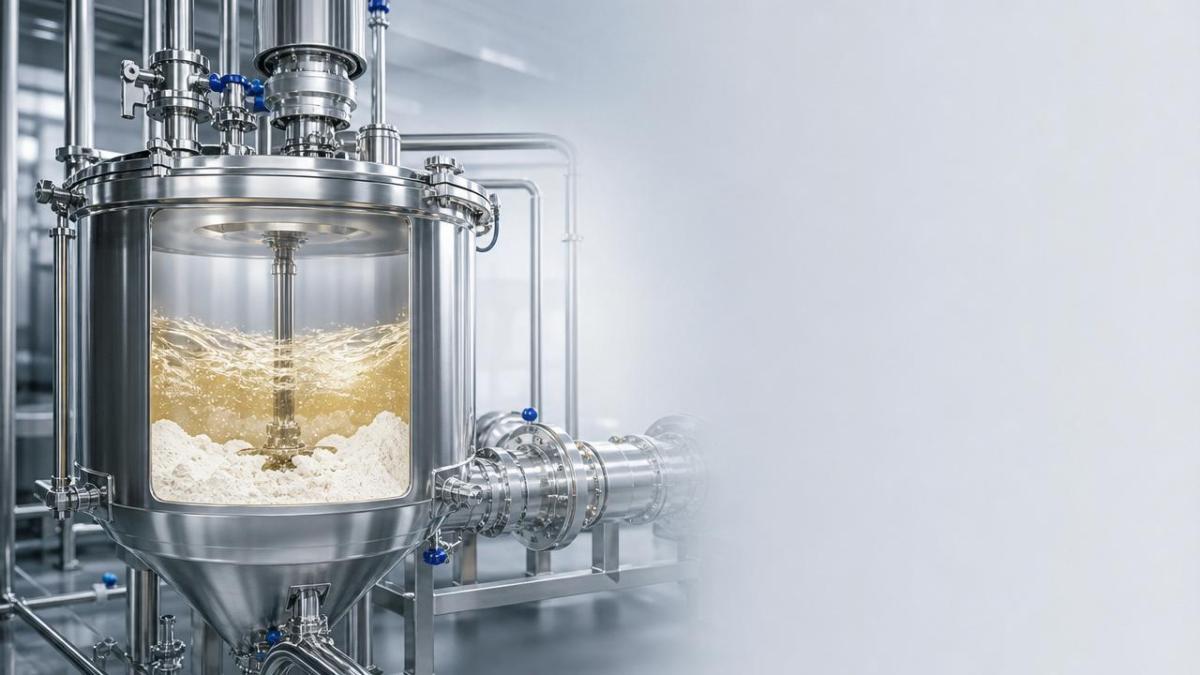
Small vessels heat and cool quickly, so the flavoring may spend little time in a damaging temperature range. In large tanks, the center, wall, and top layers may not reach the same temperature at the same time. Sensitive aromatic compounds can volatilize or degrade if part of the batch remains hot for too long. This is especially relevant for citrus notes, dairy top notes, herbaceous tones, and certain natural extracts used in bulk food flavorings.
Mixing patterns become more complex
A pilot mixer may achieve fast, nearly complete turnover. At production scale, dead zones, vortexing, foaming, and uneven flow paths can reduce dispersion. When flavor compounds are not distributed evenly, one section of product may taste strong while another tastes flat. Powder flavorings may clump, while liquid flavorings may adhere to vessel surfaces or accumulate in local high-concentration zones before proper dilution.
Volatility losses increase
Many aroma compounds are inherently volatile. In larger systems, open-top processing, prolonged agitation, recirculation loops, and headspace exposure can strip away delicate notes. Even if the total dosage of bulk food flavorings is correct, the sensory impression can decline by the time the batch reaches filling or packaging. This is one reason operators often report that the tank sample tastes different from the finished packed product.
Ingredient interactions scale differently
Flavor compounds do not exist alone. They interact with fats, proteins, starches, fibers, salts, acids, sweeteners, and process aids. In large production, these interactions may become stronger because of longer residence time or incomplete hydration of the base matrix. A flavor that is bright in water can be muted in a high-protein beverage, while a savory profile may shift when exposed to mineral-rich or high-fat systems. Bulk food flavorings therefore need to be assessed within the full formulation and process sequence.
Shear and pressure can alter perception
High-shear pumps, homogenizers, and inline mixers can improve dispersion, but they may also influence emulsion structure, release behavior, and mouthfeel. Since flavor perception depends partly on release rate, mechanical treatment can change how quickly aroma is perceived or how long it lingers. In some matrices, bulk food flavorings taste stronger immediately after homogenization but less rounded after storage.
Industrial Overview of Common Large-Batch Influences
The table below summarizes typical large-scale factors that affect bulk food flavorings and the operational implications for users and line personnel.
Where These Differences Show Up Most Clearly
Not every product category responds the same way. Bulk food flavorings tend to show the biggest scale-related differences in systems where aroma is delicate, the base is chemically active, or processing is demanding. This includes ready-to-drink beverages, powdered nutrition blends, sauces, dairy analogs, confectionery fillings, and extruded or pelleted products. Even in adjacent sectors such as feed and grain processing, palatability systems can shift under heat, pressure, and coating conditions.
For operators, the highest-risk scenarios are usually those involving late-stage flavor addition, multiple transfers between vessels, and products with long cooling windows. In these cases, variation can emerge not because the flavor is poor, but because the process gives the flavor too many chances to escape, react, or distribute unevenly.
Application Categories and Practical Sensitivities
Different product types place different demands on bulk food flavorings. A structured view helps production teams predict which controls deserve the most attention.
Why Small-Scale Success Does Not Guarantee Production Consistency
Pilot trials are valuable, but they often simplify reality. The equipment may be cleaner, residence times shorter, and manual attention higher. Operators can make quick corrections that are impossible in a high-volume shift. Production lines, by contrast, involve shift changes, upstream material variation, scheduled cleaning windows, and output targets that can compress decision-making. Under these conditions, bulk food flavorings are influenced by the whole system, not just the recipe.
This is why scale-up work should include process mapping, not only sensory matching. Teams should ask where the flavor enters the line, what temperature it sees, how long it remains in circulation, and whether the batch experiences air contact or phase separation before pack-out. These details often explain more than the nominal dosage rate.
Practical Steps to Improve Large-Batch Flavor Performance
For users and operators, the goal is not to eliminate every variable but to control the ones that most strongly affect flavor outcome. A disciplined operating approach usually gives better results than simply increasing dosage.
- Validate the addition point. Add bulk food flavorings where mixing is effective but thermal and air exposure are minimized.
- Track real batch temperatures, not only setpoints. Product temperature history matters more than controller display values.
- Measure mixing performance using turnover time or tracer methods, especially after equipment changes or scale increases.
- Review transfer and hold times. Delays between flavor addition and packaging can create avoidable drift.
- Align flavor format with process conditions. Liquid, encapsulated, oil-soluble, or carrier-based systems may perform differently at scale.
- Retain production samples from multiple line points so sensory differences can be linked to process stages.
What Teams Should Evaluate Before Adjusting Dosage
When a production batch tastes weak or unbalanced, the immediate reaction is often to add more flavor. That can solve the symptom while masking the cause. Before changing the formula, teams should verify whether the issue comes from evaporation, poor distribution, raw material shifts, pH variation, or excessive heat. Increasing the level of bulk food flavorings without diagnosing the process may create a different problem, such as harshness, cost inflation, or non-uniform product from batch to batch.
A more robust approach is to connect sensory findings with process data. If loss appears after a long hold, residence time is the likely target. If some units taste stronger than others, mixing or filling uniformity may be responsible. If the flavor changes after storage, oxidation or matrix binding may be involved. Process diagnosis usually leads to more stable improvement than reformulation alone.
Operational Value for Industrial Users
Understanding why bulk food flavorings behave differently in large batches helps operators protect consistency, reduce rework, and make better use of ingredient spend. It also improves communication between production, quality, R&D, and ingredient suppliers. When teams describe a problem in terms of heat history, mixing pattern, or hold time instead of only saying “the flavor is off,” corrective action becomes faster and more accurate.
For organizations working in regulated and technically demanding process industries, this systems view is especially valuable. Reliable outcomes depend on documented conditions, traceable adjustments, and evidence-based decisions. Flavor performance is therefore not only a sensory topic but part of broader operational control.
Moving from Observation to Better Control
Bulk food flavorings behave differently in large batches because industrial processing changes the thermal, mechanical, and chemical environment around them. Once teams recognize that flavor variation is often rooted in scale effects, they can shift from reactive corrections to structured control. The most effective next step is to review the full production pathway—from addition point to final pack—and identify where flavor is most exposed to heat, air, shear, or delay.
For operators and technical users, that mindset turns flavor consistency into a manageable production discipline. Better mapping, smarter addition strategy, and closer coordination with ingredient specialists can help bulk food flavorings deliver the same intended profile more reliably at commercial scale.
Related Intelligence
- Natural IngredientsBulk Antioxidants: Why Oxidation Control Fails in StorageBulk antioxidants can still fail in storage due to moisture, heat, oxygen exposure, and poor handling. Learn the hidden risks and practical controls to protect stability.
- Natural IngredientsWholesale Essential Oils: Why GCMS Reports Don't Tell the Whole StoryWholesale essential oils buyers: learn why GCMS reports alone are not enough. Discover how to assess authenticity, consistency, traceability, and compliance before choosing a supplier.
- Natural IngredientsChlorella Powder Wholesale: How to Screen for Purity RisksChlorella powder wholesale: learn how to screen purity risks, verify COAs, spot heavy metal and microbial issues, and choose safer suppliers with confidence.
The Morning Broadsheet
Daily chemical briefings, market shifts, and peer-reviewed summaries delivered to your terminal.
