

The Authority in Global Agricultural Chemistry & Bio-Resources
Bulk Monk Fruit Extract: What Affects Sweetness Consistency?
For quality control and safety teams, bulk monk fruit extract presents a critical challenge: maintaining sweetness consistency across batches, suppliers, and processing conditions. Variations in mogroside profile, raw material maturity, extraction methods, and storage can all influence sensory performance and compliance outcomes. Understanding these factors is essential for reducing formulation risk, strengthening supplier qualification, and ensuring reliable product standards in regulated industrial applications.
Why does bulk monk fruit extract sweetness vary from batch to batch?
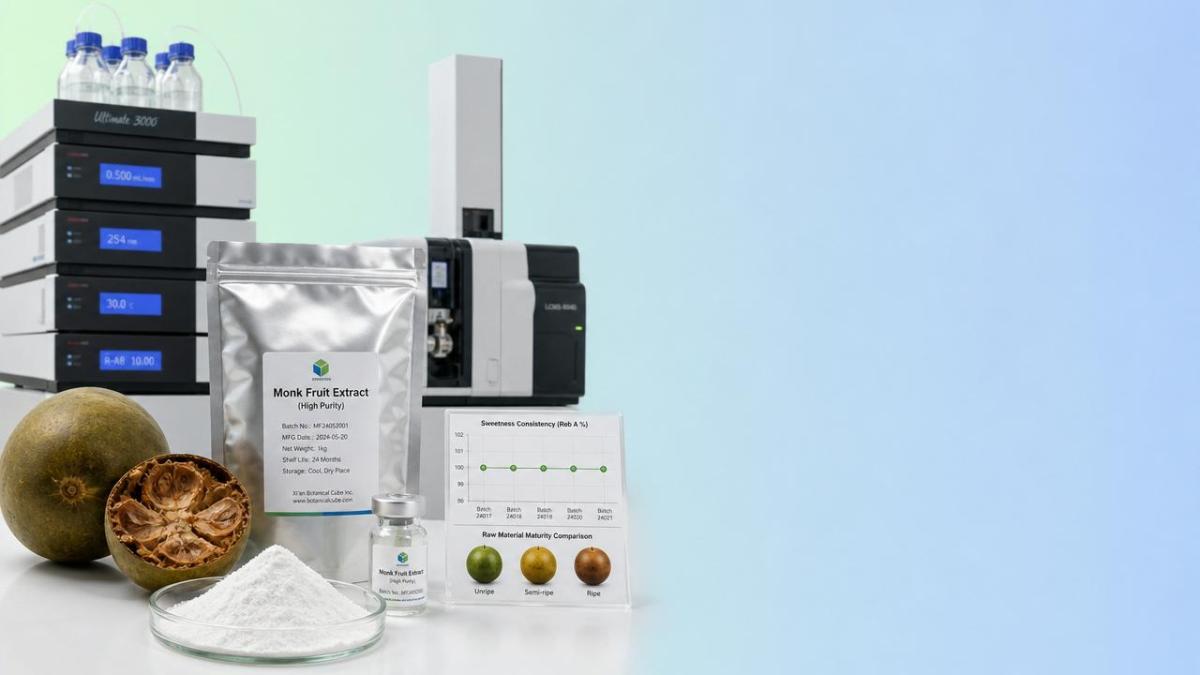
For procurement, QC, and safety managers, sweetness inconsistency is rarely a single-variable problem. In bulk monk fruit extract, perceived sweetness depends not only on total mogroside content, but also on the ratio of key fractions, the condition of the fruit before extraction, process controls during concentration, and the way the finished ingredient is stored and handled across the supply chain.
This matters across the wider primary industries and fine chemicals landscape because monk fruit extract is often evaluated as a functional ingredient, not just a flavoring. In beverage bases, nutrition systems, pharmaceutical-adjacent formulations, and industrial food processing, small shifts in sweetness onset, linger, or bitterness can trigger reformulation, release delays, customer complaints, or deviation reports.
The most common drivers of inconsistency
- Raw fruit maturity can alter mogroside composition. Fruit harvested too early may deliver lower sweetness intensity or a different sensory curve than fully matured material.
- Extraction selectivity affects the final profile. Two suppliers may both declare similar assay values while producing noticeably different sweetness performance in finished applications.
- Residual carriers, moisture, and processing aids may change flowability, stability, and blending behavior, indirectly affecting sensory uniformity in production.
- Storage temperature, humidity exposure, and packaging barrier quality can influence shelf stability and lot-to-lot consistency during long-distance shipping.
ACC’s sector focus on bio-extracts, ingredients, and regulated sourcing makes this issue especially relevant. Quality teams are no longer reviewing only a certificate of analysis; they are increasingly assessing extraction logic, traceability depth, and the supplier’s ability to maintain reproducible sensory outcomes under commercial conditions.
Which technical factors affect sweetness consistency the most?
A practical review of bulk monk fruit extract should start with the variables that change both analytical values and sensory performance. Many buyers focus on one number, such as total mogrosides, but sweetness consistency usually depends on a wider technical picture. The table below helps quality and safety teams prioritize what to check during incoming evaluation and supplier review.
The key lesson is simple: bulk monk fruit extract sweetness consistency cannot be judged by one headline specification. QC teams should combine analytical review with controlled sensory benchmarking and manufacturing-fit tests before approving large-volume purchasing.
What to ask for beyond the standard COA
- A lot-specific specification sheet showing active profile ranges rather than single-point nominal values.
- Method references for HPLC or equivalent analytical determination of key mogrosides.
- Statements on residual solvents, microbial limits, heavy metals, and allergen cross-contact controls where relevant.
- Shelf-life support data linked to packaging type, transport conditions, and recommended warehouse controls.
How should QC teams compare suppliers of bulk monk fruit extract?
Supplier comparison is where many sweetness problems are either prevented or locked in. In global supply chains, two bulk monk fruit extract suppliers may offer similar pricing and nominal purity, yet differ substantially in process discipline, traceability depth, change-control practice, and responsiveness during deviations. A structured scorecard is therefore more useful than a price-only comparison.
The comparison table below is designed for safety managers, quality teams, and technical buyers evaluating commercial-volume material for regulated or performance-sensitive applications.
This kind of matrix reduces the chance of approving a supplier whose material looks acceptable on paper but performs inconsistently in use. For industrial buyers, the most expensive bulk monk fruit extract is not always the highest-priced lot; it is often the one that causes rework, delayed release, or failed sensory targets after blending.
A practical supplier qualification checklist
- Run side-by-side sensory comparison on at least three lots when possible, not a single lab sample.
- Review batch-to-batch assay spread over time to identify whether the supplier controls natural variation effectively.
- Confirm whether the supplier uses standardized blending to target profile stability or ships lots with broader natural variation.
- Check whether logistics partners can maintain suitable packaging protection during export, warehousing, and inland transport.
What should safety and compliance teams verify before approval?
In regulated industrial environments, sweetness consistency is inseparable from compliance control. Even when bulk monk fruit extract is used in food, nutrition, or ingredient systems rather than direct pharmaceutical actives, safety teams still need a disciplined review of contamination risk, documentation quality, and the supplier’s manufacturing governance.
Core documentation to review
- Certificate of analysis with lot-specific values for active content, moisture, microbiological criteria, and contaminant limits where applicable.
- Specification sheet defining acceptance ranges instead of relying on broad marketing descriptors such as natural sweetener or high purity.
- Declaration related to residual solvents, pesticide controls, heavy metals, and relevant food or ingredient contact risks.
- Change notification policy and complaint handling process for deviations tied to sensory inconsistency or contamination events.
Depending on application and market destination, buyers may also align reviews with generally recognized manufacturing and safety expectations under frameworks such as GMP-based quality systems, FDA-facing documentation discipline, or broader environmental and handling controls relevant to EPA-sensitive operations. The exact compliance route varies by end use, but documentation discipline should never be treated as optional.
Why this matters in cross-border supply
A technically acceptable extract can still create risk if documentation is incomplete, translated inconsistently, or delayed. For global buyers, safety review must include the reliability of supplier communication, the consistency of export paperwork, and the speed at which technical clarifications can be issued during receiving inspection or customer audit support.
How can manufacturers reduce formulation risk when using bulk monk fruit extract?
The best way to control sweetness variation is to treat bulk monk fruit extract as a process-sensitive ingredient. That means validating it not only in the lab, but also under actual production conditions such as premix sequence, heat exposure, pH range, hold time, and interaction with acids, fibers, proteins, or masking systems.
Implementation steps that reduce variability
- Set sensory acceptance criteria alongside chemical specifications. A batch can pass assay yet still underperform in taste balance.
- Establish a retained sample program for approved lots so deviations can be investigated against historical reference material.
- Run pilot-scale trials before switching suppliers, origins, or declared grades, even when paperwork suggests equivalence.
- Use incoming risk segmentation. High-volume or high-impact lots may deserve tighter review than routine replenishment inventory.
These controls are especially useful in sectors where sensory drift leads to expensive downstream action, such as rebalancing sweetener systems, relabeling production, or holding finished lots pending investigation. In that sense, managing bulk monk fruit extract is not just a raw material task; it is a release-risk and cost-control strategy.
Common misconceptions about bulk monk fruit extract
Several recurring assumptions cause avoidable problems in commercial sourcing. Clearing them up helps QC and safety teams build stronger approval protocols.
Misconception 1: the highest assay always gives the most stable sweetness
Not necessarily. A higher declared purity may improve sweetness intensity, but it does not automatically guarantee preferred taste character or batch-to-batch reproducibility. Profile composition and process consistency still matter.
Misconception 2: one approved sample is enough for supplier qualification
A single sample often represents a best-case snapshot. Commercial risk becomes clearer only when multiple lots are reviewed under routine production conditions, including storage and handling after arrival.
Misconception 3: sweetness consistency is only a formulation issue
In reality, it begins upstream. Agricultural variability, extraction discipline, specification depth, and transport controls all shape what formulators receive. By the time a plant notices sensory drift, the root cause may be several supply chain steps earlier.
FAQ: what do buyers ask most often about bulk monk fruit extract?
How should we define an acceptable sweetness consistency range?
Use a combination of analytical and application-specific standards. Define acceptable ranges for key actives, then confirm them with sensory comparison in your actual matrix. Beverage, dry blend, and nutrition systems may each require different tolerance thresholds.
What is the biggest risk when changing bulk monk fruit extract suppliers?
The biggest risk is assuming apparent equivalence. Similar assay, similar price, and similar marketing language do not prove the same performance. Always requalify with pilot production and side-by-side sensory review before a full switch.
Which incoming tests matter most for quality teams?
At minimum, confirm identity, active profile, moisture, and relevant safety parameters. If the application is sensitive, add retained sample comparison and controlled tasting against an approved benchmark lot.
Can storage conditions really change sensory performance?
Yes. Moisture uptake, packaging damage, and prolonged exposure to unsuitable warehouse conditions can influence powder behavior and, over time, perceived performance. Storage controls should be part of the quality agreement, not an afterthought.
Why work with ACC when assessing bulk monk fruit extract supply risk?
AgriChem Chronicle operates at the intersection of bio-extracts, fine chemicals, and regulated primary industries. That perspective is valuable when quality and safety teams need more than supplier marketing. ACC helps buyers interpret technical claims, compare sourcing models, and understand how documentation quality, process discipline, and market structure affect real purchasing risk.
If your team is reviewing bulk monk fruit extract for industrial use, you can engage ACC around specific decision points: parameter confirmation, supplier comparison logic, documentation expectations, delivery-risk assessment, sample review criteria, and application-fit questions tied to your own operating environment.
- Clarify which technical parameters should be locked into a purchasing specification.
- Discuss how to compare candidate suppliers beyond nominal assay and price.
- Review documentation expectations for safety, compliance, and traceability.
- Plan sample support, evaluation sequence, and lot-approval workflow before commercial orders.
- Assess lead time, change-control exposure, and supply continuity factors relevant to long-term procurement.
For organizations managing formulation risk, audit readiness, or multi-supplier procurement, that kind of structured guidance can shorten qualification cycles and reduce the likelihood of costly sweetness deviations later in production.
Related Intelligence
- Botanical ExtractsWhat Sets a Reliable Ginseng Extract Manufacturer Apart?Ginseng extract manufacturer selection starts with traceability, GMP controls, and consistent ginsenosides. Learn how to compare suppliers, reduce risk, and secure long-term value.
- Botanical ExtractsHemp Extract Bulk: Full Spectrum or Isolate for New Products?Hemp extract bulk: compare full spectrum vs isolate for new products. Learn how each option affects compliance, formulation, sourcing, and market fit before bulk buying.
- Botanical ExtractsBulk Maca Extract Quality Issues That Show Up After SourcingBulk maca extract quality problems often emerge only after sourcing. Discover the key warning signs—assay drift, residues, adulteration, and document gaps—before they disrupt compliance, cost, and supply.
The Morning Broadsheet
Daily chemical briefings, market shifts, and peer-reviewed summaries delivered to your terminal.
