

The Authority in Global Agricultural Chemistry & Bio-Resources
Wholesale potassium sorbate: powder or granules for smoother processing?
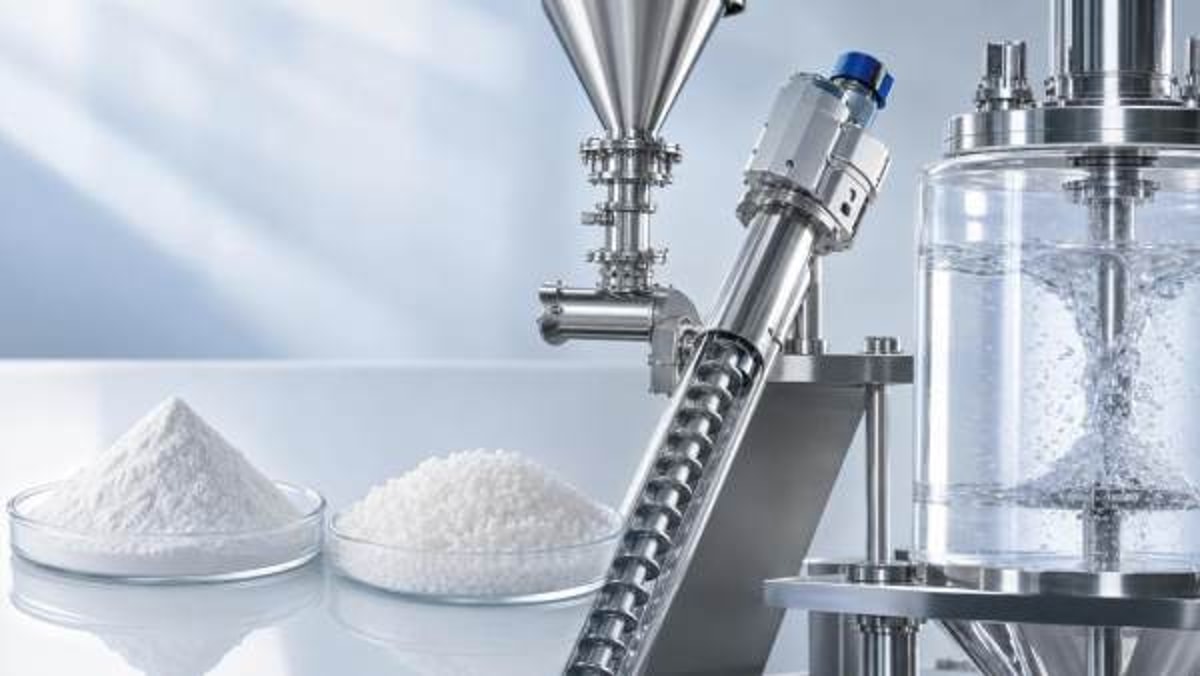
When evaluating wholesale potassium sorbate for industrial use, the choice between powder and granules can directly affect handling efficiency, dust control, mixing consistency, and overall processing stability. For operators and plant users, understanding how each form performs in real production settings is essential to smoother workflows, safer handling, and more reliable preservative dosing.
How does form factor change day-to-day processing?
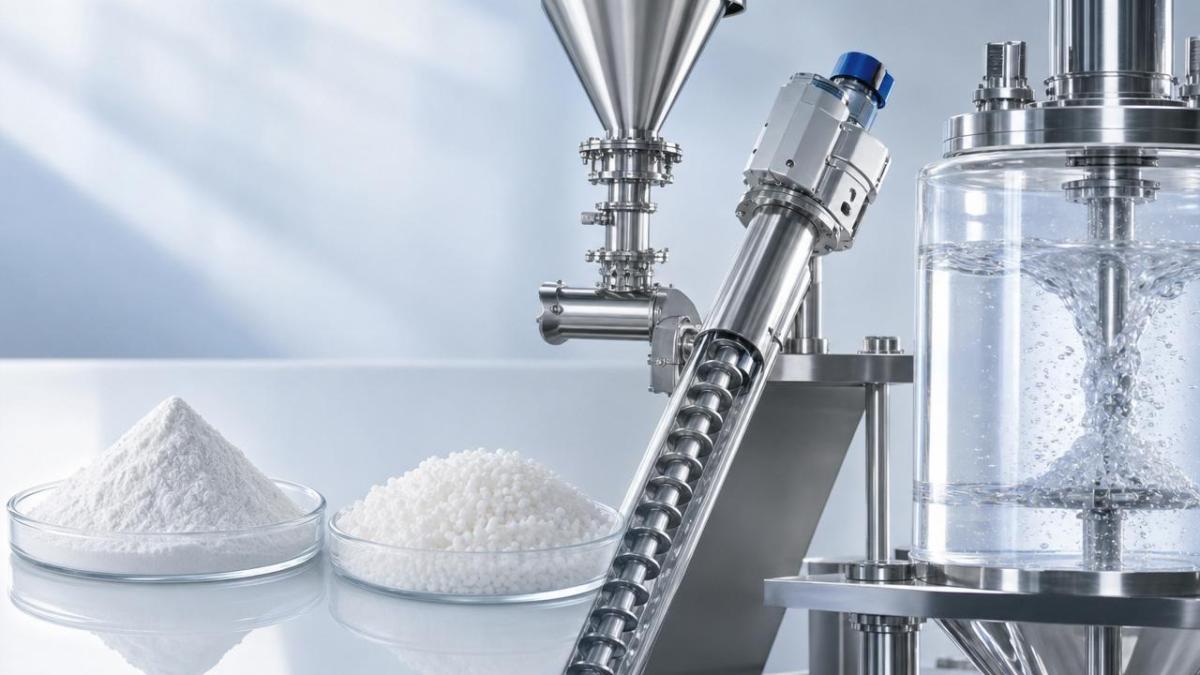
In practical terms, wholesale potassium sorbate is not only a preservative purchase decision; it is also a workflow decision. Operators in food processing, feed blending, biochemical intermediates, and ingredient pre-mix lines often focus first on assay, purity, and price. Yet on the plant floor, the physical form frequently determines whether a line runs cleanly or creates repeated interruptions.
Powder usually offers fast dissolution and broad compatibility in dry or liquid systems, but it can generate airborne dust, bridge in hoppers, and create housekeeping burdens. Granules tend to improve flowability and reduce dust exposure, but they may dissolve more slowly in some conditions and require operators to confirm particle behavior before scaling up.
For users handling wholesale potassium sorbate across multiple production shifts, the right choice depends on the actual process route: manual charging, semi-automatic batching, pneumatic transfer, liquid make-up tanks, or high-speed ribbon blending. The more complex the line, the more important the form selection becomes.
- Manual addition lines often prefer lower-dust material to reduce operator exposure and cleanup time.
- High-speed dry blending may need controlled particle size to avoid segregation from salt, sugars, acids, or feed carriers.
- Liquid preparation systems usually prioritize dissolution speed, especially where batch turnaround affects output.
- Regulated production environments may value packaging integrity, lot traceability, and lower contamination risk as much as basic price.
Powder vs granules: which format is better for wholesale potassium sorbate?
Before choosing a supply format, it helps to compare both options against the tasks operators actually perform. The table below summarizes common processing differences seen when evaluating wholesale potassium sorbate for industrial use.
The comparison shows why there is no universal answer. Powder can support quick incorporation and rapid tank preparation. Granules can simplify transfer and improve operator comfort. For many plants, the best wholesale potassium sorbate format is the one that reduces total process friction, not simply the one with the lowest quoted price per kilogram.
When powder makes more sense
Powder is often preferred where preservative solutions are prepared in batches, where dissolution time limits throughput, or where the line already has enclosed handling and dust extraction. It may also fit formulations requiring rapid uniform distribution at low inclusion rates.
When granules are the safer operating choice
Granules are often favored in facilities that rely on frequent manual charging, have strict housekeeping targets, or process multiple ingredients in shared spaces. Lower dust potential can support cleaner operations and reduce material loss around transfer points.
Which application scenarios favor each option?
Users purchasing wholesale potassium sorbate across general industrial sectors often serve very different formulations. Matching form to process avoids avoidable rework. The next table links common scenarios to the more practical supply format.
This scenario mapping is especially useful for cross-sector buyers in food ingredients, bio-extract blending, feed & grain processing, and fine chemical preparation. A plant with several production modes may even benefit from approving both forms of wholesale potassium sorbate for different lines rather than forcing one format into every workflow.
A practical line-side checklist
- Review whether dosing is manual, semi-automatic, or fully enclosed.
- Measure how long dissolution or dispersion currently takes.
- Check whether dust complaints or cleaning downtime are recurring issues.
- Compare particle size compatibility with neighboring dry ingredients.
- Test one production lot at normal speed before confirming annual procurement.
What technical points should operators verify before buying?
When sourcing wholesale potassium sorbate, operators should go beyond the product name and assay. The most useful purchasing conversations include technical details that affect real use, storage stability, and dosing accuracy. This is where informed editorial intelligence from AgriChem Chronicle helps bridge the gap between supplier paperwork and plant-floor reality.
Key technical checks
- Particle size distribution: important for feeder behavior, blending, and segregation risk.
- Moisture sensitivity and caking tendency: relevant in humid warehouses or hot-fill environments.
- Bulk density: affects hopper refill frequency, bag count, and volumetric dosing accuracy.
- Dissolution conditions: ask for expected performance under your water temperature and mixing speed.
- Packaging format: sack, lined bag, or larger industrial pack options can influence contamination control and labor load.
- Lot documentation: certificate of analysis, traceability records, and storage guidance should be easy to verify.
For regulated sectors and export-oriented processors, documentation quality matters almost as much as material behavior. Buyers working under food safety, pharmaceutical, feed, or environmental compliance frameworks should confirm that the supplier can consistently support applicable documentation, not only during qualification but also for repeat shipments.
Procurement guide: how to choose wholesale potassium sorbate with fewer surprises
A smooth procurement decision usually comes from structured comparison rather than brand claims. Operators, purchasing teams, and quality personnel should align on a short list of acceptance factors before sending out RFQs. This reduces the chance of selecting a format that looks economical on paper but disrupts production later.
This framework is especially valuable in volatile supply environments. AgriChem Chronicle regularly addresses how buyers can interpret technical disclosures, supply risk signals, and compliance constraints across fine chemicals, feed processing, and bio-ingredient chains. That broader market view helps teams evaluate wholesale potassium sorbate beyond a single invoice line.
Cost, hidden operating impact, and common mistakes
A lower unit price does not always mean lower operating cost. Powder may appear cheaper but generate more labor in cleanup, dust control, and material loss. Granules may cost more upfront yet simplify handling enough to offset that difference. The best comparison includes direct and indirect process costs.
Where hidden cost appears
- Additional cleaning hours caused by dust accumulation near weigh stations.
- Line stoppages from hopper bridging, feeder inconsistency, or incomplete dissolution.
- Overdosing or underdosing due to poor flow or segregation in dry blends.
- Rejected batches when preservative distribution is not uniform.
- Extra ventilation or PPE burden in facilities with limited dust containment.
Frequent buyer and operator mistakes
One common mistake is assuming that all wholesale potassium sorbate behaves the same regardless of particle form. Another is running qualification only in laboratory beakers rather than at production batch size. A third is overlooking packaging condition and storage humidity, which can influence caking and flow even when the chemistry itself remains within specification.
Standards, documentation, and supply-chain visibility
In general industry, compliance expectations vary by end use, but documentation discipline should always be taken seriously. Buyers of wholesale potassium sorbate should verify whether the intended use falls under food, feed, pharmaceutical-adjacent, export, or environmentally sensitive controls. Requirements can differ, but the need for accurate paperwork does not.
Documentation operators should be able to access
- Certificate of analysis for each batch, including key quality parameters.
- Product specification sheet with handling and storage recommendations.
- Lot identification and traceability information for audit readiness.
- Packaging description to confirm suitability for transport and warehouse conditions.
- Any applicable statements needed for customer quality questionnaires or import review.
Because ACC covers heavily regulated raw-material markets, its editorial lens is useful for procurement teams comparing suppliers across regions. The goal is not to replace internal quality review, but to help users ask better questions early, especially when sourcing from complex global supply chains.
FAQ: practical questions about wholesale potassium sorbate
Is powder always better for fast mixing?
Not always. Powder often dissolves faster, but fast mixing depends on water temperature, agitation intensity, batch size, and addition method. If powder clumps on the liquid surface or creates dust loss during charging, the theoretical speed advantage may disappear. A controlled plant trial is more reliable than assumption.
Are granules better for operator safety?
Granules often help by reducing airborne particulates during manual handling, but safety still depends on ventilation, PPE, transfer design, and housekeeping standards. They should be viewed as one part of exposure control, not the only measure.
What should I test before switching wholesale potassium sorbate suppliers?
Test feeder flow, dissolution time, dust behavior, blend uniformity, packaging condition on arrival, and batch-to-batch consistency. If the material is used in a regulated product, also confirm whether all supporting documents remain acceptable to your quality system and downstream customers.
Can one facility use both powder and granules?
Yes. Many operations benefit from a dual-format strategy. For example, powder may be reserved for solution tanks, while granules are used on manual dry-addition lines. This approach can improve efficiency if inventory control and SOPs are clear enough to prevent mix-ups.
Why work with us when evaluating format, sourcing, and supply intelligence?
AgriChem Chronicle supports industrial buyers and operators with decision-relevant analysis, not generic product talk. Our coverage connects technical handling concerns with broader supply-chain, regulatory, and market realities across fine chemicals, bio-ingredients, feed processing, and primary industries. That makes our perspective especially useful when a simple form choice can affect labor, consistency, compliance, and procurement risk at the same time.
If you are reviewing wholesale potassium sorbate for a new line or replacing an existing source, you can engage with us around concrete decision points: parameter confirmation, powder-versus-granule selection, expected delivery lead time, sample evaluation support, packaging options, documentation expectations, and quotation comparison logic. We also help readers frame the right supplier questions before pilot validation or annual contracting.
For teams facing recurring dust complaints, inconsistent blending, uncertain compliance paperwork, or tight changeover schedules, a targeted review can save time before the next purchase cycle. Contact us to discuss your processing setup, your dosing method, and your quality requirements so the right wholesale potassium sorbate format is matched to the way your plant actually runs.
Related Intelligence
- Natural IngredientsIndonesia BPOM Updates Natural Ingredients Labeling RulesIndonesia BPOM Updates Natural Ingredients Labeling Rules: New microbial stability claims in Bahasa Indonesia required for imports—act now to avoid delays.
- Natural IngredientsBulk ascorbic acid sourcing: why appearance checks are not enoughBulk ascorbic acid sourcing needs more than a white appearance check. Learn how assay, particle size, impurities, and compliance data help buyers avoid risk and choose reliable suppliers.
- Natural IngredientsXanthan gum food grade: what changes texture in actual formulationsXanthan gum food grade performance depends on more than dosage. Explore how pH, salts, shear, sugar, and ingredient interactions shape texture, stability, and scale-up success.
The Morning Broadsheet
Daily chemical briefings, market shifts, and peer-reviewed summaries delivered to your terminal.
