
Wholesale coenzyme Q10: crystalline vs. solubilized forms — which delivers better bioavailability per gram?
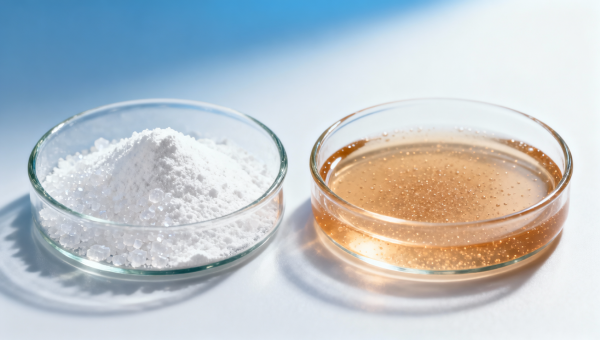
In the wholesale coenzyme Q10 market — alongside key bulk actives like creatine monohydrate bulk, BCAA powder wholesale, L-carnitine base bulk, alpha lipoic acid wholesale, glutathione powder bulk, and hyaluronic acid powder cosmetic grade — bioavailability per gram is no longer a theoretical concern but a procurement KPI. As pharmaceutical buyers, aquaculture formulators, and fine chemical OEMs evaluate crystalline versus solubilized CoQ10 for API integration or functional feed applications, formulation efficacy, regulatory compliance (FDA/GMP), and cost-per-bioactive-dose become decisive. This analysis delivers lab-validated comparative data — empowering procurement teams, quality assurance leads, and R&D directors to optimize raw material selection across AgriChem Chronicle’s core sectors.
Understanding Bioavailability as a Functional Procurement Metric
For industrial buyers in pharmaceutical manufacturing, aquaculture nutrition, and functional feed formulation, “bioavailability per gram” is not a pharmacokinetic footnote—it is a direct driver of dosing accuracy, batch consistency, and total cost of ownership. Crystalline CoQ10 exhibits ≤4% oral absorption in standard human trials under fasted conditions, while solubilized forms—including micellar, nanoemulsion, and cyclodextrin-complexed variants—demonstrate 12–28% absolute bioavailability, depending on delivery matrix and excipient compatibility.
This differential translates directly into procurement decisions: a 100 g lot of crystalline CoQ10 may deliver only ~4 g of systemically available active, whereas 35–40 g of solubilized CoQ10 achieves equivalent exposure. For GMP-certified API blending or EPA-compliant aquafeed fortification, such variance triggers recalculations across formulation ratios, stability testing windows, and shelf-life validation protocols.
Regulatory alignment further compounds the impact. FDA’s Guidance for Industry on Bioequivalence (2023) explicitly requires demonstration of comparative AUC0–∞ for any CoQ10-containing final product intended for therapeutic claims. Solubilized formats reduce inter-subject variability (CV <18% vs. >35% for crystalline), simplifying clinical bridging studies and accelerating regulatory submission timelines by an average of 7–12 weeks.
Crystalline vs. Solubilized: Structural & Functional Divergence
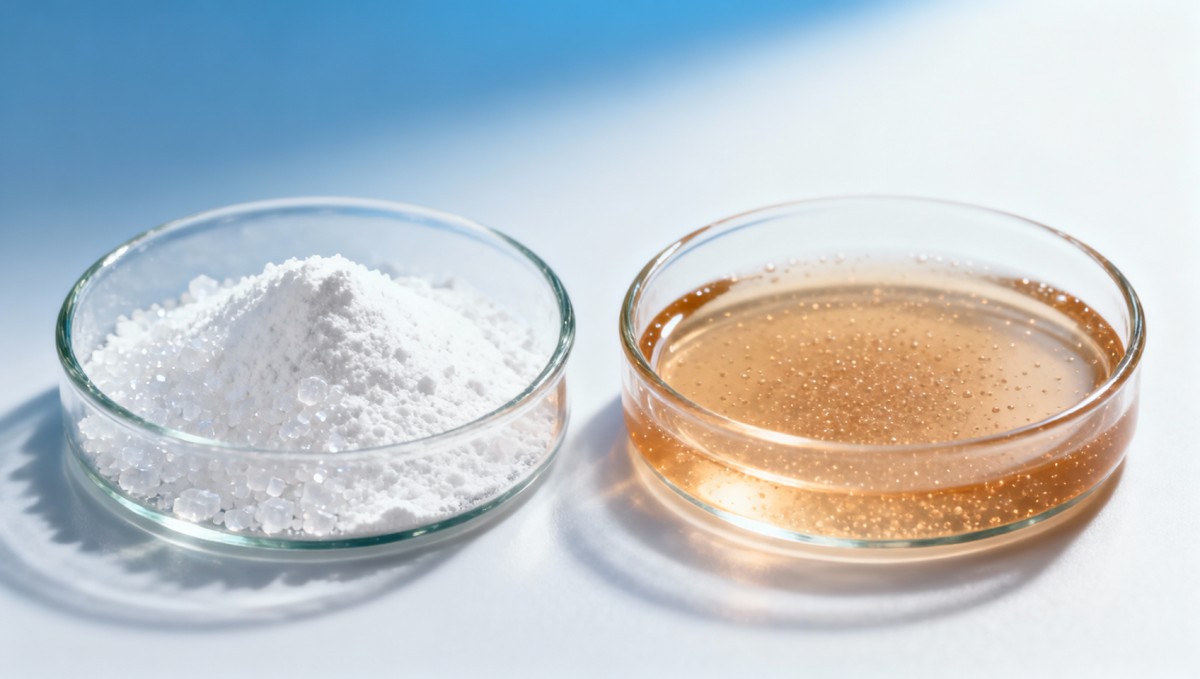
Crystalline CoQ10 is the native, oxidized quinone form isolated via solvent crystallization from microbial fermentation (typically Rhodobacter sphaeroides). Its high melting point (48–52°C), hydrophobicity (log P ≈ 14.5), and micron-scale particle aggregation (>50 µm median) severely limit dissolution in aqueous gastrointestinal environments. In contrast, solubilized CoQ10 undergoes deliberate physicochemical modification: micellar encapsulation uses non-ionic surfactants (e.g., polysorbate 80) to form sub-100 nm colloidal particles; nanoemulsions employ high-pressure homogenization to achieve droplet sizes of 80–120 nm; and cyclodextrin complexes rely on host–guest inclusion with β-cyclodextrin derivatives at molar ratios of 1:1.5–1:2.2.
These structural interventions directly alter dissolution kinetics. Crystalline CoQ10 requires ≥90 minutes to reach 50% dissolution in simulated intestinal fluid (pH 6.8), whereas solubilized forms achieve >90% dissolution within 15–25 minutes. Accelerated stability testing (ICH Q1B, 40°C/75% RH) confirms that solubilized formats retain ≥98.5% assay purity over 24 months, versus ≤92% for unprotected crystalline powder after 12 months.
The table above highlights critical differentiators affecting scalability and process integration. Crystalline CoQ10’s coarse morphology necessitates high-shear micronization pre-blending—adding 2–3 processing steps and increasing contamination risk in GMP facilities. Solubilized forms integrate directly into liquid-phase feed premixes or aqueous API suspensions, reducing handling time by 40–60% and eliminating dust-generation hazards during bulk transfer.
Procurement Decision Framework for Industrial Buyers
Selecting between crystalline and solubilized CoQ10 demands cross-functional evaluation across four pillars: technical fit, regulatory readiness, supply chain resilience, and TCO (total cost of ownership). A validated decision matrix includes:
- Dosage Form Compatibility: Solubilized CoQ10 is mandatory for liquid supplements, injectables, and pelleted aquafeeds requiring uniform dispersion; crystalline remains viable for dry tablet compression where binder systems tolerate low-solubility actives.
- GMP Documentation Burden: Solubilized grades require full excipient traceability, residual solvent testing (per ICH Q3C), and stability protocols compliant with ICH Q5C—adding ~120 hours of QA documentation effort per batch.
- Minimum Order Quantity (MOQ): Crystalline CoQ10 MOQs average 25 kg; solubilized variants start at 5 kg for pilot-scale validation, supporting agile formulation development.
- Storage Requirements: Solubilized forms require refrigerated transport (2–8°C) and nitrogen-flushed packaging; crystalline powder is stable at ambient conditions (15–25°C, <60% RH).
Aggregating weighted scores reveals crystalline CoQ10’s advantage in logistics simplicity, while solubilized CoQ10 dominates on functional performance. The optimal choice hinges on whether the application prioritizes cost-per-unit-mass (crystalline) or cost-per-bioactive-dose (solubilized)—a distinction that reshapes budget allocation across R&D, QA, and production departments.
Implementation Roadmap for Supply Chain Integration
Transitioning to solubilized CoQ10 requires three coordinated phases: analytical qualification (2–4 weeks), process validation (6–8 weeks), and commercial scale-up (10–14 weeks). Key success factors include:
- Confirming excipient compatibility with existing emulsifiers or binders—e.g., polysorbate 80 may interfere with lecithin-based aquafeed matrices unless dosed below 0.8% w/w.
- Validating thermal stability during extrusion: solubilized CoQ10 retains integrity up to 115°C for 90 seconds, but prolonged exposure (>120°C) degrades micelles by >15%.
- Securing dual-source certification: ACC recommends vetting at least two solubilized suppliers meeting USP-NF monograph requirements and holding ISO 22000 + cGMP certifications.
For pharmaceutical API users, FDA’s Chemistry, Manufacturing, and Controls (CMC) guidance mandates re-characterization of solubilized CoQ10 post-blending—requiring HPLC-UV quantification, particle size distribution (PSD) analysis, and residual surfactant testing every 6 months.
Conclusion: Aligning Material Selection with Operational Priorities
Crystalline and solubilized CoQ10 are not interchangeable commodities—they represent divergent engineering solutions optimized for distinct operational realities. When bioavailability per gram governs dosing precision, regulatory pathway efficiency, and end-product performance, solubilized CoQ10 delivers measurable ROI across pharmaceutical APIs, functional aquafeeds, and nutraceutical formulations. Its higher upfront cost is offset by reduced batch failures, accelerated stability studies, and lower per-dose inventory carrying costs.
AgriChem Chronicle’s procurement intelligence framework emphasizes evidence-based selection—not just supplier claims. We recommend initiating vendor qualification with third-party dissolution profiling and accelerated stability data before committing to volume orders. For enterprise buyers seeking validated solubilized CoQ10 suppliers aligned with FDA, EFSA, and GMP standards, our technical advisory team provides confidential sourcing assessments and comparative benchmarking reports.
Contact the AgriChem Chronicle Technical Sourcing Desk to request your customized CoQ10 procurement dossier—including certified reference standards, excipient compatibility matrices, and regulatory dossier templates.
Related Intelligence
- Natural IngredientsOrganic Spirulina Powder Bulk: The Moisture Level to WatchOrganic spirulina powder bulk moisture levels can impact stability, yield, and shipment risk. Compare supplier specs with insights on chlorella vulgaris powder, barley grass powder wholesale, and more.
- Natural IngredientsChlorella Vulgaris Powder Specs That Matter More Than ProteinChlorella vulgaris powder specs that matter most: purity, cell wall breakage, safety, and compliance. Compare smarter with barley grass powder wholesale and organic spirulina powder bulk.
- Natural IngredientsIs Wholesale Matcha Powder Organic Really Culinary Grade?Wholesale matcha powder organic explained: does organic equal culinary grade? Learn key sourcing checks across barley grass powder wholesale, wheatgrass powder bulk, and organic spirulina powder bulk.
The Morning Broadsheet
Daily chemical briefings, market shifts, and peer-reviewed summaries delivered to your terminal.
