

The Authority in Global Agricultural Chemistry & Bio-Resources
Wholesale Natural Colorants or Synthetic Dyes for Clean Labels?
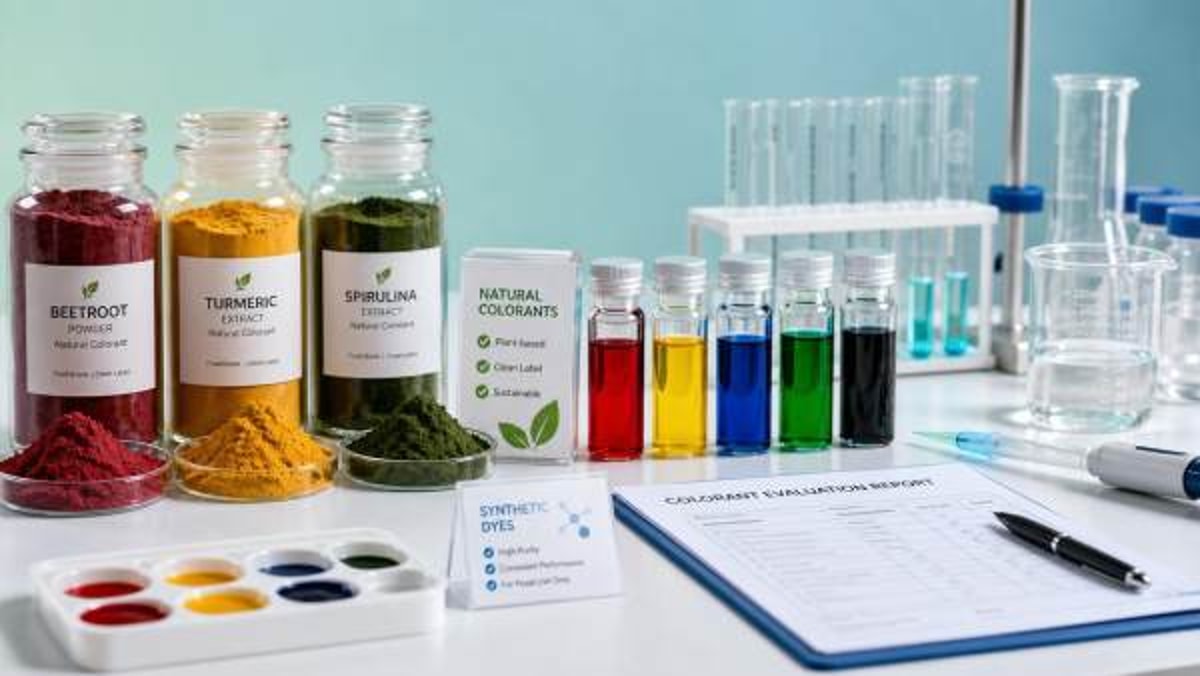
As clean-label standards reshape industrial sourcing, the debate between wholesale natural colorants and synthetic dyes has become a strategic issue for manufacturers and procurement leaders. Beyond visual appeal, the choice affects regulatory compliance, supply chain transparency, formulation stability, and brand credibility. This article examines how enterprise buyers can evaluate both options through a commercial, technical, and market-driven lens.
Why Scenario Differences Matter More Than Abstract Preference
For enterprise buyers, the question is rarely whether natural is universally better than synthetic. The real issue is where each option performs better in a specific operating environment. A beverage exporter serving retailers with aggressive ingredient screening will assess risk differently from an industrial bakery supplying private-label products at high volume. In both cases, color is functional, but the procurement logic changes according to shelf life, heat exposure, pH, target market regulation, pricing pressure, and consumer-facing claims.
That is why wholesale natural colorants should be evaluated as a business application decision rather than a branding slogan. Clean-label positioning may create commercial upside, but the value only materializes when formulation performance, documentation quality, and sourcing continuity align with the intended use case. Synthetic dyes still retain advantages in some high-stability, cost-sensitive, or technically demanding scenarios. A disciplined buyer must compare both through total commercial fit, not ideology.
For decision-makers in food ingredients, nutraceuticals, feed processing, and adjacent chemical supply chains, the shift toward natural inputs also intersects with audit readiness, traceability expectations, and institutional procurement standards. As a result, scenario-based sourcing has become essential.
Where the Debate Typically Appears in Real Buying Scenarios
The choice between wholesale natural colorants and synthetic dyes usually surfaces in five recurring business situations. First, a manufacturer may be reformulating an existing product to meet retailer clean-label requirements. Second, a new product development team may be designing a premium line where botanical origin supports pricing power. Third, a contract manufacturer may need broad color consistency across multiple production runs and geographies. Fourth, an exporter may be adjusting formulations to satisfy changing regulations in the EU, North America, or Asia-Pacific. Fifth, a procurement team may be seeking dual-source strategies to reduce exposure to agricultural seasonality or petrochemical input volatility.
Each scenario changes the weighting of key factors. In reformulation, replacement risk and label impact dominate. In premium launches, storytelling and brand trust become more important. In mass production, batch consistency and cost control may outweigh marketing narratives. In export settings, documentation and legal status become decisive. Buyers who fail to define the scenario first often overpay, underperform, or introduce avoidable compliance risk.
A Practical Scenario Comparison for Enterprise Buyers
The table below helps procurement and product teams map the most common application environments against likely sourcing priorities.
This comparison shows why procurement teams should not treat all color decisions the same. The strongest sourcing strategy begins with application conditions, not supplier claims.
Scenario 1: When Wholesale Natural Colorants Are Best for Consumer-Facing Clean Labels
Wholesale natural colorants are often the strongest fit in products where label readability directly influences purchase behavior. This is especially true in beverages, dairy alternatives, wellness snacks, nutrition powders, botanical blends, and premium packaged foods. In these categories, procurement teams are not buying color alone; they are buying a commercial signal that supports claims such as plant-based, minimally processed, naturally derived, or free from artificial additives.
In these scenarios, the benefits extend beyond marketing. Natural-source pigments can support retailer acceptance, reduce objections from ingredient-conscious consumers, and improve alignment with evolving private-label policies. For enterprise buyers working with multinational retailers or e-commerce channels, this can translate into lower listing friction and faster approval cycles.
However, success depends on matching the right natural source to the product matrix. Anthocyanins may perform differently in acidic beverages than turmeric-derived shades in baked products. Beet, paprika, spirulina, chlorophyll, caramel alternatives, and carotenoid systems each carry distinct formulation profiles. Buyers should request application-specific trial data rather than rely on generic brochures.
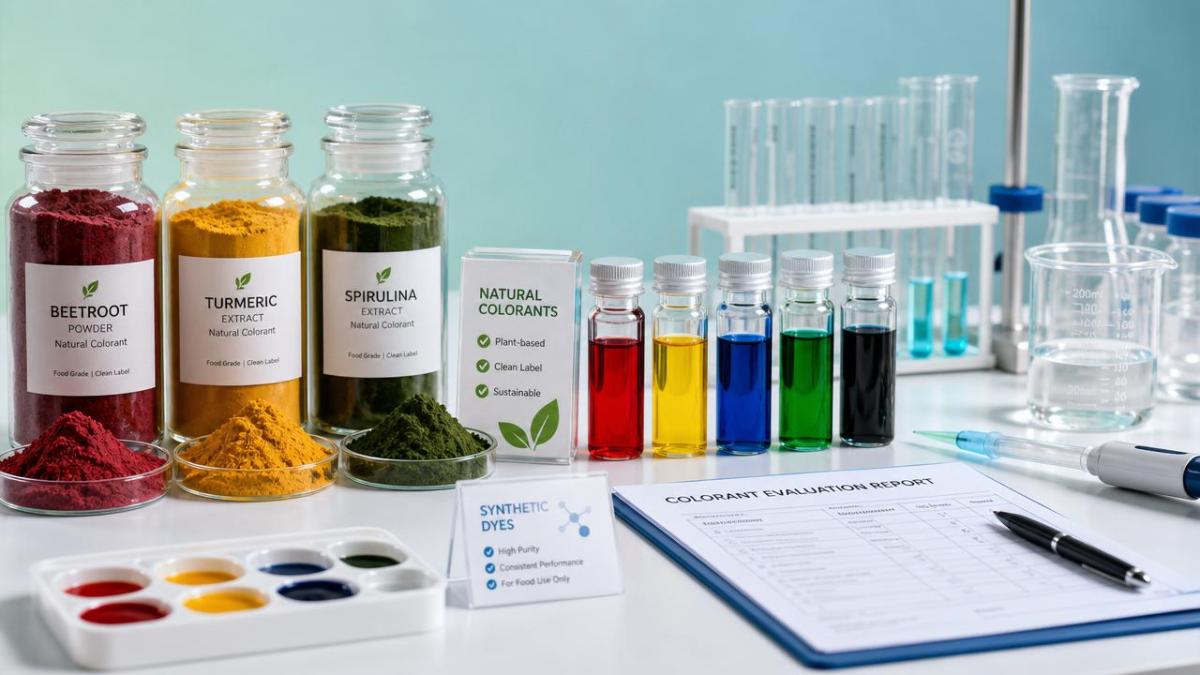
Scenario 2: When Synthetic Dyes Still Make Operational Sense
Synthetic dyes continue to make sense in applications where vivid appearance, precise shade matching, and long-term stability are critical. High-volume confectionery, decorative toppings, low-cost processed foods, and certain industrial applications may still favor synthetic systems because they deliver strong color intensity at a relatively low dosage and cost. Their performance under heat, light, and storage stress can also be more predictable.
For procurement leaders, the decision here is usually tied to cost-per-unit economics and manufacturing efficiency. If the brand is not positioned around clean-label claims, and if the target market permits the selected dye with minimal consumer backlash, synthetic options may remain commercially viable. This is especially relevant for private manufacturing environments where color consistency across long production campaigns matters more than label simplification.
That said, buyers should account for hidden strategic costs. Reformulation pressure can emerge quickly when regulators, major retailers, or large foodservice accounts revise ingredient standards. What looks efficient today may create switching costs later. Synthetic dye users should therefore maintain a reformulation roadmap, even if they keep current systems in place.
Scenario 3: Export Markets Where Regulatory and Documentation Risk Decide the Outcome
A common mistake is assuming that a color approved in one region will move smoothly across all markets. In reality, export-oriented producers must treat color selection as a compliance scenario first. The same finished product may face different acceptance thresholds depending on destination-country regulations, retailer standards, and end-user labeling expectations.
In this setting, wholesale natural colorants may offer an advantage when buyers need stronger traceability narratives and wider acceptance among premium retail channels. Yet natural origin does not remove the need for robust documentation. Procurement teams should verify specifications, extraction method disclosures, allergen status, solvent compliance, contaminant testing, country-of-origin records, and shelf-life data. If the supplier cannot support these requirements at enterprise scale, a natural solution may introduce more risk than a well-documented synthetic alternative.
For readers in regulated industries served by AgriChem Chronicle, this is particularly important. Procurement decisions increasingly demand support files that satisfy both internal technical review and cross-border trade scrutiny. Supplier sophistication matters as much as ingredient choice.
Scenario 4: Large-Scale Manufacturing Where Supply Continuity Is Non-Negotiable
Enterprise-scale operations often face a more practical question: can the supplier deliver the same performance profile, at the required volume, over multiple quarters without disruption? This is where wholesale natural colorants require deeper due diligence. Agricultural inputs can be affected by weather, harvest quality, geopolitical factors, extraction yield shifts, and freight instability. For some organizations, these variables are manageable. For others, they are unacceptable without dual sourcing and technical redundancy.
Buyers should assess whether the supplier offers standardized concentrates, backup raw material sources, lot-to-lot color management, and documented correction protocols. In some cases, natural color systems are entirely suitable for large-scale operations when the supplier has mature process controls. In other cases, synthetic dyes remain easier to scale with lower variability.
The key lesson is that procurement should evaluate wholesale natural colorants as a supply program, not just a sample approval. Commercial suitability depends on what happens after launch.
How Different Business Types Should Judge Fit
Not all organizations should apply the same decision criteria. Brand owners usually prioritize consumer perception, claim credibility, and retailer acceptance. Contract manufacturers prioritize process repeatability, throughput, and multi-client flexibility. Ingredient distributors focus on portfolio breadth, technical support, and downstream market compatibility. Industrial food processors typically emphasize cost stability, supply assurance, and quality control at scale.
For brand owners, wholesale natural colorants can create strategic differentiation when integrated with a broader ingredient transparency plan. For contract manufacturers, natural systems are more attractive when clients explicitly request clean-label capability and are willing to accept different stability parameters. For distributors, a mixed portfolio of natural and synthetic solutions may be the most resilient model. For processors selling into commodity channels, synthetic systems may remain appropriate until customer requirements shift.
Common Misjudgments Buyers Make in Color Sourcing
Several recurring mistakes weaken sourcing decisions. One is assuming natural automatically means better. In reality, if the product undergoes severe heat treatment or requires highly saturated shades, the chosen natural system may fail unless supported by precise formulation work. Another is focusing only on ingredient price rather than total delivered value. A cheaper color may increase wastage, rework, quality complaints, or approval delays.
A third mistake is neglecting supply chain transparency. Buyers may approve wholesale natural colorants for label reasons but fail to confirm crop source diversity, extraction consistency, or audit readiness. Finally, some teams overestimate future flexibility with synthetic dyes, assuming they can switch later without disruption. In many product categories, late reformulation is expensive and can alter sensory profiles, packaging claims, and customer commitments.
A Practical Evaluation Checklist Before You Commit
Before selecting wholesale natural colorants or synthetic dyes, enterprise buyers should confirm a short list of operational conditions:
- What processing stresses will the color face, including heat, pH, oxygen, and light?
- Is the business case driven by branding, compliance, export access, cost control, or all four?
- Can the supplier provide consistent enterprise-scale documentation and traceability?
- What is the realistic cost of reformulation if regulations or customer standards change?
- Does the target market reward clean-label positioning enough to justify a natural premium?
- Is there a dual-source or contingency strategy for supply disruption?
When these questions are answered early, sourcing becomes more predictable and commercially rational.
FAQ for Decision-Makers Evaluating Wholesale Natural Colorants
Are wholesale natural colorants always more expensive?
Usually on a direct ingredient-cost basis, yes, but not always on a total-value basis. If they improve retailer acceptance, reduce reformulation risk, or support premium positioning, the commercial return can offset the higher input cost.
Which industries benefit most from natural color adoption?
Consumer-facing packaged foods, beverages, nutraceuticals, wellness products, and premium ingredient brands tend to benefit most. Cost-driven industrial applications may adopt more slowly unless customer requirements shift.
Can synthetic dyes still be a strategic choice?
Yes. In scenarios requiring bright shades, extreme stability, and strict unit economics, synthetic dyes may remain the better fit, provided regulatory and market acceptance remain stable.
Final Sourcing Direction: Match the Ingredient to the Business Scenario
The most effective sourcing decision is not natural versus synthetic in the abstract, but wholesale natural colorants versus synthetic dyes in the exact context of your product, market, customer, and operational risk profile. Clean-label demand has made natural options more commercially relevant than ever, yet technical fit and supply discipline still determine whether they succeed at scale.
For enterprise buyers, the next step is clear: define the application scenario, rank the decision drivers, request evidence-based supplier documentation, and validate performance under real processing conditions. Organizations that approach color sourcing with this level of precision will be better positioned to protect compliance, sustain product quality, and strengthen brand trust in increasingly demanding markets.
Related Intelligence
- Natural IngredientsBulk Antioxidants: Why Oxidation Control Fails in StorageBulk antioxidants can still fail in storage due to moisture, heat, oxygen exposure, and poor handling. Learn the hidden risks and practical controls to protect stability.
- Natural IngredientsWholesale Essential Oils: Why GCMS Reports Don't Tell the Whole StoryWholesale essential oils buyers: learn why GCMS reports alone are not enough. Discover how to assess authenticity, consistency, traceability, and compliance before choosing a supplier.
- Natural IngredientsChlorella Powder Wholesale: How to Screen for Purity RisksChlorella powder wholesale: learn how to screen purity risks, verify COAs, spot heavy metal and microbial issues, and choose safer suppliers with confidence.
The Morning Broadsheet
Daily chemical briefings, market shifts, and peer-reviewed summaries delivered to your terminal.
