

The Authority in Global Agricultural Chemistry & Bio-Resources
Organic Hemp Seed Oil Bulk: What Shortens Shelf Life Fast?
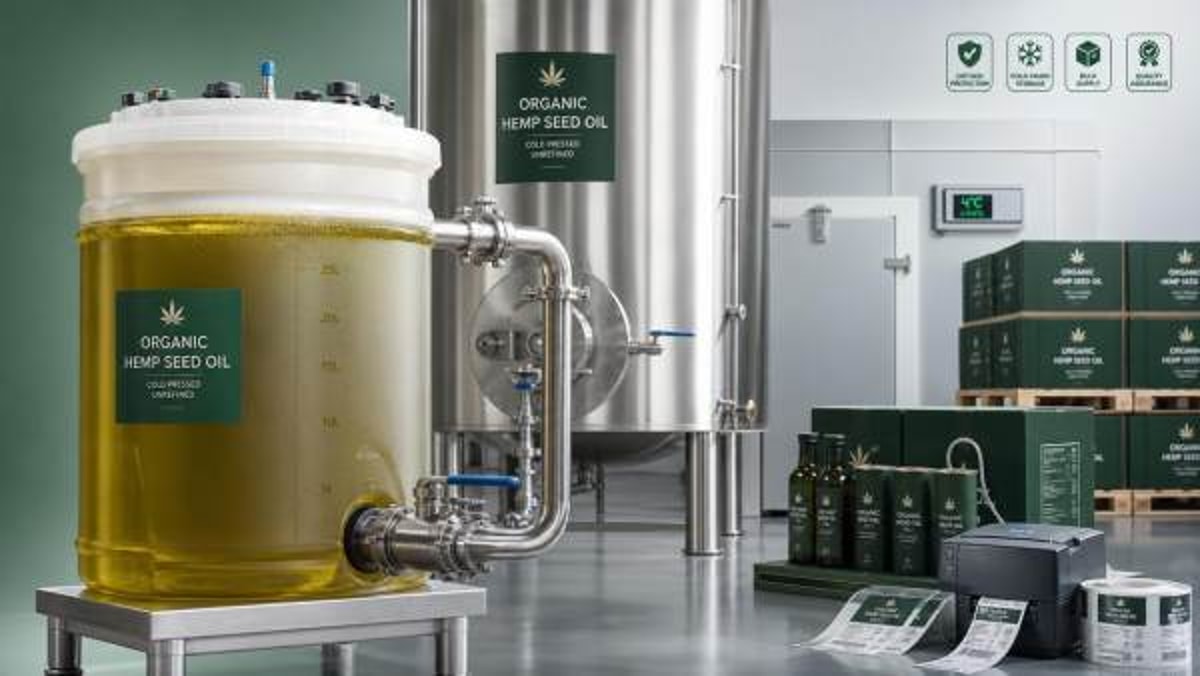
When sourcing organic hemp seed oil bulk, shelf life can decline far faster than many after-sales teams expect. Heat exposure, oxygen contact, light, packaging faults, and poor handling across storage and transport all accelerate oxidation and quality loss. For maintenance personnel responsible for preserving product integrity, understanding these failure points is essential to reducing complaints, protecting inventory value, and supporting compliant downstream use.
In industrial supply chains, organic hemp seed oil bulk is not simply a commodity drum or tote that sits in storage until dispatch. It is a sensitive bio-extract whose fatty acid profile, odor, color, and compliance status can shift within weeks if storage discipline breaks down. For after-sales maintenance teams working with distributors, processors, ingredient handlers, and private-label manufacturers, shelf life management is a practical service issue tied directly to claims, returns, and downstream process stability.
This matters even more in B2B environments where lot sizes may range from 20 liters to 1,000 liters or more, and where every handling step adds exposure risk. A small packaging fault, 6 hours of elevated dock temperature, or repeated headspace opening can shorten usable life well before the nominal date on a certificate. The result is often avoidable: rancid notes, higher peroxide values, customer dissatisfaction, and unnecessary stock write-offs.
Why Organic Hemp Seed Oil Bulk Degrades Faster Than Teams Assume
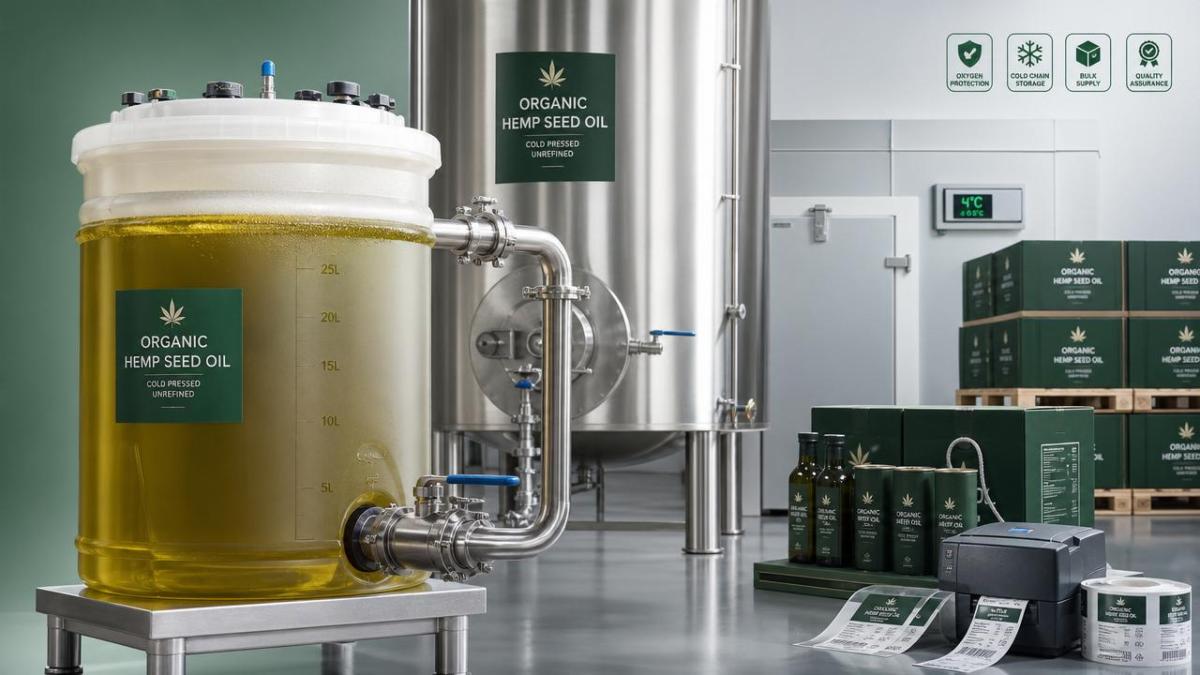
Organic hemp seed oil bulk is naturally rich in polyunsaturated fatty acids, which makes it commercially valuable but chemically less forgiving than more stable industrial oils. In practical terms, the same composition that supports nutritional and formulation value also increases oxidation sensitivity. Once oxygen, heat, and light combine, degradation can begin long before visible spoilage appears.
For maintenance personnel, the key point is that shelf life loss is usually cumulative rather than caused by a single dramatic event. A shipment stored at 28°C for 3 days, then transferred into a partially filled tank with repeated lid opening, may lose quality faster than a sealed lot held consistently at 12°C to 18°C. The problem is rarely only the supplier or only the warehouse; it is often the interaction of 4 to 6 control failures across the chain.
The main degradation drivers
The fastest shelf life reduction in organic hemp seed oil bulk typically comes from five linked triggers: temperature abuse, oxygen exposure, light exposure, trace contamination, and packaging mismatch. Even if the oil begins with acceptable sensory and analytical values, these factors can accelerate peroxide formation and off-odor development within a relatively short storage window.
- Heat spikes above 25°C during storage or transport
- Repeated opening that increases oxygen in the headspace
- Transparent or light-permeable packaging under warehouse lighting
- Contact with poorly cleaned transfer lines, seals, or valves
- Extended dwell time in partially filled containers
Why after-sales teams see the issue late
In many cases, complaints arrive after the oil has already moved through 2 or 3 internal nodes such as inbound storage, repacking, and line-side staging. By then, the original cause is difficult to isolate. Sensory change may be noticed only when customers detect bitterness, paint-like notes, or darkening. That lag makes preventive maintenance more valuable than reactive troubleshooting.
The table below outlines the most common shelf life accelerators for organic hemp seed oil bulk and the typical operational signs maintenance teams should monitor.
The operational takeaway is clear: most failures are preventable if maintenance teams track conditions at each transfer point instead of relying only on the supplier’s original shelf life statement. For organic hemp seed oil bulk, storage discipline often determines whether a lot remains saleable for months or deteriorates prematurely after a few mishandling events.
Critical Storage and Packaging Controls for After-Sales Maintenance
Once organic hemp seed oil bulk arrives on site, after-sales and maintenance teams become the frontline defense. Their role is not limited to fixing equipment; it includes preserving packaging integrity, verifying storage environment, and supporting clean transfer operations. In many facilities, these controls can extend practical usability by several weeks compared with unmanaged storage conditions.
Recommended storage parameters
A common target range for bulk botanical oils is cool, stable storage at roughly 10°C to 18°C, away from direct light and away from thermal cycling. Short excursions may be manageable, but repeated fluctuation between 12°C and 28°C can be more damaging than a single brief deviation. Facilities handling organic hemp seed oil bulk should also maintain dry surroundings and avoid proximity to odor-active chemicals.
Headspace control matters almost as much as temperature. Every time a container is opened and reclosed, oxygen enters. If a drum is only 30% full and remains in service for 2 to 4 weeks, oxidation may accelerate substantially. Where operationally feasible, smaller secondary containers, inert gas blanketing, or faster lot turnover can reduce this exposure.
Packaging formats and maintenance implications
Different packaging formats create different service risks. Stainless tanks offer strong barrier performance but require strict cleaning validation. HDPE drums are widely used and practical, but sealing quality and repeated opening patterns matter. Intermediate bulk containers can improve handling efficiency, yet outlet valves and fittings become critical contamination points if inspection frequency is too low.
- Inspect seals, caps, and valve seats on every inbound lot.
- Record storage temperature at least once per shift in high-turn facilities.
- Limit partial-container dwell time where possible to under 14 days.
- Use dedicated or validated-clean transfer lines for botanical oils.
- Shield containers from direct light during receiving, staging, and picking.
The following table compares common packaging choices for organic hemp seed oil bulk from a maintenance and shelf life perspective.
For many operations, the best option depends less on purchase price and more on turnover speed, cleaning capability, and exposure time after opening. Maintenance teams should recommend formats that match actual consumption cycles rather than theoretical storage capacity.
Handling Mistakes During Transport, Transfer, and Service Operations
Even when the original supplier packs organic hemp seed oil bulk correctly, quality can still be compromised during transport and internal movement. The highest-risk intervals are often the least documented: loading docks, repacking stations, temporary staging, and manual hose transfer. These areas create brief but repeated exposure events that erode stability lot by lot.
Transport-related stress points
During domestic or international shipment, cargo may face 8 to 48 hours of elevated temperature if trailers, containers, or port yards are not controlled. A sealed drum sitting in direct summer heat can experience significantly higher internal temperatures than ambient air. After-sales teams reviewing complaint cases should always check transit duration, unloading delays, and whether the load was exposed to sunlight before warehouse entry.
Transfer system vulnerabilities
Pumps, hoses, gaskets, and couplings can shorten shelf life if they introduce air, residues, or incompatible materials. For example, a transfer line with trapped cleaning moisture or leftover oil from another product can trigger odor variation or instability. Preventive service intervals should cover not only mechanical wear but also sanitation effectiveness and seal condition every 30 to 90 days, depending on throughput.
A practical 5-step maintenance check
- Verify actual storage temperature logs against target range before release.
- Inspect container closure, valve tightness, and tamper condition.
- Confirm transfer equipment cleaning status and dry-contact readiness.
- Minimize open-container dwell time during decanting or sampling.
- Document sensory changes, lot age, and partial-use history before shipment.
These steps require discipline rather than major capital expenditure. In many facilities, better records and tighter handoff control reduce complaint frequency more effectively than replacing packaging alone. For organic hemp seed oil bulk, traceability across each touchpoint is often the fastest way to identify the true source of accelerated shelf life loss.
How to Evaluate Shelf Life Risk Before Complaints Escalate
After-sales teams are often asked to respond once quality claims have already reached procurement, QA, or end users. A better model is early risk screening. By applying a simple condition-based review to every lot of organic hemp seed oil bulk, teams can flag vulnerable inventory before it moves deeper into production or resale channels.
Four indicators worth tracking
The most useful field indicators are lot age, cumulative temperature exposure, number of opening events, and container fill status. These are operationally available even when advanced laboratory testing is not immediate. If a lot is older than 6 months, has seen multiple warm handling events, and remains in a half-empty drum, it should be reviewed more carefully before dispatch.
- Lot age relative to supplier shelf life guidance
- Documented exposure above target storage temperature
- Count of opening, sampling, or transfer events
- Packaging condition and remaining fill ratio
When escalation is justified
Escalation is warranted when sensory drift appears, when seals are compromised, or when storage records show repeated deviation over several days. In regulated or specification-sensitive downstream uses, even a borderline lot may require QA review before release. The cost of one delayed shipment is often lower than the cost of a complaint affecting multiple finished batches.
Where available, analytical follow-up such as peroxide value, acid value, or sensory confirmation can help support decisions, but maintenance teams should not wait for lab results to correct obvious handling faults. Immediate actions such as isolating exposed stock, reducing light exposure, or speeding controlled turnover can preserve remaining value.
Common misconceptions in bulk oil after-sales support
One common mistake is assuming that an unopened container is automatically safe regardless of where it has been stored. Another is focusing only on manufacturing date while ignoring actual environmental history. A third is treating all edible or botanical oils the same. Organic hemp seed oil bulk generally demands tighter control than more oxidation-resistant oils because of its composition and sensitivity.
Procurement, Service, and Documentation Practices That Protect Inventory Value
Shelf life performance does not start in the warehouse alone. It begins with procurement specifications, packaging agreements, and service documentation. Buyers and after-sales teams should align on practical requirements for organic hemp seed oil bulk before the first shipment arrives, especially when the oil is intended for food, cosmetic, nutraceutical, or ingredient processing environments.
What should be included in supply and service agreements
At a minimum, agreements should define storage recommendations, packaging type, lot identification, handling instructions after opening, and complaint investigation responsibilities. If downstream users require specific documentation for organic handling or traceability, those expectations should be verified at onboarding rather than after a quality issue emerges.
- Specify preferred temperature range during storage and transit.
- Define acceptable packaging materials and closure standards.
- Require lot traceability through receiving, transfer, and dispatch.
- Clarify sampling, partial-use, and resealing procedures.
- Set response timelines for condition-related complaints, such as 24 to 72 hours.
Why documentation improves maintenance outcomes
Good records reduce ambiguity. If a complaint arises, documented temperature logs, opening history, and equipment sanitation checks allow teams to isolate whether the likely issue came from transport, on-site handling, or downstream misuse. That protects both supplier relationships and internal accountability while speeding corrective action.
For organizations managing organic hemp seed oil bulk across multiple sites, a standardized service checklist can also improve consistency. A 1-page inspection form used at receiving, storage, and pre-dispatch stages often provides more value than scattered informal notes that cannot support root-cause review.
For after-sales maintenance personnel, preserving organic hemp seed oil bulk is a cross-functional responsibility that combines packaging integrity, controlled storage, disciplined transfer practices, and traceable documentation. Shelf life usually shortens fastest when 3 or more small failures occur together: warm storage, oxygen exposure, and poor resealing are among the most common combinations.
Facilities that treat this oil as a sensitive bio-extract rather than a generic bulk liquid are better positioned to reduce claims, protect working inventory, and support compliant downstream use. If your operation is reviewing packaging options, storage procedures, or service protocols for organic hemp seed oil bulk, contact us to discuss your handling scenario, request a tailored process checklist, or learn more solutions for stable bulk oil management.
Related Intelligence
- Natural IngredientsBulk Antioxidants: Why Oxidation Control Fails in StorageBulk antioxidants can still fail in storage due to moisture, heat, oxygen exposure, and poor handling. Learn the hidden risks and practical controls to protect stability.
- Natural IngredientsWholesale Essential Oils: Why GCMS Reports Don't Tell the Whole StoryWholesale essential oils buyers: learn why GCMS reports alone are not enough. Discover how to assess authenticity, consistency, traceability, and compliance before choosing a supplier.
- Natural IngredientsChlorella Powder Wholesale: How to Screen for Purity RisksChlorella powder wholesale: learn how to screen purity risks, verify COAs, spot heavy metal and microbial issues, and choose safer suppliers with confidence.
The Morning Broadsheet
Daily chemical briefings, market shifts, and peer-reviewed summaries delivered to your terminal.
