
How to verify aloe vera powder 200x quality
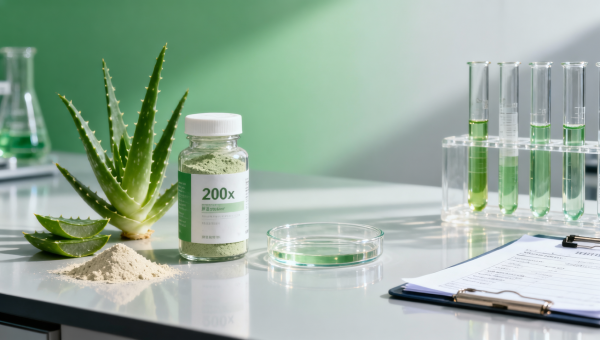
For buyers, QA teams, and project leads, knowing how to verify aloe vera powder 200x quality is essential for safe sourcing and consistent performance. From aloe vera inner leaf juice benchmarks to checks also applied across milk thistle extract silymarin, grape seed extract opc, green tea extract egcg, and pine bark extract bulk, this guide outlines practical indicators for identity, purity, compliance, and supplier reliability.
Why aloe vera powder 200x verification matters before purchasing
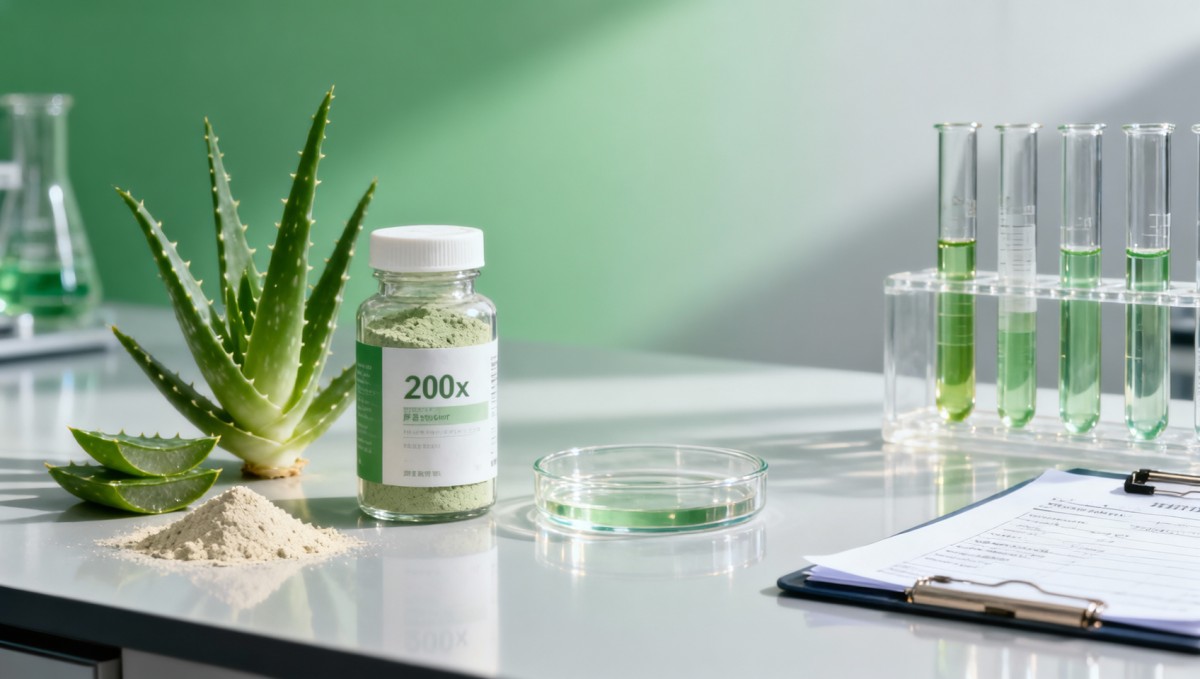
In industrial procurement, aloe vera powder 200x is not judged by label concentration alone. Buyers need to confirm what the “200x” claim actually represents, whether the powder comes from inner leaf juice or whole leaf input, and whether the concentration process preserved the expected composition. A low-price lot may appear similar on paper, yet differ in ash content, carrier load, color stability, and microbiological profile within 2–4 weeks of storage after receipt.
This matters across several decision roles. Information researchers need comparable supplier data. Operators need predictable dissolution and batching behavior. Financial approvers want to avoid rejected lots, rework, and hidden testing costs. QA and safety managers must control contamination, adulteration, and documentation gaps. Project leaders need confidence that a material approved today will still support the same formulation or production schedule over the next 30–90 days.
In the broader bio-extracts and fine chemicals trade, verification methods used for aloe vera powder 200x quality often mirror the logic used for milk thistle extract silymarin or grape seed extract opc: confirm identity, quantify marker relevance, screen purity, review process controls, and validate chain-of-custody documents. The exact tests differ, but the procurement discipline is comparable.
AgriChem Chronicle focuses on these cross-sector verification patterns because regulated supply chains rarely fail at one dramatic point. They fail through 3 familiar gaps: vague specifications, incomplete compliance records, and weak incoming inspection. For institutional buyers and industrial users, a structured review is faster and less costly than a corrective action after customs delay, internal nonconformance, or customer complaint.
What “200x” should trigger in a technical review
The first question is not whether the product is concentrated, but how the concentration claim is defined by the supplier. In practice, extraction ratio statements can be misunderstood if the raw material basis, moisture basis, and excipient basis are not stated. A procurement team should request clarification in writing before comparing price per kilogram or price per active equivalent.
- Ask whether the ratio is calculated from fresh aloe input, decolorized juice solids, or dried intermediate.
- Confirm whether maltodextrin or another carrier is added, and at what typical range such as 5%–30%.
- Check if the material is inner leaf, whole leaf, filtered, decolorized, or spray-dried from a clarified liquid stream.
- Verify whether the specification links the concentration claim to a measurable marker or only to a process statement.
How to verify aloe vera powder 200x quality with practical lab and document checks
A useful verification workflow combines documents, sensory review, analytical testing, and supplier audit questions. For most B2B buyers, 4 layers are enough for routine qualification: specification review, certificate review, incoming inspection, and periodic third-party verification. If a lot is intended for stricter nutraceutical, cosmetic, or pharmaceutical-adjacent use, an additional audit or method alignment step is often justified.
Start with the specification sheet. It should clearly state appearance, solubility behavior, loss on drying, ash, microbiological limits, and storage conditions. It should also identify botanical source and plant part. A vague sheet that only says “natural plant extract” or “200x concentrated powder” is not enough for procurement approval, especially when multiple suppliers are being benchmarked over a 7–15 day quotation cycle.
Next, compare the COA against the specification. The lot number, manufacturing date, retest or expiration date, and test methods should line up. If microbial limits are reported, the format should distinguish total plate count, yeast and mold, and key pathogens where relevant. If solvent residues or heavy metals are material to the application, the COA should not leave them unaddressed when the buyer has already listed them in the purchase specification.
Then move to receipt-stage checks. Even simple observations can catch risk early: unusual color drift, poor flowability, caking, insoluble sediment, sharp off-odor, or inconsistent bulk density between drums. These are not final proof of failure, but they are valid triggers for hold-and-test status before the material reaches production or customer dispatch.
Five key checks procurement and QA should not skip
The table below summarizes a practical screening framework for aloe vera powder 200x quality. It is designed for buyers who need a fast but defensible first-pass review before deeper qualification work.
A buyer does not need to run every advanced method on every lot, but these 5 checks should be visible in the supplier file. If one or more items remain unclear after the first document exchange, that is often a stronger risk signal than a minor numerical deviation that can be investigated with a retest.
Incoming inspection checklist for operations teams
- Confirm packaging integrity, seal condition, and label consistency across all containers in the shipment.
- Check lot number, manufacture date, and shelf-life declaration against purchase order and COA.
- Review powder color, odor, and caking level within the first 24 hours after unloading.
- Perform a simple dissolution observation under standard plant conditions before full release.
- Place the lot on hold if there is mismatch in documents, damaged packaging, or unexpected insoluble residue.
Which specification points help compare suppliers fairly
Many sourcing errors happen because teams compare quotations that are not technically equivalent. One supplier may offer aloe vera powder 200x made from inner leaf juice with limited carrier, while another may quote a lower price for a powder with a higher excipient load or a less specific process description. If price review happens before technical normalization, finance sees savings that quality and production later have to absorb.
A fair comparison uses a common evaluation matrix. At minimum, compare plant part, ratio definition, carrier content, moisture range, ash range, microbiological limits, packaging format, and document package. This creates a 6–8 point purchasing baseline and avoids the common mistake of treating all concentrated botanical powders as interchangeable commodities.
This is particularly relevant when a buyer also sources other standardized extracts such as green tea extract egcg, milk thistle extract silymarin, or pine bark extract bulk. Across these categories, apparent concentration can conceal differences in active relevance, process cleanliness, and lot consistency. The same commercial discipline should be applied even when the end use is not pharmaceutical.
AgriChem Chronicle regularly highlights this issue because global raw material supply chains now involve more intermediaries, more private-label handling, and more documentation transfer points than they did a decade ago. In such conditions, the best procurement practice is not blind trust; it is a repeatable comparison method that non-laboratory stakeholders can also understand.
Example supplier comparison matrix
Use a side-by-side matrix before requesting final approval. It helps purchasing, QA, and finance agree on what “better value” actually means in a tender or annual sourcing round.
A matrix like this turns subjective debate into documented review. It also helps financial approvers understand why a 3%–8% higher unit price may still reduce total cost if it lowers testing burden, avoids line stoppage, or shortens the release cycle by several days.
Cost is not only purchase price
When aloe vera powder 200x quality is uncertain, total landed cost can rise quickly. Extra confirmatory testing, delayed release, rejected packaging, customer complaint handling, and reformulation work all add cost outside the quoted kilogram rate. For project managers and plant leads, this is why qualification should be integrated into commercial review rather than treated as a separate technical formality.
What standards, compliance records, and traceability should buyers request
The required compliance file depends on end use and destination market, but certain records are widely expected in professional trade. At a minimum, buyers should request a current specification, lot-specific COA, manufacturing or packing identification, storage recommendation, and shelf-life or retest period. If the product enters regulated or semi-regulated channels, additional declarations may be needed before import or customer acceptance.
For quality and safety managers, traceability means more than having documents in a folder. Records should connect the lot sold to the lot tested, the lot packed, and the lot shipped. If a supplier cannot explain this chain within one or two exchanges, the practical audit risk increases. In global raw materials trade, weak traceability is often discovered only when an urgent deviation investigation begins.
Common standards language may include GMP-oriented manufacturing controls for relevant facilities, food safety or hygiene controls for applicable uses, and general compliance references tied to FDA, EPA, or importing-country requirements where relevant. Buyers should stay precise here. A supplier saying “compliant” is not enough unless the statement is linked to a specific scope, product category, or document type.
ACC’s value in this environment is not to replace the buyer’s own validation work, but to help procurement teams ask better questions sooner. In sectors where agricultural extracts, fine chemicals, and industrial ingredients overlap, stronger pre-qualification saves time for everyone involved, from sourcing analysts to compliance officers and plant supervisors.
Core compliance documents to request
- Product specification with test items, ranges, and methods.
- Lot-specific COA matching the shipped batch code.
- Statement of botanical source and plant part.
- Packaging and storage recommendation, such as cool and dry conditions with sealed containers.
- Origin, allergen, and additional declarations required by the importing market or customer specification.
- If relevant, process or facility statements that support the buyer’s GMP, hygiene, or environmental review.
Common timing expectations in qualification
A routine supplier pre-screen can often be completed in 3–5 working days if documents are complete. Sample review and internal laboratory checks may take another 7–10 days. If a third-party test, import-specific declaration, or corrective document cycle is needed, the process can extend to 2–4 weeks. These ranges are common planning assumptions and should be built into launch or replenishment schedules.
Common mistakes, FAQs, and a smarter sourcing path
The most common mistake in aloe vera powder 200x sourcing is assuming that concentration ratio alone proves quality. It does not. Another frequent error is approving a supplier based only on a sample that performed well once, without confirming lot-to-lot consistency, document readiness, and logistics reliability. A third mistake is letting teams work in sequence rather than in parallel, so technical concerns surface only after commercial commitment.
Better sourcing uses a staged process. First, define the application and critical specification points. Second, normalize supplier quotations. Third, test representative samples under real operating conditions. Fourth, approve release criteria for incoming lots. For most organizations, this 4-step structure reduces ambiguity and creates a clearer audit trail than informal email-based decisions.
This approach also scales well across related botanicals. Teams already evaluating grape seed extract opc, green tea extract egcg, or milk thistle extract silymarin can use the same procurement discipline while adjusting the analytical details for each ingredient. Consistent review methods make it easier to train staff, compare vendors, and defend purchasing decisions internally.
For readers navigating multi-country sourcing, strict customer specifications, or technical uncertainty around botanical extracts, clear intelligence matters as much as product availability. That is exactly where sector-focused editorial support and supplier-facing technical content can shorten the path from inquiry to qualified purchase.
FAQ: how to verify aloe vera powder 200x quality in real buying situations
How do I know whether aloe vera powder 200x is really suitable for my application?
Match the material to the intended use first. Ask whether your process needs quick dissolution, low sediment, low carrier content, or specific documentation. Then verify the powder through a small plant trial or lab simulation. Even a 1–2 kilogram evaluation under actual mixing conditions can reveal whether the material behaves as expected before you commit to a larger order.
What are the minimum checks if I have limited testing budget?
If budget is tight, focus on 3 essentials: identity documentation, lot-specific COA, and a practical incoming inspection with a simple dissolution review. Then prioritize third-party testing for the highest-risk points such as microbiology, heavy metals, or composition ambiguity. This is not a substitute for full qualification, but it is better than relying only on a quotation sheet.
Why do two suppliers offering “200x” show different prices?
Price differences often come from different ratio definitions, carrier levels, processing methods, documentation standards, and packaging formats. One supplier may also include more complete batch testing or faster document support. That is why technical equivalence should be confirmed before cost comparison. Without normalization, a cheaper offer can become the more expensive choice after testing and operational adjustments.
How often should approved suppliers be reviewed again?
A practical range is annual review for stable low-risk supply and more frequent review when the material is critical, complaint-prone, or sourced through changing intermediaries. Some companies also trigger requalification after specification change, manufacturing site change, repeated document delays, or 2 consecutive lot deviations. The exact cycle should reflect application risk and customer obligations.
Why work with AgriChem Chronicle
AgriChem Chronicle supports buyers, manufacturers, and technical decision-makers operating across bio-extracts, fine chemicals, and primary industries where verification is rarely simple. Our editorial framework is built for institutional procurement questions: how to compare claims, which compliance points to verify, how to interpret supplier documents, and where commercial risk hides behind technical language.
If you need support around aloe vera powder 200x quality, we can help you structure supplier comparison criteria, refine your qualification checklist, clarify document expectations, and map the right questions for samples, lead times, and release testing. We also support broader content and authority-building needs for manufacturers that want to present validated capabilities to global industrial buyers.
Contact us to discuss parameter confirmation, supplier positioning, specification alignment, sample support expectations, certification-related questions, delivery timing assumptions, or quote-stage decision content. For teams facing cross-functional approval pressure, a sharper technical-commercial framework can save weeks of internal back-and-forth and reduce sourcing risk before the purchase order is issued.
Related Intelligence
- Natural IngredientsIndonesia BPOM Updates Label Rules for Natural Ingredients ImportsIndonesia BPOM updates label rules for natural ingredients imports: New pH ≤4.6 & 60°C/30min tolerance statement required by Aug 1, 2026 — act now to avoid customs rejection.
- Natural IngredientsIndonesia BPOM Updates Natural Ingredients Import LabelingIndonesia BPOM Updates Natural Ingredients Import Labeling: New 'Microbial Resistance Profile' required for cosmetics, supplements & personal care imports—act now to avoid customs delays.
- Natural IngredientsWholesale inulin powder: common sourcing pitfallsWholesale inulin powder sourcing guide: avoid costly pitfalls in chicory root fiber bulk, fructooligosaccharides FOS wholesale, and adjacent ingredients. Learn smarter supplier checks.
The Morning Broadsheet
Daily chemical briefings, market shifts, and peer-reviewed summaries delivered to your terminal.
