
Aloe vera inner leaf juice: what makes it better?
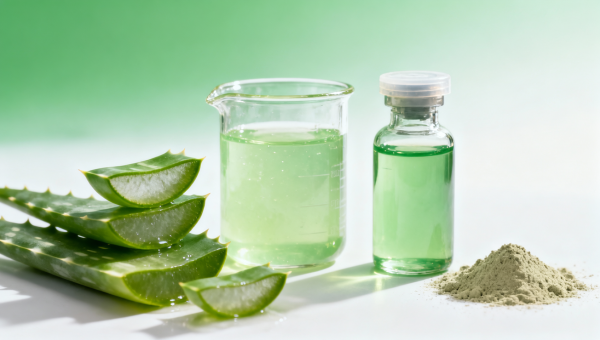
Why is aloe vera inner leaf juice often preferred over concentrates and powders in regulated ingredient markets? For buyers comparing aloe vera powder 200x, milk thistle extract silymarin, grape seed extract opc, green tea extract egcg, and wholesale witch hazel extract, the answer lies in purity, processing integrity, and application fit. This article examines what makes inner leaf juice stand out for procurement, quality assurance, and industrial formulation decisions.
Why do regulated buyers often favor aloe vera inner leaf juice?
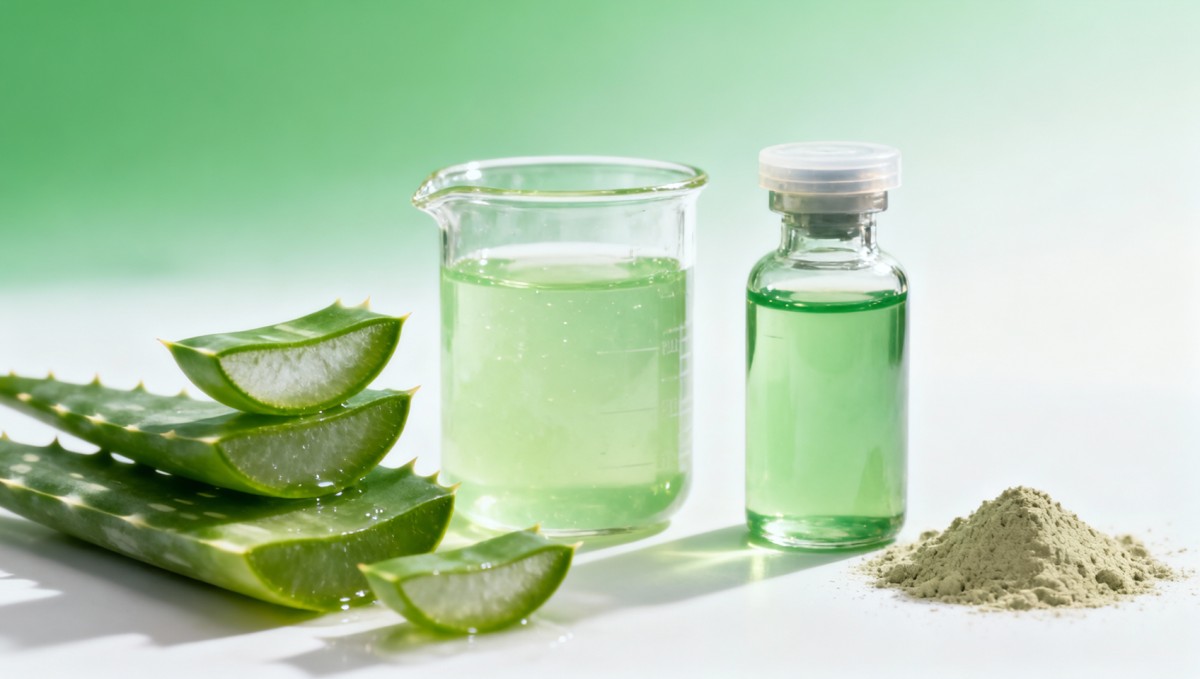
In industrial ingredient sourcing, aloe vera inner leaf juice is usually evaluated as a minimally transformed botanical input rather than simply another aloe format. That distinction matters for information researchers, operators, QA teams, and project managers who must verify not only label claims but also how the ingredient behaves across processing, storage, and downstream formulation. In many regulated use cases, fewer aggressive concentration steps can mean a more transparent raw material story.
Inner leaf juice is derived from the filleted internal gel portion of the aloe leaf, with the rind and latex-bearing outer layers removed as early as possible. This processing decision is central. It helps reduce unwanted fractions linked with harsher sensory impact, impurity concerns, or compositional inconsistency. For procurement teams reviewing 3 core options—single-strength juice, concentrates, and powders—the inner leaf format is often easier to map against source traceability and batch records.
The preference is not universal. Powders and concentrates still have valid roles in freight efficiency, long-distance storage, and high-solids applications. However, when the buying decision is driven by purity positioning, lower processing complexity, and smoother integration into liquid systems, aloe vera inner leaf juice frequently becomes the more defensible choice. This is especially true in review cycles lasting 2–6 weeks, where documentation quality can influence approval as much as price.
For financial approvers, the question is rarely “Which format is cheapest per kilogram?” It is more often “Which format lowers total commercial risk across qualification, QC release, rework, and claims review?” That broader cost lens explains why institutional buyers in bio-extracts and ingredients often compare processing integrity before they compare unit price alone.
What buyers usually mean by “better” in B2B ingredient selection
In the context of aloe vera inner leaf juice, “better” usually refers to 5 procurement dimensions rather than one marketing statement. Teams across formulation, compliance, and supply planning tend to assess whether the material is cleaner in composition, easier to document, more suitable for the intended process, stable enough for expected inventory turns, and commercially justified against alternatives.
- Purity pathway: whether inner filleting and controlled processing reduce exposure to unwanted outer leaf fractions.
- Application fit: whether the juice works directly in beverages, nutraceutical liquids, cosmetic bases, or intermediate blending systems.
- Documentation readiness: whether COA, origin records, microbiological data, and handling guidance are available batch by batch.
- Operational practicality: whether receiving, dilution, pumping, and line cleaning are manageable in routine plant conditions.
- Risk-adjusted economics: whether savings on freight or solids content are offset by extra processing, validation, or reconstitution controls.
This is where AgriChem Chronicle provides value beyond generic content. ACC’s editorial lens is shaped by biochemical engineering, agricultural science, and trade compliance review. For teams handling bio-extracts in regulated chains, that means practical analysis of what can be verified, what can be standardized, and what may become a risk point during supplier qualification.
Inner leaf juice vs aloe vera powder 200x and concentrates: what changes in practice?
Buyers comparing aloe vera inner leaf juice with aloe vera powder 200x or concentrated aloe should not treat these as interchangeable simply because they originate from the same plant. Processing intensity, solids handling, hydration behavior, and specification controls can differ materially. Those differences affect not only formulation but also how a quality team writes acceptance criteria and how an operations team manages production windows of 4–12 hours.
Powders may offer logistical advantages. They can reduce transport weight, extend ambient storage options in some packaging systems, and simplify high-volume stock planning. Concentrates can also improve freight economics where water removal is commercially important. Yet both formats introduce additional decision points: reconstitution ratios, dispersion control, dissolution time, and potential variability in sensory or visual recovery after hydration.
Inner leaf juice, by contrast, is often preferred where the target process is already liquid-based and where buyers want a clearer link between incoming material and final-use performance. In beverage bases, topical systems, and certain nutraceutical blends, less reworking at the plant can shorten commissioning and reduce operator error. That can matter more than freight savings, especially when each rejected batch causes 3–7 days of schedule disruption.
The table below summarizes the most decision-relevant differences for B2B procurement teams evaluating aloe vera inner leaf juice against higher-processing alternatives.
The practical takeaway is not that one format always outperforms the others. It is that aloe vera inner leaf juice reduces some variables while powders and concentrates optimize others. A sound decision depends on whether your plant is constrained more by freight and storage, or by documentation complexity, formulation risk, and in-process adjustment time.
How does aloe compare with other botanical extracts in buyer reviews?
The buying logic for aloe vera inner leaf juice also differs from the logic used for concentrated actives such as milk thistle extract silymarin, grape seed extract opc, green tea extract egcg, or wholesale witch hazel extract. Those ingredients are often selected for marker compounds, extract ratios, or targeted functional positioning. Aloe juice is more often selected for overall matrix character, processing profile, and mild integration into liquid systems.
That means the QC lens changes. For high-potency extracts, the first question may be assay accuracy. For aloe vera inner leaf juice, the early questions are often source treatment, preservation method, microbiological control, and whether the material remains consistent during transit and tank handling. In other words, aloe procurement is usually more about controlled integrity than about maximizing a single headline active.
Which technical and quality checkpoints matter most before approval?
Quality approval for aloe vera inner leaf juice should be built around a disciplined review sequence. In most industrial settings, 4 checkpoints matter first: raw material identity, process transparency, preservation system, and batch-level analytical consistency. If one of these is weak, even a competitively priced offer can create delays in validation, warehouse release, or customer-facing documentation.
For QC and safety managers, microbiological suitability is often the first gating factor. Because inner leaf juice is a water-based botanical ingredient, handling conditions and packaging integrity can affect shelf stability. Typical review files should cover microbial limits, preservation disclosure where applicable, storage temperature guidance such as 2°C–8°C or other supplier-defined conditions, and recommended use-after-opening intervals for bulk containers.
For operators and project leads, processing behavior is just as important. Viscosity, pumpability, filtration compatibility, and foam tendency can influence whether the ingredient moves smoothly through existing lines. A material that looks acceptable on paper but performs poorly in a 500 L to 5,000 L production environment can increase cleaning time, line hold time, and formulation drift.
For procurement and finance teams, documentation completeness should be treated as a commercial parameter. A missing specification item can add 1–2 review rounds; an unclear origin or process statement can trigger full requalification. In regulated ingredient markets, document gaps are rarely minor administrative issues. They can directly affect launch timing and inventory planning.
A practical checklist for supplier and batch evaluation
Before approving aloe vera inner leaf juice, teams can organize review criteria into 6 key checks. This creates a common language between sourcing, laboratory, and plant operations, reducing the risk that one department approves a material another department cannot use efficiently.
- Identity and source: confirm inner leaf designation, botanical source details, and whether outer leaf removal is documented in the process description.
- Analytical file: verify specification sheet, certificate of analysis, appearance profile, pH range, and any relevant solids or marker information.
- Microbiological control: review test parameters, sampling logic, packaging hygiene, and transport conditions for liquid botanical materials.
- Preservation and additives: confirm whether preservatives, stabilizers, or carriers are used and whether they fit the target application.
- Handling and storage: check shelf-life, recommended storage range, drum or tote format, and line compatibility with your plant setup.
- Traceability and compliance records: evaluate batch coding, country-of-origin records, and availability of supporting declarations for regulated markets.
ACC’s value in this phase is editorial and strategic. Because its coverage spans fine chemicals, bio-extracts, processing, and compliance, it helps buyers compare not only product forms but also the hidden qualification workload behind each option. That perspective is especially useful when cross-functional teams need a defensible decision memo rather than a simple ingredient quote.
Common specification areas teams should request
Not every supplier file looks the same, but certain specification areas should always be requested before a purchase order moves forward. The table below helps procurement, QA, and technical teams align on what “complete enough to assess” usually means in professional ingredient sourcing.
A complete file does not automatically mean a supplier is the right choice, but it sharply reduces ambiguity. In practice, the strongest vendors are often not those with the shortest quotation, but those whose documentation package allows internal review to move from inquiry to conditional approval in 7–15 business days instead of repeated clarification cycles.
How should different decision-makers evaluate application fit and total cost?
Aloe vera inner leaf juice should be selected on total-use economics, not headline price. A finance approver may initially prefer powder because the landed cost per active-use unit appears lower. But if the plant must spend extra labor on hydration, mixing verification, filtration adjustment, and batch correction, the savings can narrow quickly. This is why total cost of ownership should be assessed across at least 5 variables, not one invoice line.
For operators, inner leaf juice often reduces complexity in liquid systems. There is no dust control step, no staged reconstitution, and less uncertainty over whether the hydrated material fully matches target appearance. That can shorten startup and reduce operator intervention during a production shift. For a facility running multiple SKUs each week, lower process variability can be more valuable than lower transport cost.
For project managers, fit also depends on implementation speed. If a launch timeline allows only 3–4 weeks for formulation lock, then a format requiring extended pilot hydration work may not be ideal. Conversely, in export programs with long transit lanes and slower stock turns, concentrates or powders may remain commercially attractive. The best choice is the one that matches operational reality, not generic preference.
The comparison below is designed for cross-functional review. It helps teams translate a botanical ingredient decision into plant impact, approval effort, and budget logic.
Used correctly, this matrix prevents a common procurement error: choosing the lowest apparent-cost format for a plant that is not set up to handle it efficiently. In regulated ingredient markets, avoid separating commercial review from quality and operations review. The most resilient decisions are made when all 4 stakeholder groups—procurement, QA, operations, and finance—review the same technical file.
Where inner leaf juice is usually the stronger option
Aloe vera inner leaf juice is usually well suited to three types of scenarios. First, liquid formulation programs that need a cleaner processing narrative. Second, projects with compressed pilot schedules where reconstitution work creates delay. Third, customer-facing applications where the procurement team must defend the ingredient story to compliance, marketing, or institutional buyers. In these cases, lower transformation can support a more coherent technical and commercial position.
That logic is especially relevant in markets covered by ACC, where buyers increasingly seek validated manufacturing context, not just ingredient claims. Whether the end user is in bio-extracts, agricultural processing, or a related regulated sector, confidence grows when source handling, process logic, and documentation quality remain aligned from supplier file to finished formulation review.
What are the main compliance, risk, and misconception issues?
One common misconception is that all aloe ingredients are functionally equivalent after normalization. In practice, format changes can affect documentation pathways, handling controls, and customer acceptance criteria. Another misconception is that a higher concentration ratio always indicates a better commercial choice. It may indicate transport efficiency, but not automatically lower risk or easier qualification.
Compliance review should remain application-specific. Depending on the market and end use, teams may need to align with general expectations around GMP-managed production environments, FDA-related documentation practices for applicable categories, environmental handling considerations, or buyer-specific audit questionnaires. It is safer to treat aloe vera inner leaf juice as a controlled industrial input with category-dependent obligations than as a simple commodity juice.
Risk also increases when cross-comparisons are superficial. For example, comparing aloe vera inner leaf juice only against milk thistle extract silymarin or grape seed extract opc on a cost-per-kilogram basis can mislead stakeholders because the purchase purpose is different. These materials often serve different functional, analytical, and regulatory roles. The correct comparison is usually format-to-format within aloe, then use-case-to-use-case across botanicals.
A disciplined approval process can reduce avoidable disputes. Most teams benefit from a 3-stage workflow: supplier document review, lab or pilot confirmation, and final commercial alignment on lead time, packaging, and release conditions. Even when initial sample quantities are small, this sequence helps prevent specification drift during the first production order.
FAQ for procurement, QA, and project teams
How do I know if aloe vera inner leaf juice is better than aloe vera powder 200x for my plant?
Start with process reality. If your system is liquid-based, your pilot window is short, and your QA team prefers fewer reconstitution variables, aloe vera inner leaf juice is often the better operational fit. If your supply lane is long, dry storage is easier, and your site already manages hydration controls well, powder may still be appropriate. The right choice depends on process burden, not just purchase price.
What should QA teams ask for first?
Ask for the specification sheet, COA, process summary, microbiological profile, preservation disclosure, storage guidance, and traceability records. These 6 document areas usually reveal whether the supplier can support a regulated review. If any of them are incomplete, approval timelines can easily extend by 1–3 weeks.
Is inner leaf juice always more expensive?
Not always on a total-cost basis. Freight and storage may be less favorable than dry formats, but handling simplicity, reduced reconstitution labor, and faster qualification can offset part of that difference. The better question is whether total delivered and usable cost remains competitive after labor, testing, and production adjustment are included.
How long does supplier qualification usually take?
For a prepared supplier with complete documentation, an internal review can often move through initial screening in 7–15 business days. If pilot runs, customer-specific declarations, or additional microbiological clarification are needed, the process may extend to 3–6 weeks. Clear documentation at the start is the main factor that shortens the cycle.
Why work with AgriChem Chronicle when evaluating aloe vera inner leaf juice suppliers or formats?
AgriChem Chronicle is positioned for decision-makers who need more than surface-level ingredient summaries. Its strength lies in connecting bio-extract sourcing, technical manufacturing context, compliance expectations, and procurement logic into one review framework. That is particularly useful when aloe vera inner leaf juice is being compared not only with aloe vera powder 200x and concentrates, but also with other botanical sourcing options used in regulated portfolios.
For information researchers, ACC helps clarify what questions actually matter before supplier engagement. For operators and project managers, it highlights process-fit issues that can affect startup and scale-up. For QA and safety teams, it emphasizes document quality and traceability. For financial approvers, it supports risk-adjusted sourcing decisions grounded in technical reality rather than incomplete unit-cost comparisons.
If your team is reviewing aloe vera inner leaf juice for a new product, a reformulation, or a sourcing shift, ACC can support more focused decision-making around 6 practical topics: parameter confirmation, format selection, expected delivery windows, documentation readiness, sample support, and quotation alignment. This shortens internal discussion and improves supplier conversations from the first contact.
Contact AgriChem Chronicle if you need help comparing aloe vera inner leaf juice with powder or concentrate formats, checking which specification items should be requested, narrowing suppliers based on compliance expectations, or structuring a procurement brief for institutional buyers. A stronger sourcing decision starts with the right technical questions, the right review sequence, and the right market intelligence.
Related Intelligence
- Natural IngredientsIndonesia BPOM Updates Label Rules for Natural Ingredients ImportsIndonesia BPOM updates label rules for natural ingredients imports: New pH ≤4.6 & 60°C/30min tolerance statement required by Aug 1, 2026 — act now to avoid customs rejection.
- Natural IngredientsIndonesia BPOM Updates Natural Ingredients Import LabelingIndonesia BPOM Updates Natural Ingredients Import Labeling: New 'Microbial Resistance Profile' required for cosmetics, supplements & personal care imports—act now to avoid customs delays.
- Natural IngredientsXylitol sweetener wholesale for gum or tablets?Xylitol sweetener wholesale for gum or tablets? Compare grades, sourcing, and compliance, plus fructooligosaccharides fos wholesale, wholesale inulin powder, and monk fruit extract mogroside.
The Morning Broadsheet
Daily chemical briefings, market shifts, and peer-reviewed summaries delivered to your terminal.
