
Carrageenan Gum Wholesale: Which Grade Fits Dairy Best?
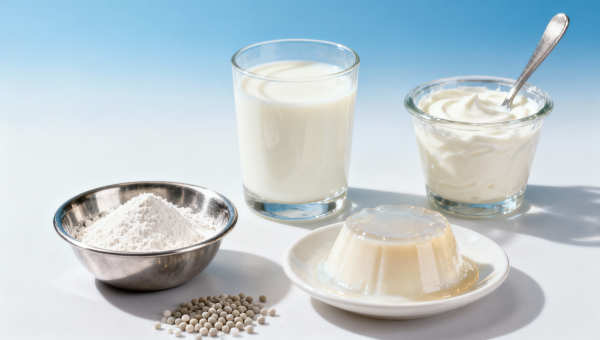
For dairy formulators and procurement teams, choosing the right carrageenan gum wholesale grade can directly affect texture, stability, cost control, and label performance. This guide explains which carrageenan type fits milk drinks, yogurt, and dairy desserts best, while also comparing it with konjac glucomannan powder, locust bean gum wholesale, and guar gum powder bulk for more informed technical and commercial decisions.
In industrial dairy processing, carrageenan is not a single-purpose additive. Grade selection influences protein interaction, suspension stability, syneresis control, pumpability, heat tolerance, and final mouthfeel. For buyers evaluating wholesale supply, the decision is rarely about price per kilogram alone. It usually involves usage rate, process compatibility, certificate completeness, and batch-to-batch consistency across 3 to 12 months of production planning.
For technical evaluators, the main question is whether kappa, iota, or blended carrageenan performs best in a given dairy matrix. For procurement teams, the challenge is matching functional performance with MOQ, lead time, and specification stability. For quality and safety managers, the focus shifts to ash content, viscosity range, microbiological limits, and supplier traceability. Each of these factors should be reviewed before a wholesale contract is approved.
The sections below break down carrageenan gum wholesale choices by dairy application, compare alternatives used in texture systems, and outline practical buying criteria for industrial users, distributors, and commercial decision-makers.
Understanding carrageenan grades in dairy systems
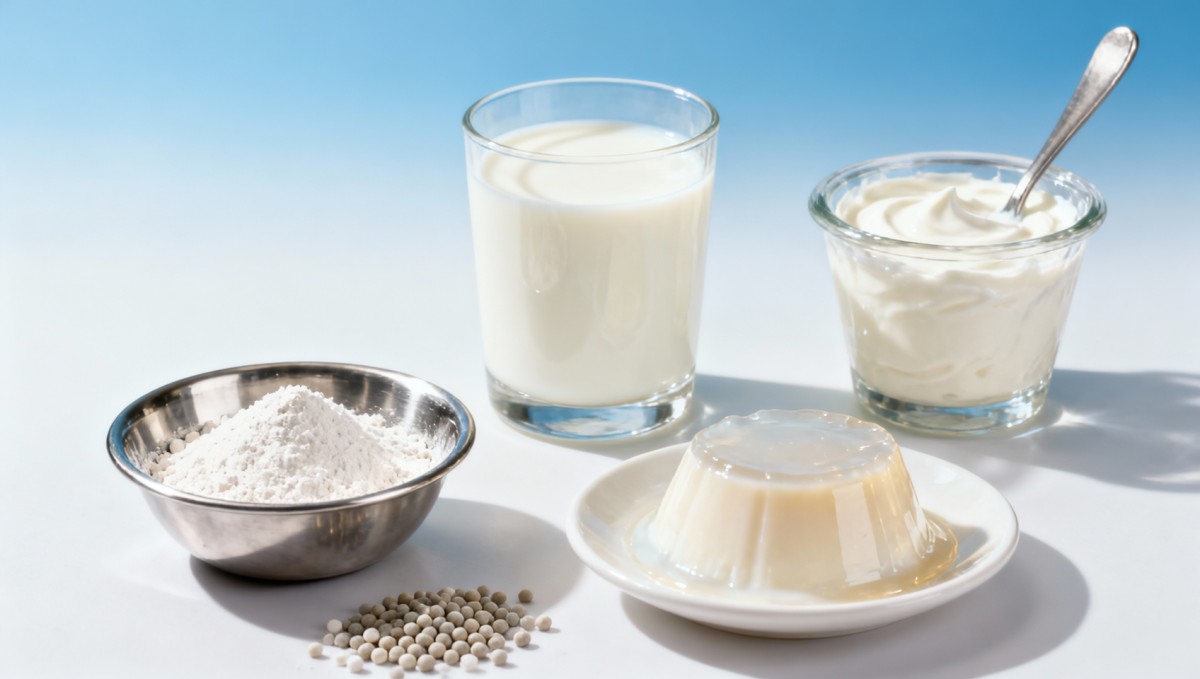
Carrageenan is a family of sulfated polysaccharides derived from red seaweed. In dairy, the most commercially relevant types are kappa, iota, and blends customized for milk protein systems. Each type delivers a different balance of gel strength, elasticity, suspension control, and sensory effect. In practical formulations, dosage often falls in the 0.015% to 0.080% range, depending on fat level, total solids, and whether the product is drinkable or spoonable.
Kappa carrageenan is widely used in chocolate milk, flavored milk, and some dairy desserts because it interacts strongly with casein. That interaction helps suspend cocoa and insoluble solids while also preventing serum separation during 30 to 90 days of shelf life. However, if the dosage is too high, kappa can create a brittle or overly firm texture, especially in low-fat systems.
Iota carrageenan forms softer, more elastic gels and is often evaluated for creamy desserts or dairy systems that require freeze-thaw resilience. It is less likely to create a short, breakable gel than kappa, but it may not provide the same suspension performance in all milk beverages. Many industrial suppliers therefore offer blended carrageenan grades designed specifically for neutral milk drinks, acidified dairy, or high-protein applications.
A common sourcing mistake is treating all carrageenan gum wholesale grades as interchangeable. In reality, mesh size, viscosity behavior, hydration profile, and recommended process temperature can differ materially between suppliers. A difference of 0.01% in usage level may look small on paper, yet at 20 to 50 metric tons of monthly production, it can change cost, processing behavior, and consumer acceptance.
Core grade distinctions buyers should know
Before requesting samples, technical and procurement teams should align around 4 practical questions: product type, target texture, process temperature, and shelf-life goal. That helps narrow the grade discussion from a broad gum category to a fit-for-purpose functional system.
- Milk drinks usually prioritize suspension, low-dose efficiency, and clean pourability.
- Yogurt systems often require syneresis control, smooth body, and acid stability.
- Dairy desserts may need gel structure, spoonable texture, and thermal process tolerance.
- High-protein formulations need special attention to protein interaction, pH sensitivity, and viscosity drift over time.
The table below summarizes how the main carrageenan types are commonly positioned in dairy formulation work.
The main takeaway is straightforward: kappa is often the first choice for milk drinks and suspension-focused dairy, iota is more suitable where soft gel texture matters, and blends are typically the best route when processors need multi-functional performance across heat, shear, and storage conditions.
Which carrageenan grade fits milk drinks, yogurt, and dairy desserts best?
The best carrageenan gum wholesale grade depends on product architecture, not just category name. Two flavored milk products can require different grades if one is UHT processed and the other is pasteurized, or if one contains 1.5% protein while another targets 4% to 6% protein. Formulators should therefore evaluate the final pH, solids load, homogenization pressure, and intended storage temperature before finalizing a grade.
For milk drinks, kappa carrageenan or a milk-drink blend is usually the best fit. At around 0.02% to 0.04%, it can improve cocoa suspension, reduce creaming, and support a stable body without excessive thickness. This is especially useful in ready-to-drink chocolate milk and flavored dairy beverages sold in chilled or ambient channels for 45 to 180 days, depending on process design.
For yogurt, especially stirred yogurt, carrageenan is not always the primary hydrocolloid, but selected blends can assist with water binding and texture support. The key risk is over-structuring the system or creating a pasty mouthfeel. In yogurt applications, processors often test carrageenan in combination with locust bean gum wholesale or starches to reduce syneresis while preserving spoonable flow. Typical total hydrocolloid loading may sit between 0.10% and 0.35%.
For dairy desserts such as puddings, custard-style products, and gelled milk desserts, iota or kappa-iota blends can be more appropriate. These grades can provide body, sliceability, or spoon-cut texture depending on solids content and thermal process. In systems exposed to retort or high-heat filling, even a 5 to 10 second difference in hold time can affect the final set, so pilot validation is important.
Application-by-application selection guide
The following table can help technical teams align grade selection with expected product behavior and purchasing priorities.
If a buyer needs one broad recommendation, kappa-based grades generally fit dairy beverages best, while blended systems deserve priority in yogurt, and iota-containing systems often perform better in creamy desserts. That said, any final decision should be verified with pilot runs of at least 2 to 3 production-scale batches rather than bench-top trials alone.
Practical formulation checks before approval
- Confirm pH range and protein level before requesting a commercial quotation.
- Test hydration and dispersion under actual plant mixing conditions, not only lab agitation.
- Measure viscosity at day 1, day 7, and end-of-shelf-life target.
- Review label requirements if the product is sold in markets with additive perception concerns.
Comparing carrageenan with konjac glucomannan, locust bean gum, and guar gum
Carrageenan is often evaluated alongside konjac glucomannan powder, locust bean gum wholesale, and guar gum powder bulk. These materials are not direct one-to-one substitutes in every dairy system. Their functionality differs in hydration behavior, interaction with proteins, viscosity development, and thermal response. In procurement discussions, this matters because a lower price per ton does not automatically translate into lower cost in use.
Konjac glucomannan powder is known for strong water binding and viscosity development, often at low inclusion rates. In some dessert and gel systems, it can enhance body or elasticity, especially when paired with other hydrocolloids. However, in drinkable dairy, it can create excessive thickness or a less clean drinking profile if not tightly controlled. Typical inclusion may start around 0.02% to 0.15% depending on the system.
Locust bean gum wholesale is widely used where creaminess, smooth mouthfeel, and syneresis control are priorities. It is a common partner gum in yogurt and dessert systems. Its hydration usually requires elevated temperatures, often above 80°C for full functionality, which can be an advantage or a limitation depending on the plant setup. For chilled dairy desserts, it can contribute a more natural, less brittle texture than some single-gum systems.
Guar gum powder bulk is generally a viscosity builder. It hydrates relatively quickly and can be cost-effective, but it does not replicate carrageenan’s specific casein interaction in milk beverages. In high doses, guar may push the product toward a heavy or slick mouthfeel. That makes it more suitable as a viscosity modifier or co-stabilizer than as a direct replacement for carrageenan in cocoa suspension applications.
Functional comparison for commercial decisions
The table below is useful when R&D, sourcing, and finance teams need a side-by-side review of technical value and purchasing implications.
For most dairy beverage manufacturers, carrageenan remains the stronger choice when the technical goal is suspension and protein stabilization. Locust bean gum often complements rather than replaces it. Konjac and guar may reduce cost or alter texture, but they should be evaluated as part of a system design, not as simple substitutes.
When substitution makes sense
- Use locust bean gum when spoonable creaminess and reduced whey-off matter more than beverage suspension.
- Use konjac glucomannan powder when strong gel or high water immobilization is a design goal.
- Use guar gum powder bulk when cost-sensitive viscosity adjustment is needed in a non-critical suspension system.
- Keep carrageenan as the anchor gum for neutral milk drinks containing cocoa, calcium, or protein-sensitive solids.
Wholesale procurement criteria: what technical and commercial teams should verify
When sourcing carrageenan gum wholesale, a specification sheet should be treated as the starting point rather than the final approval document. Industrial buyers should review certificate completeness, recommended dosage window, viscosity behavior, particle size, microbiological standards, and application guidance. In many B2B transactions, commercial risk comes less from an outright poor product and more from a product that is broadly acceptable but insufficiently consistent across multiple lots.
Lead time and MOQ also matter. Depending on origin and packaging format, a typical order cycle may run from 7 to 15 days for stocked material and 3 to 6 weeks for custom blends or imported lots. Common packaging includes 25 kg multiwall bags, and procurement planning often becomes more efficient when safety stock covers at least 4 to 8 weeks of production, particularly for export-oriented dairy manufacturers.
For quality managers, lot-to-lot verification should include organoleptic review, hydration performance, process response, and microbial compliance. For finance and business approval teams, the more meaningful metric is cost in use rather than unit price. A grade priced 8% higher may still reduce total formulation cost if dosage drops from 0.040% to 0.028% while maintaining the same shelf-life target and line efficiency.
Distributors and agents should also consider application support from the supplier. A technically responsive partner can shorten qualification cycles from 6 weeks to 2 or 3 weeks by providing pre-screened blends, stability suggestions, and complete documentation for customer audits. That directly affects conversion speed in industrial sales channels.
Procurement checklist for dairy-grade carrageenan
The table below can serve as a cross-functional review tool for purchasing, QA, and formulation teams.
In practice, the strongest sourcing decisions combine 4 elements: technical fit, documentation quality, delivery reliability, and usable application support. If even one of these is missing, the apparent savings from a lower quote can disappear quickly during scale-up.
A 5-step qualification process
- Shortlist 2 to 4 suppliers based on application-specific recommendations.
- Review documents and compare dosage windows, not only listed viscosity.
- Run lab screening, then at least 1 pilot or line trial under real heat and shear conditions.
- Monitor texture and stability for the intended shelf-life period.
- Approve supply only after technical, QA, procurement, and finance sign-off.
Common risks, formulation mistakes, and FAQ for dairy buyers
Even experienced processors can run into problems when changing carrageenan source or trying to reduce stabilizer cost. The most frequent issues include poor dispersion, unexpected viscosity shift, weak suspension after UHT, and texture instability at the end of shelf life. These problems often come from process mismatch rather than from the ingredient itself.
Another common mistake is replacing carrageenan with guar gum powder bulk or another gum without rebalancing the whole system. Hydrocolloids work as networks, not isolated ingredients. Changing one component can alter hydration speed, shear response, and protein interaction within 24 to 72 hours after production, even if the fresh product initially appears acceptable.
For project managers and commercial teams launching a new dairy SKU, the safest path is to define 3 acceptance checkpoints: processability on line, texture at release, and stability at end-of-shelf-life. A grade that passes only the first checkpoint is not ready for a full procurement contract.
FAQ 1: How do I choose between kappa and iota for dairy?
Choose kappa when suspension, firm structure, or milk protein interaction is the main target, especially in flavored milk and chocolate milk. Choose iota when a softer, more elastic gel is needed in desserts. If the product needs both suspension and creaminess, ask suppliers for a custom blend and compare performance at 2 or 3 dosage points.
FAQ 2: Can carrageenan be replaced by locust bean gum or guar gum?
Sometimes partially, but not always functionally. Locust bean gum wholesale can support smoothness and water control in yogurt or desserts, while guar gum powder bulk can build viscosity. Neither automatically reproduces carrageenan’s casein-reactive suspension performance in milk drinks. Replacement should be validated with shelf-life testing, not only fresh texture checks.
FAQ 3: What lead time should buyers expect for wholesale orders?
For stocked standard grades, 7 to 15 days is common in many markets. For custom dairy blends, imported material, or tighter document requirements, 3 to 6 weeks is more realistic. Buyers managing monthly production schedules should secure at least one backup lot or secondary source where qualification rules allow.
FAQ 4: Which indicators matter most during incoming quality control?
Focus on appearance, odor, hydration behavior, usage consistency, microbiological conformity, and actual performance in the target dairy matrix. A compliant certificate is necessary, but it should be backed by practical verification in the plant. For critical SKUs, retaining comparison samples from 3 recent lots is a sensible control measure.
For dairy manufacturers and distributors, the right carrageenan gum wholesale grade is the one that fits the product matrix, processing conditions, and commercial model at the same time. Kappa-based grades are often strongest for milk drinks, iota-containing systems suit softer desserts, and tailored blends usually deliver better balance in yogurt and complex dairy applications. Comparing carrageenan with konjac glucomannan powder, locust bean gum wholesale, and guar gum powder bulk can improve formulation strategy, but direct substitution should always be tested against shelf-life and process reality.
If you are evaluating dairy stabilizer options for industrial production, now is the right time to request application-specific specifications, compare dosage efficiency, and review documentation before your next sourcing cycle. Contact us to discuss formulation targets, wholesale supply options, or a tailored selection roadmap for milk drinks, yogurt, and dairy desserts.
Related Intelligence
- Natural IngredientsIndonesia BPOM Updates Natural Ingredients Labeling RulesIndonesia BPOM updates natural ingredients labeling rules: New 'Microbial Tolerance Statement' required for plant powders, fermented extracts & peptides—act now to avoid customs delays.
- Natural IngredientsIndonesia BPOM Updates Label Rules for Natural Ingredients ImportsIndonesia BPOM updates label rules for natural ingredients imports: New pH ≤4.6 & 60°C/30min tolerance statement required by Aug 1, 2026 — act now to avoid customs rejection.
- Natural IngredientsIndonesia BPOM Updates Natural Ingredients Import LabelingIndonesia BPOM Updates Natural Ingredients Import Labeling: New 'Microbial Resistance Profile' required for cosmetics, supplements & personal care imports—act now to avoid customs delays.
The Morning Broadsheet
Daily chemical briefings, market shifts, and peer-reviewed summaries delivered to your terminal.
