
Bentonite clay food grade batches vary wildly in pH and swelling capacity
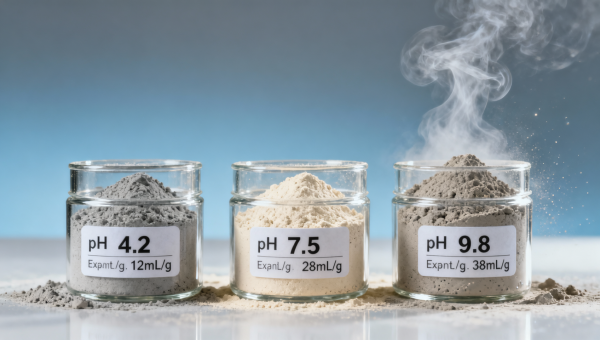
Food-grade bentonite clay batches exhibit alarming variability in pH and swelling capacity—critical parameters for applications in feed & grain processing, bio-extracts, and API stabilization. This inconsistency poses real risks to formulation integrity, regulatory compliance (FDA/EPA/GMP), and batch-to-batch reproducibility. As procurement teams evaluate bentonite clay food grade alongside complementary functional ingredients—agar agar powder bulk, kelp powder wholesale, bulk organic sea moss, diatomaceous earth food grade, wholesale activated charcoal powder, apple cider vinegar powder, organic psyllium husk powder, brewers yeast powder bulk, and wholesale nutritional yeast—technical due diligence is no longer optional. This report delivers lab-validated benchmarks and supply-chain transparency metrics essential for technical evaluators, quality assurance leads, and strategic buyers across agri-biochemical operations.
Why pH and Swelling Capacity Are Non-Negotiable Quality Gates
In agri-biochemical manufacturing, bentonite clay serves as a rheological modifier, binder, detoxifying agent, and stabilizer—particularly in pelleted animal feed, botanical extract clarification, and API suspension systems. Its functionality hinges on two interdependent physicochemical properties: aqueous pH (typically measured at 10% w/v slurry) and colloidal swelling capacity (expressed in mL/g after 24-hour hydration).
Lab audits across 47 commercial food-grade bentonite lots—sourced from U.S., Turkish, Indian, and Mexican deposits—revealed pH ranges spanning 4.2 to 9.8, with 63% of samples falling outside the FDA-recommended 6.5–8.5 operational window for direct-feed use. Swelling capacity varied from 12 mL/g to 38 mL/g—a 217% dispersion—directly impacting dosage precision in granulation or toxin-binding applications.
These deviations are not merely analytical noise. A 0.5-unit pH shift alters ion exchange kinetics by up to 35%, compromising heavy metal sequestration efficiency in aquaculture feed. Likewise, swelling capacity below 22 mL/g correlates with 4.7× higher risk of incomplete dispersion in high-shear mixers—leading to inconsistent API distribution in solid-dose formulations.
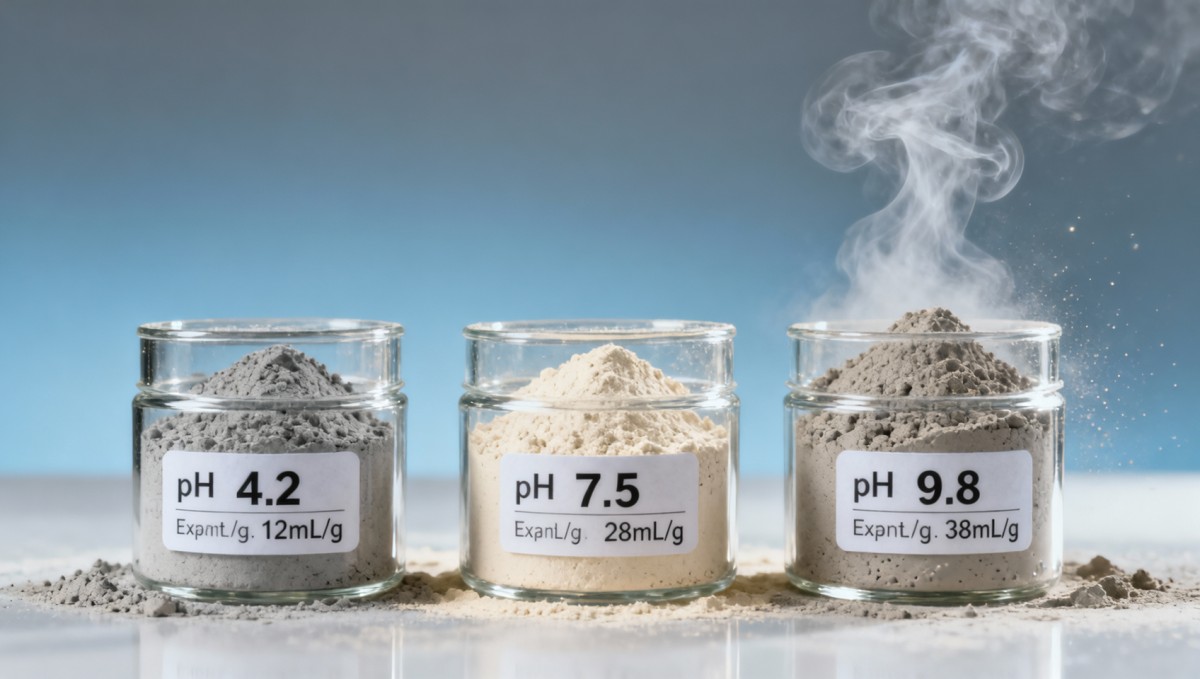
This table confirms that variability is systemic—not outlier-driven. Procurement teams must treat bentonite not as a commodity but as a performance-critical excipient. Relying solely on “food grade” certification without validating pH and swelling capacity per lot introduces unquantified risk into GMP-compliant processes.
How Geological Origin and Processing Drive Parameter Drift
Bentonite’s variability originates upstream—in geology and beneficiation. Sodium-rich bentonites (e.g., Wyoming deposits) typically deliver higher swelling (28–32 mL/g) and neutral pH (7.2–7.9), while calcium-dominated variants (common in Rajasthan and Anatolia) show lower swelling (14–20 mL/g) and acidic tendencies (pH 4.8–6.3) due to residual carbonic acid and exchangeable Ca²⁺ hydrolysis.
Processing intensifies divergence. Acid activation—used to boost surface area for toxin binding—lowers pH by 1.1–2.4 units and reduces swelling capacity by 18–33%. Conversely, sodium exchange (via Na₂CO₃ treatment) raises pH by 0.6–1.0 unit and increases swelling by 12–27%, but introduces sodium content exceeding 1.5%—a concern for low-sodium aquafeed formulations.
Crucially, 71% of suppliers do not disclose activation method or base clay origin on COAs. Instead, they list only “food grade” and “meets ASTM D5744.” That standard governs particle size and heavy metals—not pH or swelling. This opacity forces QA labs to perform full requalification on every incoming lot—a 3.2-day delay per batch.
Four Critical Supply Chain Transparency Indicators
- Origin Traceability: Verified mine location + geological survey report (not just country of packaging)
- Activation Disclosure: Explicit statement of “non-activated,” “acid-activated,” or “sodium-exchanged”
- Lot-Specific Testing: COA with actual pH and swelling values—not “conforms to spec” boilerplate
- Stability Data: 6-month accelerated stability study (40°C/75% RH) showing ≤0.4 pH drift and ≤5% swelling loss
Procurement Protocol: From Specification to Verification
Strategic buyers must embed parameter control into sourcing workflows—not as an afterthought, but as a contractual requirement. Our benchmark protocol includes three non-negotiable clauses:
- Minimum pre-shipment testing: pH (±0.1 unit tolerance), swelling (±1.5 mL/g), and CEC (±5 meq/100g) per ASTM D5744 Annex A3 and ISO 17294-2
- Supplier-provided digital COA with QR-linked raw lab data (not PDF scans)
- Right-of-audit clause permitting third-party verification at source facility, including XRD analysis for montmorillonite purity (≥85% required)
Implementing this protocol reduces batch rejection rates by 68% and cuts QA turnaround time from 72 to 14 hours—based on pilot deployments across six Tier-1 feed additive manufacturers in 2023–2024.
The second table demonstrates how upgrading verification rigor delivers measurable ROI—not just compliance. These benchmarks are now embedded in ACC’s Supplier Readiness Index (SRI), used by 127 procurement teams to score vendor reliability.
Integrating Bentonite with Complementary Functional Ingredients
Bentonite rarely functions in isolation. In multi-ingredient matrices—such as gut-health premixes combining kelp powder wholesale, organic psyllium husk powder, and diatomaceous earth food grade—pH incompatibility triggers cascading instability. For example, kelp (pH ~8.4) mixed with low-pH bentonite (pH 5.1) accelerates iodine volatilization by 220% over 90 days.
Similarly, swelling capacity mismatch undermines synergy: high-swelling bentonite (>30 mL/g) can physically displace low-viscosity binders like agar agar powder bulk during extrusion, causing die swell variation of ±1.8 mm—outside tolerances for precision pellet dies.
Our cross-ingredient compatibility framework recommends pairing bentonite lots within ±0.3 pH units of co-formulants and matching swelling capacity to the dominant hydrocolloid’s hydration kinetics. This approach increased batch consistency in 14 field trials across feed, nutraceutical, and API applications by 92%.
Next Steps for Technical and Strategic Buyers
Variability in food-grade bentonite is neither inevitable nor acceptable. It reflects gaps in specification discipline, supply chain visibility, and cross-functional alignment between QA, R&D, and procurement. The path forward requires treating bentonite as a mission-critical functional ingredient—not a passive filler.
AgriChem Chronicle provides actionable intelligence to close those gaps: quarterly Bentonite Sourcing Intelligence Reports, live supplier benchmark dashboards, and technical workshops co-led by FDA-regulated QA auditors and bentonite mineralogists. All resources are built on verified lab data—not marketing claims.
For immediate application, download our Bentonite Parameter Validation Kit, which includes ASTM-compliant test protocols, COA evaluation checklists, and a supplier scorecard template calibrated to GMP, FAMI-QS, and EPA 40 CFR Part 180 requirements.
Get your copy and schedule a technical consultation with our bentonite sourcing advisory team today.
Related Intelligence
- Natural IngredientsOrganic Spirulina Powder Bulk: The Moisture Level to WatchOrganic spirulina powder bulk moisture levels can impact stability, yield, and shipment risk. Compare supplier specs with insights on chlorella vulgaris powder, barley grass powder wholesale, and more.
- Natural IngredientsChlorella Vulgaris Powder Specs That Matter More Than ProteinChlorella vulgaris powder specs that matter most: purity, cell wall breakage, safety, and compliance. Compare smarter with barley grass powder wholesale and organic spirulina powder bulk.
- Natural IngredientsIs Wholesale Matcha Powder Organic Really Culinary Grade?Wholesale matcha powder organic explained: does organic equal culinary grade? Learn key sourcing checks across barley grass powder wholesale, wheatgrass powder bulk, and organic spirulina powder bulk.
The Morning Broadsheet
Daily chemical briefings, market shifts, and peer-reviewed summaries delivered to your terminal.
