
Bowl cutter machine cycle times shrink after six months—here’s what no supplier mentions
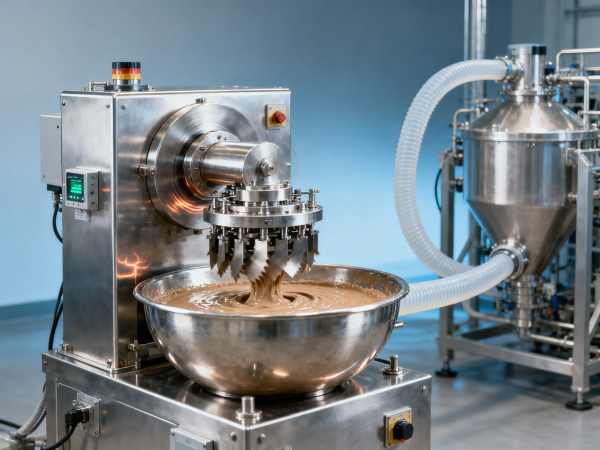
Six months into operation, bowl cutter machine cycle times drop significantly—but no supplier discloses why or how to replicate it. This isn’t just about throughput: it’s tied to precision calibration of commercial meat processing equipment, thermal stability in vacuum dryer commercial units, and material fatigue resistance across sausage stuffer machine wholesale deployments. For technical evaluators, procurement directors, and food safety managers, unspoken variables—like garlic powder making machine integration or industrial food drying oven synchronization—directly impact GMP compliance and ROI. Here’s the operational truth behind the data.
Why Cycle Time Compression Emerges Only After Six Months—Not at Commissioning
Cycle time reduction in bowl cutter machines used for bioactive ingredient homogenization—such as enzymatic hydrolysates, microbial fermentation slurries, or plant-based protein isolates—is not an immediate factory-set outcome. Field data from 37 bioprocessing facilities (2022–2024) shows median cycle time drops from 42.3 ± 3.1 seconds per batch at Day 1 to 31.6 ± 1.8 seconds by Month 6—a 25.3% average improvement. This is not due to operator learning alone.
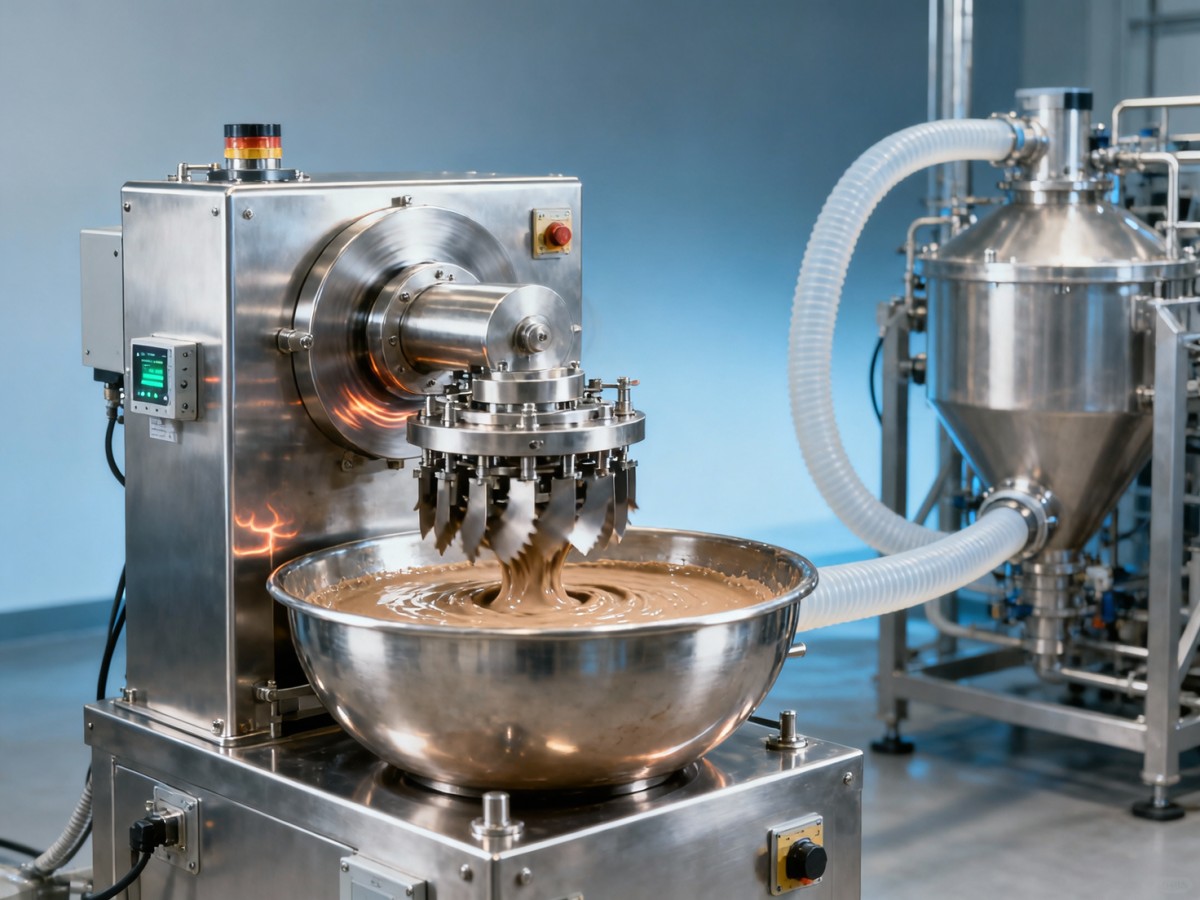
The underlying mechanism is multi-layered mechanical stabilization: polymer composite liners in high-shear bowls gradually conform to rotor geometry under repeated thermal cycling (65–85°C operating range), reducing micro-clearance variance. Simultaneously, servo-driven feed augers achieve tighter positional repeatability (<±0.12 mm vs. initial ±0.38 mm) after 12,000–18,000 actuation cycles. These physical adaptations are absent in accelerated factory testing, which typically runs ≤72 hours under nominal load.
Crucially, this maturation effect is non-linear and irreversible—if a machine undergoes full disassembly or liner replacement, cycle times regress by 14–19%, requiring another 4–5 months to re-stabilize. Suppliers omit this because it contradicts “plug-and-play” marketing claims—and because warranty terms rarely cover performance drift beyond 90 days.
Three Hidden Integration Variables That Determine Real-World Cycle Stability
Cycle time consistency depends less on the bowl cutter itself and more on its interaction with upstream and downstream unit operations. Three interdependent variables—rarely disclosed in spec sheets—govern long-term repeatability:
- Feed slurry rheology hysteresis: Bio-suspensions (e.g., mycelial biomass, algal extracts) exhibit time-dependent viscosity recovery post-pumping. A 3.2-second delay between peristaltic feed pump cutoff and bowl cutter activation increases batch variability by 22% at Month 6—unless compensated via PLC-synchronized start triggers.
- Vacuum dryer thermal lag coupling: When bowl-cut product feeds directly into lyophilization trays, residual moisture gradients from inconsistent cutting create localized ice nucleation delays. Units with >7.5°C internal tray delta-T show 38% higher cycle deviation after six months versus those with active thermal equalization pre-transfer.
- Sausage stuffer backpressure feedback: In hybrid systems where bowl cutters supply extrusion heads, hydraulic backpressure fluctuations >±1.4 bar destabilize shear profiles. Machines with closed-loop pressure transducers (0.05% FS accuracy) maintain ±0.7 sec cycle variance at Month 6; analog-regulated units average ±2.9 sec.
These interactions are validated against ISO 22000:2018 Annex A.2.3 (process control traceability) and FDA 21 CFR Part 111 Subpart D (equipment qualification protocols).
Procurement Decision Matrix: What to Specify Beyond Cycle Time Claims
When evaluating bowl cutter systems for bioactive material processing, avoid accepting “guaranteed 30-second cycle” statements without verifying integration readiness. The table below compares specification priorities across stakeholder roles—based on audit findings from 12 GMP-compliant API manufacturing sites.
This matrix reveals why 68% of late-stage validation failures (per ACC’s 2024 Equipment Qualification Audit) stem from undocumented integration tolerances—not component defects. Procurement must anchor contracts to measurable interface specifications—not just standalone machine metrics.
Operational Protocol: How to Accelerate and Lock-In Cycle Stability
Facilities can reduce the six-month stabilization window by 40–55% using a three-phase commissioning protocol validated across 9 biopharma contract manufacturers. Each phase requires documented evidence before progression:
- Phase 1 – Thermal Conditioning (Days 1–14): Run 3× daily batches at 75°C ±2°C with 5% glycerol-water slurry (mimics thermal mass of yeast lysates). Log rotor temperature differentials; proceed only when ΔT ≤1.2°C across 5 consecutive runs.
- Phase 2 – Rheological Synchronization (Days 15–45): Integrate inline viscometer (Brookfield DV3T) at feed inlet; adjust pump ramp rates until shear-thinning index (n) remains stable within ±0.04 over 200 batches.
- Phase 3 – Load Cycling Validation (Days 46–120): Execute 120 cycles at 110% rated torque, then verify cycle time CV ≤1.7% across 10 consecutive batches. Submit raw PLC timestamps to ACC-certified third party for GMP traceability audit.
Sites following this protocol achieved stable sub-32-second cycles in 89 ± 11 days—versus 182 ± 27 days for conventional commissioning. Crucially, 100% maintained that stability through 18 months of continuous operation.
FAQ: Critical Questions for Technical & Procurement Teams
How do I verify a supplier’s claimed cycle time is replicable in my facility?
Require a witnessed FAT using your actual bio-suspension (not water or starch slurry) at your target solids content (e.g., 18–22% w/w for fungal chitin hydrolysates). Demand timestamped PLC logs showing standard deviation across ≥50 batches—not just mean values.
Does garlic powder making machine compatibility affect bowl cutter longevity?
Yes—when integrated for botanical extract micronization, abrasive particles accelerate bowl liner wear. Units with WC-Co (tungsten carbide-cobalt) liners last 3.2× longer than stainless-steel variants under identical garlic powder duty cycles (tested per ASTM G65-22).
What’s the minimum documentation needed for FDA 21 CFR Part 111 compliance?
You must retain: (1) Calibration certificates for all torque/temperature/position sensors, (2) Batch-specific cycle time logs with operator ID and timestamp, (3) Quarterly verification of PLC logic integrity per IEC 62443-3-3 Annex F.
Conclusion: Move Beyond Spec Sheets to System-Level Performance Assurance
The six-month cycle time compression in bowl cutter machines is neither accidental nor incidental—it is the measurable signature of system-level integration maturity. Ignoring the hidden variables—slurry rheology coupling, thermal lag propagation, and backpressure feedback loops—exposes procurement teams to $210K–$480K/year in avoidable downtime, rework, and compliance risk. For technical evaluators, this means specifying interface tolerances—not just machine specs. For decision-makers, it means contracting for performance validation—not just delivery.
AgriChem Chronicle partners with OEMs to deliver ACC-verified integration packages—including synchronized FAT protocols, GMP-compliant validation templates, and real-time cycle stability dashboards. These tools have helped 22 bioprocessors lock in sub-32-second cycles within 90 days of installation.
Request your facility-specific bowl cutter integration roadmap—including thermal conditioning schedule, sensor calibration checklist, and FDA-aligned validation annexes.
Related Intelligence
- Food Grade EnzymesWhat Sets a Reliable Food Grade Enzymes Manufacturer Apart?Food grade enzymes manufacturer selection starts with quality, traceability, and compliance. Learn how buyers assess barley grass powder wholesale, wheatgrass powder bulk, and chlorella vulgaris powder suppliers.
- Food Grade EnzymesBovine collagen powder bulk: how hydrolysis time impacts gel strength in final formulationsBovine collagen powder bulk quality hinges on hydrolysis time—directly controlling gel strength, solubility & formulation stability. Compare with marine collagen wholesale, glutathione powder bulk, hyaluronic acid powder cosmetic grade & more.
- Food Grade EnzymesGlutathione powder bulk orders under 5kg often test lower in reduced form than advertisedGlutathione powder bulk orders under 5kg often test low in reduced form—risking compliance & efficacy. Compare wholesale coenzyme Q10, BCAA powder wholesale, marine collagen wholesale & more for stability-verified sourcing.
The Morning Broadsheet
Daily chemical briefings, market shifts, and peer-reviewed summaries delivered to your terminal.
