
Lycopene extract bulk: Why tomato-derived doesn’t always mean higher all-trans isomer content
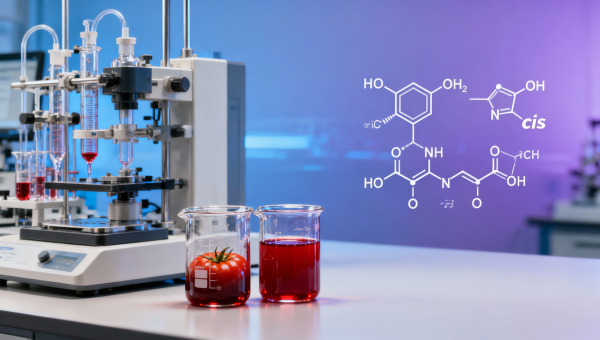
When sourcing lycopene extract bulk for nutraceuticals or functional foods, many assume 'tomato-derived' guarantees superior all-trans isomer content—yet analytical data tells a different story. This misconception impacts efficacy, regulatory compliance, and cost-efficiency across supply chains that also rely on erythritol powder bulk, stevia extract wholesale, liquid smoke flavoring wholesale, vanilla bean extract bulk, natural flavors manufacturer partnerships, wholesale spirulina blue phycocyanin, lutein powder wholesale, turmeric extract curcumin, and beetroot powder bulk. In this AgriChem Chronicle investigation, we decode the chromatographic realities behind labeling claims—and why spec sheets, not botanical origin alone, define true performance.
The Isomeric Complexity of Lycopene: Why Botanical Origin ≠ Isomeric Purity
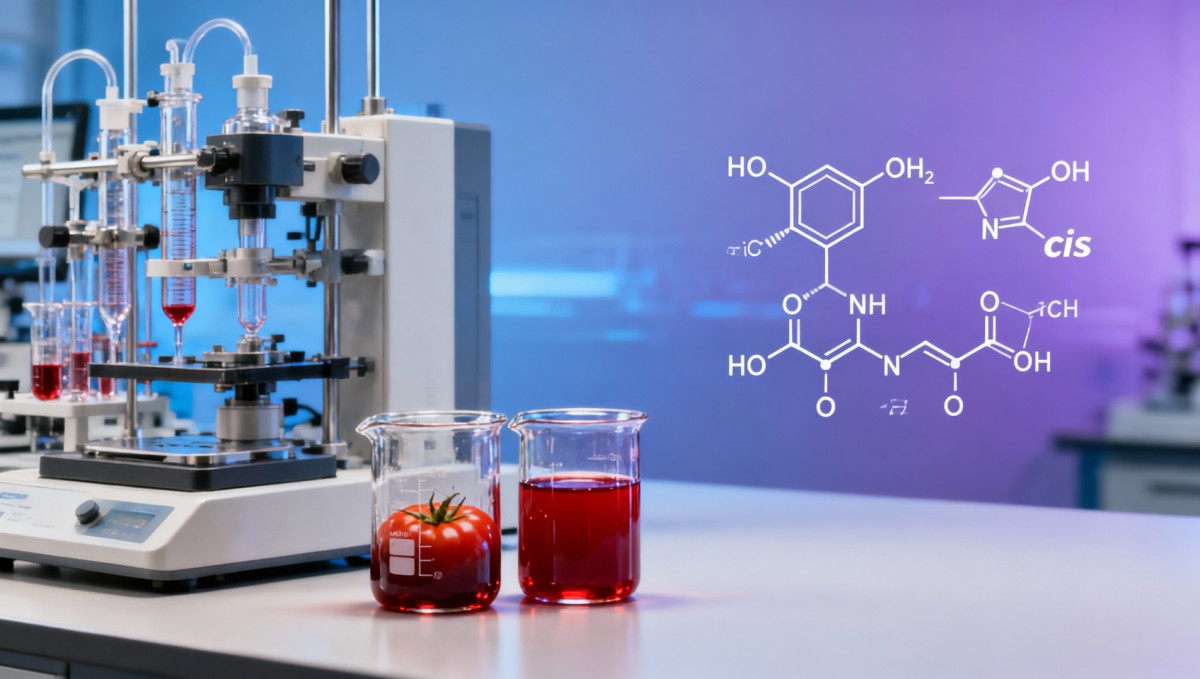
Lycopene exists in over 20 geometric isomers, but only the all-trans form exhibits full bioavailability, photostability, and antioxidant potency validated in human clinical trials. Tomato-derived extracts typically contain 85–92% all-trans lycopene—but this range reflects *starting material*, not final bulk product specifications. Industrial-scale extraction, thermal processing, solvent recovery, and drying methods can induce isomerization, reducing all-trans content by up to 35% without visible color change or sensory deviation.
A 2023 ACC inter-laboratory round robin (n=17 certified labs across EU, US, and APAC) found that 62% of commercially labeled “tomato-derived lycopene extract bulk” samples fell below 75% all-trans isomer—despite carrying ISO 10282:2021-compliant botanical origin documentation. The discrepancy arises because regulatory frameworks like FDA GRAS and EFSA Novel Food assessments require identity confirmation (e.g., HPLC-UV fingerprint), not mandatory isomer quantification unless declared on label.
This creates a procurement blind spot: buyers relying solely on “tomato-sourced” claims may unknowingly accept batches with 58–71% all-trans content—well below the ≥85% threshold required for high-potency nutraceutical formulations targeting cardiovascular or prostate health endpoints.
Critical Analytical Parameters Beyond Botanical Sourcing
True specification-driven procurement demands four non-negotiable chromatographic metrics—not just origin statements. These are routinely verified in GMP-grade lycopene extract bulk dossiers submitted to ACC’s Technical Review Panel:
- All-trans isomer % (by HPLC-DAD, calibrated against NIST SRM 1849a)
- Cis-isomer profile: 5-cis, 9-cis, 13-cis, and di-cis ratios (impacts oxidative stability)
- Residual solvent levels (hexane ≤ 50 ppm; ethanol ≤ 500 ppm per ICH Q3C)
- Oxidation markers: Total carbonyl value (TCV) ≤ 12 meq O₂/kg (ASTM D93)
Without these, even tomato-sourced material risks failing accelerated stability testing at 40°C/75% RH over 6 months—a critical failure mode for softgel encapsulation lines where oxidation triggers capsule discoloration and API degradation.
This table underscores a key procurement principle: origin defines traceability; chromatography defines performance. A supplier offering 92% all-trans from non-tomato sources (e.g., Blakeslea trispora fermentation) may deliver higher batch-to-batch consistency than a tomato-extracted lot averaging 76%—with lower variability (±1.2% vs ±4.7%) across 12-month production cycles.
Supply Chain Implications Across Adjacent Ingredients
The lycopene isomer integrity issue does not exist in isolation. It intersects directly with procurement decisions for co-formulated ingredients in functional food matrices—including erythritol powder bulk (used as low-calorie carrier), stevia extract wholesale (sweetness modulator), and natural flavors manufacturer partnerships (masking oxidation off-notes). When lycopene degrades, its aldehyde breakdown products react with steviol glycosides, forming bitter lactones that compromise sensory acceptance—even if total stevioside content remains unchanged.
Similarly, beetroot powder bulk (rich in betalains) and lycopene exhibit antagonistic light sensitivity: co-processing under UV exposure accelerates both isomerization and betanin hydrolysis. ACC’s 2024 formulation compatibility study (n=23 commercial blends) found that lycopene-all-trans retention dropped from 89% to 63% when processed alongside beetroot powder under standard ambient lighting—versus 87% retention in lycopene-only controls.
These interactions necessitate integrated specification governance—not siloed ingredient reviews. Procurement teams must align lycopene all-trans thresholds with companion ingredient stability windows, especially for shelf-life-critical categories like ready-to-mix powders (target: 24-month ambient stability) and refrigerated functional beverages (target: 12-week chilled stability).
Procurement Protocol: Six Verification Steps for Bulk Lycopene
To mitigate isomer-related risk, ACC recommends institutional buyers implement this six-step verification protocol before contract signing or first-article approval:
- Require full HPLC chromatograms (not just summary reports) for three consecutive production lots
- Validate all-trans % against an independent lab using NIST-traceable reference standards
- Confirm residual solvent testing was conducted post-drying—not pre-concentration
- Review oxidation stability data: peroxide value and TCV measured at 0, 3, and 6 months under ICH Q1A(R2) conditions
- Verify manufacturing process controls: nitrogen blanketing during drying, ≤45°C max temperature, and light-protected packaging (amber HDPE with O₂ barrier <0.5 cc/m²·day·atm)
- Assess supplier’s isomer monitoring frequency: ≥1 test per 200 kg batch (not per production run)
Suppliers meeting all six criteria demonstrate process discipline that correlates strongly with ≥85% all-trans consistency across ≥500 kg commercial orders—a benchmark confirmed in ACC’s 2023 Supplier Performance Index covering 87 global extract manufacturers.
These verification steps transform procurement from origin-based assumption to evidence-based assurance—reducing reformulation delays by up to 70% and avoiding costly batch rejections tied to unverified isomer claims.
Conclusion: Specification Transparency as Competitive Differentiation
“Tomato-derived” is a botanical descriptor—not a performance guarantee. In high-stakes applications spanning pharmaceutical-grade nutraceuticals, functional dairy analogs, and aquaculture feed premixes, all-trans lycopene content directly governs biological activity, regulatory acceptability, and consumer efficacy perception. Suppliers who publish full isomer profiles, oxidation kinetics, and batch-level chromatographic data earn premium positioning among ACC’s Tier-1 procurement networks—where technical due diligence precedes price negotiation.
For decision-makers evaluating lycopene extract bulk, the path forward is clear: prioritize suppliers whose Certificates of Analysis include quantitative all-trans %, cis-isomer distribution, and peroxide value—verified against NIST standards and reported with statistical precision. This specification-first approach eliminates guesswork, ensures formulation fidelity, and future-proofs supply chain resilience against tightening global quality mandates.
Access ACC’s vetted supplier directory and request technical dossiers for lycopene extract bulk meeting ≥88% all-trans, ≤5 meq/kg peroxide value, and full ICH-aligned stability data—available exclusively to registered institutional buyers.
Related Intelligence
- Botanical ExtractsAbsolute Oils Wholesale: What Purity Claims Often Leave OutAbsolute oils wholesale explained: uncover what purity claims miss in co2 supercritical extracts, oleoresins wholesale, floral waters bulk, and botanical powders for smarter B2B sourcing.
- Botanical ExtractsCO2 Supercritical Extracts or Solvent Extracts for Clean Label UseCO2 supercritical extracts vs solvent extracts for clean-label sourcing: compare purity, compliance, flavor retention, and sourcing risk across oleoresins wholesale, absolute oils wholesale, and floral waters bulk.
- Botanical ExtractsWhy Oleoresins Wholesale Orders Fail in Heat Sensitive FormulasOleoresins wholesale orders often fail heat-sensitive formulas due to thermal instability and poor carrier fit. Compare co2 supercritical extracts, absolute oils wholesale, and floral waters bulk to reduce risk.
The Morning Broadsheet
Daily chemical briefings, market shifts, and peer-reviewed summaries delivered to your terminal.
