
Green tea extract EGCG: what to check first?
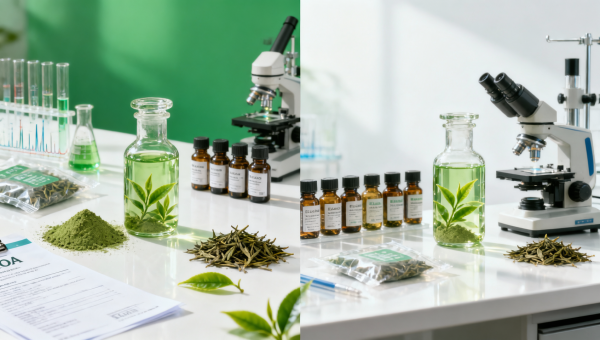
Before sourcing green tea extract EGCG, buyers should verify assay methods, catechin profile, caffeine limits, solvent residues, and traceable manufacturing records. For teams comparing grape seed extract OPC, milk thistle extract silymarin, or pine bark extract bulk, these same quality benchmarks help reduce regulatory risk, protect formulation performance, and support confident approval across procurement, QC, and project management.
If you are evaluating green tea extract EGCG, the first checks should not be marketing claims such as “high purity” or “premium grade.” The real decision points are technical: whether the EGCG assay is clearly defined, whether the catechin composition matches your application, whether caffeine and residual solvents are controlled, and whether the manufacturer can provide traceable quality and compliance records. For procurement teams, formulators, quality managers, and budget approvers, these are the factors that determine whether a material is usable, approvable, and worth the price.
What should you check first when buying green tea extract EGCG?
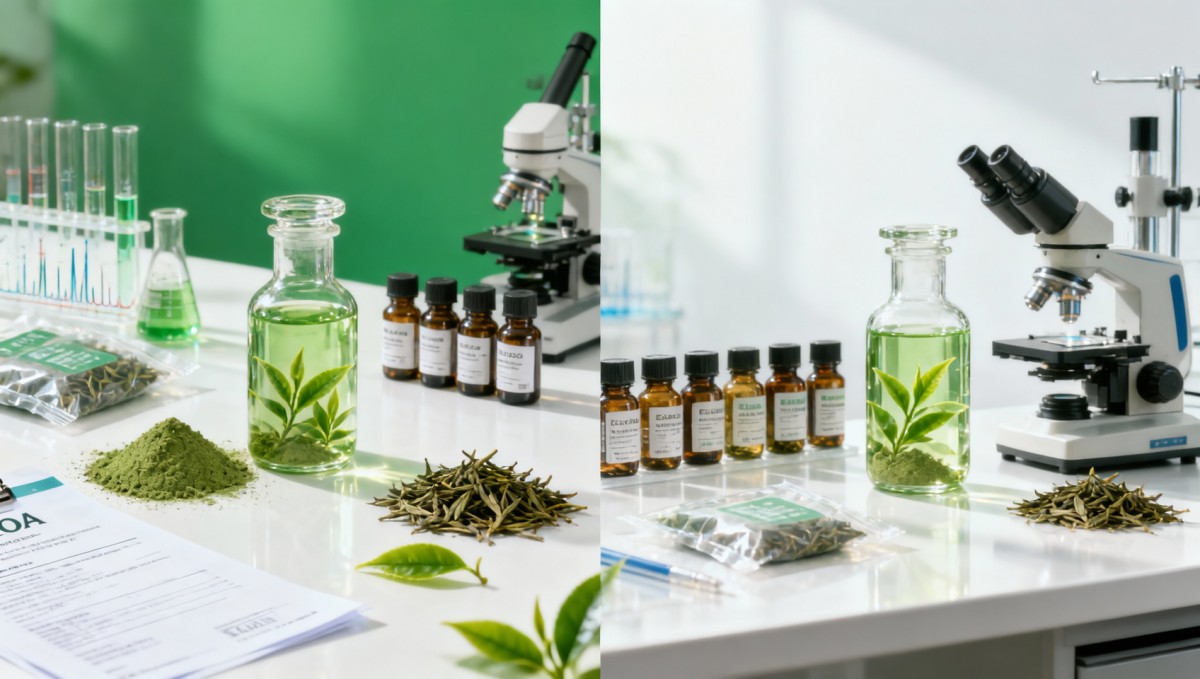
The fastest way to screen suppliers is to review five items in order:
- Assay basis: Is the EGCG content measured by HPLC or another validated method, and is it reported on an as-is or dry basis?
- Catechin profile: Does the specification show total catechins and the breakdown of EGCG, EGC, ECG, and EC?
- Caffeine level: Is it decaffeinated, low caffeine, or standard? Does that fit your end-use requirement?
- Residual solvents and contaminants: Are solvents, heavy metals, pesticides, and microbiology covered by current test reports?
- Traceability: Can the supplier provide batch records, COA consistency, origin details, and manufacturing certifications?
If any of these points are unclear, the material should be treated as higher-risk, even if the quoted price looks attractive.
Why assay method matters more than the headline EGCG percentage
Many buyers focus first on labels such as “50% EGCG” or “98% polyphenols,” but those numbers are only meaningful when the testing method and reporting basis are clear. Two suppliers may both claim high EGCG content while measuring different parameters or using different moisture assumptions.
What to verify:
- Analytical method: HPLC is typically the preferred method for catechin identification and quantification.
- Reference standard: Ask whether certified standards are used.
- Reporting basis: Results on dry basis are not the same as as-is basis.
- Lot-to-lot consistency: One strong COA is not enough; review several recent batches.
For QC teams, this is essential because poor assay transparency can lead to failed incoming inspection or formulation drift. For financial approvers, it affects real cost-per-active, not just price-per-kilogram.
How to evaluate the catechin profile for real formulation performance
EGCG is often the key active marker, but it should not be assessed in isolation. The broader catechin profile affects solubility, taste, stability, and functional positioning. Depending on whether the extract is intended for nutraceuticals, beverages, tablets, capsules, or topical applications, a different balance may be preferable.
Questions worth asking the supplier:
- What is the total catechin content?
- What percentage is specifically epigallocatechin gallate (EGCG)?
- Are other catechins listed individually?
- Is there supporting stability data under typical storage or formulation conditions?
For product developers and project managers, this helps avoid a common mistake: approving a raw material based on a single marker while overlooking whether the overall composition is suitable for the final product.
Should you prioritize low caffeine or standard EGCG extract?
This depends on the application and label claim strategy. In many formulations, especially those targeting sensitive users or stimulant-free positioning, caffeine control is a first-pass requirement. In other applications, a standard green tea extract may be acceptable if caffeine is declared and remains within internal limits.
Check these points:
- Declared caffeine specification, not just “decaf” language
- Batch testing frequency for caffeine content
- Regulatory fit for your destination market and finished product category
- Impact on taste and formulation, especially in beverage or sachet systems
For safety and compliance personnel, caffeine variation can create labeling and consumer-use risks. For procurement, this also affects supplier comparability, because “EGCG extract” products are not interchangeable if caffeine specifications differ.
What contaminant and compliance documents should a serious supplier provide?
A compliant supplier should be able to provide more than a generic specification sheet. For commercial approval, especially in regulated or export-oriented environments, documentation depth matters almost as much as the material itself.
Core documents usually include:
- Certificate of Analysis (COA) for the current batch
- Specification sheet with method references
- Residual solvent report
- Heavy metal and pesticide screening
- Microbiological test results
- Allergen, GMO, and irradiation statements, where relevant
- Manufacturing certification such as GMP-aligned documentation
- Traceability and origin information
For quality managers, the key question is whether the supplier’s documentation supports your internal release system. For project leaders, complete documents reduce approval delays and rework between technical, QA, and procurement teams.
How to compare green tea extract EGCG with other botanical extracts using the same buying logic
Teams that also source grape seed extract OPC, milk thistle extract silymarin, or pine bark extract bulk can apply the same evaluation framework. Although the actives differ, the decision structure is similar:
- Confirm the marker compound assay method
- Review the full compositional profile, not only one headline number
- Check contaminants and residual solvents
- Verify manufacturing controls and traceability
- Assess fit for intended application, not just lowest cost
This is especially useful for multi-ingredient sourcing programs, where standardizing the supplier review process can improve speed and reduce approval risk across several plant extracts.
What are the most common purchasing mistakes?
In practice, buyers often run into the same avoidable issues:
- Choosing on price without checking assay basis
- Assuming all EGCG extracts are interchangeable
- Ignoring caffeine until label review or final QC
- Accepting incomplete COAs without method detail
- Overlooking batch consistency and long-term supply reliability
These mistakes can lead to reformulation, delayed approvals, failed incoming QC, or hidden cost escalation. For financial stakeholders, the cheapest quote can become the most expensive option once testing failures and project delays are included.
Supplier approval checklist for procurement, QC, and project teams
Before approving a supplier of green tea extract EGCG, use a practical checklist:
- Confirm EGCG assay method and reporting basis.
- Review full catechin profile and intended-use fit.
- Verify caffeine specification and tolerance.
- Check residual solvents, heavy metals, pesticides, and microbiology.
- Request at least several recent batch COAs for consistency review.
- Confirm manufacturing standards, traceability, and origin records.
- Evaluate packaging, shelf life, storage conditions, and logistics stability.
- Compare cost based on usable active content and compliance readiness, not only unit price.
This checklist gives procurement a faster screening process, gives QC a stronger release basis, and gives managers a clearer approval path.
In short, the first thing to check with green tea extract EGCG is not the sales claim but the evidence behind it. Start with assay method, catechin profile, caffeine limits, contaminant control, and traceable manufacturing records. When those basics are verified early, buyers can reduce technical risk, improve supplier comparisons, and make decisions that hold up across procurement, quality, compliance, and budget review. That is the standard serious teams should apply not only to EGCG, but also to grape seed extract OPC, milk thistle extract silymarin, and pine bark extract bulk.
Related Intelligence
- Botanical ExtractsANVISA Extends Traceability for Botanical Extract Imports to Tier-2 SuppliersANVISA extends botanical extract traceability to tier-2 suppliers—key for Chinese exporters of herbal ingredients, supplements & cosmetics. Act now for July 2026 compliance.
- Botanical ExtractsANVISA Extends Traceability for Botanical Extracts to Tier-2 SuppliersANVISA extends botanical extract traceability to tier-2 suppliers—solvents, filter aids, adsorption media—effective Sept 1, 2026. Essential for exporters & supplement brands.
- Botanical ExtractsEU CBAM Carbon Tariff First Applies to Botanical ExtractsEU CBAM Carbon Tariff now covers Botanical Extracts—key for exporters, importers & LCA providers. Act now to ensure compliance by 24 April 2026.
The Morning Broadsheet
Daily chemical briefings, market shifts, and peer-reviewed summaries delivered to your terminal.
