
The Authority in Global Agricultural Chemistry & Bio-Resources
Wholesale flocculants: why jar tests still prevent costly mistakes
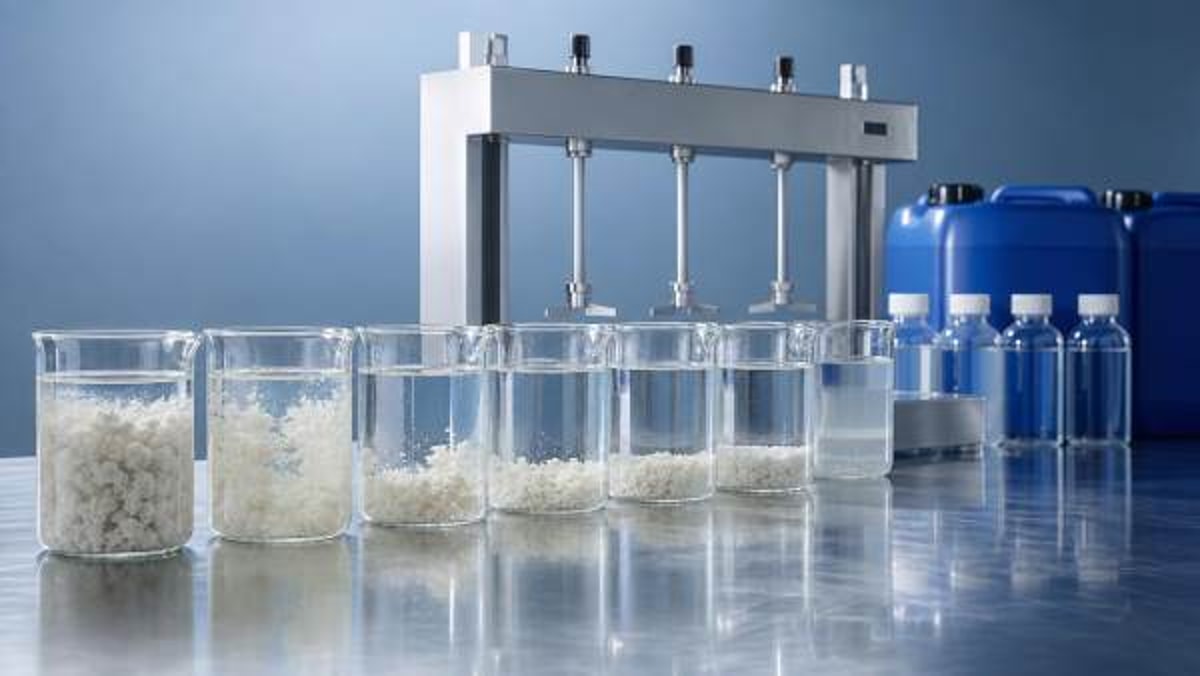
In industrial water treatment and solids separation, buying wholesale flocculants at scale can reduce unit costs, but skipping proper validation often leads to expensive process failures. For project managers and engineering leads, jar tests remain a practical safeguard, helping verify dosage, settling performance, sludge behavior, and chemical compatibility before full deployment.
Why are jar tests still essential when buying wholesale flocculants?
The short answer is simple: bulk purchasing lowers the price per kilogram, but process chemistry does not become simpler just because the order size is larger. Wholesale flocculants may look equivalent on a datasheet, yet real process water rarely behaves like a controlled laboratory sample. Suspended solids, pH shifts, shear conditions, temperature variation, dissolved organics, salinity, and upstream chemical carryover can all change polymer performance.
For project managers, this matters because a wrong flocculant choice affects far more than chemical spend. It can delay commissioning, reduce throughput, increase sludge hauling costs, trigger compliance issues, and create friction between operations, procurement, and contractors. A jar test is not an old-fashioned ritual. It is a low-cost decision tool that validates whether wholesale flocculants actually create strong flocs, fast settling, clean overflow, and manageable sludge under site-relevant conditions.
In sectors covered by AgriChem Chronicle’s readership—from feed and grain processing to aquaculture systems, biochemical manufacturing, and primary industry wastewater handling—the risk profile is especially high. Many facilities operate under tight discharge limits or product quality constraints. In that environment, jar testing helps translate supplier claims into practical operating confidence before purchase contracts expand into pallet, container, or long-term supply commitments.
What can go wrong if a team skips testing and buys wholesale flocculants based only on price or specs?
A common mistake is assuming that charge type and molecular weight alone guarantee success. In reality, two anionic or cationic products may behave very differently in the same clarifier or dewatering line. When teams skip jar tests, they often discover problems only after dosing systems are installed or production is already running.
Typical failures include under-flocculation, where fine particles remain suspended and turbidity stays high, and over-dosing, where excess polymer restabilizes solids or creates sticky sludge. Another issue is poor compatibility with coagulants, pH adjusters, antifoams, or disinfectants already in use. Even when water appears clearer, sludge may become too voluminous, too compressible, or too difficult to dewater efficiently.
These failures turn into hidden project costs. Pumps may foul, centrifuge performance may drop, belt presses may blind, and settling tanks may lose capacity. Operators then respond with trial-and-error adjustments that consume time and inventory. For engineering leads, the bigger problem is that this reactive approach blurs root causes. Teams may blame equipment or mixing energy when the real issue is poor flocculant selection. Jar testing reduces that ambiguity at the front end.
What should project managers look for during a jar test of wholesale flocculants?
A useful jar test is not just about asking which sample forms the largest floc. The better question is which product delivers the most stable and economical process result. When comparing wholesale flocculants, project teams should evaluate several factors together rather than focusing on a single visual impression.
First, confirm the effective dosage window. A product that works only within a very narrow range may create operating risk in a plant where feed characteristics fluctuate. Second, observe floc formation speed and structure. Large flocs are not always better if they break under shear or collapse before sedimentation. Third, assess clarified water quality, since overflow clarity often matters as much as settling rate. Fourth, pay attention to sludge volume and drainability. A flocculant that settles quickly but creates difficult sludge may increase downstream disposal costs.
Project managers should also ask whether the tested preparation method reflects field reality. Polymer inversion, aging time, dilution water quality, and mixing intensity all affect results. If a sample performs well only under ideal bench conditions that are hard to reproduce at plant scale, the test may give false confidence. A disciplined jar test therefore links chemistry selection to practical operations, not just laboratory appearance.
How do jar tests help compare suppliers of wholesale flocculants more fairly?
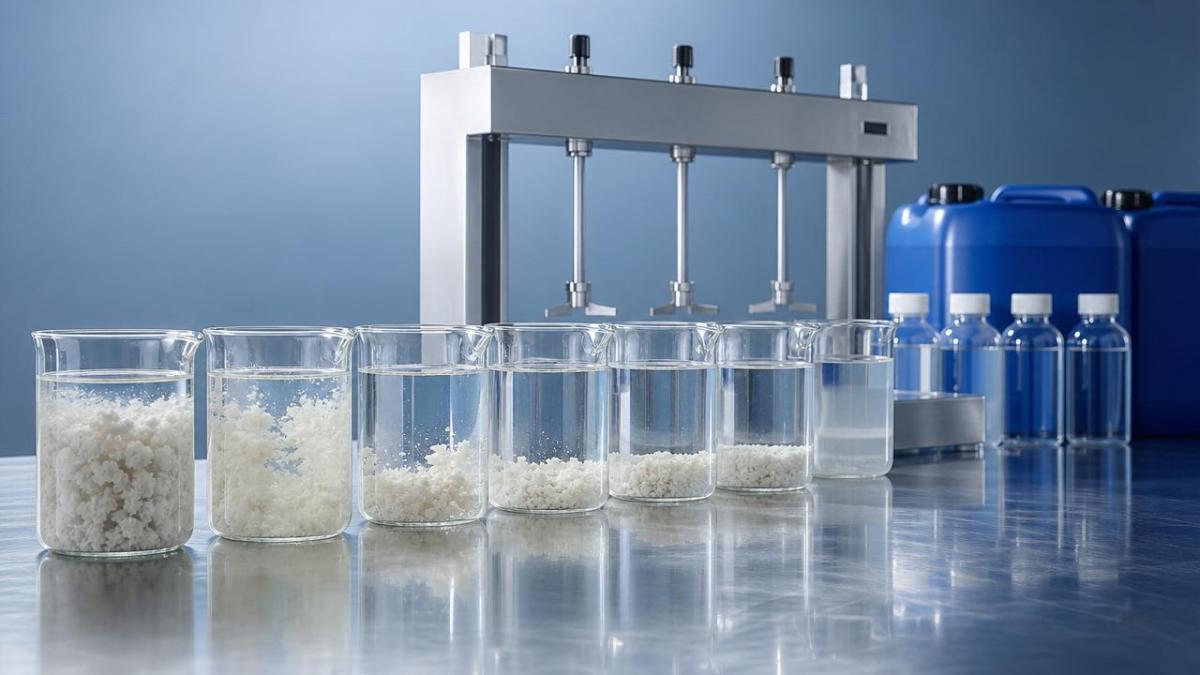
Supplier comparison becomes difficult when every vendor presents different concentration formats, recommended dose ranges, or performance claims. Jar tests create a common evaluation framework. Instead of comparing brochures, teams compare outcomes under the same water sample, mixing sequence, and observation method.
This matters especially in international sourcing, where project leaders may be balancing local distributors, direct manufacturers, and contract blenders. The cheapest quote for wholesale flocculants may not be the lowest total-cost option once active content, freight, dissolution behavior, shelf life, and dose efficiency are considered. A product priced slightly higher per unit can still be more economical if it requires less dosage, creates less sludge, or improves dewatering throughput.
A good comparison process also strengthens procurement discipline. Teams can record dose response, settling time, supernatant clarity, sludge characteristics, and handling notes in a consistent matrix. That documentation helps justify decisions internally, especially when capex, commissioning deadlines, or compliance exposure are significant. For organizations that must demonstrate technical due diligence, jar tests provide evidence that the selected wholesale flocculants were evaluated against operational criteria rather than chosen only on price pressure.
Practical comparison checklist
Are jar tests enough on their own, or should they be combined with pilot validation?
Jar tests are the right starting point, but they are not always the final answer. For straightforward applications with stable feed conditions, a well-designed jar test may be enough to screen and select wholesale flocculants confidently. However, in larger projects or variable industrial streams, pilot validation often adds important insight.
Bench testing cannot fully simulate residence time, hydraulic loading, seasonal variation, solids shocks, equipment shear, or the practical realities of dosing control. A pilot run can show whether the selected chemistry still performs when scaled into actual piping, pumps, clarifiers, dissolved air flotation units, thickeners, or dewatering systems. It can also reveal whether the polymer performs differently across production shifts or under changing upstream process conditions.
From a project management perspective, the decision is not bench test versus pilot test. It is usually bench test first, then pilot if the process risk or contract value justifies deeper validation. This staged approach protects schedule and budget. It narrows supplier options quickly, keeps engineering decisions evidence-based, and lowers the chance of late redesign or emergency chemical substitution after start-up.
What are the most common mistakes teams make when evaluating wholesale flocculants?
One frequent mistake is testing only one water sample. Industrial streams can change by hour, batch, season, or product campaign. If the team evaluates wholesale flocculants against a single “good day” sample, the chosen polymer may fail under average or worst-case conditions. Another mistake is ignoring the coagulant-flocculant sequence. The same polymer can perform very differently depending on pH adjustment, coagulant type, and flash-mix timing.
A third error is judging performance only by visual clarity. Clear water is important, but it is not the only metric. Sludge compaction, dewatering speed, polymer consumption, operator handling, and residual impact on downstream processes all matter. Fourth, some teams test with unrealistic dilution practices or incorrect polymer activation times. That can lead to rejecting a good product or approving a poor one based on flawed preparation.
Finally, organizations sometimes separate procurement from technical evaluation too sharply. Procurement may focus on the quotation for wholesale flocculants, while operations worry about runtime performance later. The better approach is cross-functional review. Engineering, operations, compliance, and purchasing should agree on test criteria before supplier selection is finalized. This avoids the classic problem of buying cheaply and operating expensively.
How can teams turn jar test results into a smarter purchasing decision?
The strongest purchasing decisions combine technical fit, supply reliability, and commercial clarity. Once jar tests identify promising wholesale flocculants, teams should translate the results into decision metrics that matter to management: estimated chemical cost per treated cubic meter, impact on sludge disposal cost, expected operator complexity, likely process stability, and supplier quality assurance.
It is also wise to define acceptance thresholds before contract award. These might include maximum dose range, minimum settling performance, acceptable clarified water quality, and required batch consistency. If the supplier supports site optimization, teams should clarify whether technical service, troubleshooting, and retesting are included. For regulated or export-oriented industries, documentation quality can be just as important as performance, particularly where traceability and environmental reporting are involved.
In practice, the best wholesale flocculants are rarely the ones with the most aggressive sales pitch. They are the products that perform repeatedly across realistic conditions and can be sourced with dependable quality control. Jar tests help identify that difference early, when adjustments are inexpensive and before operational mistakes become embedded in the project timeline.
Which quick FAQ answers matter most before placing a bulk order?
What should you confirm first if you want to move from evaluation to supply discussions?
If your team is moving toward procurement, start by confirming five points in order: the target water characteristics, the dosing and mixing window proven by jar tests, the likely impact on sludge management, the supplier’s batch consistency and traceability controls, and the support available during scale-up. That sequence keeps the discussion grounded in process reality instead of generic sales language.
For project managers and engineering leads, wholesale flocculants should be treated as performance-critical inputs, not interchangeable commodities. Jar tests remain valuable because they expose operational fit before a bulk order magnifies the consequences of a poor decision. If you need to confirm a specific solution, parameters, timeline, quotation structure, or cooperation model, the first questions to raise are: what water conditions were used in validation, what operating range has been proven, what support is available during commissioning, and how will supply consistency be documented across future deliveries?
Related Intelligence
- Aeration & Water TechOcean Alliance Raises Aeration & Water Tech Freight Rates by 18%Aeration & Water Tech freight rates surge 18% by Ocean Alliance—impacting aerators, pumps & smart monitoring gear. Act now to mitigate costs & delays.
- Aeration & Water TechWater treatment chemicals bulk supply: signs a vendor may not be stableWater treatment chemicals bulk buyers: learn the warning signs of an unstable vendor, from price swings and quality drift to weak compliance and delivery risk.
- Aeration & Water TechSwimming pool chlorine tablets wholesale: is slower dissolve always better?Swimming pool chlorine tablets wholesale: discover why slower dissolve is not always better, and how smart buyers compare dosing performance, compliance, and total operating cost.
The Morning Broadsheet
Daily chemical briefings, market shifts, and peer-reviewed summaries delivered to your terminal.
