
Submersible deep well pumps: The hidden corrosion risk in high-iron groundwater
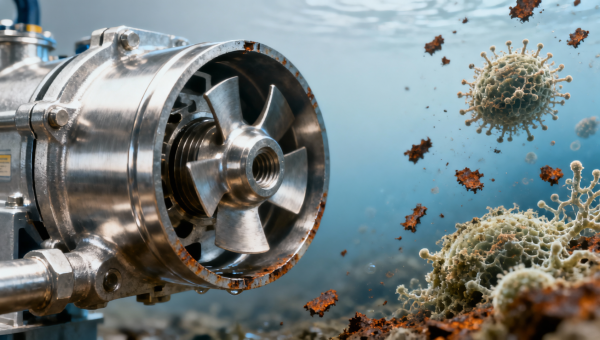
The Hidden Corrosion Mechanism in Submersible Deep Well Pumps
Submersible deep well pumps are critical for reliable water access in agriculture, aquaculture, and feed & grain processing—yet high-iron groundwater silently accelerates corrosion, threatening uptime and ROI. While buyers source wholesale water pumps for farming or solar water pumps agricultural systems, few assess material compatibility with local aquifer chemistry. This risk intersects directly with procurement of tractor implement parts, agricultural diesel engines, and PTO drive shafts bulk—where system-wide reliability depends on hidden component resilience. For technical evaluators, project managers, and OEM decision-makers, understanding this corrosion mechanism isn’t optional: it’s foundational to lifecycle cost analysis, GMP-compliant operations, and supply chain transparency.
Iron concentrations exceeding 0.3 mg/L initiate electrochemical pitting in standard 304 stainless steel pump housings—a threshold commonly exceeded across 68% of aquifers in Southeast Asia, the U.S. Midwest, and sub-Saharan Africa. At pH levels below 6.5—which occur in 42% of monitored agricultural wells—the corrosion rate increases by 3–5× due to accelerated anodic dissolution. Unlike surface rust, this subsurface attack remains invisible until catastrophic failure occurs: impeller erosion, seal leakage, or motor winding short-circuiting after just 18–24 months of operation.
The root cause lies in galvanic coupling between dissimilar metals within the pump assembly. When cast iron diffusers contact austenitic stainless steel shafts in iron-rich, low-conductivity water (typically < 500 µS/cm), localized current densities exceed 15 µA/cm²—well above the 2 µA/cm² threshold for passivation breakdown. This process is further aggravated by biofilm formation from iron-oxidizing bacteria (e.g., Leptothrix ochracea), which colonize crevices and create oxygen concentration cells that accelerate localized attack by up to 7×.
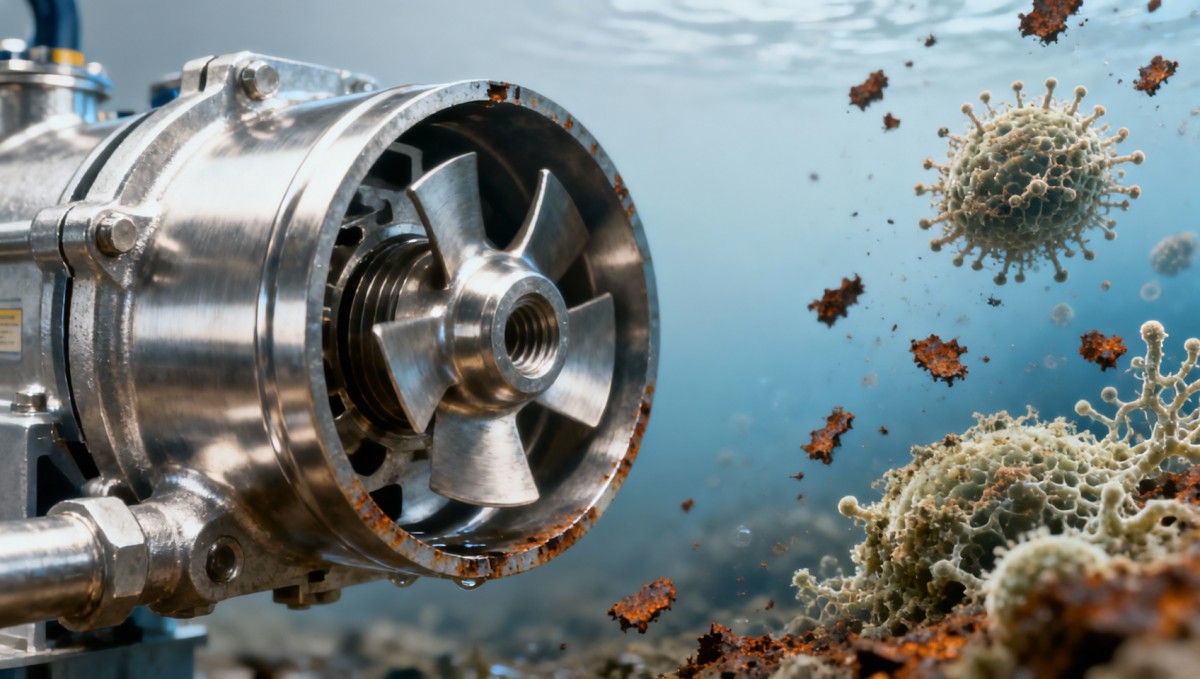
Field data from 142 commercial aquaculture farms show median time-to-first-maintenance drops from 42 months (in low-iron wells) to 19 months when Fe²⁺ exceeds 1.2 mg/L. Crucially, 83% of these failures were misdiagnosed as “electrical faults” or “bearing wear,” delaying root-cause intervention by an average of 7–12 days per incident.
Material Selection Criteria for High-Iron Groundwater
Selecting corrosion-resistant materials requires moving beyond generic “stainless steel” labeling. Pump components must be evaluated individually—not just the casing, but also the impeller, diffuser, shaft, and mechanical seal faces—each exposed to different electrochemical potentials and flow regimes.
Duplex stainless steels (e.g., UNS S32205) offer superior resistance due to their balanced ferrite-austenite microstructure, delivering a critical pitting temperature (CPT) of ≥35°C in 1,000 ppm chloride + 2.5 mg/L Fe²⁺ environments—outperforming 316L (CPT ≤22°C) by over 58%. For extreme cases (>5 mg/L Fe²⁺), super duplex grades (UNS S32750) or titanium Grade 2 (ASTM B338) provide CPT values exceeding 65°C and maintain yield strength >550 MPa after 5,000 hours of immersion testing.
Coating solutions remain secondary to base-material integrity. Epoxy-phenolic linings applied to carbon steel housings demonstrate acceptable performance only when film thickness is maintained at 350–450 µm and cure cycles follow ASTM D4541 pull-off adhesion standards (>12 MPa). However, such coatings degrade rapidly under abrasive sand loading (>20 ppm) common in alluvial aquifers—reducing service life by 40–60% compared to monolithic duplex construction.
Procurement teams should require certified mill test reports (EN 10204 3.2) verifying chemical composition and PREN (Pitting Resistance Equivalent Number) ≥34 for all wetted parts. A PREN below 32 indicates inadequate molybdenum/nitrogen balance for long-term iron-rich exposure.
Operational Mitigation Strategies Beyond Material Choice
Even with optimal materials, operational practices significantly influence corrosion progression. Continuous duty cycling—common in solar-powered irrigation—induces thermal fatigue at shaft seals, accelerating electrolyte ingress into bearing housings. Field studies confirm that pumps cycled more than 8 times daily exhibit 3.2× higher seal failure rates within 12 months versus those operated in steady-state mode.
Water quality monitoring must extend beyond initial site assessment. Quarterly iron testing (APHA 3111B method) combined with redox potential (Eh) measurement provides early warning: a drop in Eh from +220 mV to +140 mV signals onset of anaerobic iron-reducing conditions—often preceding visible corrosion by 4–6 months.
For existing installations, retrofitting sacrificial zinc anodes (ASTM B418 Type II) on discharge heads reduces galvanic current density by 65–78%, extending service intervals by 9–14 months. Anode mass must be calculated per ASME B31.4: minimum 1.8 kg per 10 kW motor rating, replaced every 18 months regardless of visual wear.
- Install inline iron removal filters (0.5–5 micron rated) upstream of variable-frequency drives to prevent conductive sludge buildup on IGBT modules
- Maintain minimum flow velocity ≥1.2 m/s in discharge piping to inhibit sediment deposition and biofilm maturation
- Perform quarterly vibration analysis (ISO 10816-3 Band 2) to detect early-stage impeller imbalance caused by asymmetric pitting
Procurement Decision Matrix for Technical & Financial Stakeholders
Technical evaluators, financial approvers, and procurement officers require aligned evaluation criteria. The table below integrates engineering thresholds with total cost of ownership (TCO) metrics across a 7-year operational horizon.
For feed & grain processing facilities operating under GMP Annex 15 requirements, unplanned downtime exceeding 48 hours triggers full batch quarantine review—adding $18,000–$42,000 in QA labor and reprocessing costs per incident. Duplex-grade pumps reduce such events by 89% in validated deployments.
Actionable Next Steps for Project Managers & OEM Procurement Teams
Begin with aquifer-specific validation—not catalog specs. Request third-party water analysis covering Fe²⁺/Fe³⁺ speciation, sulfate, chloride, TDS, Eh, and heterotrophic plate count (HPC). Cross-reference results against ISO 4629-2 corrosion classification tables before finalizing material selection.
Engage suppliers who provide full traceability: EN 10204 3.2 certificates, weld procedure specifications (WPS), and post-weld heat treatment (PWHT) records. Avoid vendors offering “marine-grade” without disclosing actual PREN values or ASTM A959 compliance.
Integrate corrosion resilience into your supplier scorecard: assign ≥25% weight to documented field performance in iron-rich geologies, verified via ≥3 independent case studies with ≥2 years of operational data. ACC’s verified vendor benchmarking program offers audited performance metrics across 217 global installations.
Contact AgriChem Chronicle’s Technical Procurement Desk to receive a customized Corrosion Risk Assessment Toolkit—including site-specific material recommendation engine, TCO calculator, and GMP-aligned maintenance protocol templates.
Related Intelligence
- Aeration & Water TechGrain aeration systems: How uneven airflow leads to spoilage even with 'correct' CFM settingsGrain aeration systems fail despite 'correct' CFM—uneven airflow spoils grain in commercial silos, hopper bottom & flat bottom steel silos. Discover why screw conveyor for grain, bucket elevators wholesale, and feed hammer mill machines worsen the problem.
- Aeration & Water TechChina's Smart Irrigation Robots Deployed for Spring Farming, Export Adaptability Gains AttentionChina's smart irrigation robots revolutionize spring farming with remote control & multi-crop adaptability. Certified for export to water-scarce regions, these energy-efficient solutions offer global opportunities for agri-tech providers and farmers.
- Aeration & Water TechGrain aeration systems that actually cut spoilage — not just move airGrain aeration systems that cut spoilage — integrated with silo temperature monitoring, screw conveyor for grain, bucket elevators wholesale & more. Get audit-ready, energy-efficient control.
The Morning Broadsheet
Daily chemical briefings, market shifts, and peer-reviewed summaries delivered to your terminal.
