
Submersible Deep Well Pumps for Large Irrigation
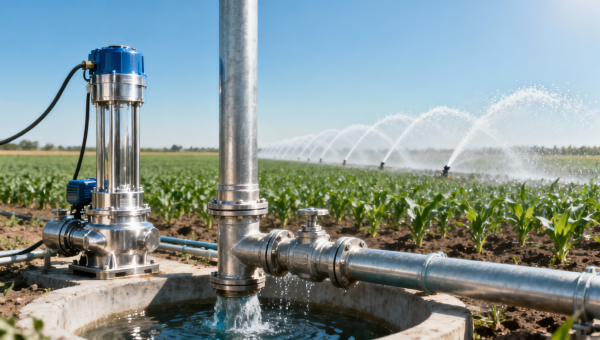
For large-scale irrigation projects, selecting submersible deep well pumps is no longer just a technical choice but a strategic investment in efficiency, reliability, and water security. From solar water pumps agricultural systems to wholesale water pumps for farming, today’s buyers must compare performance, operating costs, and supply chain credibility to identify solutions that match demanding field conditions and long-term procurement goals.
Why are submersible deep well pumps central to large irrigation planning?
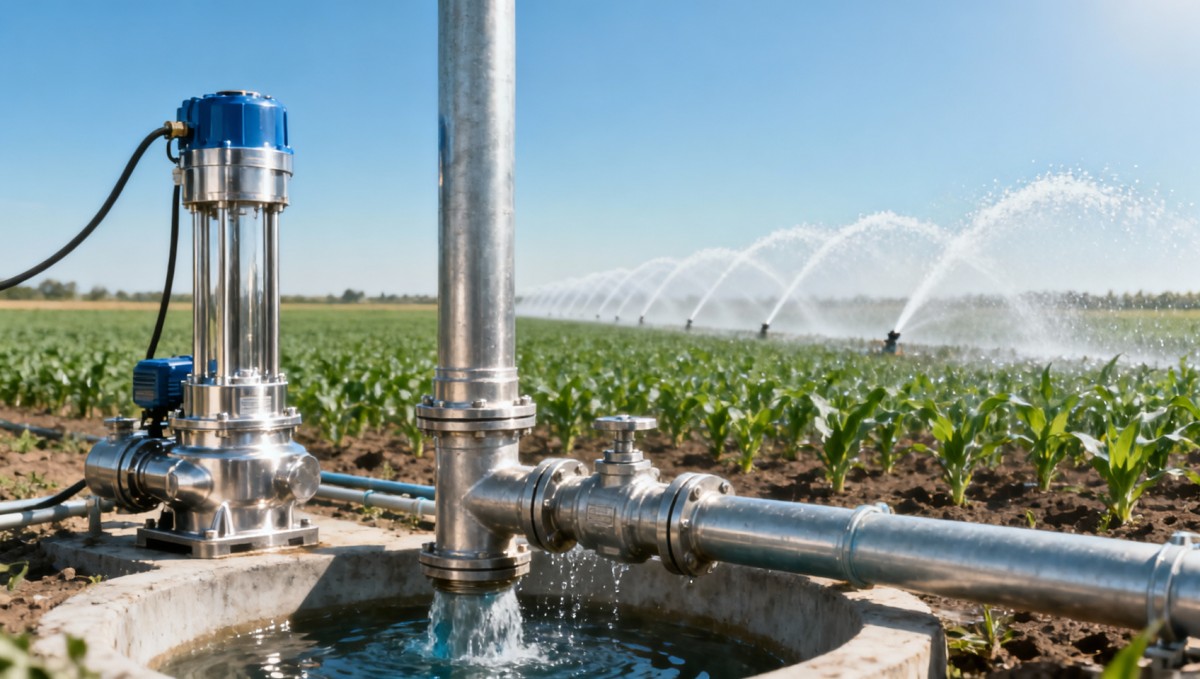
Submersible deep well pumps are designed to operate below the water level inside drilled wells, which allows them to push water upward efficiently across long vertical distances. In large irrigation systems, this matters because pumping depth often ranges from 30 m to more than 200 m, and suction-based surface pumps become impractical or unstable at those levels. For farm operators, project engineers, and procurement teams, the pump is not a standalone item; it is the hydraulic core of the entire irrigation asset.
In broad industrial agriculture, the right submersible deep well pumps support center pivots, drip irrigation blocks, reservoir filling, fertigation transfer, and emergency drought response. Decision-makers are usually balancing 3 competing goals at once: stable flow, controllable operating cost, and low unplanned downtime during peak irrigation windows. Missing one of these variables can disrupt crop schedules, increase labor load, and extend payback periods well beyond the expected 2–4 irrigation seasons.
This is also why buyers increasingly compare submersible deep well pumps with solar water pumps agricultural packages and wholesale water pumps for farming through a wider procurement lens. Beyond nameplate power, they must assess bore diameter compatibility, total dynamic head, voltage conditions, water chemistry, spare parts access, and supplier documentation. In regulated and capital-sensitive sectors, technical suitability and transaction transparency carry equal weight.
For readers of AgriChem Chronicle, the evaluation process is rarely limited to a product brochure. ACC’s value lies in connecting machinery selection with operational risk, compliance expectations, and supply chain traceability. That perspective is especially useful when irrigation investments intersect with food production targets, agro-processing schedules, and institutional budget approvals.
What makes these pumps different from standard agricultural pumping options?
The main distinction is hydraulic positioning. Because submersible deep well pumps work underwater, they avoid priming issues and reduce cavitation risk in deep applications. They are commonly paired with multistage impellers, allowing higher head delivery than many shallow-well alternatives. In practical irrigation planning, that means more consistent pressure at field outlets when the bore depth, pipeline friction, and elevation change are significant.
- They are typically selected for deep groundwater extraction where static water level and pumping level fluctuate seasonally by several meters.
- They fit long-duty cycles, often 6–18 hours per day during irrigation peaks, when thermal stability and motor protection become critical.
- They can integrate with grid, generator, or solar hybrid systems, which is useful in remote agricultural zones with unstable power supply.
For distributors and engineering teams, this also changes after-sales priorities. Instead of only stocking seals and cables, they must prepare for motor matching, control panels, variable frequency drive compatibility, and field troubleshooting related to dry-run protection or voltage imbalance.
Which technical parameters matter most before purchase?
Many irrigation pump projects fail at the specification stage because teams compare only horsepower or outlet size. A better approach is to begin with 5 core variables: required flow rate, total dynamic head, borewell diameter, power supply condition, and water quality profile. If one of these inputs is wrong, the selected submersible deep well pumps may operate outside their efficient duty point, leading to excess energy use and shortened service life.
Flow requirement is usually expressed in cubic meters per hour, while head combines static lift, drawdown, discharge elevation, and line friction losses. In many large irrigation schemes, common specification windows fall between 20–150 m³/h and 40–300 m head, though the actual range depends on crop type, plot size, and distribution method. Drip systems may favor stable pressure and cleaner water, while flood or sprinkler systems may prioritize higher volume delivery.
Motor and materials selection deserve equal attention. Stainless steel wet-end components are often preferred where water contains moderate mineral content or where long service intervals are needed. In sandy wells, impeller wear resistance becomes a commercial issue, not only a technical one, because premature abrasion drives replacement cost and maintenance labor. For quality control and safety managers, cable insulation, motor protection class, and overload safeguards should be confirmed before order release.
The table below summarizes practical specification checkpoints used by technical evaluators and purchasing teams when reviewing submersible deep well pumps for large irrigation and wholesale water pumps for farming programs.
This specification logic helps business evaluators and finance approvers ask better questions. A lower upfront quote may appear attractive, but if the duty point is wrong by even one major parameter, the total cost of ownership can rise through higher kWh use, more shutdowns, and earlier replacement cycles.
How should project teams validate pump suitability?
Validation should follow a simple 4-step technical review rather than a price-first process. First, confirm the pumping water level across dry and wet seasons. Second, calculate design flow and peak hour demand. Third, estimate line losses across the actual discharge route. Fourth, check electrical conditions, including voltage variation and control system compatibility. This reduces the risk of under-sizing or over-sizing the pump.
Field checklist before order confirmation
- Measure static water level and expected drawdown under pumping load, not only initial well depth.
- Review water sample indicators such as sand content, mineral scaling tendency, and corrosive characteristics.
- Confirm whether the site runs on 3-phase grid, diesel generator backup, or solar water pumps agricultural hybrid configuration.
- Request pump curve, motor data, cable recommendation, and installation guidance as part of the quotation package.
When ACC reviews supplier information in this category, documentation quality is often an early trust signal. Clear technical files, realistic lead time communication, and consistent material declarations help buyers separate serious manufacturing partners from trading offers that may not support long-term field performance.
How do submersible deep well pumps compare with other irrigation pumping solutions?
Comparison analysis matters because not every irrigation site requires the same pumping architecture. In some projects, submersible deep well pumps compete with surface centrifugal pumps, vertical turbine pumps, or solar water pumps agricultural packages. The right decision depends on depth, daily runtime, water demand variability, and infrastructure maturity. Procurement teams should compare use-case fit, not just quoted equipment price.
For example, surface pumps may work well when water is drawn from canals, tanks, or shallow sources with limited suction height. Vertical turbine systems can serve high-capacity installations but often require more civil and mechanical alignment work. Solar water pumps agricultural systems can lower fuel dependency in remote areas, but they need careful matching between irradiance profile, storage strategy, and irrigation timing.
The comparison table below helps technical and commercial teams map common irrigation options against decision criteria that influence both performance and capital approval. It is especially useful for distributors, EPC participants, and enterprise buyers comparing wholesale water pumps for farming across multi-site projects.
The key takeaway is that submersible deep well pumps are usually the strongest option when groundwater depth and continuous duty define the project. However, they should be selected as part of a full irrigation system review, including power source strategy, filtration design, and seasonal water demand patterns.
Where do buyers often make the wrong comparison?
A common mistake is comparing a deep well pump with a surface pump only on purchase price. That ignores civil work, downtime risk, energy draw, and expected runtime profile. Another mistake is assuming solar packages automatically reduce lifecycle cost. In reality, a solar water pumps agricultural solution may require additional panels, controls, storage, or hybrid backup to deliver the same irrigation window.
Commercial reviewers should compare at least 6 dimensions: hydraulic fit, power compatibility, maintenance access, spare parts availability, lead time, and operator skill requirement. When those dimensions are documented early, budgeting and board-level approval become more defensible.
What should procurement, compliance, and finance teams check before approval?
In B2B irrigation procurement, pump selection is not complete until documentation, compliance logic, and commercial terms are reviewed together. Procurement officers need clarity on scope of supply. Quality managers need evidence of material consistency and safety provisions. Finance approvers need confidence that maintenance frequency, operating cost, and lead time risk are already considered. This is especially important in projects where irrigation uptime directly affects harvest scheduling or contract farming commitments.
While certification requirements differ by market and application, buyers commonly request traceable technical data, electrical conformity documents where applicable, installation manuals, spare parts lists, and warranty terms with clear exclusions. In export-oriented supply chains, packaging, labeling, and shipment records can also matter. If a supplier cannot support a basic documentation set within 7–15 days of technical clarification, that may signal downstream delivery or service challenges.
ACC’s editorial advantage is relevant here because primary industries increasingly buy under scrutiny. Whether the project sits in agriculture, aquaculture, or resource-intensive processing, institutional buyers expect more than brochure claims. They need reviewed specifications, realistic manufacturing communication, and transparent sourcing logic. This is where informed media-backed intelligence can reduce due-diligence time for project leaders and distributors.
The checklist below is practical for teams evaluating submersible deep well pumps, solar water pumps agricultural assemblies, or wholesale water pumps for farming under multi-stakeholder approval workflows.
Six approval checks before issuing the purchase order
- Confirm the quoted duty point on the pump curve, rather than relying on nominal horsepower or broad catalog ranges.
- Verify materials for impellers, shaft, casing, and cable to match water chemistry and expected service interval.
- Review control panel scope, including dry-run protection, overload protection, and voltage monitoring where necessary.
- Check lead time for both pump delivery and critical spares; common project planning windows range from 2–8 weeks depending on configuration.
- Clarify warranty boundaries, startup conditions, and whether field commissioning support is available.
- Request packing list, manuals, and technical drawings early so site preparation can proceed without delay.
From a financial perspective, lifecycle cost usually matters more than entry price in systems running every day during dry months. A slightly higher-spec pump with better hydraulic matching and safer controls may reduce unscheduled stoppages and energy waste over 12–36 months, which is often the period that internal reviewers use when evaluating operational return.
FAQ: how do buyers reduce risk in large irrigation pump projects?
Search behavior in this category is often practical: buyers want quick answers about sizing, service life, lead times, and application fit. The questions below address common decision points raised by information researchers, project managers, and distributors reviewing submersible deep well pumps for large irrigation.
How do I know whether a submersible deep well pump is the right choice for my farm or project?
It is usually the right choice when your water source is a drilled borewell and the pumping depth exceeds what a surface pump can reliably handle. If your system must run 6–18 hours per day, maintain pressure over long pipe runs, and supply medium to large irrigation blocks, submersible deep well pumps are often the preferred architecture. Final confirmation should come from well data, head calculation, and power review.
What should buyers ask when comparing wholesale water pumps for farming?
Ask for the duty curve, motor specification, material list, bore fit, cable recommendation, and spare parts availability. Also ask whether the quotation includes control panel items, non-return valve, cable join kit, and installation guidance. These details help separate complete project-ready offers from partial quotes that appear cheaper but create extra cost later.
Can solar water pumps agricultural systems replace conventional deep well pumping?
In some remote locations, yes, especially where solar irradiation is favorable and irrigation timing is flexible. But replacement is not automatic. The system must be matched to well depth, required flow, daily pumping window, and whether water storage is available. For large irrigation, hybrid designs that combine solar input with grid or generator support are often more predictable than solar-only operation.
What is a realistic delivery timeline for large irrigation pump orders?
For common configurations, buyers often see commercial lead times in the 2–8 week range. Customized voltage, non-standard materials, or large quantity orders can extend that window. Site readiness should also be planned in parallel, including well confirmation, cable route, control panel location, and discharge piping, so delivery delays do not shift the irrigation start date.
Why consult AgriChem Chronicle before finalizing suppliers or specifications?
Large irrigation investments now sit inside a broader chain of operational and regulatory accountability. A pump that looks acceptable on paper may still expose the buyer to maintenance gaps, weak documentation, or inconsistent supply support. AgriChem Chronicle helps close that gap by placing product selection in a wider decision framework shaped by technical review, industrial procurement logic, and supply chain transparency.
Because ACC serves readers across agricultural machinery, biochemical processing, feed systems, and primary industries, its perspective is especially useful for cross-functional buying teams. Technical evaluators can use the framework to validate hydraulic fit. Procurement teams can compare offer completeness. Business approvers can better judge lifecycle implications. Quality and safety managers can identify documentation gaps before goods ship.
If you are reviewing submersible deep well pumps, solar water pumps agricultural options, or wholesale water pumps for farming, ACC can support the questions that matter most in early-stage and late-stage evaluation. That includes parameter confirmation, application matching, delivery window assessment, documentation review, spare parts logic, and practical comparison between standard and customized pumping packages.
Contact us to discuss your required flow and head range, bore depth, power conditions, target delivery timeline, documentation expectations, and quotation comparison criteria. If your team is screening multiple suppliers, we can help structure a more defensible short list and highlight the technical and commercial checkpoints that should be clarified before commitment.
Related Intelligence
- Aeration & Water Tech2026 Shanghai Fastener Show Adds Aeration & Water Tech ZoneAeration & Water Tech Zone debuts at 2026 Shanghai Fastener Show—featuring corrosion-resistant fasteners for aquaculture & wastewater systems. Discover engineered, smart connection solutions.
- Aeration & Water Tech2026 Shanghai Fastener Show Highlights Aeration & Water TechAeration & Water Tech takes center stage at the 2026 Shanghai Fastener Show — discover energy-efficient, IoT-enabled aeration systems, global procurement trends, and smart infrastructure integration.
- Aeration & Water TechCIBF2026 Marks Earth Day: Zero-Carbon Factory Policy & Battery Recycling AccelerateZero-carbon factory policy & battery recycling take center stage at CIBF2026—key for lithium battery, PV, smart greenhouse, and RAS exporters targeting EU/US markets.
The Morning Broadsheet
Daily chemical briefings, market shifts, and peer-reviewed summaries delivered to your terminal.
