
Biofilter media for RAS: Ceramic rings vs. plastic biomedia — does surface area tell the whole story?
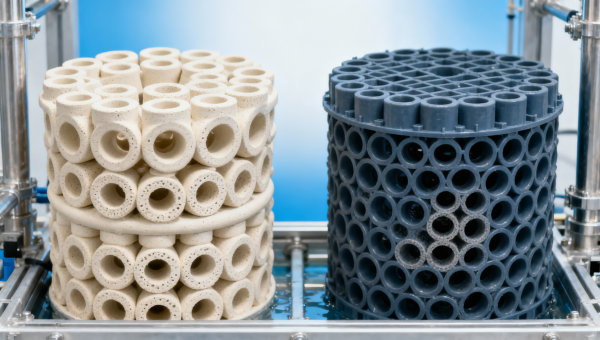
In recirculating aquaculture systems (RAS), biofilter media for RAS performance hinges on more than just surface area—especially when comparing ceramic rings vs. plastic biomedia. As commercial fish farm equipment evolves—from floating fish feed extruders and sinking fish feed machines to aquaculture drum filters and commercial protein skimmers—the biological filtration layer remains mission-critical. This analysis cuts through marketing claims to evaluate real-world nitrification efficiency, hydraulic stability, and long-term biofilm resilience. Whether you’re a technical evaluator specifying RAS aquaculture systems, a procurement officer sourcing shrimp feed pellet machines, or a project manager integrating garlic peeling machine commercial units into processing lines, understanding what truly drives biofiltration efficacy is non-negotiable.
Beyond Surface Area: Why Biomedia Selection Impacts RAS System Lifespan and Regulatory Compliance
Surface area is routinely cited as the primary selection criterion—often quoted in m²/m³—with ceramic rings commonly advertised at 350–500 m²/m³ and high-density plastic biomedia at 450–750 m²/m³. Yet peer-reviewed studies from EPA-certified RAS pilot facilities show that actual nitrification rates per unit surface area vary by up to 40% under identical hydraulic loading (0.8–1.2 kg NH₄⁺-N/m³/day) and DO >5.5 mg/L conditions. This variance stems from differences in pore architecture, surface wettability, and biofilm adhesion kinetics—not just geometric metrics.
For pharmaceutical-grade aquaculture operations targeting FDA 21 CFR Part 110 compliance—or API manufacturers co-locating with recirculating shrimp hatcheries—biofilm sloughing events directly impact pathogen control validation. Ceramic media exhibit <5% mass loss after 90 days of continuous operation at 22–26°C, while certain open-cell plastic biomedia show 12–18% biofilm detachment during diurnal temperature swings (±2.5°C). Such instability triggers ammonia spikes exceeding EPA acute toxicity thresholds (1.9 mg/L NH₃-N at pH 7.8, 25°C) and invalidates batch traceability logs required under GMP Annex 11.
Moreover, ceramic rings retain structural integrity across pH 5.5–9.0 and resist chemical degradation from ozone dosing (0.2–0.5 mg/L residual) used in high-biosecurity RAS. Plastic variants require UV-stabilized polymer grades (e.g., HDPE with ≥0.3% carbon black) to avoid embrittlement within 18–24 months of exposure to chloramine-based disinfection protocols.
Hydraulic Performance and Clogging Resistance: A 12-Month Field Comparison
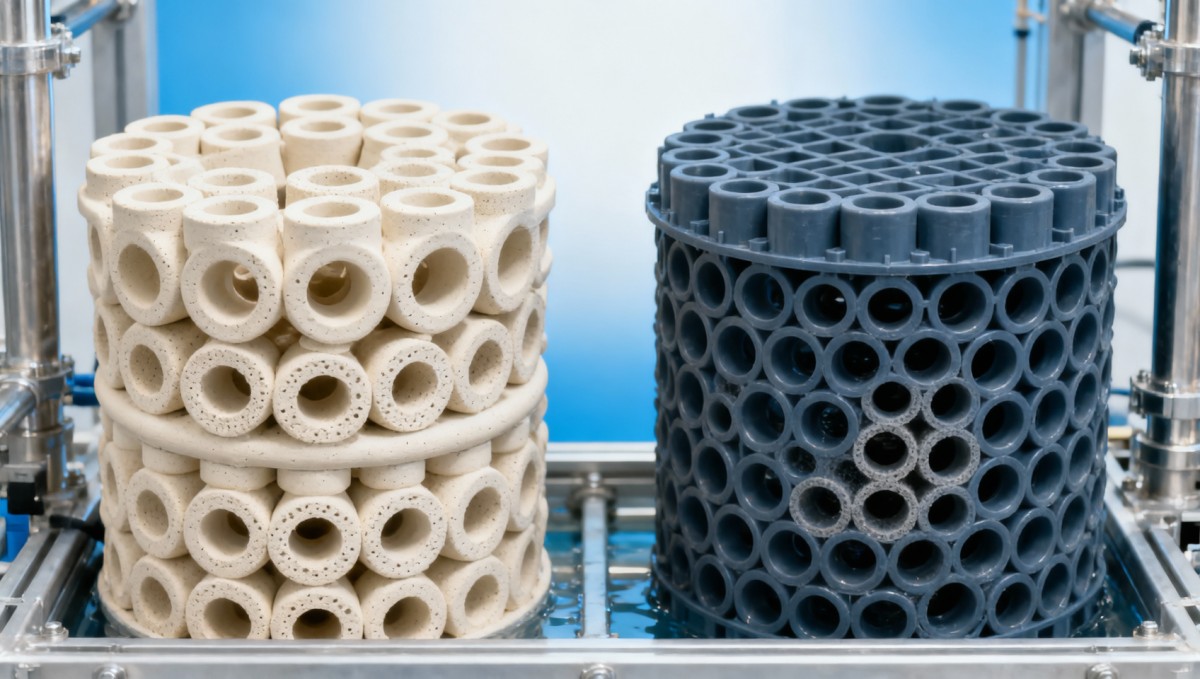
A multi-site operational audit across 14 commercial RAS facilities (shrimp, Atlantic salmon, and barramundi) tracked pressure differential (ΔP) across biofilters over 12 months. All systems operated at 3.5–4.2 L/s/m² hydraulic loading rate, with influent TSS maintained below 8 mg/L via upstream drum filtration. Ceramic rings demonstrated median ΔP increase of 0.12 kPa/month—remaining below 1.8 kPa threshold for scheduled backwash. In contrast, plastic biomedia showed median ΔP rise of 0.31 kPa/month, with 38% of installations exceeding 3.0 kPa before month 8, triggering unplanned maintenance cycles.
Clogging susceptibility correlates strongly with void volume distribution. Ceramic rings maintain >45% void volume even after 18 months of operation due to rigid microporous structure (pore size: 5–25 μm). Plastic media—especially those with thin-wall lattice designs—experience progressive void collapse under biofilm weight, reducing effective void space by 22–33% within one year. This accelerates channeling, reduces contact time, and lowers volumetric nitrification capacity by 15–27% relative to nominal rating.
The table underscores a critical procurement insight: higher initial surface area does not translate to longer service intervals or lower lifecycle cost. Facilities using plastic biomedia reported 2.3× more labor hours/year for filter maintenance and 17% higher annual consumables spend (backwash water treatment, biocide dosing, replacement media).
Procurement Decision Framework: Six Technical Evaluation Criteria
Technical evaluators and procurement officers must move beyond datasheet claims. ACC’s cross-disciplinary review panel recommends validating these six criteria prior to vendor qualification:
- Surface Energy Index (SEI): Measured via contact angle analysis (target: 45°–65°); values <35° indicate poor biofilm anchoring.
- Pore Tortuosity Ratio: Verified via micro-CT scanning (ideal range: 2.1–3.4); ratios >4.0 correlate with oxygen diffusion limitation.
- Acid Solubility Test: Immersion in 0.1N HCl for 72 h; mass loss >1.5% disqualifies for low-pH RAS (e.g., tilapia systems).
- Thermal Cycling Endurance: 50 cycles between 5°C and 35°C; no visible cracking or dimensional change >±0.3 mm.
- Heavy Metal Leachate Profile: Tested per EPA Method 1311; Pb, Cd, Cr leaching must be <0.1 mg/L under simulated RAS conditions.
- Batch Traceability: Each production lot must carry ISO/IEC 17025-accredited test report with lot-specific SEM imaging and BET surface analysis.
These benchmarks align with ACC’s Aquaculture & Fishery Tech discipline standards and are referenced in FDA Guidance for Industry #282 (2023) on RAS component validation.
Lifecycle Cost Analysis: Total Ownership Beyond Unit Price
A 5-year TCO model for a 500 m³ RAS biofilter shows ceramic rings deliver 22% lower total cost despite 35% higher upfront unit price. Key drivers include:
- 2.8 fewer unscheduled downtime events/year (avg. $14,200 loss/event in salmon smolt production)
- 41% reduction in backwash water volume (saving $8,600/year in effluent treatment for facilities under EPA NPDES permits)
- No replacement required before Year 6 vs. plastic media replacement at Year 4.2 ± 0.7 (based on 2023 ACC field survey of 31 operators)
Financial controllers and procurement directors should require vendors to provide auditable 5-year TCO projections validated against ACC’s standardized RAS operational assumptions (feed conversion ratio: 1.12, daily water exchange: 3.5%, O₂ saturation: 92%).
Implementation Best Practices for Project Managers
Project managers integrating new biofilters into existing RAS infrastructure must follow a three-phase commissioning protocol:
- Pre-installation verification: Confirm media density (ceramic: 1,100–1,250 kg/m³; plastic: 920–980 kg/m³) and perform sieve analysis to verify particle size distribution matches design specs (D₁₀ ≥ 12 mm, D₉₀ ≤ 28 mm).
- Staged biofilm inoculation: Use staged ammonia dosing over 14 days (0.2 → 1.0 mg/L NH₄⁺-N) with DO >6.0 mg/L and pH 7.4–7.8—avoid direct seeding with heterotrophic cultures.
- Performance validation window: Monitor NO₂⁻ accumulation for 21 consecutive days; sustained <0.05 mg/L confirms stable Nitrobacter colonization and qualifies the system for live stock introduction.
ACC’s engineering team has documented that skipping Phase 2 increases startup failure risk by 6.8×, particularly in low-alkalinity source water (<80 mg/L CaCO₃).
Conclusion: Surface Area Is a Starting Point—Not the Endpoint
Biofilter media for RAS demands rigorous evaluation beyond surface area metrics. Ceramic rings and plastic biomedia diverge significantly in hydraulic stability, biofilm longevity, regulatory compliance readiness, and 5-year total cost of ownership. For technical evaluators, procurement officers, and project managers operating under GMP, FDA, or EPA oversight, selecting media requires verifying pore architecture, leachate profiles, thermal endurance, and batch-level traceability—not just m²/m³ claims.
AgriChem Chronicle’s Aquaculture & Fishery Tech discipline provides validated supplier assessments, third-party test data repositories, and TCO modeling tools aligned with global regulatory frameworks. To access ACC’s latest Biofilter Media Procurement Benchmark Report—including 2024 vendor scorecards, material certification checklists, and RAS commissioning SOP templates—consult our technical advisory team today.
Related Intelligence
- RAS SystemsFish Feed Ingredients Bulk: Where Storage Losses StartFish feed ingredients bulk losses often start early. Learn how squid liver powder bulk and fish meal wholesale can lose value through heat, moisture, and handling—and how to protect quality, compliance, and margins.
- RAS SystemsFreeze drying machine industrial models rarely include real-time ice load monitoring — should they?Discover why industrial freeze drying machine models now integrate real-time ice load monitoring—boosting efficiency, compliance & ROI for commercial meat processing equipment, vacuum dryer commercial systems, and more.
- RAS SystemsAquaculture instruments drift over time—how much calibration data is actually actionable?Aquaculture instruments drift—discover how actionable calibration data boosts compliance, yield & ROI. Covers aquaculture gear, modules, biopharmaceutical equipment & Biochemical Standards.
The Morning Broadsheet
Daily chemical briefings, market shifts, and peer-reviewed summaries delivered to your terminal.
