
Who Should Buy a Round Baler Machine
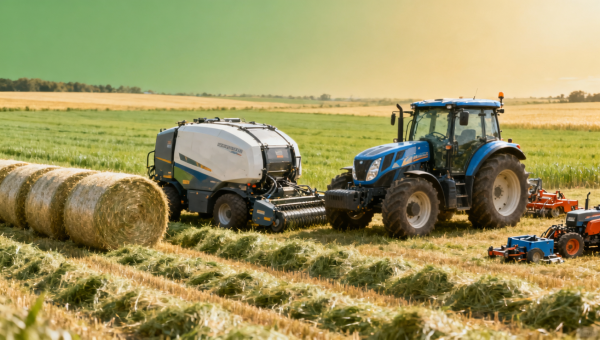
A round baler machine is not the right investment for every farm or contractor, but for operations focused on efficient forage handling, lower labor input, and faster baling cycles, it can deliver clear value. From buyers comparing a square baler machine to teams sourcing tractor implement parts, pto drive shafts bulk, agricultural tires wholesale, or grass forage chopper systems, understanding who truly benefits is the first step toward a smarter equipment decision.
Which operations gain the most from a round baler machine?
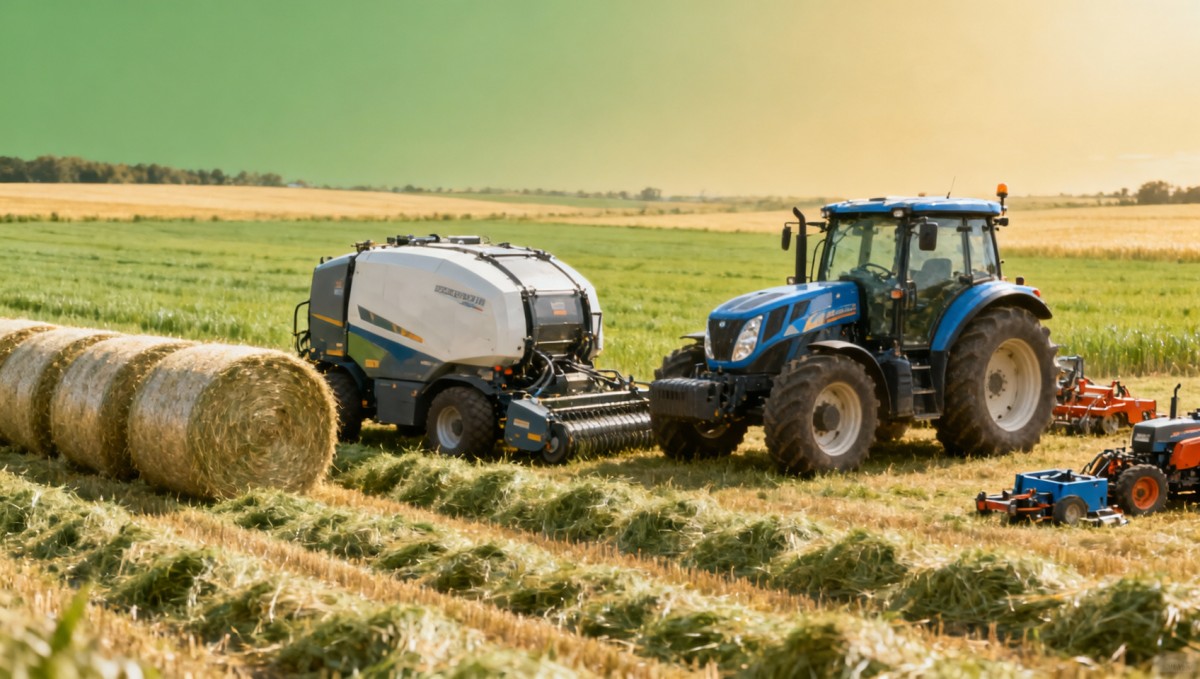
A round baler machine is typically best suited to farms, forage contractors, and livestock enterprises that need to compress hay, straw, or silage into manageable round bales within a short field window. In most practical buying scenarios, the strongest candidates are not defined by farm size alone, but by annual bale volume, crop moisture conditions, labor availability, and transport logistics across 1 to 3 harvesting peaks each season.
For technical evaluators and project managers, the core question is simple: does the operation need higher throughput with fewer manual handling steps? A round baler machine becomes more attractive when the business wants to reduce loose forage losses, shorten field exposure after cutting, and standardize bale size for storage or resale. These needs are common in dairy units, cattle feed operations, mixed farms, and custom baling service providers.
For procurement teams and finance approvers, the investment case usually strengthens when labor is tight, weather windows are narrow, and multiple implements must work in sequence. If a farm already depends on mowers, rakes, forage choppers, and tractor implement parts with synchronized maintenance cycles, adding a round baler machine can improve overall equipment utilization rather than acting as a standalone purchase.
Distributors and dealers should also note that buyer suitability often depends on whether the customer intends to produce dry hay, semi-moist forage, or wrapped silage bales. A machine that works well in one moisture range may require different chamber design, pickup width, or wrapping compatibility in another. That is why serious buyers increasingly look beyond price and ask for field-fit analysis before final model selection.
Typical buyer profiles with the strongest fit
- Livestock farms producing regular hay or silage over 2 to 4 harvest cycles per year and needing predictable bale handling.
- Custom baling contractors serving multiple farms where faster turnaround per field directly affects seasonal revenue.
- Mixed crop farms managing straw collection after grain harvest and seeking to lower field cleanup time.
- Regional dealers building machinery packages that also include pto drive shafts bulk supply, pickup wear parts, and agricultural tires wholesale support.
Who should be more cautious before buying
A round baler machine may be a weaker fit for very small farms with low annual forage volume, operations lacking compatible tractor power, or businesses whose downstream handling systems are built around square bale stacking. It may also be less suitable where long-distance transport efficiency is the highest priority, because bale geometry affects trailer loading density and warehouse planning.
How does a round baler compare with a square baler machine in real procurement decisions?
Many buyers begin with a direct comparison between a round baler machine and a square baler machine. This is the right starting point because the choice affects labor, storage, feeding routines, transport cost, and customer expectations. In B2B procurement, the wrong baler type can create downstream inefficiencies for 3 to 7 years, well beyond the initial machine purchase cycle.
A round baler machine generally favors speed, field flexibility, and lower labor dependency. A square baler machine often favors stacking efficiency, more uniform package geometry, and easier truck loading in certain commercial distribution chains. Neither is universally better. The better choice depends on whether the business values rapid baling in changing weather or tighter logistics in storage and resale.
Technical assessment should also include the entire forage system. If the operation already uses a grass forage chopper for part of the crop and bales another part for storage flexibility, the round baler machine can complement rather than replace chopping. In contrast, if a customer sells baled product into a distribution network that demands dense rectangular loads, the square format may still hold an advantage.
The table below helps procurement teams compare the two options across practical decision points rather than broad marketing claims.
This comparison shows why procurement decisions should not stop at machine type. Buyers should evaluate bale destination, operator skill level, tractor compatibility, and handling equipment already in use. In many cases, the most economical choice over a 24 to 60 month period is the one that reduces process friction across the full forage chain, not simply the one with the lowest acquisition price.
Three questions that clarify the better format
- Will most bales be fed on-site, sold locally, or shipped over longer distances?
- Does the operation have enough labor and handling equipment during 2 to 6 peak weeks?
- Is the existing tractor fleet matched to the baler’s PTO and hydraulic demand?
What technical and operational signs indicate a good round baler investment?
A round baler machine makes the most sense when technical conditions support reliable output. Procurement and engineering teams should look at crop type, field roughness, tractor horsepower range, pickup width, bale diameter options, wrapping needs, and spare parts access. Typical evaluation cycles include at least 5 key checks: power match, bale density control, feed system design, maintenance access, and local service capability.
One common mistake is to focus on bale size without verifying driveline durability. Buyers sourcing pto drive shafts bulk or related transmission components already know that torque loads spike under inconsistent windrows or wet forage. A balanced selection process should examine not only rated PTO input but also driveline protection, chain or belt condition requirements, and the replacement lead time for critical wear parts during harvest.
Another signal of suitability is how often the machine will run in a compressed harvest window. If the business expects repeated operation over 8 to 12 hour days during a 2 to 3 week peak, serviceability matters as much as productivity. Easy access to bearings, belts, rollers, lubrication points, and net wrap systems can reduce downtime significantly when labor and weather pressure are high.
Operations using variable field conditions should also assess tire and chassis support. Agricultural tires wholesale sourcing is often discussed separately, but tire size, flotation, and stubble resistance directly affect transport stability and soil impact. For uneven ground or soft fields, the machine must maintain pickup performance without excessive vibration, especially where crop quality preservation is tied to feed value and storage stability.
Typical technical checkpoints before approval
The table below summarizes common screening items that technical evaluators, quality teams, and project leads can use before issuing an RFQ or moving to a supplier shortlist.
This checklist helps translate technical suitability into procurement clarity. A round baler machine is usually a good investment when the operation can verify machine-tractor fit, predictable crop flow, realistic service support, and a clear use case for the resulting bale format. If any of these are uncertain, a site-specific review is more valuable than rushing toward a quote.
Operational indicators that often justify the purchase
- The farm repeatedly loses forage quality because manual or slower baling extends field exposure beyond the target window.
- The business needs to serve multiple fields per day and cannot allocate large teams during peak cutting periods.
- There is a practical plan for bale transport, wrapping, stacking, or direct feeding after production.
What should procurement, finance, and compliance teams check before placing an order?
Buying a round baler machine is rarely a one-line purchasing decision. Procurement professionals need to assess commercial terms, spare parts planning, operator training, warranty scope, and delivery scheduling. Finance reviewers will want to know whether the machine supports measurable labor savings or throughput gains across a 2 to 5 year planning horizon. Safety and quality teams will ask whether guards, manuals, decals, and maintenance procedures are clearly documented.
In cross-border sourcing, compliance checks should also cover origin documentation, packing standards, shipment timing, and after-sales response commitments. While round balers are not regulated in the same way as chemical or pharmaceutical products, institutional buyers still expect disciplined supplier transparency. This is especially true for organizations already accustomed to GMP, EPA, or FDA-oriented procurement frameworks in adjacent business units, where documentation habits are stricter.
For business evaluators and distributors, the most useful procurement model is often a staged review with 4 steps: demand confirmation, technical screening, commercial comparison, and service validation. This reduces the risk of approving a machine that appears cost-effective on paper but creates downstream friction through slow spare parts supply or inconsistent operator support during the first harvest season.
AgriChem Chronicle supports this decision process by framing machinery selection within broader industrial procurement logic. Because ACC covers agricultural and forestry machinery alongside fine chemicals, feed processing, and regulated primary industries, its editorial approach emphasizes specification discipline, traceability, and decision-ready comparisons that matter to institutional buyers rather than one-dimensional product promotion.
Procurement review matrix for a round baler machine
Before final approval, many organizations use a scoring matrix. The table below outlines a practical framework for comparing suppliers or machine configurations.
This framework is especially useful when several departments influence the purchase. It keeps technical fit, commercial risk, and operational readiness in one view. For many enterprises, the difference between a successful round baler machine purchase and a problematic one lies less in the machine itself and more in how clearly these pre-order checks are completed.
Five high-value questions to ask suppliers
- What tractor power and hydraulic conditions are required for stable operation in our crop type?
- Which wear parts should be stocked locally before the first season starts?
- What is the realistic lead time for machine delivery and for urgent spare parts support?
- How is operator training provided during setup, adjustment, and initial field use?
- Can the supplier explain when a square baler machine would actually be the better option?
Common misconceptions, risk points, and buying guidance for decision-makers
One frequent misconception is that a round baler machine is automatically the right choice for any farm that handles forage. In reality, suitability depends on process fit. If bale stacking density, container loading, or resale logistics drive the economics, the machine may not deliver the expected advantage. Another misconception is that the baler can solve upstream crop preparation problems. Poor mowing, raking, or windrow consistency will still reduce bale quality and operating efficiency.
A second risk point is underestimating total system cost. The machine itself is only one part of the decision. Buyers also need to account for tractor compatibility, maintenance stock, film or net consumption, field transport, tire wear, and possible need for additional handling attachments. Cost-conscious finance teams should review the full operating chain over an entire season rather than judging value through purchase price alone.
A third issue involves service assumptions. Some buyers approve a machine based on attractive commercial terms, only to discover that spare parts transit takes 2 to 4 weeks during harvest. That delay can erase the expected benefit of faster baling. A practical buying rule is simple: if the machine is considered mission-critical during a short field window, then parts and support readiness deserve the same attention as capacity and price.
For information researchers and enterprise decision-makers, the better path is to treat the round baler machine as part of a forage system investment. That means reviewing neighboring equipment such as grass forage chopper units, driveline components, and transport hardware together. When these decisions are integrated, the machine is far more likely to produce operational value instead of becoming a disconnected asset.
FAQ for buyers comparing round baler options
How large should an operation be before a round baler machine makes sense?
There is no single acreage threshold. A better indicator is recurring bale demand across at least one major harvest cycle, combined with a need to reduce labor or respond quickly within narrow weather windows. Even mid-sized farms can justify the investment if they bale regularly, outsource expensively, or operate multiple forage fields that must be cleared within days rather than weeks.
Is a round baler machine always cheaper to run than a square baler machine?
Not always. The operating cost depends on throughput, bale handling, transport route, and end use. A round baler machine may reduce labor and simplify field work, but a square baler machine can improve storage density and truck loading efficiency. The right comparison should include labor hours, fuel use, handling equipment, and downstream logistics over a full season.
What is the usual lead time for procurement and startup?
Lead time varies by supplier, season, and whether stock or custom configuration is involved. In practical terms, buyers should plan for several stages: specification confirmation, commercial review, production or allocation, shipment, and commissioning. For seasonal equipment, starting the procurement process 4 to 12 weeks before the intended field date is usually safer than waiting until the harvest window is near.
What are the most important documents to request?
Request a detailed specification sheet, parts list for routine wear items, operating and safety manual, warranty terms, packing details, and a clear statement of tractor compatibility. For import purchases, shipping documents and origin information should also be confirmed early. These documents help procurement, technical, and safety teams review the same machine from different decision angles.
Why consult AgriChem Chronicle before shortlisting suppliers?
AgriChem Chronicle serves institutional buyers and industrial operators who need more than basic product descriptions. In sectors where machinery, biochemical inputs, feed processing, and regulated supply chains often intersect, ACC brings a disciplined editorial lens to technical evaluation. That matters when a round baler machine purchase must satisfy not only field operators, but also procurement managers, finance controllers, quality stakeholders, and regional distribution partners.
Our advantage is not generic promotion. ACC connects agricultural and forestry machinery insight with broader primary-industry procurement logic, including documentation quality, supplier transparency, and practical implementation planning. For teams comparing a round baler machine, a square baler machine, forage processing systems, or related components such as tractor implement parts and pto drive shafts bulk supply, this cross-sector perspective reduces avoidable decision gaps.
If your organization is building a shortlist, preparing an internal approval file, or evaluating supplier positioning for distribution, we can help you clarify 6 high-impact areas: operating scenario fit, specification review, service readiness, commercial comparison, delivery timing, and risk screening. This is particularly useful when the purchase affects seasonal operations and downtime carries high opportunity cost.
Contact AgriChem Chronicle to discuss round baler machine selection, compare bale format strategies, review delivery-cycle assumptions, or assess how related systems such as grass forage chopper lines, agricultural tires wholesale sourcing, and spare parts planning should be aligned. If you need help with parameter confirmation, product selection, supplier comparison, compliance documentation habits, or quote-stage evaluation, ACC can support a more informed and defensible buying process.
Related Intelligence
- Heavy Agri MachineryIndia Launches Anti-Dumping Review on Chinese TractorsIndia's anti-dumping review on Chinese tractors may raise duties from 22.3% to 28.5% — critical for exporters, distributors & supply chain teams. Act now.
- Heavy Agri MachineryIndia Launches AD Review on Chinese Tractors, Tariff May Rise to 28.5%India's AD review on Chinese tractors may raise tariffs to 28.5% — critical insights for exporters, importers & agri-machinery stakeholders.
- Heavy Agri MachineryIndia Launches Anti-Dumping Review on Chinese TractorsIndia's anti-dumping review on Chinese tractors (≥50HP, smart hydraulic suspension) may raise duties to 22.5–28.5%. Exporters, CKD assemblers & suppliers: act now to assess risk and compliance.
The Morning Broadsheet
Daily chemical briefings, market shifts, and peer-reviewed summaries delivered to your terminal.
