

The Authority in Global Agricultural Chemistry & Bio-Resources
What affects hay balers wholesale pricing more than many expect
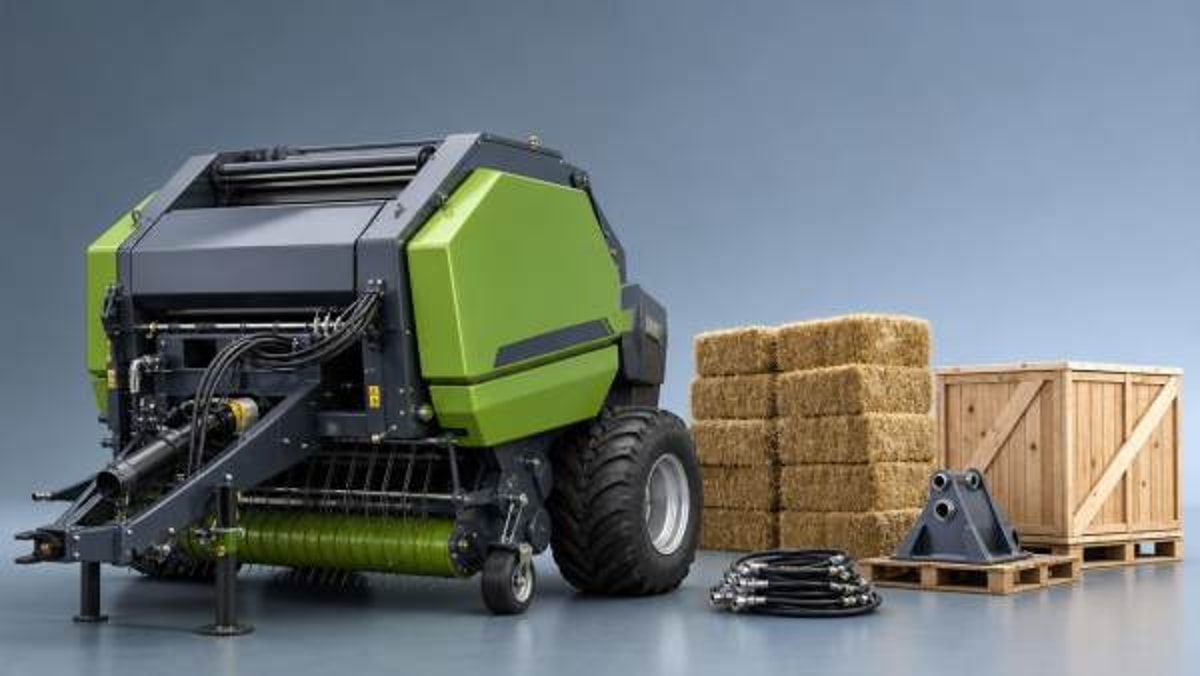
For business evaluators, hay balers wholesale pricing is rarely driven by unit size alone. Factors such as steel volatility, hydraulic system specs, OEM capacity, compliance requirements, freight exposure, and seasonal dealer incentives can shift quotations far more than many buyers anticipate. Understanding these hidden variables helps procurement teams benchmark offers more accurately, reduce sourcing risk, and negotiate from a position of stronger market intelligence.
Why hay balers wholesale quotes often vary more than expected
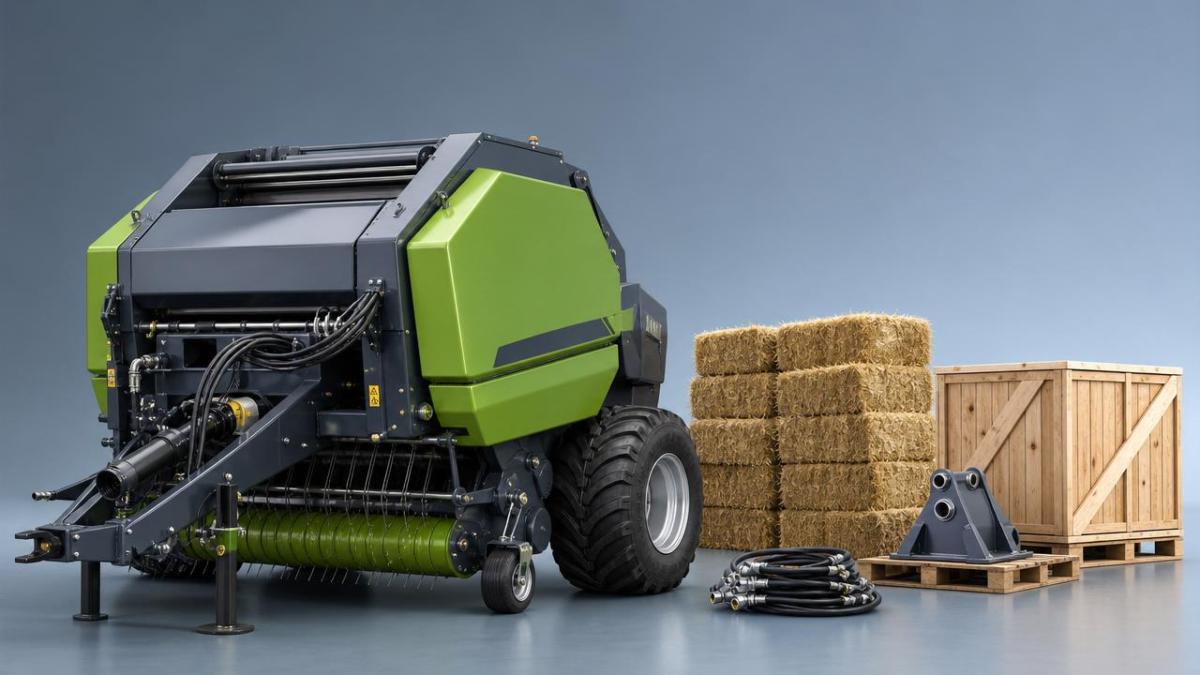
In agricultural machinery sourcing, a wholesale quote for a hay baler can look straightforward on paper and still conceal major cost drivers. Two machines with similar bale dimensions may differ sharply in list price because of frame material thickness, pickup assembly design, knotter origin, axle rating, electronic monitoring, or the supplier’s production backlog. For business evaluators, this is where cost analysis becomes more complex than a simple price-per-unit comparison.
The phrase hay balers wholesale also covers several commercial channels: direct OEM supply, export trading, dealership inventory, and contract manufacturing arrangements. Each channel carries a different overhead structure, warranty exposure, documentation standard, and logistics burden. A quote that appears lower at first glance may exclude setup parts, export packaging, field commissioning, or spare kits that another seller includes.
For ACC readers in primary industries, the practical lesson is clear: pricing analysis should be treated as a multi-variable procurement exercise. As with regulated inputs in chemicals or feed processing, the visible quotation is only one layer. The real commercial assessment must account for manufacturing quality, traceability, operational uptime, freight sensitivity, and the probability of post-sale support.
- Base machine configuration may exclude moisture sensors, bale counters, tire upgrades, or heavy-duty driveline options.
- Supplier location affects ocean freight, inland transport, customs handling, and lead-time risk.
- Production scale influences raw material purchasing power and the ability to hold stable pricing during steel or component volatility.
- After-sales commitments, documentation depth, and parts support can add cost but reduce lifecycle risk.
Which hidden cost drivers matter most in hay balers wholesale procurement?
When evaluating hay balers wholesale offers, business teams should break price into material, component, compliance, capacity, and delivery layers. This method is more reliable than comparing machine category alone. In many cases, the machine type explains less of the final quotation than the technical and commercial conditions behind it.
The table below outlines common cost drivers that materially affect wholesale pricing and why they often escape a first-pass review.
This comparison shows why the lowest hay balers wholesale quotation is not automatically the most economical option. A modest difference in component quality or logistics structure can later translate into missed harvest windows, higher service calls, and more expensive spare procurement.
Material and component volatility
Steel pricing remains one of the clearest external variables. Balers depend on fabricated frames, rotating assemblies, pickup tines, rollers, shields, and chassis elements. If a supplier purchases steel on short contracts rather than long-term hedged arrangements, prices may move quickly from month to month. The same logic applies to bearings, tires, chains, hydraulic fittings, and control electronics.
Capacity utilization at the factory
Wholesale buyers often overlook factory loading. An OEM with a near-full schedule may protect margin by quoting higher, while a plant seeking to fill production slots may offer tactical discounts. However, evaluators should ask whether discounting reflects efficient scale or underutilization caused by inconsistent demand, unstable quality, or weak after-sales networks.
Specification creep during negotiation
Another frequent issue in hay balers wholesale purchasing is quote drift. A first proposal may be based on a standard axle, manual lubrication points, or limited electrical monitoring. Once procurement requests tire changes, crop-adapted pickup width, safety decals for destination markets, or bundled service parts, the “same machine” can become materially more expensive.
How technical specifications change wholesale price faster than buyers assume
Technical specifications do not just affect field performance; they directly reshape manufacturing cost, shipping profile, and servicing requirements. For evaluators, the smartest approach is to identify which specifications materially improve the operating case and which simply add budget without proportional return.
The table below can be used as a practical screening tool when comparing hay balers wholesale offers from different suppliers.
For many buyers, the right answer is not the most advanced spec package. It is the configuration that fits throughput requirements, operator skill level, service availability, and total cost of ownership. A balanced quote often outperforms both the cheapest and the most feature-rich option.
- Ask whether quoted bale density is achieved under standard crop conditions or only under ideal test assumptions.
- Confirm whether control systems are integrated at the factory or added late in assembly.
- Review wear-part lists early, especially for tines, belts, chains, bearings, and knotter consumables.
What procurement teams should check beyond the base hay balers wholesale quote
A disciplined procurement process reduces the chance of price surprises and post-award disputes. Business evaluators should not treat machinery buying differently from other industrial sourcing categories. Document control, commercial definitions, and compliance review matter just as much here as in chemical inputs or processing equipment.
A practical evaluation checklist
- Define the operating scenario first. Annual acreage, crop type, field condition, towing power, and expected bale output should be documented before requesting a final quote.
- Normalize quote scope. Ensure every supplier states whether tools, spare kits, manuals, setup support, and destination-specific labeling are included.
- Separate machine cost from landed cost. Freight, insurance, duties, inland trucking, and packaging should be shown as distinct lines.
- Review lead time by stage. Fabrication, assembly, testing, export booking, and customs clearance should each be identified.
- Assess supplier documentation quality. Serial traceability, inspection records, and parts manuals often reveal the maturity of the manufacturer.
This framework is especially useful when reviewing hay balers wholesale sourcing across multiple regions. What appears to be a pricing advantage can vanish after adding destination packaging, replacement parts lead time, and commissioning support.
Questions that improve negotiation quality
- Which components are sourced externally, and are there alternative approved suppliers?
- How long is the current production queue for the quoted configuration?
- What inspection or run-test routine is completed before shipment?
- Which spare parts are considered critical for the first season of use?
- Can the supplier hold pricing for a defined validity period if steel or freight moves sharply?
How compliance, documentation, and trade terms affect price and risk
Hay balers are not purchased in a regulatory vacuum. Destination markets may require safety markings, operator documentation, emissions-related compatibility for towing equipment, or import documentation standards that affect packaging and shipment release. While the machine itself may be mechanically similar, the export-ready version can cost more because documentation work and quality control expand.
For ACC’s audience, this resembles procurement patterns in regulated sectors: documentation quality is not administrative overhead alone; it is a risk-control mechanism. In hay balers wholesale transactions, incomplete manuals, weak parts coding, or ambiguous warranty terms can generate more downstream cost than a moderate difference in factory price.
Trade terms also matter. An ex-works price may look attractive but shifts loading, inland transport, export clearance, and damage exposure to the buyer. FOB or CIF structures may appear higher, yet they provide a better basis for comparison if the supplier has stronger shipping coordination and packaging discipline.
Common misconceptions that distort hay balers wholesale benchmarking
“If bale size is similar, pricing should be similar”
Not necessarily. Bale size says little about metal thickness, driveline quality, field endurance, or control sophistication. Machines that produce similar output dimensions can have very different service lives and maintenance burdens.
“The cheapest wholesale quote gives the best margin potential”
This assumption ignores landed cost and support cost. If the lower-priced unit requires more frequent downtime, delayed spare parts, or extra setup work, resale margin or operating return can deteriorate quickly.
“All suppliers describe specifications the same way”
Specification language varies. One supplier’s standard package may include options another treats as upgrades. Procurement teams should request a normalized specification sheet and a deviation list before comparing offers.
FAQ: what business evaluators ask about hay balers wholesale pricing
How should I compare hay balers wholesale quotes from different countries?
Start with a common commercial basis. Convert all offers to the same trade term, currency date, and included scope. Then compare machine specification, lead time, export packaging, documentation, spare parts, and warranty response. Country-to-country comparisons are unreliable if freight and after-sales assumptions are mixed into the machine price differently.
What usually changes the final quotation late in the process?
Late-stage changes often come from specification refinement, destination compliance requirements, accessory additions, and freight updates. Production scheduling can also change price if the factory moves from open capacity to peak booking season.
Is it better to buy standard models or request custom configuration?
Standard models usually provide faster lead times and lower validation risk. Customization is justified when field conditions, throughput targets, or regional service realities demand it. The key is to distinguish between operationally necessary customization and preference-based additions that do not improve return.
What documents should be requested before award?
Ask for a detailed specification sheet, parts list outline, warranty terms, inspection or test summary if available, packaging method, trade term definition, and a lead-time breakdown. If the supplier cannot present clear documentation, quote transparency may be weaker than it first appears.
Why informed market intelligence improves machinery sourcing decisions
Hay balers wholesale pricing is shaped by more than machine size, and experienced evaluators know that the real challenge is not obtaining a quote but interpreting it correctly. The strongest sourcing decisions come from combining technical scrutiny, logistics visibility, supplier due diligence, and realistic total-cost modeling.
AgriChem Chronicle supports this kind of decision-making by connecting machinery procurement with the broader discipline of industrial market intelligence. Our editorial approach reflects the same rigor demanded across agricultural systems, feed processing, bio-based production, and regulated supply chains. That perspective helps buyers ask sharper questions and avoid simplistic price comparisons.
Why choose us for deeper procurement insight
If your team is reviewing hay balers wholesale opportunities and needs sharper commercial clarity, ACC can help frame the evaluation with industry-grounded analysis. We focus on the variables that influence sourcing quality in real transactions: parameter confirmation, model selection logic, lead-time exposure, compliance expectations, documentation depth, and supplier communication quality.
You can reach out for support around configuration comparison, quotation structure review, delivery-cycle assessment, destination-market documentation concerns, spare-parts planning, and price benchmarking across sourcing channels. For business evaluators working under time pressure or budget scrutiny, that kind of targeted intelligence can make negotiation more precise and procurement decisions more defensible.
Related Intelligence
- Heavy Agri MachineryHow Agri & Forestry machinery manufacturers differ after deliveryAgri & Forestry machinery manufacturers differ most after delivery—compare parts support, technical service, training, and compliance to reduce downtime and total ownership cost.
- Heavy Agri MachineryWhich Agri & Forestry machinery specifications matter in real use?Agri & Forestry machinery specifications explained for real use: learn which ratings truly affect efficiency, safety, durability, and cost before you compare or buy.
- Heavy Agri MachineryRound baler machine pickup width vs field efficiencyRound baler machine pickup width affects field efficiency, fuel use, and bale quality. Learn how to match width to windrows, crop conditions, and tractor capacity.
The Morning Broadsheet
Daily chemical briefings, market shifts, and peer-reviewed summaries delivered to your terminal.
