

The Authority in Global Agricultural Chemistry & Bio-Resources
How Agri & Forestry machinery manufacturers differ after delivery
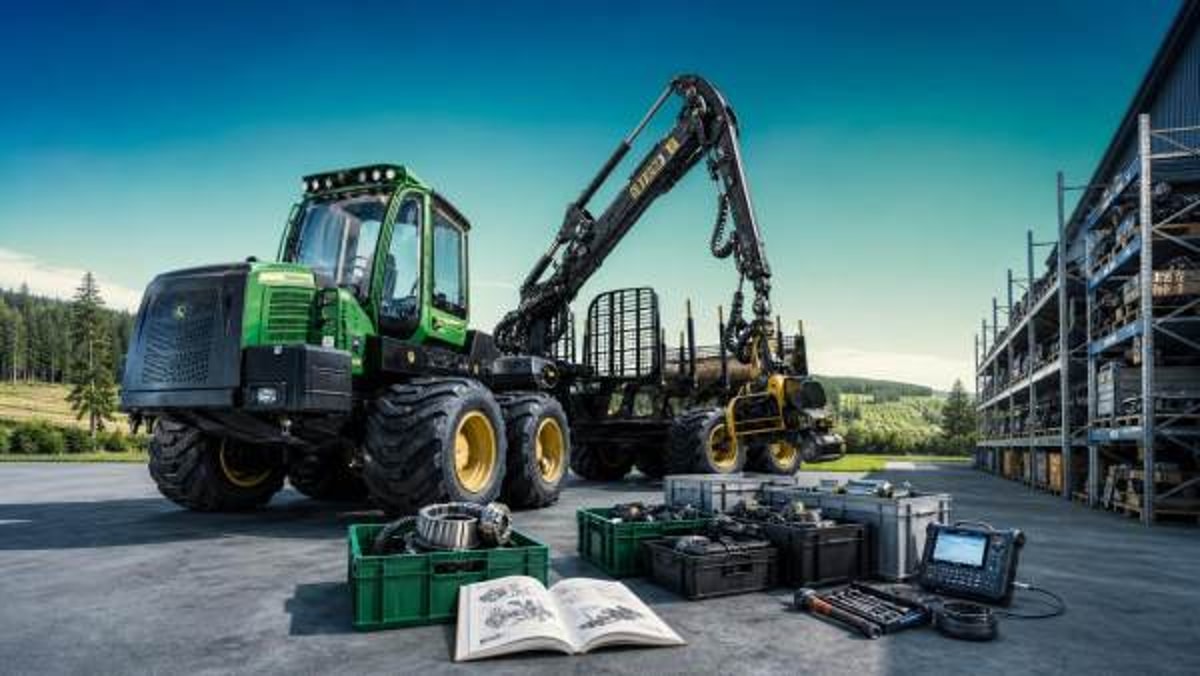
When evaluating long-term vendor value, Agri & Forestry machinery manufacturers often stand apart not at the point of sale, but after delivery. For business assessment professionals, the real differences emerge in spare parts availability, technical support, operator training, compliance documentation, and lifecycle service responsiveness—factors that directly shape uptime, risk exposure, and total cost of ownership.
Why post-delivery performance matters more than brochure specifications
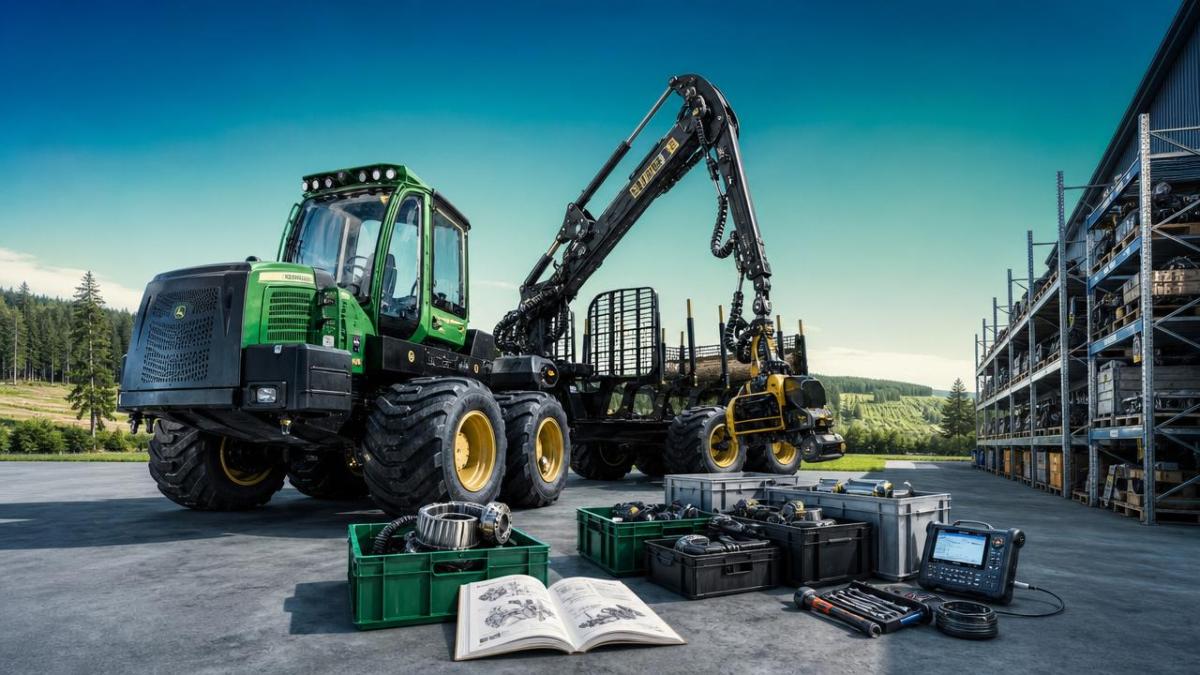
In agricultural and forestry operations, the machine purchase is only the starting point. A harvester, sprayer, forwarder, chipper, or tractor may look competitive on price and engine output, yet the true commercial outcome depends on what happens once the unit enters the field. That is where Agri & Forestry machinery manufacturers begin to separate into very different risk profiles.
For business assessment teams, post-delivery support is not a soft service issue. It is an asset utilization issue, a working capital issue, and often a compliance issue. If replacement parts take weeks to arrive during harvest windows or logging schedules, the operational loss can exceed any purchase discount gained at contract signing.
This is especially relevant across integrated primary industries, where machinery often supports regulated supply chains linked to food production, biomass processing, land stewardship, or export-grade raw material handling. In these settings, service quality affects not only productivity but traceability, environmental control, and audit readiness.
- Downtime during peak seasonal use has a disproportionate financial impact because delayed field operations can reduce yield quality, increase labor overtime, and disrupt downstream processing.
- Weak documentation support can slow insurance claims, regulatory checks, internal maintenance reviews, and multi-site procurement comparisons.
- Insufficient operator onboarding increases misuse risk, fuel inefficiency, avoidable wear, and safety incidents, all of which distort lifecycle cost calculations.
AgriChem Chronicle follows these distinctions closely because procurement decisions in primary industries increasingly require more than product descriptions. Buyers need validated context: where a supplier fits in the service chain, how responsive the support structure is, and whether after-sales promises are supported by realistic field capability.
Where Agri & Forestry machinery manufacturers differ after delivery
The most useful way to compare Agri & Forestry machinery manufacturers is to break post-delivery performance into measurable dimensions. Business assessment personnel can then move beyond generic claims and build a more defendable supplier ranking model.
The table below highlights the post-delivery dimensions that most often affect uptime, budget predictability, and supplier stability in real operating environments.
For commercial buyers, these differences are not minor operational details. They directly influence whether a machine can remain productive across seasonal demand peaks, remote job sites, and compliance-sensitive operations.
1. Spare parts availability is a cashflow issue, not just a maintenance issue
Many procurement reviews still focus on warranty duration while underweighting parts logistics. Yet for Agri & Forestry machinery manufacturers, the depth of parts support often predicts service reliability better than the sales contract does. Ask whether the supplier can identify fast-moving parts, stocking nodes, substitute part chains, and expected replenishment windows.
2. Technical support quality determines fault recovery speed
A responsive support structure usually includes a defined service desk, digital diagnostics where applicable, local technicians or partner workshops, and documented escalation procedures. If a manufacturer cannot explain how a hydraulic fault, ECU warning, or driveline issue is handled in the first 24 to 72 hours, risk remains high regardless of machine specification.
3. Training reduces hidden operating losses
Proper commissioning and operator instruction can affect fuel use, maintenance intervals, wear rates, and safety compliance. In mixed fleets or multi-site operations, untrained operators may use different maintenance routines, leading to inconsistent performance data and premature failures that buyers may incorrectly attribute to product quality.
How business assessment professionals should compare suppliers
A practical assessment framework should combine technical, commercial, and support factors. This helps procurement teams compare Agri & Forestry machinery manufacturers on lifecycle value rather than purchase price alone.
The following matrix can be adapted for RFI, RFQ, vendor approval, or annual supplier review processes.
Used properly, this kind of matrix reduces subjective supplier scoring. It also gives finance, operations, and compliance teams a common language for discussing post-delivery risk.
A practical due diligence checklist
- Request a parts availability overview for the first 24 months of operation, including wear items and critical failure components.
- Ask for the service process map from fault reporting to field resolution, including who authorizes warranty actions.
- Review the handover package: manuals, maintenance intervals, safety instructions, inspection forms, and serial-level traceability.
- Clarify whether training is generic or machine-specific, and whether it covers operators, mechanics, and supervisors.
- Check whether the supplier can support remote sites, seasonal demand spikes, and cross-border service needs.
What post-delivery costs are commonly underestimated?
Business buyers often model capex carefully but underestimate the opex variability created by weak service support. This is one reason why lower-priced offers from some Agri & Forestry machinery manufacturers can become more expensive over the equipment lifecycle.
The hidden cost profile usually includes more than repair invoices. It includes delayed crop operations, rental replacement equipment, emergency freight, idle labor, missed processing slots, and administrative overhead from unresolved service claims.
Common hidden cost drivers
- Emergency parts freight when no regional stock exists for critical components.
- Lost productivity when service technicians need multiple visits due to weak first-time diagnostics.
- Fuel and wear inefficiency caused by poor calibration, weak commissioning, or inconsistent operator behavior.
- Higher internal administration time for document chasing, warranty disputes, and maintenance record reconciliation.
In forestry, remote operating locations amplify these costs because access time is longer and replacement options are fewer. In agriculture, narrow planting and harvest windows intensify the financial effect of each service delay. That is why business assessment professionals should treat support infrastructure as part of the asset, not an optional add-on.
How compliance and documentation affect supplier choice
For many buyers, especially those supplying regulated food, biomass, chemical, or export markets, documentation quality is a decisive differentiator among Agri & Forestry machinery manufacturers. The issue is not only legal conformity. It is operational traceability and internal control.
Depending on the market and machine type, buyers may need evidence related to safety, emissions, environmental handling, maintenance procedures, and equipment identification. Even when requirements differ by jurisdiction, the manufacturer’s ability to provide orderly, current, and retrievable records is a strong indicator of maturity.
Documentation areas worth checking
- Operator manuals and maintenance manuals with revision control.
- Machine serial traceability and parts reference consistency.
- Safety instructions aligned with the delivered configuration and accessories.
- Emissions or environmental data where required by local operating conditions or fleet policy.
- Service bulletins, inspection records, and warranty process documentation.
This is an area where AgriChem Chronicle provides value to commercial decision-makers. ACC tracks how regulatory complexity, supply chain transparency, and technical documentation standards increasingly intersect across primary industries. That perspective helps buyers ask better questions before vendor approval rather than after a service failure.
Which supplier model fits which operating scenario?
Not every buyer needs the same support model. A single-site farm with in-house mechanics will assess Agri & Forestry machinery manufacturers differently from a regional contractor, a timber operator in remote terrain, or a vertically integrated processor managing multiple assets.
The table below shows how post-delivery priorities change by operating scenario.
This comparison shows why there is no universal “best” manufacturer. The strongest choice depends on whether the supplier’s after-delivery model matches the buyer’s operational risk pattern.
FAQ: what buyers ask about Agri & Forestry machinery manufacturers after delivery
How should we compare warranty promises from different manufacturers?
Do not compare warranty length alone. Check exclusions, labor coverage, response procedures, parts availability, and who actually performs the repair. A longer warranty with slow field execution may be less valuable than a shorter one backed by reliable local support.
What is the biggest post-delivery red flag in supplier evaluation?
A vague answer to service escalation is one of the biggest red flags. If the manufacturer cannot define who takes ownership of urgent faults, how parts are sourced, and what response windows are realistic, commercial risk is probably being shifted to the buyer.
Are local dealers enough, or should we assess the manufacturer directly?
Both matter. A capable dealer can improve responsiveness, but the manufacturer still controls engineering support, parts systems, documentation quality, and policy consistency. Business assessment professionals should map both the local service layer and the upstream manufacturer support layer.
What documents should be requested before final approval?
Request operating manuals, maintenance schedules, parts list structure, service contact matrix, warranty terms, training scope, and relevant safety or emissions documentation. If the machinery will serve a regulated or audited production chain, confirm revision control and record retrieval processes as well.
Why informed market intelligence improves machinery procurement
For business assessment teams, the hardest part of evaluating Agri & Forestry machinery manufacturers is often not collecting offers. It is interpreting whether those offers reflect durable operational capability. That is where specialized industry intelligence becomes valuable.
AgriChem Chronicle supports decision-makers operating across agriculture, forestry, biochemical processing, feed, and other primary industries where technical purchases carry long lifecycle consequences. ACC’s editorial focus on regulated supply chains, technical validation, and procurement-critical analysis helps buyers connect machinery service claims with broader commercial realities.
When suppliers, OEMs, and industrial buyers all operate under tighter compliance expectations and more volatile logistics conditions, post-delivery performance becomes a strategic evaluation category. The organizations that recognize this early usually make better capital decisions and face fewer service surprises later.
Why choose us for deeper supplier evaluation support
If you are assessing Agri & Forestry machinery manufacturers for procurement, vendor qualification, or market positioning, AgriChem Chronicle can help you move beyond surface-level product comparison. Our sector coverage is built for decision-makers who need technical context, supply chain visibility, and commercially useful interpretation.
- Request support on supplier comparison criteria, including after-sales capability, documentation quality, and support structure benchmarking.
- Discuss machinery selection questions tied to operating scenario, fleet scale, service footprint, and lifecycle cost exposure.
- Clarify delivery cycle concerns, spare parts planning assumptions, training requirements, and compliance-related documentation expectations.
- Explore how technical whitepapers, manufacturing capability profiles, and verified market intelligence can strengthen supplier screening or commercial communication.
Contact us if you need structured guidance on parameter confirmation, product selection logic, delivery expectations, certification-related documentation, custom evaluation frameworks, or supplier quotation discussions. For commercial buyers in complex primary industries, the right insight after delivery starts before the purchase order is signed.
Related Intelligence
- Heavy Agri MachineryHow Agri & Forestry machinery manufacturers differ after deliveryAgri & Forestry machinery manufacturers differ most after delivery—compare parts support, technical service, training, and compliance to reduce downtime and total ownership cost.
- Heavy Agri MachineryWhich Agri & Forestry machinery specifications matter in real use?Agri & Forestry machinery specifications explained for real use: learn which ratings truly affect efficiency, safety, durability, and cost before you compare or buy.
- Heavy Agri MachineryRound baler machine pickup width vs field efficiencyRound baler machine pickup width affects field efficiency, fuel use, and bale quality. Learn how to match width to windrows, crop conditions, and tractor capacity.
The Morning Broadsheet
Daily chemical briefings, market shifts, and peer-reviewed summaries delivered to your terminal.
