

The Authority in Global Agricultural Chemistry & Bio-Resources
Square baler machine capacity looks good on paper, but is it enough?
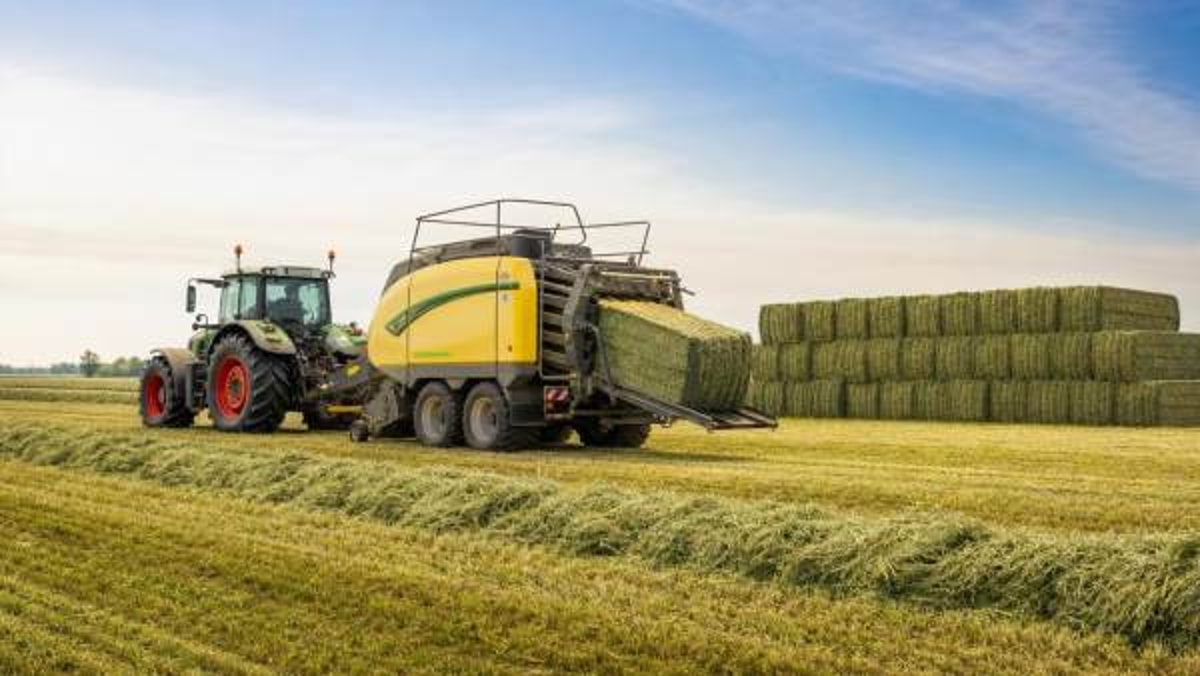
On a spec sheet, square baler machine capacity can appear more than sufficient. But for project managers and engineering leads, rated output alone rarely reflects field conditions, labor coordination, moisture variation, maintenance intervals, or downstream handling efficiency. This article examines whether nominal capacity truly supports operational targets, procurement decisions, and long-term performance in demanding agricultural processing environments.
What square baler machine capacity really means
A square baler machine is designed to compress crop residue, hay, straw, or forage into uniform rectangular bales for easier transport, storage, and feeding. In technical discussions, capacity is usually presented as tons per hour, bales per hour, or acres per hour. These numbers are useful, but they are not complete. For engineering-led operations, capacity should be understood as a system outcome rather than a single machine statistic.
The rated capacity of a square baler machine is often measured under controlled operating assumptions: steady windrows, trained operators, consistent crop density, ideal moisture, minimal turning, and uninterrupted material flow. In actual field deployment, few projects enjoy those conditions for an entire season. That is why the apparent gap between brochure output and delivered output remains one of the most important planning issues in agricultural machinery operations.
For project managers, the central question is not simply whether a square baler machine can produce enough bales in an hour. The more relevant issue is whether the machine can maintain required throughput across variable terrain, shifting weather windows, labor constraints, and the logistics chain that follows baling. A machine that looks oversized on paper may still become a bottleneck when field time is compressed.
Why the industry pays close attention to nominal versus effective output
In modern primary industries, equipment is rarely assessed in isolation. A baling project affects field scheduling, transport fleet sizing, labor allocation, fuel demand, storage planning, and even downstream processing quality. In sectors covered closely by technical industry publishers such as AgriChem Chronicle, machinery evaluation is increasingly tied to operational resilience and data-backed performance rather than marketing claims alone.
This matters because a square baler machine often operates in a narrow harvest window. If weather patterns shorten that window, then every assumed hour of productivity must be realistic. A nominal 20 tons per hour means little if moisture spikes reduce bale density, if tying systems require repeated stoppages, or if support tractors cannot clear finished bales fast enough. Engineering leads know that throughput losses usually come from cumulative small disruptions rather than one dramatic failure.
In addition, institutional buyers and large farm operators now evaluate machines with greater attention to lifecycle efficiency. Maintenance accessibility, knotter reliability, plunger durability, sensor integration, and compatibility with telematics can influence usable capacity more than a headline specification. The best square baler machine for one operation may not be the one with the highest published output, but the one with the most stable performance under local conditions.
The difference between paper capacity and field capacity
A practical way to assess a square baler machine is to separate three layers of output. First is rated capacity, which is what the manufacturer publishes. Second is achievable capacity, which reflects well-managed operation in favorable conditions. Third is effective project capacity, which includes delays, operator changes, transport interruptions, inspection stops, and moisture-related adjustments. The third number is usually the most important for planning.
For example, a square baler machine may achieve excellent bale-per-hour numbers in dry straw with long, even windrows. The same unit may perform very differently in heavy alfalfa or mixed forage where moisture content and feed uniformity vary throughout the day. If the machine requires frequent chamber adjustments or twine monitoring, actual throughput can drop below what a project schedule assumed.
This distinction is especially relevant for engineering project leads managing multi-machine fleets. The baler’s output must align with rake performance, mower conditioning, hauling intervals, bale accumulation patterns, and storage intake. Capacity planning that ignores these links may produce overinvestment in one area and underperformance in another.
Operational factors that change square baler machine performance
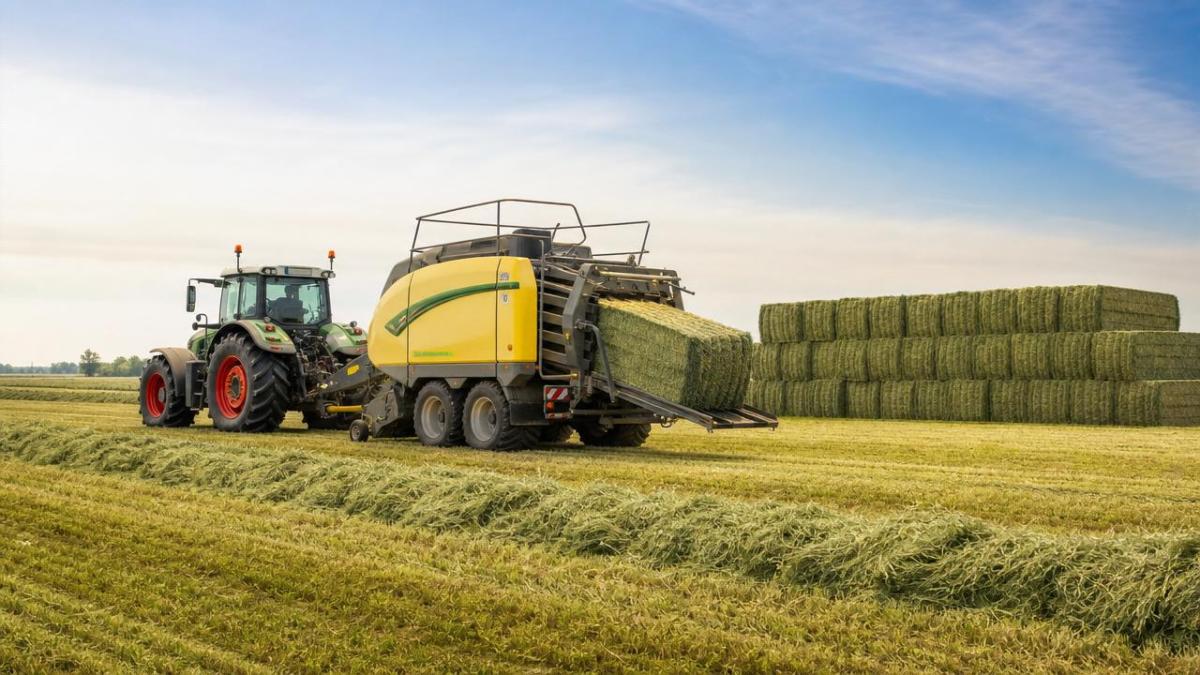
Several field variables determine whether the capacity of a square baler machine is truly enough. Crop type is one of the biggest. Fine, dry straw feeds differently from dense hay or stalk residue. Moisture content is another major factor because it affects compression resistance, bale integrity, and the likelihood of plugging or excessive wear.
Ground speed also matters, but faster is not always better. If higher speed causes uneven bale formation, broken ties, or excessive stress on the pickup and feeder system, then theoretical gains disappear. Bale size and target density further influence output. Larger, denser bales improve transport efficiency but increase power demand and may reduce hourly bale count. The correct balance depends on transport economics, storage strategy, and end-use requirements.
Operator skill should not be underestimated. An experienced crew can keep a square baler machine running in a stable performance band by adjusting to field variability, identifying wear symptoms early, and coordinating support vehicles efficiently. A less experienced team may lose significant time to avoidable stoppages. For project-based operations, training and standard operating procedures are often part of capacity management, not just labor management.
A practical industry overview for project evaluation
When reviewing whether a square baler machine is sufficient for a project, decision-makers should compare machine ratings against real operating constraints. The table below summarizes common evaluation dimensions used by field engineers and operations managers.
Where a square baler machine creates the most business value
The value of a square baler machine extends beyond field compaction. Uniform bales improve stackability, transportation efficiency, inventory control, and material traceability. For operations supplying feed processors, biomass users, or export-oriented forage markets, bale consistency can affect acceptance rates and freight planning. This is why capacity should be linked with bale quality, not viewed as a separate metric.
Project managers also benefit from evaluating a square baler machine in terms of resource synchronization. If bale output is predictable, managers can schedule trailers, loaders, and storage labor more accurately. Predictability reduces idle time across the chain. In integrated agricultural processing environments, this can have a measurable effect on delivered cost per ton and overall seasonal utilization of assets.
For industrial-scale users, the machine also contributes to risk control. Reliable baling capacity helps prevent field loss, weather exposure, and emergency contracting costs. In years with volatile climate conditions, a machine that consistently reaches effective throughput targets may protect margin better than a nominally larger machine with poor uptime stability.
Typical operating scenarios and what “enough” capacity looks like
There is no single answer to whether square baler machine capacity is enough. The answer depends on the operating model. The table below highlights how capacity expectations shift by scenario.
Practical guidance for engineering leads and project managers
A disciplined evaluation process usually starts with seasonal tonnage targets and available harvest days, not with catalog capacity. From there, estimate realistic field hours, downtime allowances, transport turnaround, and bale removal speed. This reveals the effective hourly requirement your square baler machine must achieve in operation, rather than in theory.
It is also wise to request performance evidence under conditions similar to your own. Ask for crop-specific references, moisture ranges, power requirements, and maintenance histories. If possible, compare telematics records or field demonstrations that show sustained output over a working day. A square baler machine that maintains 80 percent of rated output with low stoppage frequency can be more valuable than one that briefly reaches a higher peak and then loses time to adjustments or wear.
Another best practice is to evaluate support infrastructure at the same time as the machine. Spare parts access, technician response, knotter service expertise, and operator training packages all influence realized capacity. In sophisticated procurement environments, these factors should be included in total cost of ownership and risk assessments.
Common mistakes when judging capacity
One common mistake is assuming that bale-per-hour figures automatically translate into daily output. They do not, because unloading, field movement, weather interruptions, and maintenance all consume time. Another mistake is comparing one square baler machine to another without normalizing for bale size, density targets, and crop conditions. This can distort the decision.
A further error is overlooking downstream congestion. If loaders, wagons, or storage crews cannot keep pace, the baler will either slow down or create unmanaged field accumulation. In that case, the machine is not the real constraint, but the project still misses capacity goals. Engineering-led planning works best when the entire baling chain is treated as one operating system.
Conclusion and next-step perspective
So, is square baler machine capacity enough when it looks good on paper? Sometimes yes, but only when nominal output aligns with crop variability, labor readiness, machine uptime, and post-baling logistics. For project managers and engineering leads, the right benchmark is not the advertised maximum. It is the repeatable effective capacity that supports seasonal targets with acceptable risk.
A high-performing square baler machine should be assessed as part of a wider agricultural processing strategy: one that values throughput stability, bale quality, maintenance practicality, and system coordination. If your team is reviewing equipment plans, preparing a fleet upgrade, or validating operational assumptions, a structured capacity audit can provide far better decision support than spec sheets alone. In a market where efficiency, compliance, and reliable execution increasingly define competitiveness, that level of evaluation is no longer optional.
Related Intelligence
- Heavy Agri MachineryHow Agri & Forestry machinery manufacturers differ after deliveryAgri & Forestry machinery manufacturers differ most after delivery—compare parts support, technical service, training, and compliance to reduce downtime and total ownership cost.
- Heavy Agri MachineryWhich Agri & Forestry machinery specifications matter in real use?Agri & Forestry machinery specifications explained for real use: learn which ratings truly affect efficiency, safety, durability, and cost before you compare or buy.
- Heavy Agri MachineryRound baler machine pickup width vs field efficiencyRound baler machine pickup width affects field efficiency, fuel use, and bale quality. Learn how to match width to windrows, crop conditions, and tractor capacity.
The Morning Broadsheet
Daily chemical briefings, market shifts, and peer-reviewed summaries delivered to your terminal.
