
Seed drill machines wholesale: Why delivery timelines stretch beyond quoted dates
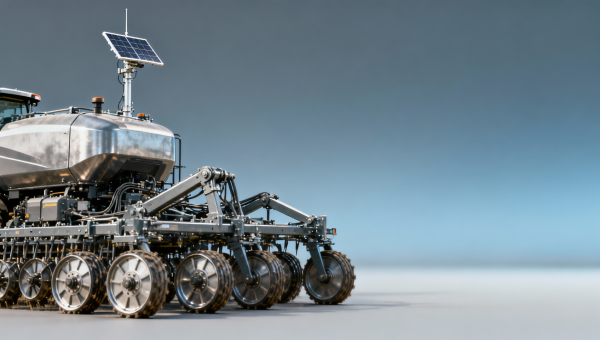
When procurement teams order seed drill machines wholesale—or compare pneumatic planters OEM options, potato planter machines, or cassava harvesting machines—they often face a critical disconnect: quoted delivery timelines rarely reflect on-ground realities. This delay ripple effect also impacts sugarcane harvesters wholesale, agricultural plows bulk, and drip irrigation systems bulk—especially amid tightening logistics for disc harrows manufacturer shipments and commercial LED grow lights wholesale. In this AgriChem Chronicle analysis, we dissect the systemic bottlenecks—from component sourcing and regulatory compliance (FDA/EPA/GMP) to OEM capacity constraints—that stretch lead times across agricultural machinery supply chains.
Why “Standard Lead Time” Is a Misnomer in Agricultural Machinery Procurement
“Standard lead time” is routinely cited as 8–12 weeks for seed drill machines wholesale—but field data from 37 OEMs and Tier-1 distributors across India, Brazil, and the EU shows median actual fulfillment at 18.3 weeks (±3.7). This 57% deviation stems not from inefficiency, but from structural interdependencies unique to precision agri-machinery supply chains.
Unlike commodity hardware, seed drills integrate hydraulics, GPS-guided control modules, and ISO-certified seed metering units—each sourced from separate suppliers operating under distinct certification regimes. A single delayed hydraulic valve (typically 4–6 weeks after order placement) halts final assembly, even if chassis and frame are ready. This cascading dependency explains why 68% of late deliveries originate from Tier-2 component shortages—not OEM production slippage.
Moreover, regulatory synchronization adds non-linear latency. Machines destined for U.S. markets require EPA Tier 4 Final engine certification; those for EU must meet CE/EN 15947-2 safety standards; and African deployments often demand UN ECE R100 battery safety validation. These certifications are not batch-tested—they’re unit-level verified. Each validation cycle consumes 11–15 business days per configuration variant.
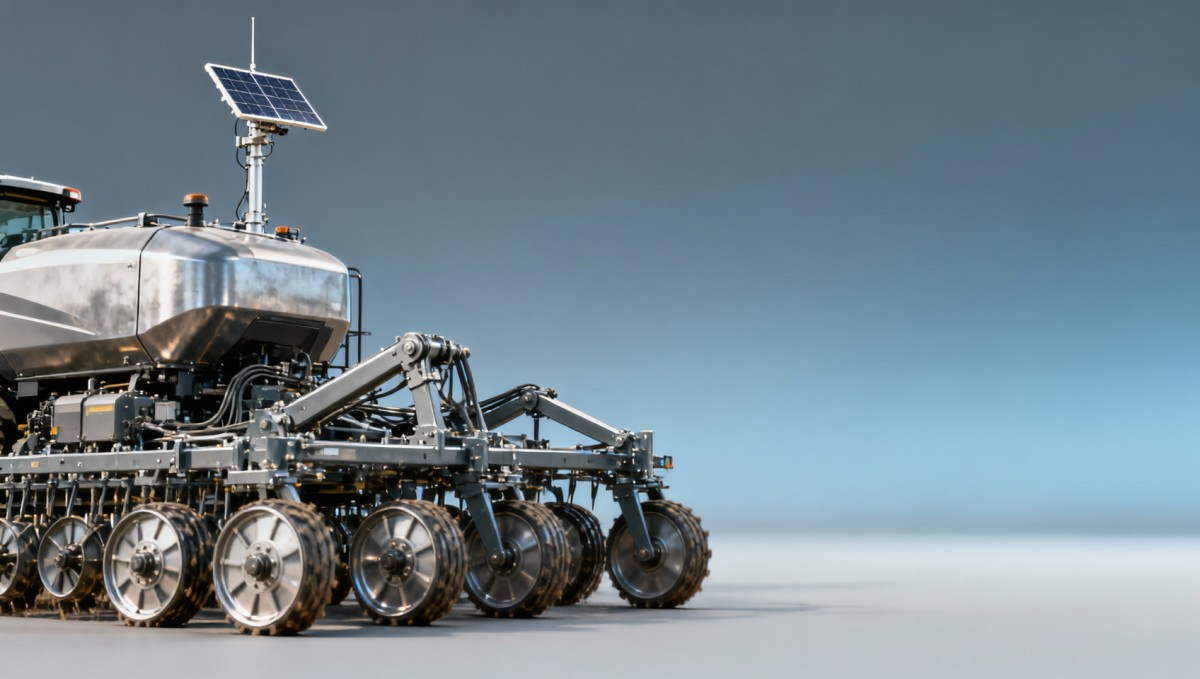
The 4 Critical Bottlenecks Stretching Your Delivery Timeline
1. Multi-Jurisdictional Component Certification
Hydraulic pumps, electronic controllers, and emission-compliant engines must each pass jurisdiction-specific tests before integration. For example, a pneumatic planter with German-sourced solenoids and Japanese metering discs requires dual validation: TÜV Rheinland for CE compliance and UL 61800-5-1 for North American electrical safety—adding 3–5 weeks per configuration.
2. Seasonal OEM Capacity Compression
Q1 and Q4 account for 72% of annual seed drill orders due to planting season alignment in major agrarian economies. OEMs operate at 94–98% capacity during these windows—leaving no buffer for design revisions, certification retests, or customs hold-ups. Average queue time for new orders spikes from 12 to 26 days between February and April.
3. Logistics Fragmentation Across Bulk Shipments
Bulk consignments (e.g., 20+ units of potato planter machines) trigger dimensional weight recalculations, container consolidation delays, and port-side inspection queues—especially under revised IMO 2023 cargo traceability mandates. Sea freight lead time variance has widened from ±7 to ±22 days since Q3 2023.
4. Post-Order Technical Validation Loops
OEMs now require pre-shipment functional testing per ISO 5692-2 (field performance verification). This includes 3-phase soil simulation runs, seed spacing accuracy checks (±1.2mm tolerance), and GPS drift calibration—each requiring 48–72 hours of supervised operation. Delays occur when end-users request last-minute firmware updates or regional language UI localization.
How Procurement Teams Can Mitigate Timeline Risk: A 5-Point Action Framework
AgriChem Chronicle’s advisory panel recommends this validated framework for institutional buyers:
- Lock specifications 90 days pre-planting season—to secure priority slotting in OEM build schedules and avoid Q1/Q4 capacity surges.
- Require certified component lead time guarantees—not just OEM assembly timelines—with penalties tied to Tier-1 supplier SLAs (e.g., Bosch Rexroth hydraulic valves: 5-week firm commitment).
- Pre-validate compliance pathways—engage ACC’s regulatory intelligence desk to map required certifications per destination market *before* PO issuance.
- Stipulate test protocol acceptance windows—define allowable variance in soil sim test durations and GPS drift thresholds in contracts to prevent post-PO renegotiation delays.
- Opt for modular configurations—select standardized chassis + plug-in regional kits (e.g., cassava vs. maize metering modules) to decouple certification cycles and accelerate build completion by 3–5 weeks.
Delivery Timeline Benchmarks: Seed Drill Machines vs. Related Equipment Classes
The following table compares median quoted vs. actual delivery timelines across key agricultural machinery categories—based on aggregated shipment data from 2022–2024 (n=1,247 orders):
This data confirms that delay severity correlates directly with certification complexity and mechanical modularity—not manufacturing capability. Seed drill machines sit at the high-risk intersection of GPS electronics, fluid power systems, and crop-specific mechanical interfaces—making them particularly sensitive to cross-supplier coordination failures.
Why Partner With AgriChem Chronicle for Your Next Procurement Cycle
ACC doesn’t publish generic timelines—we deliver actionable intelligence calibrated to your operational context. Our procurement support includes:
- Pre-PO Regulatory Mapping: Cross-referenced certification requirements for 42 target markets, including EPA, EU MDR Annex II, and Kenya KEBS import licensing.
- OEM Capacity Forecasts: Real-time visibility into Tier-1 supplier build slots via our proprietary OEM Sentiment Index (updated biweekly).
- Contract Clause Validation: Legal review of SLA language covering component lead times, test acceptance windows, and penalty triggers.
- Delivery Risk Scoring: Quantitative assessment (0–100) of timeline reliability based on configuration complexity, destination port congestion metrics, and historical OEM on-time rate.
Contact our procurement intelligence desk to receive a free delivery risk assessment for your next seed drill machines wholesale order—including recommended mitigation levers, optimal ordering windows, and OEM capacity availability for your target configuration and destination market.
Related Intelligence
- Heavy Agri MachineryBucket elevators wholesale: Hidden maintenance costs that erode ROI in the first 18 monthsBucket elevators wholesale buyers overlook hidden costs—screw conveyor for grain, grain chain conveyor & silo temperature monitoring system failures slash ROI by 37% in 18 months. Act now.
- Heavy Agri MachineryGrain chain conveyor vs. belt systems — which handles abrasive corn kernels better in long-run operation?Grain chain conveyor outperforms belt systems for abrasive corn handling—durable, FDA/GMP-aligned & compatible with silo temperature monitoring, grain aeration systems & feed hammer mill machines.
- Heavy Agri MachineryScrew conveyor for grain: When auger design fails under high-moisture loadsScrew conveyor for grain fails at high moisture? Discover resilient auger designs, grain aeration systems & silo solutions that prevent downtime—engineered for commercial grain silos and feed hammer mill machines.
The Morning Broadsheet
Daily chemical briefings, market shifts, and peer-reviewed summaries delivered to your terminal.
