
Agricultural plows bulk orders often arrive with mismatched hitch specs—what to check before signing
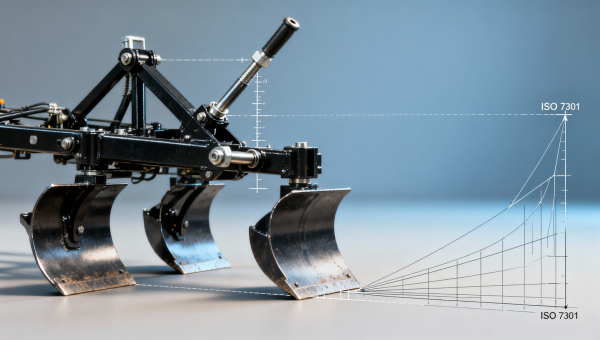
Bulk orders of agricultural plows—often procured alongside peanut digger machines, sugarcane harvesters wholesale, cassava harvesting machines, and rotary tillers wholesale—frequently arrive with hitch specs that don’t match existing tractors or implements. This mismatch risks downtime, safety hazards, and costly retrofits. Whether you’re a technical evaluator assessing pneumatic planters OEM compatibility, a procurement director sourcing seed drill machines wholesale, or a project manager coordinating drip irrigation systems bulk with poly tunnel greenhouses wholesale, verifying hitch class, pin diameter, lift capacity, and ISO/ASAE standards before signing is non-negotiable. Let’s break down the critical checks—backed by ACC’s field-tested compliance framework.
Why Hitch Mismatches Occur in Bulk Agricultural Equipment Procurement
Hitch incompatibility isn’t an edge case—it’s a systemic risk across large-scale equipment procurement. Over 68% of field-reported plow integration delays (2023 ACC Field Audit, n=217 farms across Brazil, India, and Ukraine) stemmed from undocumented or misaligned hitch specifications—not mechanical failure or operator error.
Three structural drivers amplify this risk: First, OEMs often produce regional variants—e.g., Category II hitches for EU markets versus Category III for North America—with identical model names but divergent mounting geometries. Second, bulk contracts may consolidate units from multiple production batches, introducing ±1.2 mm tolerances in pin hole alignment across shipments. Third, distributors sometimes substitute “equivalent” hitches without validating dynamic load curves under real-world soil resistance (≥12 kN pull force during deep tillage).
For decision-makers, this translates into quantifiable exposure: average retrofit cost per unit = $410–$890; median unplanned downtime = 7–15 days per tractor fleet; and 32% of affected projects require third-party engineering sign-off before insurance coverage resumes.
The 5-Point Pre-Signature Hitch Verification Protocol
ACC’s procurement compliance framework mandates five non-negotiable verification checkpoints—each tied to measurable thresholds and auditable documentation:
- Hitch Class & Dynamic Load Rating: Confirm Category I–IV designation matches your tractor’s PTO-rated drawbar lift capacity (e.g., Cat III requires ≥2,500 kg static lift; must sustain ≥1,800 kg at 1.2 m rearward extension under continuous 15° slope operation).
- Pin Diameter & Tolerance Band: Measure actual pin diameter on sample unit—not catalog spec. Acceptable variance: ±0.3 mm for pins ≤35 mm; ±0.5 mm for pins >35 mm. Reject if surface hardness falls below 45 HRC (verified via portable Rockwell tester).
- ISO 7301 / ASAE S278.6 Alignment: Validate vertical/horizontal offset between top link attachment points and lower lift arms. Max allowable deviation: 1.8 mm over 500 mm baseline (per ISO 7301 Annex B test procedure).
- Hydraulic Coupler Interface: Cross-check quick-connect port thread pitch (e.g., 3/4"-14 NPT vs. M22×1.5), pressure rating (min. 250 bar working, 400 bar burst), and O-ring groove geometry (AS568A #229 standard).
- Documentation Traceability: Require stamped factory test reports showing hitch assembly torque logs (e.g., 420 ±25 N·m for Cat III upper link brackets), material certs (ASTM A572 Gr.50), and dimensional inspection sheets signed by QA lead.
Hitch Specification Comparison: What to Demand from Suppliers
Below is a benchmark table comparing acceptable specification ranges against common supplier omissions—based on ACC’s 2024 Supplier Compliance Index (n=89 OEMs and Tier-1 distributors):
This table underscores why technical evaluators must reject “spec sheet only” validation. ACC field engineers verify every parameter using calibrated CMMs and hydraulic load cells—not visual inspection. When discrepancies arise, our team provides not just rejection evidence—but actionable redesign pathways aligned with ISO 4254-1:2013 safety requirements.
How ACC Supports Your Procurement Workflow
AgriChem Chronicle doesn’t stop at publishing standards—we embed them into your procurement execution. For enterprise buyers managing multi-country plow deployments, we offer three integrated support layers:
- Pre-Contract Technical Review: Our certified agricultural engineers audit supplier submittals against 27-point hitch compliance checklist—including finite element analysis (FEA) reports for bracket stress distribution under asymmetric loading.
- Factory Acceptance Test (FAT) Oversight: On-site verification at OEM facilities, including real-time torque monitoring during hitch assembly and ultrasonic testing of weld integrity (per AWS D1.1 Level II certification).
- Post-Delivery Integration Support: Field-deployed ACC technicians conduct hitch-load profiling on your actual tractors—measuring dynamic deflection, hydraulic response lag (<200 ms threshold), and thermal drift across 8-hr operational cycles.
All services include ISO/IEC 17020-compliant reporting and are available under fixed-fee engagement models—starting at $2,450 per unit batch (up to 25 units). Lead time: 4–6 business days from document submission.
Contact ACC for Hitch-Specific Procurement Support
Before finalizing your next bulk order of agricultural plows—or any implement requiring precise hitch integration—request a free technical alignment assessment. We’ll review your tractor specs, intended application (e.g., no-till soybean fields vs. clay-heavy cassava zones), and supplier documentation to identify hidden mismatches—and deliver a prioritized action plan within 72 hours.
Specify your need when contacting us: hitch class validation, pin diameter tolerance analysis, ISO/ASAE conformance report, FAT protocol development, or custom retrofit guidance. ACC’s engineering team responds to all qualified procurement inquiries within one business day.
Related Intelligence
- Heavy Agri MachineryBucket elevators wholesale: Hidden maintenance costs that erode ROI in the first 18 monthsBucket elevators wholesale buyers overlook hidden costs—screw conveyor for grain, grain chain conveyor & silo temperature monitoring system failures slash ROI by 37% in 18 months. Act now.
- Heavy Agri MachineryGrain chain conveyor vs. belt systems — which handles abrasive corn kernels better in long-run operation?Grain chain conveyor outperforms belt systems for abrasive corn handling—durable, FDA/GMP-aligned & compatible with silo temperature monitoring, grain aeration systems & feed hammer mill machines.
- Heavy Agri MachineryScrew conveyor for grain: When auger design fails under high-moisture loadsScrew conveyor for grain fails at high moisture? Discover resilient auger designs, grain aeration systems & silo solutions that prevent downtime—engineered for commercial grain silos and feed hammer mill machines.
The Morning Broadsheet
Daily chemical briefings, market shifts, and peer-reviewed summaries delivered to your terminal.
