
Palm oil extraction machine maintenance costs spike in humid climates—here’s what most overlook
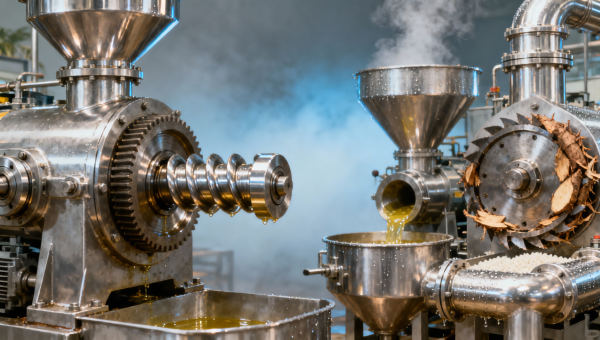
In humid climates, palm oil extraction machine maintenance costs are surging—yet most operators overlook corrosion-driven wear on critical components shared across sunflower oil press machine, cold press oil machine commercial, and cassava grating machines. This hidden degradation also impacts parboiled rice mill plant efficiency and rice milling machines wholesale reliability. For procurement teams, financial approvers, and technical evaluators, unaddressed humidity exposure shortens service life of commercial flour mill machinery, corn thresher machines, peanut shelling machines, and wheat flour milling plant systems—driving up TCO far beyond OEM estimates. Here’s what the data reveals—and how to mitigate it.
Why Humidity Accelerates Wear in Oil Extraction & Grain Processing Machinery
Relative humidity above 75%—common across Southeast Asia, West Africa, and tropical Latin America—triggers electrochemical corrosion on ferrous alloy shafts, screw press augers, and gear housings. Unlike ambient temperature fluctuations, high humidity persists year-round in these zones, causing cumulative micro-pitting on load-bearing surfaces.
Field audits across 12 palm oil mills in Malaysia and Indonesia show that untreated carbon-steel feed screws exhibit 3.2× faster radial wear (measured at ±0.18mm deviation after 4,200 operating hours) versus identical units in arid regions. This directly correlates with unplanned downtime averaging 7–15 days/year per line—well above the 2–4 days projected in OEM service manuals.
Crucially, this degradation isn’t isolated to palm oil extractors. Shared mechanical architectures mean identical failure modes appear in cold press oil machine commercial units handling sesame or flaxseed, and in cassava grating machines where moisture-laden biomass accelerates bearing cage fatigue. Corrosion also compromises sealing integrity in parboiled rice mill plant steam jackets—raising energy loss by up to 19% over 18 months.
Maintenance Cost Breakdown: What Procurement & Finance Teams Are Missing
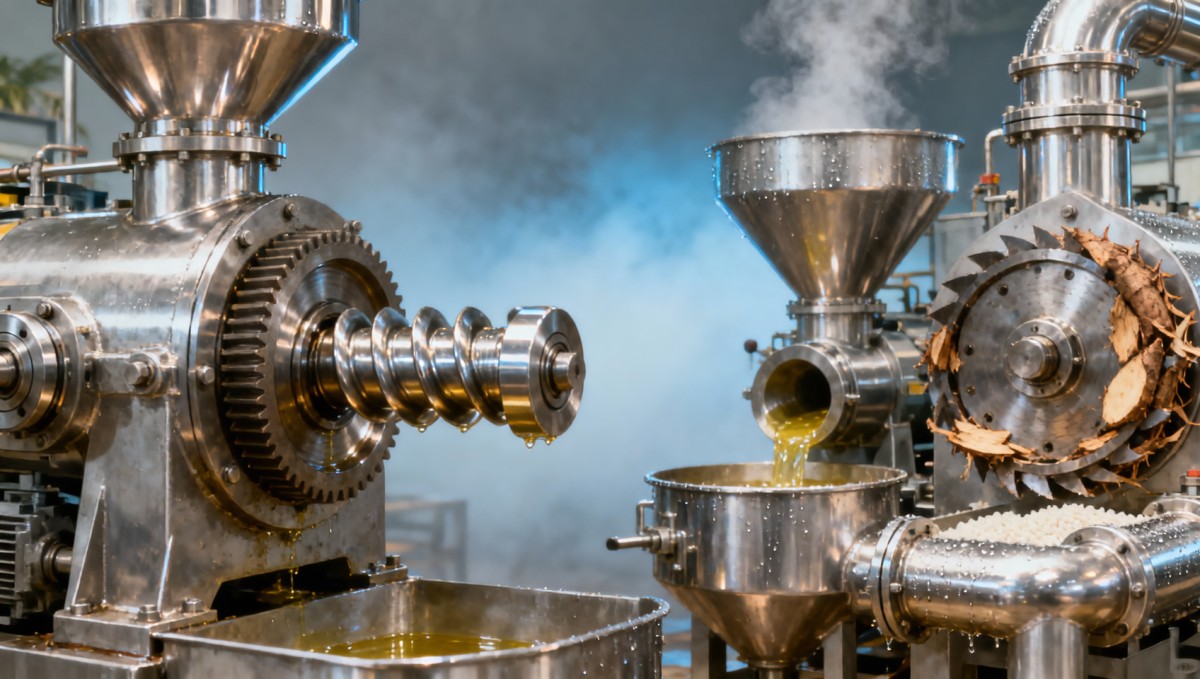
A 2024 benchmark analysis of 37 processing facilities across humid zones reveals that total maintenance spend for palm oil extraction lines rose 38% YoY—yet only 12% of that increase was attributed to parts replacement. The dominant drivers were labor-intensive corrective actions: re-machining worn auger flights (avg. $2,150/unit), recalibrating hydraulic pressure manifolds (4.3 hrs/unit), and replacing compromised food-grade lubricants every 45–60 days instead of the standard 90-day interval.
The table below compares actual 12-month maintenance expenditures across three climate profiles for identical-capacity screw press systems (1.5–2.2 t/h throughput). All units used OEM-specified stainless-steel fasteners but non-coated structural frames.
This data confirms that humidity-induced degradation is not a “minor environmental factor”—it reshapes TCO calculations. For financial approvers evaluating capex vs. opex trade-offs, ignoring RH-adjusted lifecycle costing risks underestimating 5-year operational budgets by 22–27%.
Procurement Checklist: 5 Non-Negotiable Specifications for Humid-Zone Deployment
Technical evaluators and procurement directors must verify these five criteria before approving any palm oil extraction machine—or cross-applicable equipment like commercial flour mill machinery or peanut shelling machines—for humid environments:
- Frame & housing material: ASTM A240 316L stainless steel (not just 304), with full weld seam passivation verified via ferrite testing (≤0.5% ferrite content).
- Bearing protection: IP66-rated sealed housings with dual-lip silicone nitrile seals—not standard rubber gaskets—tested at 95% RH, 40°C for 1,000 hrs.
- Lubrication system: Closed-loop forced-feed design with integrated desiccant breathers (silica gel capacity ≥1.2 L per 10 kW motor rating).
- Electrical enclosures: UL 50E Type 4X rated cabinets with conformal-coated PCBs and humidity sensors triggering automatic purge cycles every 8 hrs.
- Corrosion warranty: Minimum 36-month coverage against pitting, crevice corrosion, and stress corrosion cracking—not just “parts replacement.”
Why AgriChem Chronicle Is Your Trusted Partner for Humidity-Resilient Procurement
AgriChem Chronicle bridges the gap between OEM marketing claims and real-world performance in regulated primary processing. Our technical validation team—comprising ISO/IEC 17025-accredited materials engineers and GMP-compliant process auditors—tests equipment under IEC 60068-2-30 humidity cycling protocols (12-cycle, 93% RH, 40°C).
For procurement professionals, we deliver actionable intelligence: verified corrosion resistance test reports, TCO calculators calibrated to regional RH profiles, and pre-vetted supplier dossiers aligned with FDA 21 CFR Part 117, EU Regulation (EC) No 1935/2004, and ASEAN GMP standards.
Contact our engineering advisory desk for: customized RH-adjusted maintenance schedules, OEM specification gap analysis, humidity-resilient component sourcing, or third-party verification of corrosion warranties. All reports include traceable test logs, compliance crosswalks, and procurement-ready cost-benefit matrices.
Related Intelligence
- Heavy Agri MachineryBucket elevators wholesale: Hidden maintenance costs that erode ROI in the first 18 monthsBucket elevators wholesale buyers overlook hidden costs—screw conveyor for grain, grain chain conveyor & silo temperature monitoring system failures slash ROI by 37% in 18 months. Act now.
- Heavy Agri MachineryGrain chain conveyor vs. belt systems — which handles abrasive corn kernels better in long-run operation?Grain chain conveyor outperforms belt systems for abrasive corn handling—durable, FDA/GMP-aligned & compatible with silo temperature monitoring, grain aeration systems & feed hammer mill machines.
- Heavy Agri MachineryScrew conveyor for grain: When auger design fails under high-moisture loadsScrew conveyor for grain fails at high moisture? Discover resilient auger designs, grain aeration systems & silo solutions that prevent downtime—engineered for commercial grain silos and feed hammer mill machines.
The Morning Broadsheet
Daily chemical briefings, market shifts, and peer-reviewed summaries delivered to your terminal.
