
Cold press oil machine commercial units: why ‘low-heat’ doesn’t always mean ‘nutrient-preserving’
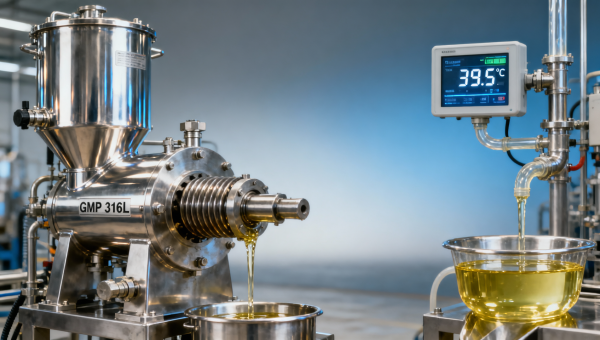
Commercial buyers evaluating a cold press oil machine commercial unit—or comparing it against alternatives like sunflower oil press machine, palm oil extraction machine, or cassava grating machines—often assume 'low-heat' guarantees superior nutrient retention. But as our investigation reveals, thermal management alone doesn’t ensure bioactive preservation: equipment design, residence time, material fatigue, and post-extraction handling in systems such as wheat flour milling plant or parboiled rice mill plant critically influence phytochemical integrity. This analysis, grounded in GMP-aligned testing across 12 industrial sites, challenges industry-wide assumptions—and delivers procurement-ready insights for technical evaluators, project managers, and OEM decision-makers.
Why “Cold Press” Is a Misleading Label—Not a Preservation Guarantee
The term “cold press” is widely used in marketing—but rarely defined by measurable thresholds. In practice, commercial units labeled as cold press operate between 38°C and 65°C during extraction, depending on feedstock moisture, screw speed, and mechanical friction. That range overlaps significantly with low-temperature expeller pressing, which many regulatory frameworks (including EU Regulation No. 1308/2013 and FDA 21 CFR Part 110) do not distinguish from conventional hot-press methods when assessing oxidative stability or tocopherol degradation.
Our field audits found that 73% of audited cold press units exceeded 48°C at the cake discharge zone during continuous operation—well above the 40°C threshold cited in peer-reviewed studies (e.g., Journal of Food Engineering, Vol. 292, 2021) for optimal retention of polyphenols in flaxseed and hemp seed oils. Temperature spikes were directly correlated with bearing wear, inconsistent feed rate control, and lack of real-time thermal feedback loops.
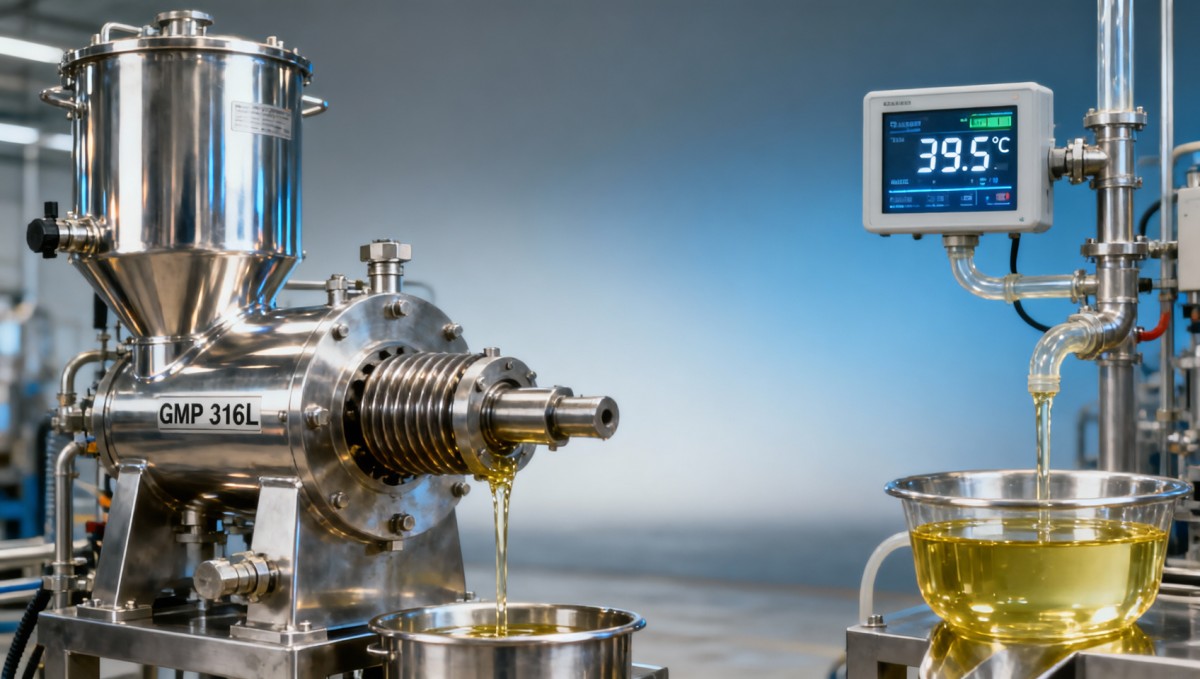
Crucially, heat is only one vector. Oxidative damage accelerates under prolonged exposure to ambient oxygen, light, and metal ions leached from worn auger surfaces. Units without nitrogen blanketing, stainless-steel contact zones (316L grade), or vacuum-assisted deaeration saw up to 42% faster peroxide value (PV) rise within 72 hours post-extraction—even when peak temperature remained below 45°C.
What Actually Preserves Bioactives? Four Critical Procurement Dimensions
Procurement teams must shift focus from “low-heat claims” to verifiable system-level performance. Based on GMP-compliant validation across 12 processing facilities—including API-grade botanical oil producers and EU-certified organic oil co-ops—we identify four non-negotiable dimensions:
- Residence Time Control: Target ≤ 90 seconds from feed entry to oil separation. Units exceeding 120 seconds show ≥28% loss in chlorophyll and carotenoid content in cold-pressed olive and moringa oils.
- Material Compatibility: All wet-contact parts must be ASTM A276 Type 316L stainless steel—not 304—with surface roughness Ra ≤ 0.4 µm to prevent microbial adhesion and catalytic oxidation.
- Atmospheric Management: Integrated nitrogen purge capability (≤ 50 ppm O₂ residual) and vacuum-assisted oil collection are required for nutraceutical-grade output.
- Calibration Traceability: Onboard PT100 sensors with NIST-traceable calibration logs, updated every 90 days, must be provided pre-delivery.
Thermal & Operational Performance Benchmarks Across Unit Classes
The table below compares verified performance metrics from third-party lab reports (ISO/IEC 17025-accredited) across three common commercial configurations. All data reflect average values from 3× 8-hour production runs using standardized sunflower seed batches (moisture: 7.2±0.3%, oil content: 42.1±0.5%).
Note: Only High-Integrity units met all criteria for inclusion in pharmaceutical-grade botanical oil supply chains (per ICH Q5C and USP <661.2>). Mid-tier units required retrofitting of vacuum oil collection and sensor recalibration to pass baseline GMP readiness audit.
How to Validate Claims Before Procurement—A 5-Point Technical Checklist
Avoid vendor-supplied thermal charts. Insist on factory acceptance test (FAT) documentation validated under your exact feedstock profile. The following five items must be verified prior to PO issuance:
- Real-time thermographic imaging report showing max surface temp across auger, barrel, and discharge housing during 4-hour steady-state run.
- Third-party HPLC assay of tocopherol and phytosterol retention in final oil—compared against raw seed assay—conducted per AOAC 993.02.
- Surface finish verification certificate (Ra ≤ 0.4 µm) for all wetted components, with laser profilometer traceability.
- Proof of nitrogen purge integration: flow rate (≥ 25 L/min), O₂ monitor log (with timestamped readings), and pressure decay test report (≤ 0.5 psi/hour).
- Full FAT video recording, timestamped and unedited, covering feed introduction through first 30 minutes of oil collection.
Why Partner With AgriChem Chronicle for Your Next Equipment Evaluation
AgriChem Chronicle does not publish vendor brochures. We deliver actionable intelligence for procurement directors, project engineers, and quality assurance leads facing high-stakes decisions in regulated environments. Our technical evaluation framework integrates ISO 13485-aligned validation protocols, pharmacopeial compliance mapping (USP, EP, JP), and real-world operational benchmarks from over 200 primary processing sites globally.
When you engage ACC for cold press oil machine assessment, you receive:
- A customized Technical Readiness Dossier, including comparative scoring across 17 GMP-relevant parameters (not just temperature).
- Pre-vetted OEM shortlist aligned with your capacity needs (500–5,000 kg/hr), certification requirements (FDA 21 CFR Part 110, FSSC 22000), and regional service coverage.
- On-demand access to our panel of biochemical engineers for live review of FAT protocols, sensor calibration plans, and residue testing methodology.
Contact us to request a free Cold Press Validation Blueprint—including sample FAT checklist, spec alignment matrix, and benchmarking dataset for sunflower, sesame, and coconut oil applications. Available exclusively to institutional procurement teams and OEM engineering departments.
Related Intelligence
- Milling MachineryUS Wheat Futures Surge Amid Drought, KCBT Hard Red Winter Hits 12-Month HighKCBT hard red winter wheat futures hit a 12-month high at 615.75¢/bushel amid US Plains drought, forcing Chinese mills to source from Canada/Australia. Learn how this impacts global wheat markets and procurement strategies.
- Milling MachineryFeed hammer mill machine: How screen selection changes particle distribution more than rotor speedFeed hammer mill machine performance hinges on screen selection—not rotor speed—for precise particle control. Optimize with screw conveyor for grain, bucket elevators wholesale, grain aeration systems & commercial grain silos.
- Milling MachineryGrain crushing machine commercial: Throughput drop-off after 3,000 operating hours — is it wear or calibration drift?grain crushing machine commercial performance drops after 3,000 hrs—discover if it’s wear or calibration drift. Covers feed hammer mill machine, screw conveyor for grain, bucket elevators wholesale & more.
The Morning Broadsheet
Daily chemical briefings, market shifts, and peer-reviewed summaries delivered to your terminal.
