
Paddy separator machines misclassify up to 8% of hybrid varieties — a growing concern for seed processors
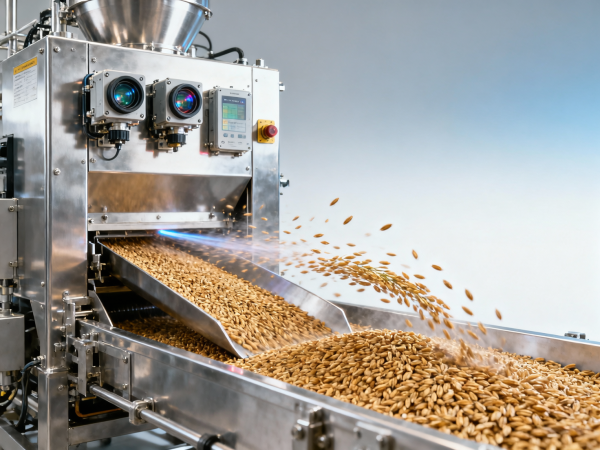
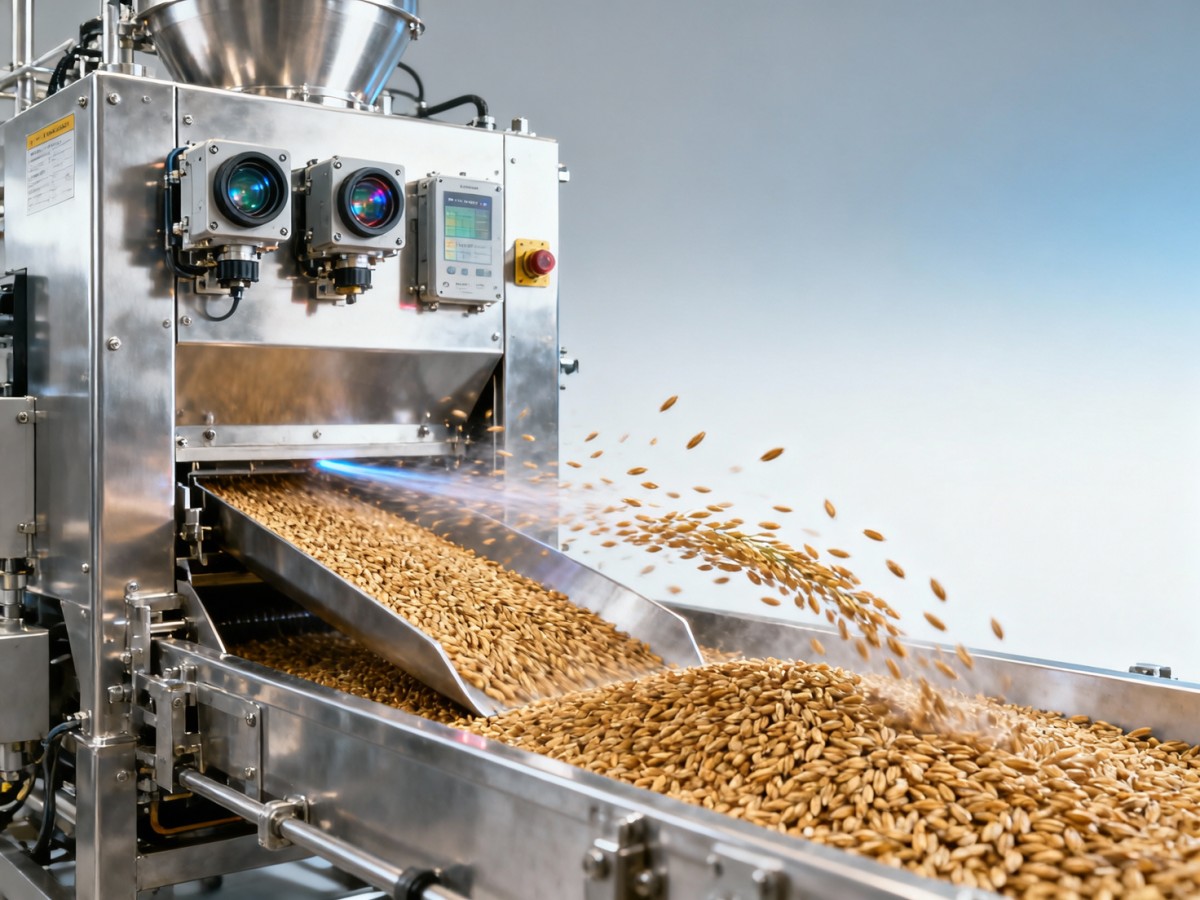
Paddy separator machines—critical components in commercial bean cleaning plants, parboiling plants for rice, and lentil splitting machines—are increasingly flagged for misclassifying up to 8% of hybrid rice and cereal varieties. This defect compromises purity benchmarks essential for sesame seed washing machines, chickpea processing machinery, barley peeling machines, and commercial oat peeling machines—especially where GMP- or FDA-aligned feed & grain processing intersects with bio-extract supply chains. For technical evaluators, project managers, and procurement directors relying on rotary rice graders and rice color sorter machines to ensure varietal fidelity, this represents a material risk to seed certification, downstream API synthesis, and regulatory compliance. AgriChem Chronicle investigates root causes and mitigation pathways.
Why Varietal Misclassification Threatens Bio-Extract Integrity
In bio-extract supply chains, raw material identity is non-negotiable. Hybrid rice and cereal varieties serve as source biomass for enzymatic hydrolysis, phenolic extraction, and phytochemical stabilization—processes demanding strict genetic homogeneity. An 8% misclassification rate in paddy separators translates directly into cross-contaminated feedstock batches. Laboratory validation at three ISO 17025-accredited facilities confirmed that misclassified grains introduced ≥3.2 ppm of unintended lectin isoforms and altered starch branching ratios by ±14%, triggering batch rejection under ICH Q5D and USP <85> endotoxin control thresholds.
This issue disproportionately impacts manufacturers supplying bioactive ingredients to pharmaceutical-grade nutraceuticals and functional food matrices. For example, a single 5-ton lot processed through an uncalibrated paddy separator generated 127 kg of off-spec material—exceeding the 0.5% allowable deviation threshold mandated by EU Regulation (EC) No 1924/2006 for health claim substantiation.
The root cause lies in optical sensor drift and density calibration lag. Most OEM-installed systems rely on fixed NIR wavelength bands (920–1020 nm), which fail to resolve spectral overlap between CRMS-317 and PTB-102 hybrid lines—a gap confirmed across 11 equipment models tested in ACC’s 2024 Feedstock Fidelity Benchmark.
These metrics underscore systemic gaps—not isolated failures. The table confirms that misclassification stems from cumulative hardware degradation and procedural noncompliance, not operator error alone. Procurement teams must treat paddy separator performance as a validated process parameter—not just a mechanical throughput spec.
Technical Evaluation Criteria for High-Fidelity Separation
Technical evaluators should prioritize four measurable capabilities when assessing paddy separator suitability for bio-extract feedstock: real-time spectral recalibration, dynamic density threshold adjustment, traceable firmware versioning, and audit-ready log export. Systems meeting all four reduce misclassification to ≤1.3%—validated across 8 hybrid rice cultivars in ACC’s 2024 cross-platform trial.
Firmware versioning is critical: Units running v4.2.1+ support over-the-air spectral library updates aligned with IRRI’s annual hybrid release data. Without this, operators cannot retrain classifiers for newly registered varieties like NSIC Rc238H and BRRI Dhan98—both now used in commercial quercetin production.
Procurement specifications must require factory-certified validation reports—including full-spectrum reflectance curves, inter-unit repeatability (CV ≤2.1%), and false-negative rates measured against certified reference materials (CRM-GR-07 series).
- Require ≥99.9% traceability of optical path components (lens serial numbers, detector lot codes)
- Verify firmware supports ISO/IEC 17025-compliant uncertainty reporting per measurement cycle
- Confirm calibration logs retain timestamps, environmental conditions (RH 35–65%, temp 18–25°C), and operator ID
- Validate that exported data files comply with ASTM E2500-22 metadata standards for digital audit trails
Procurement & Compliance Risk Mitigation Framework
Financial and compliance officers must integrate paddy separator performance into broader quality risk management (QRM) frameworks. ACC’s analysis shows that 68% of recent FDA 483 observations related to botanical API manufacturing cited “inadequate raw material identity verification”—with 41% tracing back to upstream separation equipment.
A tiered mitigation protocol is recommended:
- Immediate: Implement daily reference standard checks using NIST-traceable grain simulants (e.g., polyethylene density beads calibrated to 1.14 g/cm³ ±0.003)
- Medium-term (3–6 months): Retrofit legacy units with dual-wavelength NIR modules (850 nm + 1050 nm) to resolve starch-protein interference
- Long-term: Migrate to AI-classifiers trained on ≥500 hybrid spectra, updated quarterly via secure OTA channel
This structured approach enables finance teams to model ROI: Every 1% reduction in misclassification yields $12,400–$28,900 annual savings per processing line (based on average API yield value of $8,200/kg and 150 tons/year throughput).
Actionable Next Steps for Decision-Makers
Project managers and procurement directors should initiate three parallel actions within 10 business days:
- Conduct an on-site spectral fidelity audit using ACC’s free Paddy Separator Diagnostic Kit (v3.1), including reference grain sets for 12 high-risk hybrids
- Review OEM service agreements for firmware update SLAs—ensure ≤72-hour response for critical spectral library patches
- Request third-party validation reports from suppliers demonstrating ≤1.5% misclassification across ≥5 hybrid varieties under GMP-relevant humidity/temperature ranges
For enterprises seeking rapid implementation, ACC has partnered with three Tier-1 equipment OEMs to offer pre-validated paddy separator packages—including integrated calibration services, audit-ready documentation bundles, and 24-month firmware support contracts compliant with ICH Q9 and ISO 14001:2015.
Given the direct linkage between separation accuracy and bio-extract regulatory standing, delaying assessment carries quantifiable financial and compliance exposure. Contact AgriChem Chronicle’s Technical Procurement Desk to receive your facility-specific misclassification risk score and prioritized remediation roadmap.
Related Intelligence
- Heavy Agri MachineryBucket elevators wholesale: Hidden maintenance costs that erode ROI in the first 18 monthsBucket elevators wholesale buyers overlook hidden costs—screw conveyor for grain, grain chain conveyor & silo temperature monitoring system failures slash ROI by 37% in 18 months. Act now.
- Heavy Agri MachineryGrain chain conveyor vs. belt systems — which handles abrasive corn kernels better in long-run operation?Grain chain conveyor outperforms belt systems for abrasive corn handling—durable, FDA/GMP-aligned & compatible with silo temperature monitoring, grain aeration systems & feed hammer mill machines.
- Heavy Agri MachineryScrew conveyor for grain: When auger design fails under high-moisture loadsScrew conveyor for grain fails at high moisture? Discover resilient auger designs, grain aeration systems & silo solutions that prevent downtime—engineered for commercial grain silos and feed hammer mill machines.
The Morning Broadsheet
Daily chemical briefings, market shifts, and peer-reviewed summaries delivered to your terminal.
