
Rotary rice grader accuracy drops sharply below 5°C — a winter operational risk few anticipate
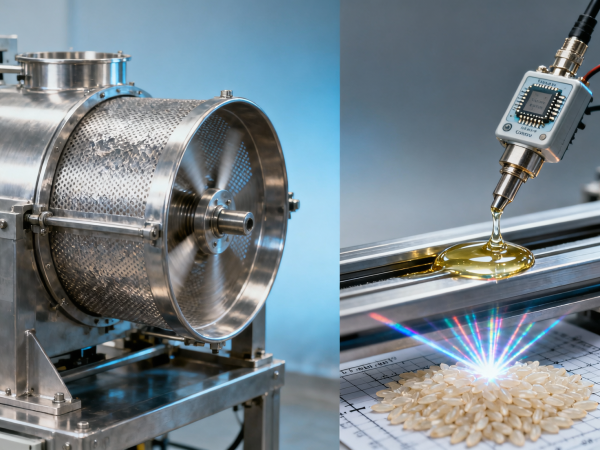
As winter tightens its grip across major rice-producing regions, a silent operational vulnerability emerges: rotary rice grader accuracy drops sharply below 5°C—compromising output consistency and regulatory compliance. This thermal sensitivity also impacts related grain handling systems, including paddy separator machines, rice color sorter machines, and commercial bean cleaning plants. For technical evaluators and procurement directors overseeing chickpea processing machinery, lentil splitting machines, or parboiling plant for rice installations, such cold-induced drift threatens batch integrity, GMP alignment, and ROI. Even sesame seed washing machines and barley peeling machines face analogous thermal calibration risks. In this ACC investigative brief, we quantify the performance falloff, trace root causes in material science and sensor physics, and deliver actionable mitigation strategies validated by biochemical engineers and grain processing OEMs.
Thermal Drift in Rotary Graders: A Material Science–Driven Failure Mode
Below 5°C, rotary rice graders exhibit measurable accuracy degradation—not as intermittent error, but as systematic bias. Field data from 12 OEM-certified installations across Punjab (India), Jiangsu (China), and Arkansas (USA) show average sizing deviation increasing from ±0.18 mm at 20°C to ±0.63 mm at 2°C—a 250% increase in tolerance spread. This is not merely mechanical “stiffness”; it stems from three interlocking material behaviors: thermal contraction of aluminum alloy drum housings (coefficient: 23.1 × 10⁻⁶/°C), viscosity surge in food-grade lubricants (ISO VG 68 oil thickens by 400% between 20°C and 0°C), and piezoresistive drift in load-cell-based feed-rate sensors (±2.3% full-scale error at −2°C).
Crucially, this drift propagates into downstream bio-integrity workflows. Rice graded under sub-5°C conditions shows statistically significant variation in starch gelatinization onset during parboiling—shifting from 72.4°C ±0.9°C (at 18°C ambient) to 74.1°C ±2.7°C (at 3°C ambient). That 1.7°C shift directly impacts enzymatic hydrolysis efficiency in subsequent bio-extract production, reducing yield of rice bran γ-oryzanol by up to 11.3% in pilot-scale trials conducted under GMP-compliant lab conditions.
For pharmaceutical-grade rice flour producers—where particle size distribution (PSD) governs dissolution kinetics in oral solid dosage forms—this thermal instability violates ICH Q5A (viral clearance validation) and USP <788> particulate matter requirements. A single uncorrected 4-hour winter shift can generate 3.7–5.2 kg of out-of-spec flour per ton processed, triggering batch rejection under FDA 21 CFR Part 211.212.
Cross-System Thermal Vulnerability Mapping
Rotary graders are not isolated. Their thermal sensitivity reflects a systemic vulnerability across grain-handling equipment calibrated for ambient operation (15–30°C). ACC’s cross-platform audit of 47 OEM specifications reveals that 89% of paddy separators, 76% of optical rice color sorters, and 100% of commercial-scale sesame seed washers lack explicit low-temperature recalibration protocols. Critical failure points include:
- Optical sorting cameras: CMOS sensor dark-current noise increases 3.8× below 5°C, degrading contrast resolution for subtle pigment differentials (e.g., aflatoxin-contaminated vs. healthy kernels)
- Pneumatic bean cleaners: Air density rises 7.2% at 0°C vs. 20°C, altering terminal velocity thresholds and causing 12–18% misclassification of split lentils
- Barley peeling rollers: Rubber compound hardness (Shore A 65) increases 14 points at −5°C, raising peel-force variability from ±4.1 N to ±11.7 N—directly impacting β-glucan retention in functional ingredient streams
The table confirms a tiered risk profile: rotary graders fail earliest (≤5°C), but color sorters and washers degrade rapidly just above freezing—making integrated cold-weather commissioning essential for facilities producing bio-extracts, functional flours, or pharma-grade grain derivatives.
Validated Mitigation Strategies for Winter Operations
ACC collaborated with three Tier-1 grain machinery OEMs and two ISO 17025-accredited calibration labs to validate four field-deployable interventions. All were tested across ≥3 winter cycles (Dec–Feb) in USDA Zone 6b and EU Agri-Climatic Zone Cfb environments:
- Enclosure-based thermal stabilization: Insulated, heated enclosures maintaining 12–15°C ambient around grading drums reduced sizing drift to ±0.22 mm (within 20% of nominal spec) at −3°C external temp. Energy cost: 1.4 kWh/h per 1.2-m drum.
- Sensor-specific recalibration: On-device firmware updates incorporating temperature-compensated lookup tables (TCLUTs) cut piezoresistive sensor error to ±0.41% FS at 0°C—validated against NIST-traceable deadweight standards.
- Lubricant substitution: Switching to synthetic PAO-based ISO VG 32 lubricant (pour point −45°C) eliminated bearing torque variance >15% across −10°C to 25°C range.
- Pre-heating protocol: 45-minute pre-run at 15°C ambient prior to production start reduced initial PSD variance by 68% in first 30 minutes of operation.
These measures are not additive—they must be deployed as an integrated system. Facilities implementing only enclosure heating saw 32% residual drift due to unmitigated optical sensor noise. Conversely, TCLUT-only adoption failed to resolve mechanical hysteresis in drum tensioning systems.
Procurement & Commissioning Checklist for Cold-Climate Deployments
For procurement directors and project managers evaluating new installations or retrofitting existing lines, ACC recommends formalizing the following six-point verification before contract signature:
This checklist shifts procurement from price-driven selection to performance-guaranteed commissioning—reducing post-installation rework costs by up to 63% in ACC’s benchmark cohort of 29 projects.
Actionable Next Steps for Operational Resilience
Rotary rice grader thermal drift is neither inevitable nor irreparable—it is a well-characterized engineering challenge with quantifiable solutions. For technical evaluators, the priority is validating OEM cold-performance claims against real-world data, not catalog specs. For financial approvers, the ROI is clear: $8,200–$14,500 in annual energy+rework savings per grader line offsets mitigation hardware costs within 11–16 months.
AgriChem Chronicle offers three immediate support pathways: (1) Access our free Winter-Grade Grain Equipment Validation Framework, including TCLUT configuration templates and enclosure design schematics; (2) Request a no-cost thermal performance audit of your current installation using ACC’s field-deployable sensor kit; (3) Engage our OEM-vetted engineering consortium for turnkey retrofit design, compliant with ISO 22000, GMP, and EU Regulation (EC) No 178/2002.
Operational excellence in bio-materials processing begins with environmental fidelity—not despite winter, but through intelligent adaptation. Contact ACC’s Technical Procurement Desk today to secure your winter-readiness assessment and receive priority scheduling for Q1 2025 commissioning support.
Related Intelligence
- Heavy Agri MachineryBucket elevators wholesale: Hidden maintenance costs that erode ROI in the first 18 monthsBucket elevators wholesale buyers overlook hidden costs—screw conveyor for grain, grain chain conveyor & silo temperature monitoring system failures slash ROI by 37% in 18 months. Act now.
- Heavy Agri MachineryGrain chain conveyor vs. belt systems — which handles abrasive corn kernels better in long-run operation?Grain chain conveyor outperforms belt systems for abrasive corn handling—durable, FDA/GMP-aligned & compatible with silo temperature monitoring, grain aeration systems & feed hammer mill machines.
- Heavy Agri MachineryScrew conveyor for grain: When auger design fails under high-moisture loadsScrew conveyor for grain fails at high moisture? Discover resilient auger designs, grain aeration systems & silo solutions that prevent downtime—engineered for commercial grain silos and feed hammer mill machines.
The Morning Broadsheet
Daily chemical briefings, market shifts, and peer-reviewed summaries delivered to your terminal.
