
How to Choose PTO Drive Shafts in Bulk
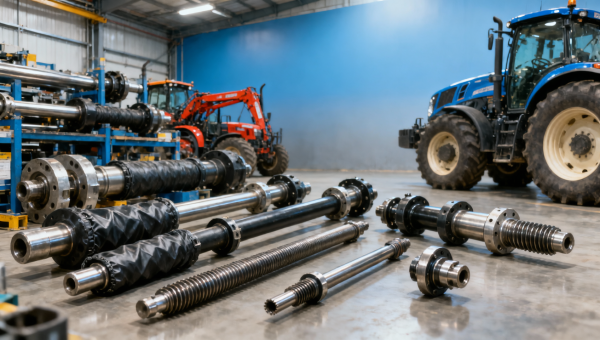
Buying PTO drive shafts in bulk is not just a price decision—it affects equipment compatibility, uptime, safety, and total operating cost across modern farming operations. For buyers comparing tractor implement parts, agricultural tires wholesale options, solar water pumps agricultural systems, or agricultural diesel engines, understanding shaft specifications and supplier standards is essential. This guide helps procurement teams, technical evaluators, and distributors choose with greater confidence.
Why bulk PTO drive shaft selection requires more than a catalog match
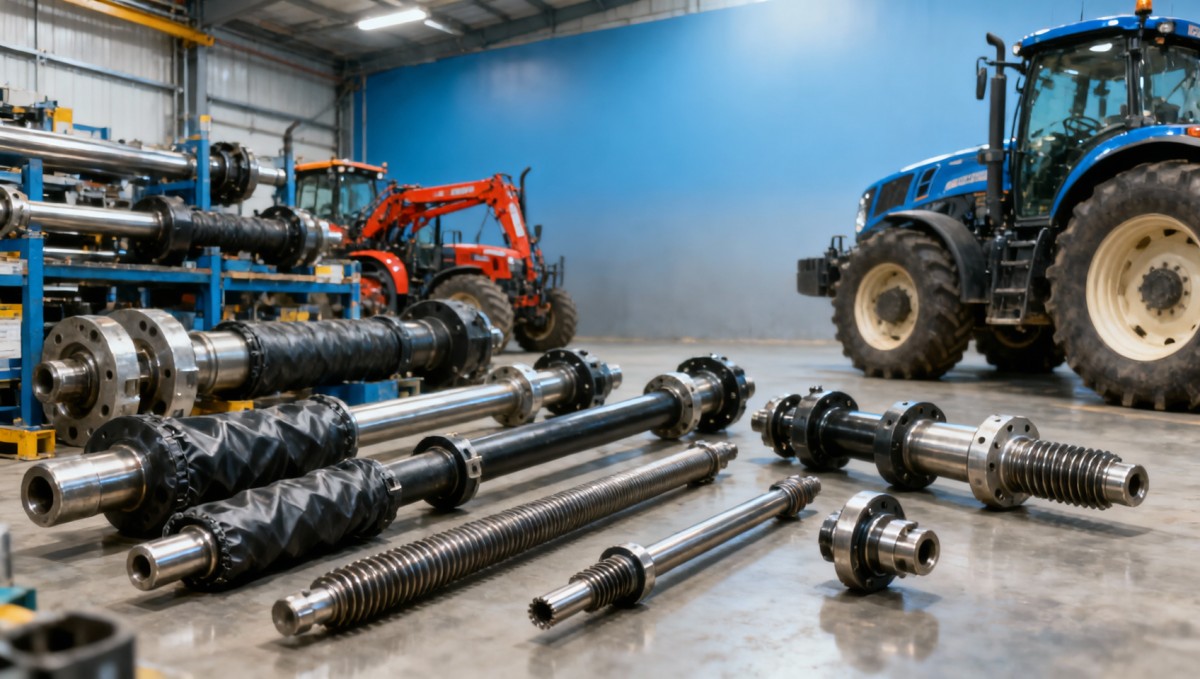
A PTO drive shaft transfers power from the tractor PTO output to an implement such as a rotary tiller, mower, baler, fertilizer spreader, slurry pump, or feed processing unit. In bulk purchasing, the risk is rarely about buying too few parts; it is about buying the wrong specification across 20, 50, or 200 machines and then facing fitment delays, safety exposure, and avoidable field downtime during peak operating weeks.
For technical assessment teams, the core challenge is compatibility. A PTO drive shaft must match tractor horsepower range, PTO speed, implement torque demand, yoke connection profile, compressed and extended length, guarding design, and operating angle. A mismatch of even a few centimeters in working length or an incorrect spline profile can create vibration, accelerated wear, or bottoming out during turning and lifting.
For procurement and finance teams, bulk orders also involve total cost control over a 12–36 month equipment cycle. Unit price matters, but replacement frequency, warranty handling, packaging robustness, documentation quality, and delivery reliability often have a larger financial impact than a small discount on the initial order. This is especially true for distributors and large farming groups working with mixed fleets.
At AgriChem Chronicle, the industrial audience does not look for generic product claims. It looks for verifiable selection logic, regulatory awareness, and supply chain transparency. That is why buyers increasingly evaluate PTO drive shafts the same way they evaluate other industrial inputs: through specification discipline, risk screening, and supplier consistency rather than simple brochure comparison.
- Bulk buyers usually need to verify 5 core dimensions: PTO speed, torque class, connection type, operating length, and guard configuration.
- In seasonal agriculture, a delivery delay of 7–15 days can be more costly than a moderate difference in piece price.
- Mixed implement fleets often require 2–4 shaft series instead of a single universal model.
Which technical specifications matter most when choosing PTO drive shafts in bulk?
The first technical filter is power transmission suitability. PTO drive shafts are commonly selected according to tractor output, implement load profile, and duty cycle. A mower used intermittently has a different shock load pattern from a stone burier, post-hole digger, or feed mixer operating for longer continuous intervals. Buyers should assess not only nominal power, but also startup load, sudden resistance, and frequency of overload events.
Length is the second critical factor. In practical procurement, buyers should request both compressed length and maximum operating length, then compare these values against the implement geometry during lifting, turning, and transport. A shaft that is too long may bottom out and damage bearings or gearbox housings. A shaft that is too short can separate under articulation. In field service, this is one of the most common causes of early failure.
Key parameters that should appear on every supplier quotation
A serious quotation for PTO drive shafts should not stop at item name and unit price. It should include dimensional and functional data that lets technical teams compare offers across vendors. This is especially important when purchasing for OEM integration, distribution inventory, or multi-location farming operations where the same part may be installed by different maintenance crews.
This type of parameter table helps prevent a common procurement error: comparing incomplete offers as if they were identical. If one vendor quotes only a tube length while another quotes full working length, safety shield, and yoke profile, the apparent price difference may not reflect the real delivered scope.
How to judge protection, joint quality, and service life
Guarding and joint quality deserve separate review in bulk buying. The protective shield should rotate freely, remain intact during repeated installation cycles, and suit the implement’s operating environment. Universal joints should show reliable machining, proper lubrication access, and consistent assembly quality. For fleets operating in dust, slurry, or washdown conditions, sealing and grease retention can affect maintenance intervals over an entire season.
Procurement teams should ask whether the shaft is intended for light, standard, or heavy-duty agricultural service. They should also ask about recommended lubrication intervals, spare part availability for crosses and guards, and whether overload protection is integrated through a shear bolt or slip clutch arrangement. In many applications, those details matter more than appearance or packaging.
A practical 4-point technical review
- Check the shaft under 3 machine positions: transport, working depth, and maximum turning angle.
- Confirm the required protection method: standard shield, shear bolt, or slip clutch.
- Review maintenance access if the shaft will run more than 6–8 hours per day in harvest periods.
- Ask for dimensional drawings or installation photos before committing to a large lot.
How should procurement teams compare suppliers, pricing, and delivery risk?
When buying PTO drive shafts in bulk, the best supplier is not automatically the one with the lowest ex-works price. Buyers should compare supply stability, documentation, responsiveness to technical questions, packaging for export handling, and consistency across batches. If a distributor receives mixed dimensions in one shipment, the resulting sorting and return process can offset any front-end savings.
For business evaluators and project managers, supplier review should cover at least 3 commercial layers: quotation clarity, lead time realism, and after-sales handling. A supplier offering a 2–4 week production window is not equivalent to one quoting the same timeline without confirming raw material availability, inspection process, or packing list detail. In industrial procurement, vague promises create hidden cost.
ACC’s readership often works across regulated and complex supply chains, from machinery systems to fine chemical sourcing. In that environment, documentation discipline is a strong indicator of supplier maturity. For PTO drive shafts, that means clear drawings, material and assembly consistency, traceable labeling where applicable, and a structured answer to nonconformity handling. Good commercial terms matter, but clean technical communication matters just as much.
A comparison framework for bulk PTO drive shaft sourcing
The following framework helps teams score multiple vendors in a way that is useful for procurement, engineering, quality, and finance at the same time. It is especially relevant when the purchase supports seasonal demand or dealer inventory replenishment.
A table like this helps cross-functional teams align. Engineering can focus on fit and torque, procurement can compare delivered scope, finance can estimate cost of rework, and quality teams can define acceptance points before the order is placed rather than after the shipment arrives.
Cost is not just unit price
A lower price per shaft may still produce a higher operating cost if lubrication intervals are shorter, protective guards crack in transport, or replacement components are difficult to source. Buyers should estimate total ownership over at least one full season and preferably one annual budget cycle. In some fleets, one extra service event per machine can outweigh a 5%–10% purchase saving.
Distributors should also account for SKU complexity. If one supplier can rationalize a product range into 3 standard shaft families with clear compatibility notes, inventory planning becomes easier than managing 8–10 poorly differentiated versions. This can improve warehouse efficiency, reduce picking mistakes, and support faster dealer response.
What standards, safety checks, and acceptance steps should buyers apply?
PTO drive shafts sit in a high-risk area because they combine rotating power transmission with field operation, operator proximity, and varied implement geometry. Buyers should therefore treat safety guarding, installation instructions, and acceptance inspection as mandatory procurement topics rather than optional extras. This is especially important for OEMs, distributors, and farming groups with formal health and safety procedures.
While specific compliance requirements vary by market, buyers commonly review whether the supplied shaft design, shielding, labels, and instructions align with applicable agricultural machinery safety expectations in the destination country. For importers, it is wise to verify early whether local distributors, insurers, or project owners require additional documentation before equipment can be commissioned.
A 6-item incoming inspection checklist
A structured incoming inspection reduces dispute risk and improves installation readiness. For bulk shipments, the same checklist should be used across the first sample units and the final receiving batch, especially when purchase volume exceeds one pallet or supports multiple project sites.
- Verify model code, shaft series, and ordered quantity against the purchase order and packing list.
- Measure compressed and extended length on sample units from at least 2 cartons or bundles.
- Check tractor-side and implement-side yoke profiles, locking method, and fit tolerance.
- Inspect the protective guard for cracks, free rotation, chain points, and transport damage.
- Review grease points, universal joint assembly quality, and visible coating condition.
- Confirm that instructions, safety markings, and any agreed technical documents are included.
For projects with strict handover procedures, quality teams may also define acceptance sampling based on batch size, installation criticality, and field urgency. Even a simple sample verification at the warehouse can save 3–5 days of on-site correction work after dispatch to remote farms or dealer branches.
Common mistakes that create avoidable safety and warranty issues
- Assuming one “standard” PTO drive shaft will fit all implements in a mixed fleet.
- Ordering by tractor horsepower alone without checking implement-side geometry and shock load.
- Ignoring guard quality because the shaft appears mechanically strong.
- Skipping sample approval before placing a larger bulk order for dealer stock.
These errors are common because teams often split responsibility: procurement buys, maintenance installs, and operations reports failure later. A better process is to align all 3 groups before final order confirmation. That approach is standard in sophisticated industrial sourcing and increasingly expected in agricultural machinery supply chains as well.
How to build a better bulk purchasing plan for distributors, OEMs, and farm operators
The most effective way to buy PTO drive shafts in bulk is to standardize the decision process. Start by grouping demand into application bands such as mowing, tillage, baling, pumping, and feed handling. Then map each band to torque class, yoke type, working length range, and overload protection. This reduces ad hoc buying and creates a reusable sourcing framework for future seasons.
A practical purchasing plan usually has 3 stages over 2–6 weeks: requirement collection, sample validation, and batch confirmation. In stage one, teams gather machine data from tractors and implements already in the field. In stage two, they validate fitment on representative units. In stage three, they finalize volume split, packaging method, and shipment schedule based on seasonal demand and storage capacity.
For distributors, the ideal outcome is a manageable product matrix and fewer returns. For farm operators, it is uptime during the narrow working window. For OEMs and project managers, it is smooth installation and fewer site modifications. The same structured process serves all these groups, which is why decision-makers increasingly want technical sourcing content that goes beyond brochure language.
FAQ: questions buyers often ask before placing a bulk order
How many sample units should be tested before a larger purchase?
For mixed applications, testing 2–3 representative sample units per shaft family is usually more useful than testing many units of one model. The goal is to validate connection fit, operational movement, and guarding behavior across the actual machine range. If the order covers several implement categories, sample approval should reflect that diversity.
What lead time is reasonable for PTO drive shafts in bulk?
Lead time depends on standardization, quantity, and packaging requirements. For common configurations, buyers often see production windows around 2–4 weeks, while custom combinations or peak-season demand can extend the cycle. It is wise to ask suppliers to separate production time, inspection time, and shipping time rather than quoting one vague total.
Should buyers keep one universal shaft model to simplify inventory?
Usually no. A partially standardized portfolio works better than a universal model. Most operations benefit from reducing to 2–4 clearly defined shaft families, each matched to a specific duty band or implement group. That keeps inventory manageable without sacrificing fit and safety.
What should finance teams ask besides the quoted price?
Finance teams should ask about minimum order quantity, packaging losses, spare component availability, warranty handling steps, and expected replacement intervals. They should also ask whether the supplier supports technical clarification before shipment. Those details help estimate the real cost over one season or one annual procurement cycle.
Why informed buyers work with AgriChem Chronicle
AgriChem Chronicle serves procurement-led industries where technical precision, compliance awareness, and supply chain transparency are essential. That same editorial discipline is valuable when evaluating PTO drive shafts in bulk. Our content is designed for engineers, sourcing managers, distributors, and decision-makers who need practical selection logic, not generic sales language.
If you are comparing PTO drive shafts for dealer inventory, OEM sourcing, or farm equipment projects, you can contact us for support on parameter confirmation, model matching, sample planning, delivery-cycle evaluation, supplier comparison, and documentation expectations. If your team is also reviewing related categories such as tractor implement parts, agricultural diesel engines, or solar water pumps agricultural systems, we can help frame the decision in one consistent procurement workflow.
Use ACC to shorten technical clarification time, reduce sourcing ambiguity, and improve internal alignment between engineering, purchasing, quality, and commercial teams. The most effective bulk purchase starts with the right questions. We help you ask them before the order is placed.
Related Intelligence
- Heavy Agri MachineryIndia Launches Anti-Dumping Review on Chinese TractorsIndia's anti-dumping review on Chinese tractors may raise duties from 22.3% to 28.5% — critical for exporters, distributors & supply chain teams. Act now.
- Heavy Agri MachineryIndia Launches AD Review on Chinese Tractors, Tariff May Rise to 28.5%India's AD review on Chinese tractors may raise tariffs to 28.5% — critical insights for exporters, importers & agri-machinery stakeholders.
- Heavy Agri MachineryIndia Launches Anti-Dumping Review on Chinese TractorsIndia's anti-dumping review on Chinese tractors (≥50HP, smart hydraulic suspension) may raise duties to 22.5–28.5%. Exporters, CKD assemblers & suppliers: act now to assess risk and compliance.
The Morning Broadsheet
Daily chemical briefings, market shifts, and peer-reviewed summaries delivered to your terminal.
