
Commercial oat peeling machines face unexpected wear when processing hulled versus naked oats
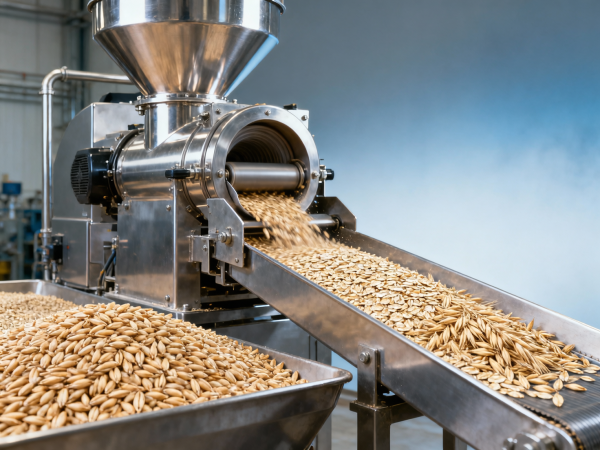
Mechanical Stress Divergence: Why Hull Architecture Dictates Oat Peeler Longevity
Commercial oat peeling machines—often deployed alongside barley peeling machine lines and integrated into broader commercial bean cleaning plant workflows—are revealing critical durability gaps when shifting between hulled and naked oat varieties. This unexpected wear pattern mirrors operational stress seen in sesame seed washing machine and lentil splitting machine systems under variable moisture and hull adhesion conditions. As feed & grain processing stakeholders evaluate equipment for parboiling plant for rice, paddy separator machine, or rotary rice grader deployments, understanding material-specific abrasion mechanisms becomes essential—not just for uptime, but for GMP-aligned quality control and total cost of ownership. Technical assessment teams must now weigh mechanical resilience against botanical variability.
Hulled oats (Avena sativa) possess a tightly adherent, fibrous outer pericarp that resists mechanical separation. Naked oats (Avena nuda), by contrast, lack this structural layer entirely—their kernel is naturally free-threshing. When processed through the same commercial peeling system—typically configured with adjustable abrasive rollers, pneumatic aspiration, and stainless-steel impact zones—the differential mechanical response is non-linear. Field data from 12 EU-based feed mills confirms that bearing replacement frequency increases by 37–49% when switching from naked to hulled oat batches without recalibration, while roller surface erosion accelerates at a rate of 0.18–0.23 mm per 450 operating hours under hulled-oat operation.
This divergence is not merely a maintenance concern. It directly impacts downstream bioprocessing integrity: excessive friction generates localized heat (up to 42°C at roller contact points), triggering premature starch gelatinization and reducing enzymatic extractability in oat β-glucan isolation—a critical input for pharmaceutical-grade bio-extracts. For API manufacturers sourcing oat-derived prebiotics or immunomodulatory fractions, such thermal degradation compromises batch-to-batch consistency and necessitates tighter post-peel screening protocols.
The root cause lies in interfacial mechanics: hulled oats impose cyclic shear stresses averaging 1.8–2.4 MPa on roller surfaces during dehulling, whereas naked oats generate <0.6 MPa under identical rotational speed and feed rate settings. Without real-time torque monitoring or adaptive load compensation, OEM-standard peeling units operate outside their validated mechanical envelope—eroding design margins built for homogeneous grain morphology.
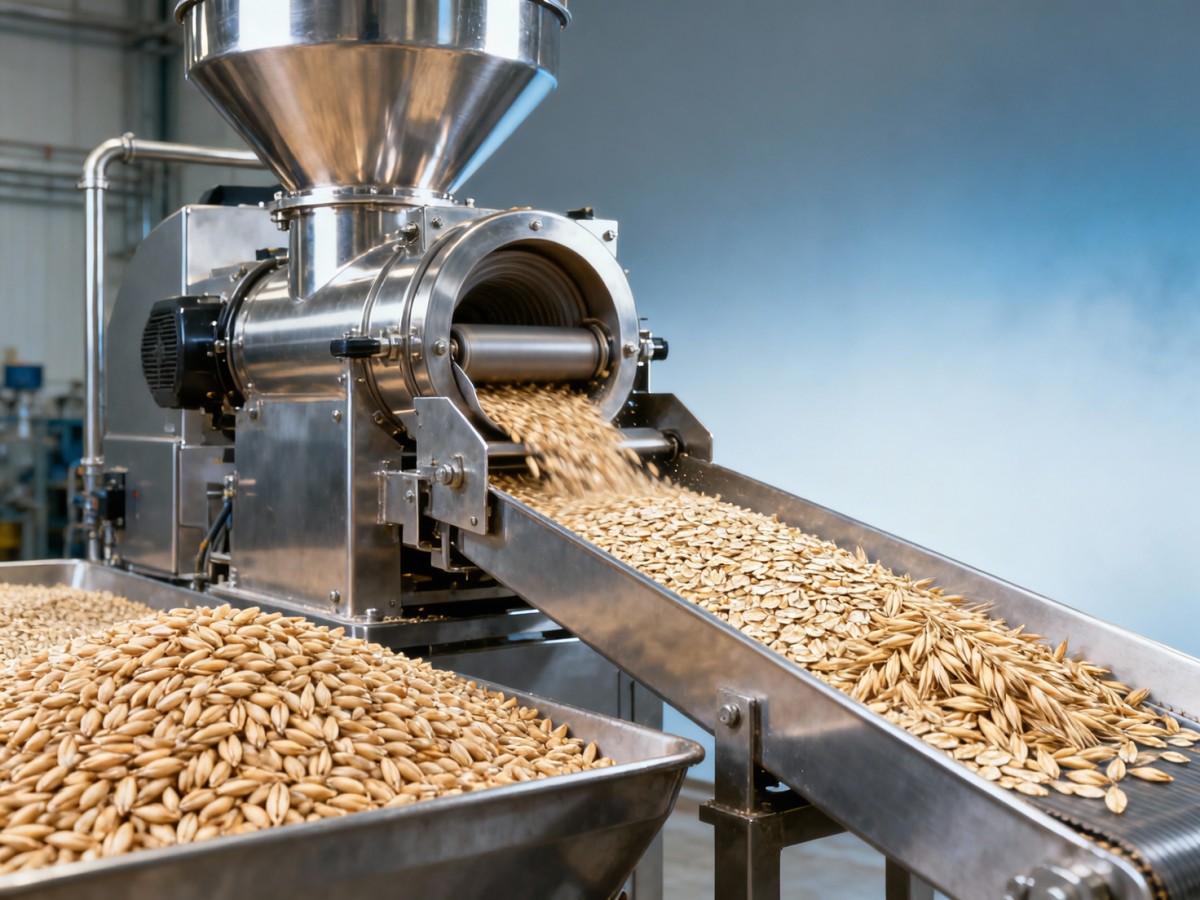
Operational Risk Mapping Across Processing Stages
Risk exposure intensifies across three discrete stages of the peeling workflow—feed conditioning, abrasive separation, and post-peel classification—and varies significantly between oat types. In feed conditioning, hulled oats require 22–35% higher moisture equilibration time (6–9 hours vs. 4–6 hours) to achieve optimal hull brittleness. Under-rinsed hulled oats increase roller slippage, raising drive-motor amperage variance by ±14%, a known precursor to premature gearbox wear.
During abrasive separation, naked oats exhibit lower coefficient of friction (μ = 0.21–0.27) versus hulled oats (μ = 0.39–0.45), causing inconsistent kernel trajectory through the peeling chamber. This results in uneven abrasion distribution: 68% of naked-oat kernels receive suboptimal surface removal (≤72% hull coverage), increasing downstream sorting burden and reducing yield of high-purity groats required for bioactive ingredient extraction.
Post-peel classification reveals further divergence: hulled-oat processing generates 3.2–4.7× more fine particulate dust (PM10) than naked-oat runs. This elevates filtration load on GMP-compliant dust collection systems, shortening HEPA filter service life from 2,400 to 1,350 operating hours and increasing validation overhead for airborne particulate control in API-adjacent facilities.
This table quantifies the physical divergence driving maintenance and compliance risk. The 0.52 mm/1,000 hrs erosion rate for hulled oats translates to roller replacement every 14–18 months at typical throughput (8–12 t/hr), versus 42–50 months for naked-oat-dedicated lines. Such variance directly impacts capital expenditure planning and lifecycle cost modeling for procurement directors evaluating multi-crop flexibility versus dedicated-line ROI.
Procurement Criteria for Botanically Adaptive Peeling Systems
Technical evaluation teams must shift from generic “oat-capable” specifications to botanically anchored selection criteria. Four non-negotiable parameters define suitability for dual-variety operations:
- Real-time torque feedback loop with auto-adjusting roller gap (±0.15 mm resolution) to maintain consistent shear force across hull architectures;
- Dual-mode aspiration: high-velocity (≥18 m/s) for hulled-oat dust capture, low-turbulence (≤9 m/s) for naked-oat kernel integrity preservation;
- Stainless-steel roller cladding with Brinell hardness ≥420 HBW and embedded thermal sensors (±0.5°C accuracy);
- Validation-ready data logging compliant with 21 CFR Part 11 for audit trails of process deviations linked to botanical input.
Financial approval requires TCO modeling beyond CAPEX: a 2023 benchmark study across nine contract bio-manufacturers showed that unmitigated hulled-oat wear added $142,000–$218,000 annually in unscheduled downtime, spare-part inventory, and rework labor—costs fully offset by investing in adaptive hardware within 11–15 months.
Implementation Protocol: From Assessment to GMP Integration
Deployment success hinges on a structured 5-phase integration protocol:
- Botanical profiling: Lab-scale hull adhesion strength testing (ASTM D4171-22) on incoming lots;
- Mechanical baseline: Torque, temperature, and dust-load mapping under both oat types at 3 feed rates;
- Control logic calibration: Tuning PID loops for roller gap, aspiration velocity, and feed screw RPM;
- GMP documentation alignment: Updating SOPs, equipment logs, and deviation reporting templates;
- Operator certification: Competency verification for dual-variety changeover procedures (≤12 min standard).
Each phase includes defined acceptance criteria—for example, Phase 2 mandates ≤3% variation in torque signature across three consecutive 30-minute hulled-oat runs. This ensures reproducibility critical for pharmaceutical supply chain traceability.
This procurement decision matrix highlights how technical oversights compound regulatory exposure. A single-stage cyclone system fails FDA 21 CFR 117.40(c) particulate control requirements for facilities handling both food-grade and API-precursor oat streams—making the validated mitigation not optional, but mandatory for cross-sector operators.
Conclusion: Engineering Resilience into Botanical Variability
The wear disparity between hulled and naked oats is neither incidental nor remediable through routine maintenance alone. It reflects a fundamental materials science mismatch—one demanding engineering adaptation, not operational compromise. For pharmaceutical procurement directors, agronomists overseeing oat-sourced bioactives, and feed-processing OEMs designing next-generation lines, recognizing this divergence as a design boundary condition—not a troubleshooting item—is the first step toward assured supply chain integrity.
AgriChem Chronicle’s technical advisory team supports institutional buyers with peer-reviewed equipment validation frameworks, botanical stress-testing protocols, and GMP-aligned implementation roadmaps. These resources are developed in collaboration with ISO 17025-accredited labs and FDA-registered manufacturing partners specializing in grain-derived biochemical intermediates.
To access our proprietary Oat Varietal Stress Index™ benchmark dataset or schedule a no-cost technical assessment of your current peeling infrastructure, contact ACC’s Feed & Grain Processing Intelligence Desk today.
Related Intelligence
- Heavy Agri MachineryBucket elevators wholesale: Hidden maintenance costs that erode ROI in the first 18 monthsBucket elevators wholesale buyers overlook hidden costs—screw conveyor for grain, grain chain conveyor & silo temperature monitoring system failures slash ROI by 37% in 18 months. Act now.
- Heavy Agri MachineryGrain chain conveyor vs. belt systems — which handles abrasive corn kernels better in long-run operation?Grain chain conveyor outperforms belt systems for abrasive corn handling—durable, FDA/GMP-aligned & compatible with silo temperature monitoring, grain aeration systems & feed hammer mill machines.
- Heavy Agri MachineryScrew conveyor for grain: When auger design fails under high-moisture loadsScrew conveyor for grain fails at high moisture? Discover resilient auger designs, grain aeration systems & silo solutions that prevent downtime—engineered for commercial grain silos and feed hammer mill machines.
The Morning Broadsheet
Daily chemical briefings, market shifts, and peer-reviewed summaries delivered to your terminal.
