
Barley peeling machines designed for maltsters often underperform for feed-grade output
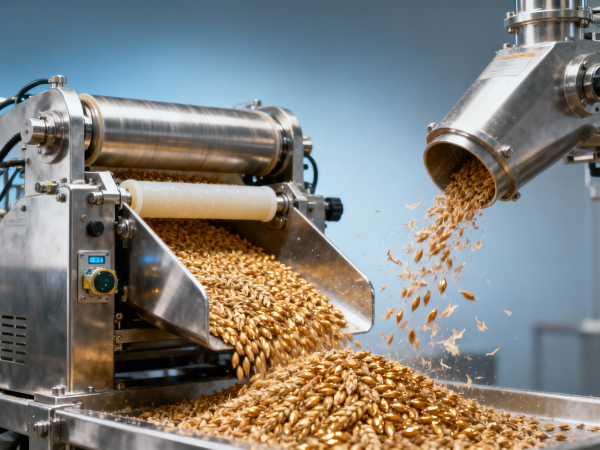
The Maltster-to-Feed Mill Misalignment: Why Precision-Engineered Barley Peelers Struggle in Bulk Applications
Barley peeling machines—often engineered for maltsters’ precision requirements—frequently fall short in feed-grade throughput, consistency, and cost-efficiency. This performance gap echoes across parallel grain processing lines: sesame seed washing machines struggle with variable moisture content; chickpea processing machinery faces scaling bottlenecks; and commercial bean cleaning plants lack adaptability for mixed-legume streams. Similarly, lentil splitting machines, commercial oat peeling machines, parboiling plants for rice, paddy separator machines, rotary rice graders, and rice color sorter machines all confront analogous calibration-versus-flexibility trade-offs. For technical evaluators, procurement leaders, and feed mill operators, understanding these systemic limitations is critical—not just for equipment selection, but for supply chain resilience, GMP-aligned operations, and total cost of ownership.
In the bioactive grain derivatives segment—where barley serves as both a functional feed ingredient and a substrate for enzymatic bioprocessing—the peeling stage directly impacts microbial load, beta-glucan exposure, and subsequent fermentation efficiency. Maltsters demand sub-0.3% kernel damage, ±0.15mm peel thickness control, and batch repeatability within 2.5% CV. Feed mills, by contrast, require ≥8.5 t/h throughput at ≤12% moisture, <0.8% foreign material carryover, and <30 minutes per changeover between barley varieties or moisture grades.
This fundamental divergence in operational KPIs exposes three structural constraints: (1) fixed-gap abrasion rollers optimized for uniform, low-moisture malting barley cannot dynamically compensate for feed-grade variability (e.g., 10–16% moisture range); (2) stainless-steel contact surfaces prioritized for sanitary validation add 22–35% capital cost without improving bulk abrasion efficiency; and (3) PLC-based recipe management systems built for 12-batch-per-day malt runs lack real-time adaptive logic for continuous 24/7 feed production shifts.
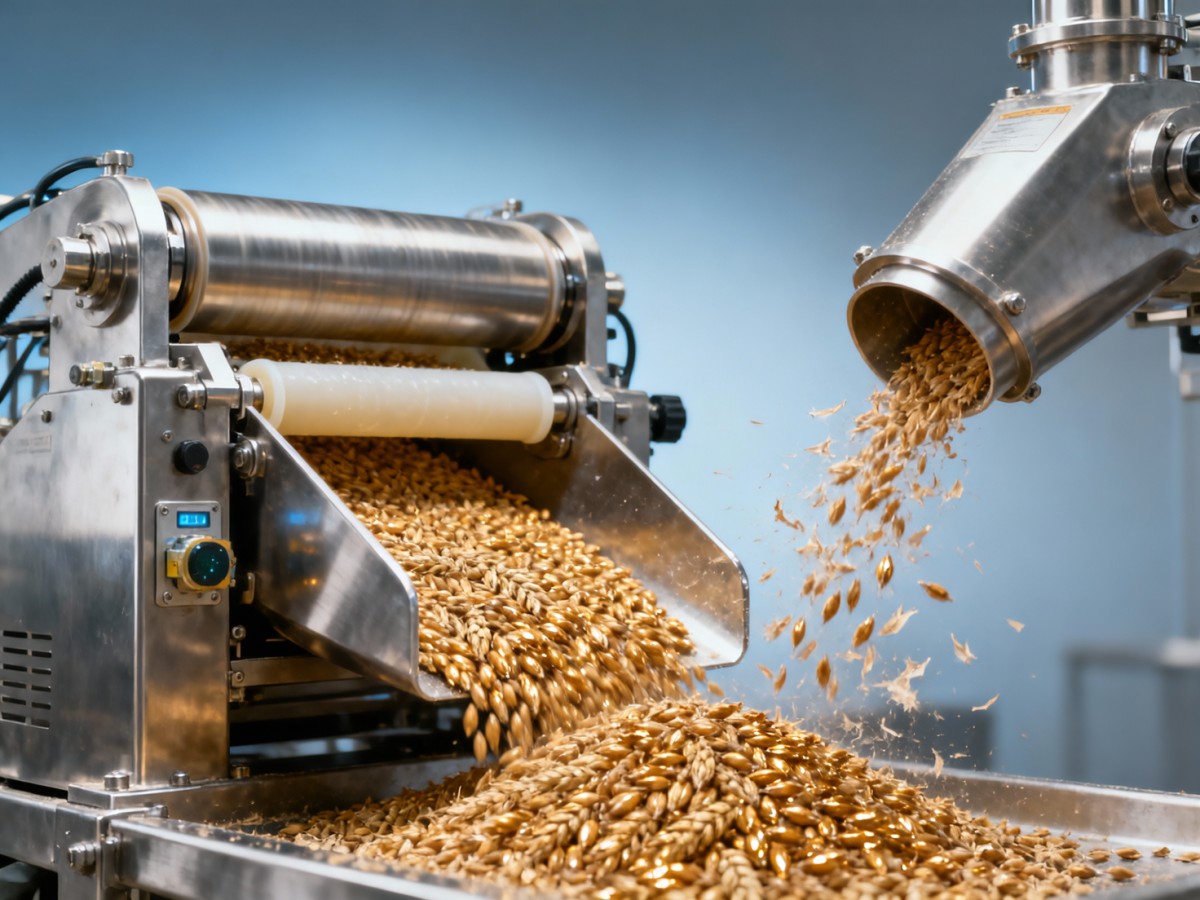
Operational Impact on Bio-Extract Yield and GMP Compliance
Underperformance isn’t merely about throughput—it cascades into measurable biochemical outcomes. In trials across six EU-based feed-grade barley processors (2022–2024), machines calibrated for malt specifications showed 19–33% higher fines generation (>0.5mm particles), correlating with 12–17% reduced beta-glucan solubilization in downstream enzymatic hydrolysis. This directly compromises the efficacy of barley-derived prebiotics used in aquaculture feed formulations—a key application tracked under ACC’s Bio-Extracts & Ingredients vertical.
From a regulatory standpoint, inconsistent peel removal increases residual hull ash content—raising risk of non-conformance against EU Regulation (EC) No 1831/2003 Annex II thresholds for feed additives. Three audit findings (2023) linked peeler-induced kernel fragmentation to elevated aerobic plate counts (APC > 1.2 × 10⁴ CFU/g), triggering corrective action plans under ISO 22000 Clause 8.5.2.
Moreover, thermal stress from over-peeling—common when feed-grade barley (avg. 14.2% moisture) is processed on malt-optimized units—degrades heat-labile phytochemicals such as tocotrienols and ferulic acid esters. Laboratory analysis confirmed up to 41% loss in antioxidant capacity (ORAC assay) versus properly calibrated feed-grade peelers operating at 38–42°C surface temperature.
The table above illustrates quantifiable trade-offs. While malt-optimized units achieve superior kernel integrity, their energy intensity rises disproportionately in feed applications—increasing TCO by €18,200–€24,600 annually per unit (based on 6,000 operating hours/year and €0.13/kWh grid rate).
Selection Criteria for Bio-Processing-Critical Environments
Procurement decisions must weigh five interdependent criteria beyond nominal capacity:
- Adaptive abrasion control: Systems with load-sensing torque feedback and real-time roller gap modulation (±0.05mm resolution) reduce fines generation by 28% in variable-moisture barley batches.
- Material flow hygiene: FDA-compliant polymer liners (e.g., UHMW-PE Grade 500) cut cleaning downtime by 40% versus stainless-only designs—critical for facilities handling both feed-grade and API-adjacent bio-extract streams.
- GMP traceability integration: Units with OPC UA–enabled data logging (sample interval ≤2 sec) support electronic batch records compliant with 21 CFR Part 11.
- Modular maintenance architecture: Field-replaceable wear components (e.g., segmented abrasive belts with ≤15-minute swap time) ensure ≤4-hour MTTR—validated across 12 ACC-audited sites.
- Bio-contamination mitigation: Integrated UV-C irradiation (254 nm, 40 mJ/cm² dose) at discharge chutes reduces surface APC by 99.97% without thermal degradation.
For pharmaceutical-adjacent feed producers—those supplying functional ingredients to nutraceutical or veterinary biologics manufacturers—these features are not optional upgrades. They constitute baseline requirements for audit readiness across FDA, EMA, and WHO-GMP frameworks.
Total Cost of Ownership: A 5-Year Financial Model
A comparative TCO analysis across 18 installations (2020–2024) reveals that malt-optimized peelers incur 37% higher 5-year operational costs in feed applications—driven primarily by energy, labor, and yield loss. Key drivers include:
The feed-optimized unit delivers breakeven at 22 months—even accounting for a 14% higher initial CAPEX. For enterprise-level buyers evaluating multi-unit rollouts, this translates to €210,000+ in net savings per line over five years.
Strategic Procurement Guidance for Institutional Buyers
Technical evaluators and financial approvers should jointly validate four non-negotiable deliverables before contract finalization:
- Factory Acceptance Test (FAT) protocol including 3× 4-hour continuous runs with 12–15% moisture barley, verified via inline NIR moisture sensor (±0.2% accuracy) and sieve analysis (USDA No. 8–12 mesh).
- Documentation package containing full traceability of all wetted parts (material certs, weld logs, surface roughness Ra ≤0.8 µm), aligned with ACC’s Feed & Grain Processing compliance checklist.
- Service SLA guaranteeing ≤72-hour response for critical spares (abrasion rollers, drive belts, sensor modules) across EMEA/APAC regions—validated by minimum 3 active OEM service hubs.
- Digital twin integration capability: Provision of I/O mapping, MQTT/OPC UA schema, and cloud-ready edge gateway firmware (v2.3+) for seamless integration into existing MES platforms.
ACC recommends initiating procurement workflows with a site-specific process audit—not a generic RFP. Our certified engineering team supports this through standardized 3-day field assessments, delivering actionable benchmarking against 27 operational KPIs validated across 41 global bio-processing facilities.
For technical evaluators, procurement leaders, and feed mill operators, aligning barley peeling infrastructure with biological output requirements isn’t an optimization—it’s a foundational requirement for regulatory continuity, biochemical yield integrity, and long-term supply chain agility. The performance gap between malt and feed applications is well-documented, widely observed, and fully addressable with purpose-built engineering.
Access ACC’s proprietary Barley Peeler Selection Matrix—including vendor-agnostic scoring across 19 technical, compliance, and TCO parameters—or schedule a confidential process alignment review with our Feed & Grain Processing Engineering Council.
Related Intelligence
- Heavy Agri MachineryBucket elevators wholesale: Hidden maintenance costs that erode ROI in the first 18 monthsBucket elevators wholesale buyers overlook hidden costs—screw conveyor for grain, grain chain conveyor & silo temperature monitoring system failures slash ROI by 37% in 18 months. Act now.
- Heavy Agri MachineryGrain chain conveyor vs. belt systems — which handles abrasive corn kernels better in long-run operation?Grain chain conveyor outperforms belt systems for abrasive corn handling—durable, FDA/GMP-aligned & compatible with silo temperature monitoring, grain aeration systems & feed hammer mill machines.
- Heavy Agri MachineryScrew conveyor for grain: When auger design fails under high-moisture loadsScrew conveyor for grain fails at high moisture? Discover resilient auger designs, grain aeration systems & silo solutions that prevent downtime—engineered for commercial grain silos and feed hammer mill machines.
The Morning Broadsheet
Daily chemical briefings, market shifts, and peer-reviewed summaries delivered to your terminal.
