
Cassava grating machines and the hidden cause of uneven particle size
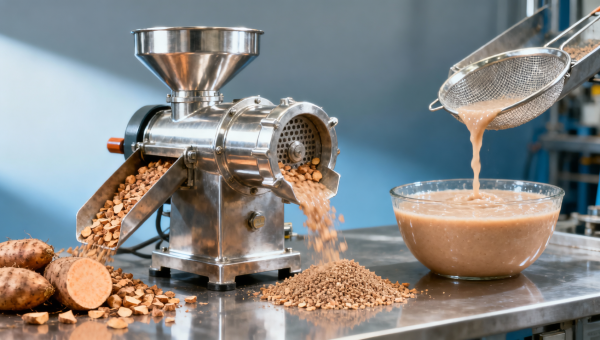
In cassava grating machines, uneven particle size is rarely caused by a single worn component; it often reflects a deeper interaction between rotor speed, feed consistency, screen condition, and upstream handling. For buyers comparing coffee processing machinery, sunflower oil press machine systems, or a wheat flour milling plant, understanding this hidden cause is essential for stable output, lower waste, and smarter equipment selection.
For operators, the problem appears on the discharge side: coarse chunks, excess fines, inconsistent mash texture, or fluctuating throughput. For technical evaluators and procurement teams, however, uneven particle size is a process stability issue that affects starch recovery, downstream pressing, drying efficiency, cleaning frequency, and even motor loading. In medium-capacity lines, a deviation of only a few millimeters in feed preparation or a 10% change in moisture can shift the grating profile enough to create measurable production losses.
This matters far beyond cassava. Across primary processing industries, whether in grain milling, oilseed crushing, or coffee depulping, particle consistency drives yield, quality control, energy use, and maintenance planning. The same buying logic applies: a machine should not be judged only by installed power or nominal capacity, but by how well the whole system controls variation over 8-hour, 12-hour, or continuous operating cycles.
Why uneven particle size is usually a system problem, not a single-part failure
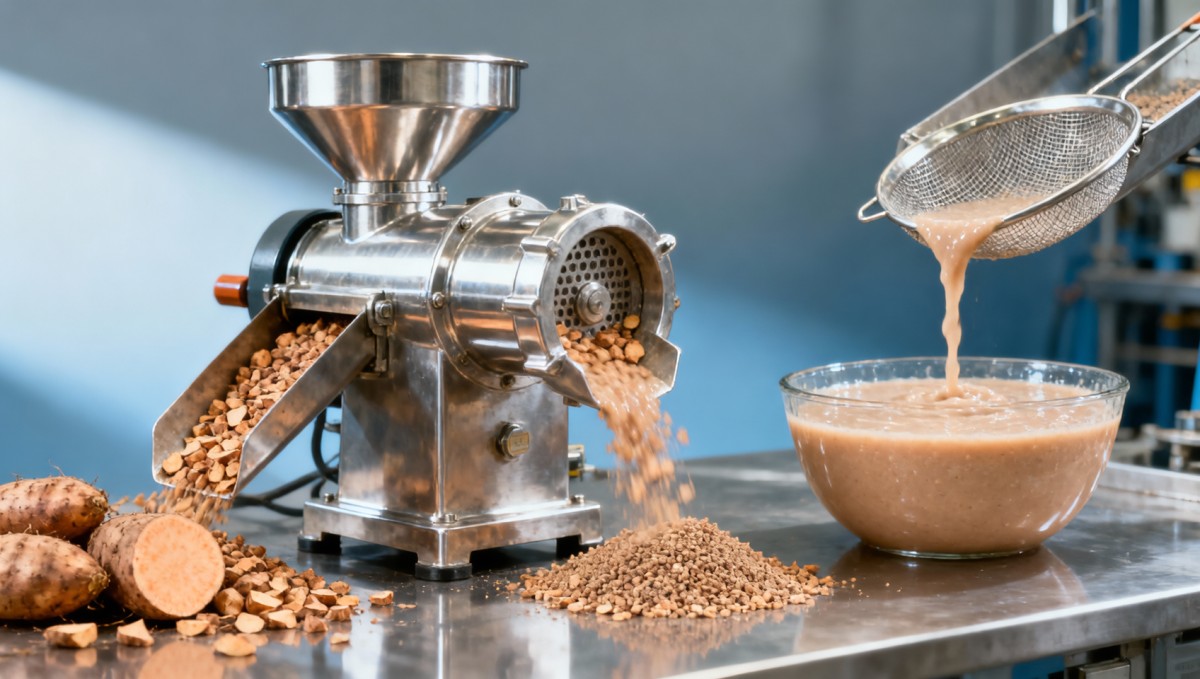
Many buyers initially suspect the grating surface or blade set when cassava mash becomes inconsistent. In practice, that is only one variable. A cassava grating machine works within a chain that includes washing, peeling, cutting, feeding, rotor acceleration, screen interaction, and discharge handling. If one upstream step becomes unstable, the machine may still run, but the output particle size distribution widens quickly.
Rotor speed is a good example. A unit designed to operate within a stable speed band may still spin at nameplate RPM, yet under fluctuating load the actual cutting effect changes because feed density changes moment to moment. A line processing 1 to 3 tons per hour can show visibly different mash textures if chunk size entering the hopper swings from 20 mm to 60 mm. The rotor is not necessarily faulty; the feed is simply no longer uniform enough for repeatable grating.
Screen condition also causes hidden variation. A screen with partial blockage, uneven wear, or slight deformation does not always reduce throughput immediately. Instead, it often creates mixed output: fine material where the openings remain clear and coarse fragments where product bypasses or rebounds. This is especially common when fibrous content, peel residue, or wet soil contamination enters the machine after incomplete washing.
Moisture and root condition play a similar role. Fresh cassava roots with consistent maturity and moisture behave differently from roots that have been stored too long, partially dehydrated, or mixed across harvest batches. Even a 5% to 8% moisture variation can change fracture behavior enough to increase fines or leave larger particles. For quality control teams, that means the “machine issue” may actually be a raw material consistency issue.
The operational takeaway is straightforward: if particle size becomes uneven, inspection should begin with the process map, not just the machine housing. This is the same approach used by technical teams evaluating feed and grain processing equipment, because system balance usually explains performance drift faster than isolated component replacement.
The four hidden interactions most often missed
- Feed size inconsistency: roots entering at mixed lengths and diameters create uneven contact time against the grating surface.
- Variable moisture load: wet and semi-dry roots process differently, especially in lines without controlled pre-cutting.
- Screen and discharge restriction: buildup at one section changes flow pattern across the full rotor width.
- Operator rhythm: manual feeding surges every 10 to 20 seconds can cause repeated overloading and underloading cycles.
The main technical causes and how to diagnose them on site
A practical diagnosis should separate symptoms into three layers: mechanical condition, process condition, and material condition. If teams jump directly to replacing the rotor or motor without observing product flow, they often spend on parts while the root cause remains upstream. In most plants, a structured 30 to 60 minute inspection reveals enough evidence to narrow the issue significantly.
Mechanical checks begin with rotor stability, bearing condition, vibration level, and screen integrity. Abnormal vibration, even if not severe enough to trigger shutdown, can cause inconsistent cutting contact. A slight shaft imbalance or bearing wear can widen the gap between rotating and stationary surfaces. That gap variation is often small, but in fine primary processing, a shift of 1 mm to 2 mm is enough to alter output texture.
Process checks focus on feeding behavior and residence time. If the feed hopper is too shallow, too steep, or manually loaded in surges, the machine receives intermittent dense clusters rather than a smooth stream. That creates alternating overload and underload conditions. In an 8-hour shift, these variations can increase rework volume, generate more downstream screening, and reduce usable throughput by 5% to 15% even when average motor power looks normal.
Material checks should cover root freshness, cut size, peel residue, and contamination. Roots carrying excess sand or peel fragments accelerate wear and partially blind screens. Oversized roots or irregular pre-cut pieces reduce entry consistency. In many cases, the best diagnostic test is simple: sample input material every 15 minutes for 1 hour, compare size range and moisture consistency, and correlate the results with discharge quality.
The table below helps technical teams connect visible symptoms with likely causes and immediate actions before larger maintenance decisions are made.
A key lesson from the table is that the same symptom can emerge from different sources. That is why procurement and maintenance planning should treat particle consistency as a line-level performance metric rather than a single spare-part issue.
A 5-step diagnostic routine
- Record feed condition for at least 3 intervals during active production.
- Check rotor, bearings, and vibration under real load, not idle state only.
- Inspect screen wear pattern across the full working area.
- Collect discharge samples every 15 to 20 minutes and compare fractions.
- Review upstream washing, peeling, and cutting consistency before authorizing part replacement.
What procurement teams should ask service engineers
The best service discussions include measurable questions: What feed size range is acceptable? What moisture range is manageable without major quality drift? How often should screens be inspected at 1 ton per hour versus 5 tons per hour? Clear answers turn maintenance from reactive spending into predictable operating control.
How equipment design and upstream handling shape final particle distribution
Machine design still matters, but design quality should be assessed through process compatibility. A cassava grating machine that performs well in one facility may struggle in another if the feeding mode, root preparation, and cleaning discipline differ. Buyers comparing different primary processing systems often make the same mistake: they compare motor size and output claims but ignore how the machine integrates with upstream handling.
Three design areas deserve close review. First is feeding geometry, including hopper angle, throat opening, and whether a controlled feed mechanism is available. Second is the grating assembly itself, including working surface layout and ease of cleaning. Third is discharge behavior, because restricted discharge can recycle material within the chamber and create excess fines. In higher-volume plants, these details influence consistency more than a small difference in installed kilowatts.
Upstream handling can improve or destroy these design advantages. If roots are washed poorly, cut irregularly, or held too long before processing, even a well-designed machine produces unstable output. This is one reason serious technical evaluators benchmark full-line compatibility. The same rule applies when selecting coffee processing machinery or a wheat flour milling plant: the line must be balanced from intake to discharge.
The comparison below shows how common upstream and design factors affect particle size consistency in everyday operations.
The table highlights a procurement reality: machine selection should include upstream discipline requirements. If a plant cannot maintain narrow feed variation, it may need stronger feed control features rather than simply a larger grater.
Design questions to raise during technical evaluation
- How easy is the machine to open, inspect, and clean between shifts of 8 to 12 hours?
- Can the feeding arrangement support manual loading today and controlled feeding later?
- What screen and wear-part replacement intervals are typical under clean versus contaminated root conditions?
- Is the line layout likely to create discharge retention or recirculation points?
Procurement criteria for buyers, distributors, and plant decision-makers
For B2B buyers, the right question is not only “What is the machine capacity?” but “Under what feed conditions does the machine hold a stable particle profile?” That distinction protects financial approvals and production planning. A lower-cost machine with weak feed tolerance may appear attractive at purchase stage, yet create higher cleaning labor, more screen changes, lower extraction yield, and extra downstream separation costs over 12 to 24 months.
Technical evaluators should define at least four acceptance dimensions before comparing quotations: throughput stability, particle consistency, sanitation access, and wear-part serviceability. Procurement teams should then connect those technical points to commercial terms such as spare-part lead time, recommended maintenance intervals, commissioning support, and operator training. For distributors and agents, these factors also influence after-sales call frequency and customer retention.
Financial approvers often benefit from a simple risk-cost framing. If inconsistent particle size reduces downstream recovery by even a modest percentage, annual losses may exceed the initial price difference between two equipment options. In practical terms, a machine that holds steadier output over 250 operating days can justify a higher upfront cost if it reduces rework, stoppages, and wear-related interventions.
The checklist below can help standardize vendor comparison across cassava, grain, and other primary processing equipment categories.
Procurement checklist with measurable criteria
- Confirm the realistic operating capacity range, for example 1 to 2 tons per hour or 3 to 5 tons per hour, rather than nameplate peak output alone.
- Request the acceptable feed size and moisture range needed for consistent grating performance.
- Ask how many routine inspection points are required per shift and whether cleaning can be completed within planned downtime windows.
- Review wear-part access, replacement difficulty, and expected spare-part lead times such as 7 to 21 days.
- Clarify support scope: installation guidance, operator training, commissioning tests, and troubleshooting response.
Common buying mistakes
Three mistakes are especially common: selecting by power alone, ignoring feed preparation requirements, and underestimating sanitation access. In sectors with variable raw materials, these oversights are often the true reason machines fail to meet expectation after installation.
Well-informed buyers instead align equipment choice with raw material reality, operator skill level, available maintenance time, and downstream quality targets. That approach improves both operating performance and investment confidence.
Maintenance strategy, operating discipline, and practical FAQ
Stable particle size is easier to preserve than to recover. Once output drift becomes severe, the plant is already paying through lower recovery, more cleanup, and inconsistent product quality. A preventive plan should include daily visual checks, scheduled cleaning, periodic vibration review, and simple input sampling. Even in smaller plants, a 10-minute inspection at shift start and end can reveal changes before they affect the entire batch.
Operating discipline matters just as much as maintenance. Operators should be trained to avoid surge feeding, monitor abnormal sound or vibration, and report changes in root condition. Quality teams should record at least basic production markers such as feed appearance, output texture, and downtime cause. Over 4 to 6 weeks, these records often show clear patterns linked to specific root batches, cleaning gaps, or wear cycles.
For plants with multiple processing assets, this practice creates a transferable standard. The same structured maintenance thinking improves coffee processing machinery, sunflower oil press machine systems, and flour milling sections because it reduces hidden process variation before it becomes a product defect.
Routine maintenance points
- Inspect screen cleanliness and wear at least once per shift in high-moisture or dirty-root conditions.
- Check bearing temperature, noise, and vibration trend weekly, or more often on continuous lines.
- Standardize feed preparation so oversized roots are removed or cut before entering the hopper.
- Keep a spare set of high-wear parts if replacement lead times exceed 14 days.
FAQ: How can operators tell whether the problem is feed-related or machine-related?
If output quality shifts alongside visible changes in root size, moisture, or feeding rhythm, the cause is often feed-related. If inconsistency appears under stable material conditions and is accompanied by vibration, noise, or localized screen wear, the cause is more likely mechanical. Sampling at 15-minute intervals is usually enough to separate the two.
FAQ: What operating data should procurement teams request before purchase?
They should request the recommended feed size range, expected maintenance interval, typical wear points, cleaning time per shift, and the realistic throughput band under standard raw material conditions. These details are more decision-useful than a broad capacity claim alone.
FAQ: Is uneven particle size always a sign the machine is undersized?
No. Undersizing can contribute, but many cases are caused by unstable feeding, screen blockage, poor raw material preparation, or maintenance gaps. A larger machine may still produce inconsistent output if those factors are not controlled.
Uneven particle size in cassava grating machines is best understood as a process control signal. It points to the interaction of feed preparation, rotor behavior, screen condition, discharge flow, and operator practice. Buyers who evaluate these links early can reduce waste, improve downstream performance, and make more reliable equipment decisions across cassava, grain, oilseed, and other primary processing lines.
For manufacturers, distributors, plant managers, and procurement teams seeking more stable output and lower operating risk, a structured technical review delivers more value than replacing parts by guesswork. To discuss application fit, maintenance priorities, or line-level equipment selection, contact us today to get a tailored solution, request technical details, or explore more processing equipment insights.
Related Intelligence
- Heavy Agri MachineryTemperature control issues in a cold press oil machine commercial lineCold press oil machine commercial temperature control guide: compare sunflower oil press machine and seed oil expeller wholesale options to improve yield, quality, and ROI.
- Heavy Agri MachineryCold press oil machine commercial setups and the real yield tradeoffCold press oil machine commercial insights: compare real yield, sunflower oil press machine performance, and seed oil expeller wholesale value to choose efficient coffee processing machinery and more.
- Heavy Agri MachineryWhen a sunflower oil press machine needs pretreatment to work wellSunflower oil press machine pretreatment guide: learn when cleaning, drying, and conditioning boost yield, cut downtime, and improve ROI for seed oil expeller wholesale and cold press oil machine commercial buyers.
The Morning Broadsheet
Daily chemical briefings, market shifts, and peer-reviewed summaries delivered to your terminal.
