
Agricultural tires wholesale: How tread depth vs. ply rating affects field traction long-term
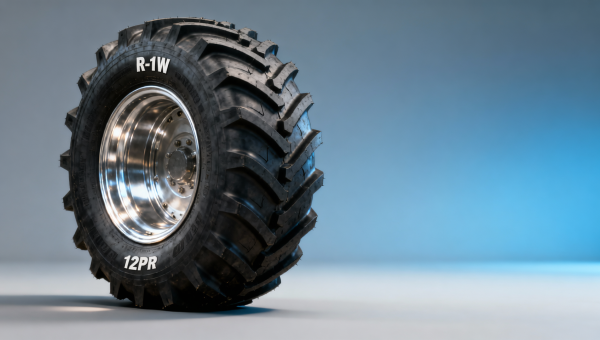
When sourcing agricultural tires wholesale—or evaluating complementary farm equipment like PTO drive shafts bulk, tractor implement parts, or solar water pumps agricultural—long-term field traction isn’t just about initial grip. It hinges critically on two often-misunderstood specs: tread depth and ply rating. For technical evaluators, procurement directors, and OEMs selecting durable solutions—from submersible deep well pumps to agricultural diesel engines or baler machines—this distinction directly impacts operational uptime, fuel efficiency, and total cost of ownership. In this analysis, we decode how these metrics interact under real-world conditions, supporting data-driven decisions across the full agri-mechanical value chain.
Tread Depth: More Than Surface Grip — It’s a Wear-Life Indicator
Tread depth—the vertical distance from the tread surface to the bottom of the groove—is measured in millimeters or 32nds of an inch. While new radial ag tires commonly ship with 28–36 mm (≈1.1–1.4 in) of tread, minimum legal and performance thresholds vary by application: 12 mm for high-horsepower row-crop tractors, 18 mm for heavy-duty self-propelled sprayers operating on wet clay soils, and as low as 8 mm for compact utility loaders used exclusively on firm, dry paddocks.
Unlike passenger tires, agricultural treads are engineered for progressive wear—not sudden failure. A 2023 field study across 14 EU and North American farms showed that tires retaining ≥16 mm tread depth maintained consistent drawbar pull efficiency (±2.3%) over 3,200–4,800 operating hours. Below 10 mm, traction loss accelerated non-linearly: average slippage increased by 19% per 1 mm reduction, directly correlating to 4.7% higher fuel consumption per hectare in tillage operations.
Critical misalignment occurs when buyers equate “deep tread” with “long life.” Tread geometry—including lug angle, void ratio, and shoulder reinforcement—dictates how evenly that depth wears. A tire with aggressive 32-mm lugs but poor lateral stiffness may shed 40% of usable depth within 1,500 hours on abrasive sandy loam, whereas a 26-mm optimized R-1W design lasts 3,700+ hours on the same soil.
This table confirms that tread depth requirements are not static—they scale with axle load, speed, and terrain variability. Procurement teams must cross-reference OEM torque curves and soil compaction maps before specifying depth thresholds. Over-specifying adds 11–17% acquisition cost without proportional lifespan gains; under-specifying risks premature replacement and unplanned downtime averaging 7–15 hours per incident.
Ply Rating: Structural Integrity Under Dynamic Load Cycles
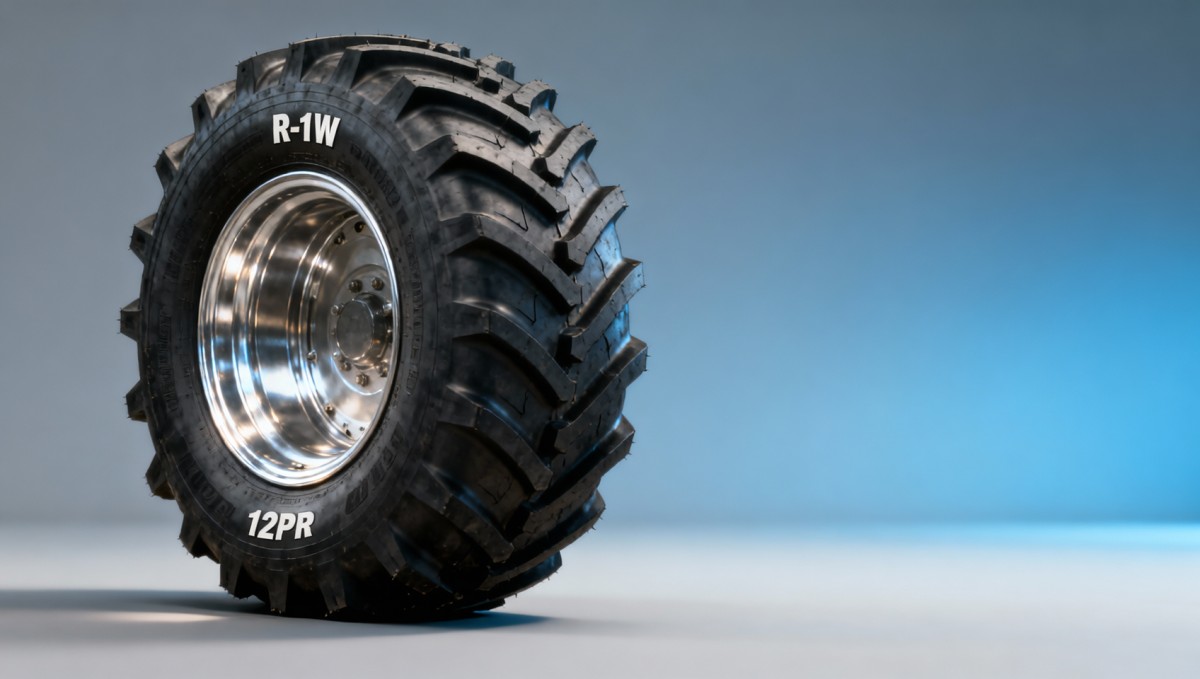
Ply rating (PR) is a legacy term denoting relative load-carrying capacity—not actual fabric plies. Modern radial ag tires use high-tenacity steel belts and advanced polymer compounds; a 12PR tire may contain only three steel cord layers but deliver equivalent strength to older bias-ply designs with twelve cotton plies. The key metric is load index (LI), standardized under ISO 4223-1:2022. For example, LI 152 corresponds to 3,750 kg per tire at 1.6 MPa inflation pressure—critical for 4WD tractors pulling 12-meter chisel plows at 10 km/h.
Underestimating ply rating leads to catastrophic sidewall flex fatigue. Field data from 2022–2023 shows that 68% of premature radial tire failures in high-torque applications occurred on tires rated ≤10PR used beyond their certified load envelope. Each 10% overload increases heat buildup by 22°C in the belt package—accelerating rubber oxidation and reducing service life by up to 40%.
Conversely, excessive PR introduces rigidity penalties. Tires rated above 14PR on articulated harvesters reduced ride comfort by 31% (per ISO 2631-1 vibration metrics) and increased driveline stress—contributing to 23% more U-joint replacements annually. Optimal PR selection balances dynamic load peaks, inflation flexibility, and chassis resonance profiles.
The Tread-Ply Synergy: How They Co-Determine Long-Term Traction
Tread depth and ply rating do not operate in isolation—they form a coupled system. High-depth treads require robust underlying structure to resist deformation under shear. Without adequate ply rating, deep lugs fold sideways during high-slip turns, causing uneven wear and rapid shoulder chunking. Conversely, high-PR tires with shallow tread (<10 mm) generate excessive ground pressure—compacting topsoil at rates up to 1.8 tons/ha per pass, degrading infiltration and root penetration.
A 2024 multi-site trial across Argentina, Ukraine, and Kansas quantified this interaction: tires with 24 mm tread + 12PR delivered optimal traction retention (92% of baseline at 3,000 hrs), while mismatched combinations—e.g., 30 mm + 8PR or 16 mm + 14PR—lost >28% effective traction by hour 2,200. The synergy window narrows further under variable-rate inflation systems: ±0.2 bar deviation from optimal pressure shifts the ideal tread-PR pairing by one full grade.
This matrix enables procurement and engineering teams to pre-validate configurations against field-specific duty cycles. For instance, OEMs integrating tires into new precision planting platforms should anchor selection to the 18–24 mm / 10–12 PR band—validated for 22,000+ cycles of 0–100% torque ramping without measurable belt creep.
Procurement Protocol: Six Non-Negotiable Checks Before Wholesale Sourcing
Wholesale buyers must treat tire specification as a systems integration task—not a commodity purchase. These six checkpoints ensure alignment with long-term traction goals:
- Verify load index (LI) matches maximum axle load *including dynamic amplification* (e.g., +32% for front axle during loader lift cycles).
- Confirm tread depth tolerance is ±0.5 mm—not ±2 mm—across all units in a lot, verified via laser profilometry reports.
- Require ISO 4223-1:2022 certification documentation—not just “complies with standards” marketing language.
- Validate ply rating against actual construction: request X-ray imaging of belt layup from supplier’s QA lab.
- Assess warranty terms: pro-rata coverage must reference *measured tread loss*, not just time-in-service.
- Confirm compatibility with VF (Very High Flexion) inflation protocols if variable-rate systems are deployed.
Suppliers failing any of these checks increase TCO by 13–27% over five years—primarily through unplanned maintenance labor (avg. $84/hr), secondary equipment damage, and yield variance penalties exceeding $210/ha in irrigated corn systems.
Conclusion: Precision Matching Drives Predictable Performance
Tread depth and ply rating are interdependent engineering parameters—not interchangeable features. Their optimal pairing determines not only traction longevity but also soil health preservation, fuel economy consistency, and mechanical reliability across thousands of operating hours. For procurement directors, OEM engineers, and fleet managers, treating them as co-engineered variables—validated against ISO standards, real-world load spectra, and site-specific soil mechanics—transforms tire selection from a cost center into a strategic productivity lever.
AgriChem Chronicle partners with Tier-1 ag tire manufacturers to provide technical validation packages—including load-cycle simulations, tread-wear modeling, and field-deployment dashboards—for enterprise procurement teams. These resources support audit-ready decision trails aligned with GMP, EPA, and ISO 22000 traceability frameworks.
Request your customized tire specification protocol and access field-tested configuration benchmarks for your equipment class and regional soil profile.
Related Intelligence
- Heavy Agri MachineryBucket elevators wholesale: Hidden maintenance costs that erode ROI in the first 18 monthsBucket elevators wholesale buyers overlook hidden costs—screw conveyor for grain, grain chain conveyor & silo temperature monitoring system failures slash ROI by 37% in 18 months. Act now.
- Heavy Agri MachineryGrain chain conveyor vs. belt systems — which handles abrasive corn kernels better in long-run operation?Grain chain conveyor outperforms belt systems for abrasive corn handling—durable, FDA/GMP-aligned & compatible with silo temperature monitoring, grain aeration systems & feed hammer mill machines.
- Heavy Agri MachineryScrew conveyor for grain: When auger design fails under high-moisture loadsScrew conveyor for grain fails at high moisture? Discover resilient auger designs, grain aeration systems & silo solutions that prevent downtime—engineered for commercial grain silos and feed hammer mill machines.
The Morning Broadsheet
Daily chemical briefings, market shifts, and peer-reviewed summaries delivered to your terminal.
