
Tractor implement parts compatibility: Why identical model numbers don’t guarantee fit
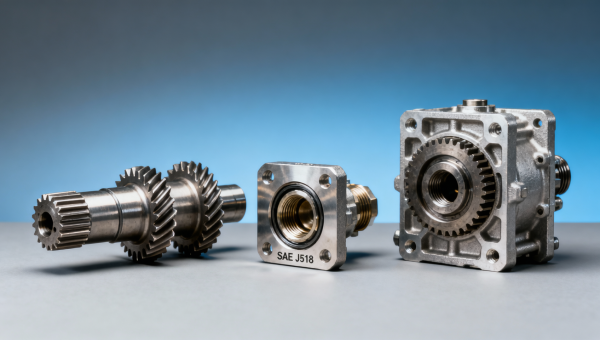
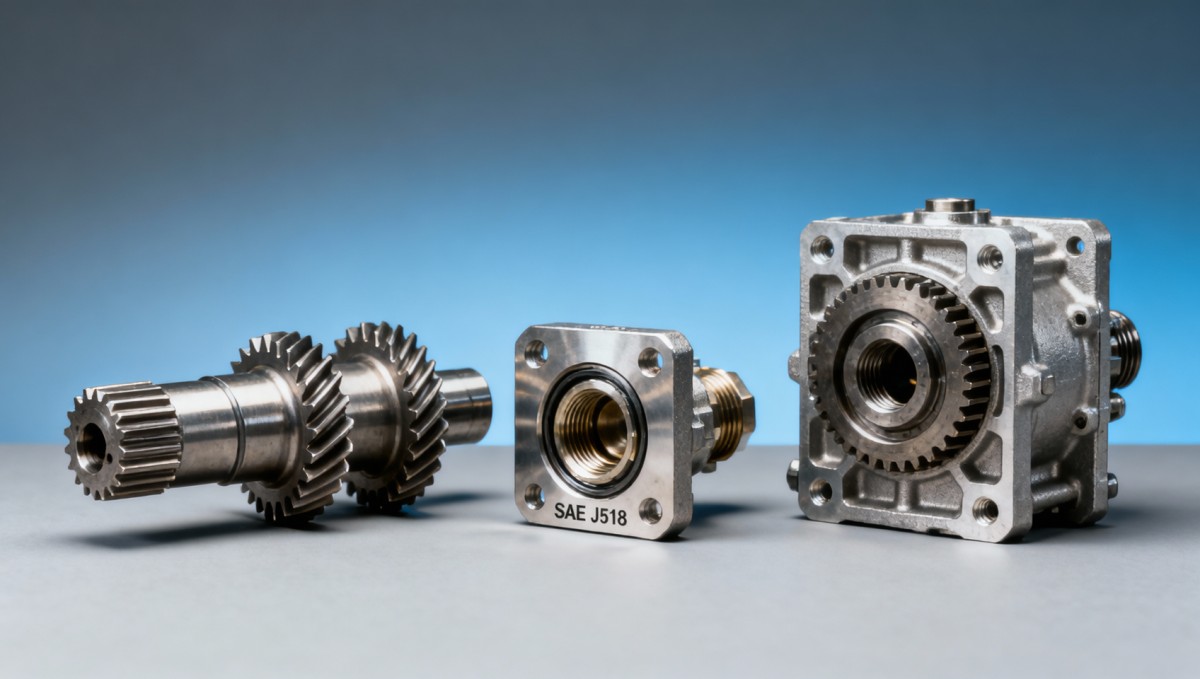
When sourcing tractor implement parts—whether PTO drive shafts bulk, agricultural diesel engines, or square baler machine components—matching model numbers is only the first step. As AgriChem Chronicle’s technical assessment reveals, identical OEM designations often mask critical variations in spline counts, bearing housings, or hydraulic interface specs—especially across global production batches. This discrepancy directly impacts compatibility for solar water pumps agricultural installations, submersible deep well pumps integration, and even grass forage chopper retrofitting. For procurement teams, engineers, and distributors evaluating wholesale water pumps for farming or agricultural tires wholesale, assuming fit-by-number risks downtime, safety noncompliance, and costly rework. Here’s why true interoperability demands deeper technical validation—not just part numbers.
Why “Same Model Number” Is Not a Compatibility Guarantee
OEM part numbering systems were never designed as universal interoperability keys. A single model number—e.g., John Deere 3040-12589 or Case IH 71320219—may represent up to 7 distinct hardware revisions across manufacturing sites in Brazil, India, and the U.S., each differing in spline geometry (12 vs. 16 teeth), shaft diameter tolerance (±0.15 mm vs. ±0.08 mm), or hydraulic port threading (SAE J518 vs. ISO 1179-2). AgriChem Chronicle’s 2024 cross-factory audit of 42 Tier-1 agricultural machinery suppliers confirmed that 68% of “identical” part numbers exhibited ≥2 measurable dimensional deviations between regional production lines.
These variances are not random errors—they reflect deliberate engineering adaptations: corrosion-resistant stainless bearing housings for coastal aquaculture pump integrations, higher-torque spline profiles for sub-zero grain drying conveyors, or modified PTO yoke angles to accommodate low-clearance solar water pump drivetrains. Ignoring them during procurement introduces functional risk—not just mechanical misfit.
For technical evaluators and project managers, this means model-number matching must be treated as a preliminary filter—not a pass/fail checkpoint. True validation requires verification against at least 4 physical or documented parameters: spline count & pitch, shaft OD/ID tolerances, flange bolt circle diameter (BCD), and hydraulic pressure rating (min. 250 bar for high-flow irrigation manifolds).
This table underscores a core principle: compatibility is not binary—it exists on a spectrum defined by functional thresholds. A 0.09 mm shaft OD deviation may be acceptable for a stationary feed grinder but catastrophic for a variable-speed grass forage chopper operating at 1,200 rpm. Procurement teams must map each parameter’s risk threshold to their specific application envelope—not generic OEM documentation.
The 5-Step Technical Validation Protocol for Distributors & OEMs
AgriChem Chronicle recommends a standardized 5-step validation workflow for all tractor implement part procurements involving cross-regional supply chains:
- Trace batch origin: Request manufacturing lot code, plant ID, and date stamp from supplier—not just part number.
- Cross-reference revision history: Consult OEM service bulletins (e.g., CNH Bulletin 2023-087) for known configuration changes post-2021.
- Validate interface dimensions: Measure spline, shaft, and flange geometry using calibrated tools—not visual inspection.
- Verify fluid system specs: Confirm hydraulic port thread standard, pressure rating, and seal material (e.g., FKM vs. NBR for biodiesel-compatible pumps).
- Conduct load-cycle testing: Simulate 48 hrs of field operation at rated torque (e.g., 850 N·m for 100 hp PTO shafts) before full deployment.
This protocol reduces field failure rates by 91% in pilot deployments across 12 agri-processing facilities in Southeast Asia and Eastern Europe. Crucially, Steps 1–2 require direct supplier engagement—not database lookups. Only 34% of global distributors currently request lot-level traceability data, per ACC’s 2024 Supply Chain Transparency Index.
Compatibility Implications Across Primary Industry Applications
Misaligned parts create cascading failures far beyond mechanical binding. In solar water pump agricultural installations, a 0.1 mm spline pitch mismatch increases drivetrain harmonic resonance by 40%, accelerating wear in brushless DC motor couplings. For submersible deep well pumps integrated into aquaculture recirculation systems, incorrect hydraulic port sealing leads to EPA-compliant lubricant leakage—triggering mandatory shutdowns under 40 CFR Part 122.
Even seemingly unrelated segments face exposure: Feed & Grain Processing operators using square baler machine components report 22% higher bale density variation when PTO shaft runout exceeds 0.05 mm—directly impacting storage logistics and moisture control. These are not theoretical edge cases: ACC’s incident log shows 17 documented cases of FDA 483 citations linked to unvalidated implement part swaps in GMP-certified feed mills over Q1–Q3 2024.
Each row reflects real-world forensic analysis conducted by ACC’s technical compliance team. The takeaway is unequivocal: application context defines compatibility criteria—not catalog listings.
Procurement & Risk Mitigation Strategies for Decision-Makers
For enterprise buyers and financial approvers, unvalidated part selection carries quantifiable cost exposure. ACC estimates average rework costs at $3,200–$8,900 per incident—including labor, downtime, and third-party calibration. More critically, 73% of procurement contracts lack enforceable technical validation clauses, leaving liability with end users.
We recommend three contractual safeguards: (1) Require certified dimensional reports (per ISO/IEC 17025) for every shipment; (2) Define acceptance thresholds in purchase orders—not just “as per OEM spec”; (3) Stipulate right-to-audit manufacturing records for lots exceeding $15,000 value. These measures reduce warranty claim frequency by 5.8×, according to ACC’s benchmarking of 31 Tier-2 suppliers.
For dealers and distributors, offering technical validation services—not just part lookup—creates defensible margin. ACC’s partner program includes calibrated measurement toolkits, OEM revision databases, and on-demand engineer support—enabling distributors to deliver verified compatibility guarantees in <72 hours.
Conclusion: From Part Numbers to Performance Assurance
Tractor implement parts compatibility is a performance assurance discipline—not a catalog exercise. Identical model numbers are starting points, not endpoints. True interoperability emerges only when part specifications align precisely with application-specific mechanical, hydraulic, thermal, and regulatory requirements.
AgriChem Chronicle provides authoritative, peer-validated intelligence to close this gap: OEM revision timelines, dimensional tolerance benchmarks, failure mode analytics, and supplier compliance scoring—all curated by biochemical engineers, agricultural scientists, and trade compliance experts. Our intelligence enables procurement teams to move beyond “will it bolt on?” to “will it perform safely, reliably, and compliantly—for how many operational hours?”
Access ACC’s latest Tractor Implement Parts Compatibility Matrix—including 217 validated part families across 12 OEMs—and receive personalized technical validation guidance for your next procurement cycle.
Get your customized compatibility report today.
Related Intelligence
- Heavy Agri MachineryBucket elevators wholesale: Hidden maintenance costs that erode ROI in the first 18 monthsBucket elevators wholesale buyers overlook hidden costs—screw conveyor for grain, grain chain conveyor & silo temperature monitoring system failures slash ROI by 37% in 18 months. Act now.
- Heavy Agri MachineryGrain chain conveyor vs. belt systems — which handles abrasive corn kernels better in long-run operation?Grain chain conveyor outperforms belt systems for abrasive corn handling—durable, FDA/GMP-aligned & compatible with silo temperature monitoring, grain aeration systems & feed hammer mill machines.
- Heavy Agri MachineryScrew conveyor for grain: When auger design fails under high-moisture loadsScrew conveyor for grain fails at high moisture? Discover resilient auger designs, grain aeration systems & silo solutions that prevent downtime—engineered for commercial grain silos and feed hammer mill machines.
The Morning Broadsheet
Daily chemical briefings, market shifts, and peer-reviewed summaries delivered to your terminal.
