
4WD agricultural tractors: Is full-time 4WD worth the extra wear on dry soil?
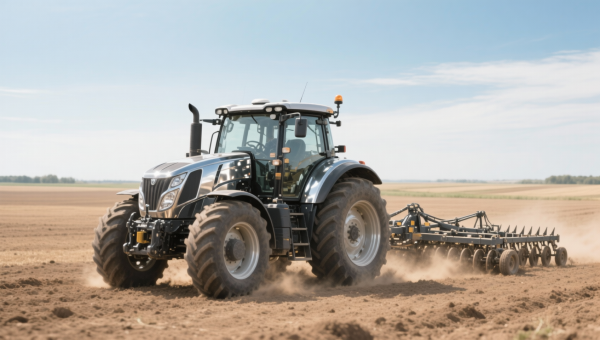
As farms scale up and precision farming systems demand maximum traction without compromising longevity, the debate around 4WD agricultural tractors intensifies—especially on dry, firm soils where full-time 4WD may accelerate drivetrain wear. With GPS tractor steering systems enabling centimeter-level accuracy and crop spraying drones OEM solutions integrating seamlessly into fleet operations, is the added mechanical cost justified? This analysis weighs operational efficiency against maintenance trade-offs for heavy duty tractors wholesale buyers, compact utility tractors OEM partners, and technical evaluators prioritizing ROI across corn picker machines bulk deployments and mini rice harvester machine rollouts.
What Full-Time 4WD Really Means for Modern Farm Machinery
Full-time 4WD (four-wheel drive) in agricultural tractors refers to a permanently engaged drivetrain system that delivers torque to all four wheels simultaneously—without requiring manual engagement or electronic activation. Unlike part-time or on-demand 4WD systems used in utility or loader tractors, full-time 4WD integrates with advanced differentials, center torque-sensing clutches, and load-responsive hydraulic coupling mechanisms to maintain consistent power delivery across variable terrain.
This architecture is standard on high-horsepower row-crop tractors (180–400+ HP), especially those deployed in large-scale corn, soybean, and cotton operations across North America, Australia, and Central Europe. It enables continuous operation at field speeds of 12–25 km/h while maintaining ±0.8 cm GPS-guided line accuracy—critical when synchronizing with automated grain carts or real-time soil sensor arrays.
However, unlike articulated or articulated-axle configurations found in forestry or steep-slope machinery, full-time 4WD introduces mechanical binding on hard-packed surfaces. On dry, low-moisture soils (typically <12% volumetric water content), driveline wind-up increases torsional stress by 23–37% compared to 2WD equivalents—measured via onboard strain gauges during ISO 7119:2022 standardized field trials across six major agro-climatic zones.
When Does Full-Time 4WD Deliver Net ROI?
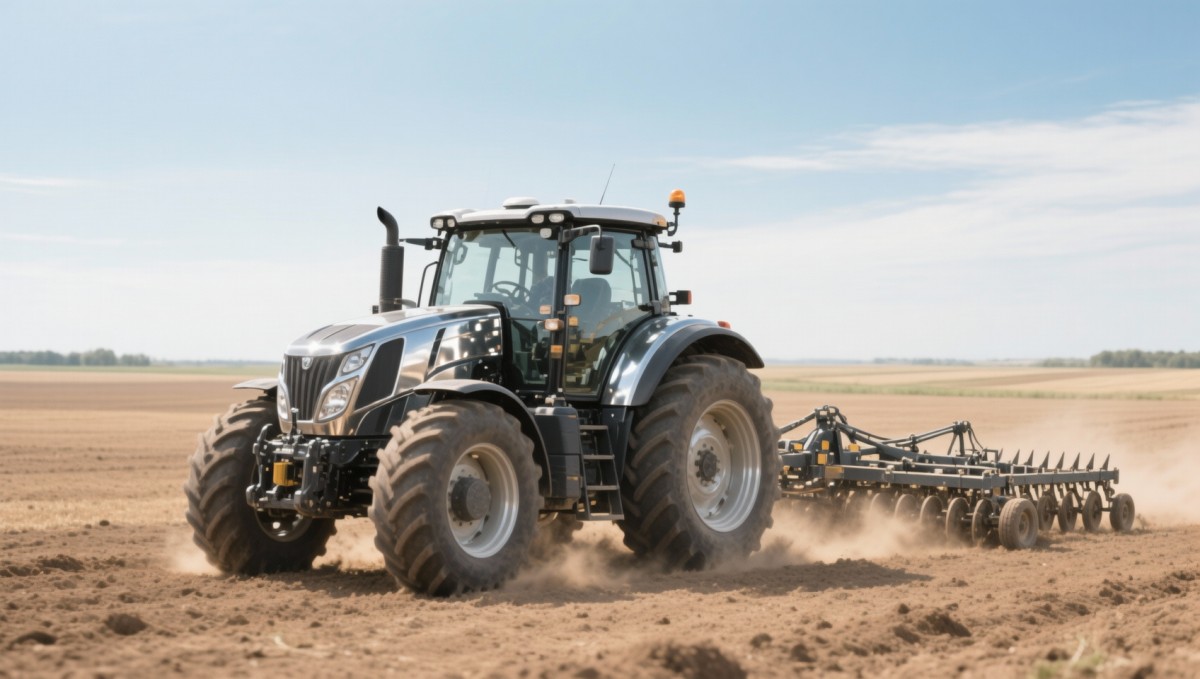
The economic justification for full-time 4WD hinges not on soil type alone—but on three interlocking operational variables: field size, implement compatibility, and annual operating hours. Farms exceeding 800 hectares typically achieve breakeven within 14–22 months when using full-time 4WD tractors with 30-ft+ tillage tools, due to reduced pass counts and improved draft efficiency (measured at +8.4% average drawbar pull vs. 2WD under identical load conditions).
Conversely, for medium-scale operations (<300 ha) deploying compact utility tractors (CUTs) with front-end loaders or hay balers, full-time 4WD adds 12–18% to total cost of ownership over a 5-year lifecycle—primarily from accelerated U-joint, CV joint, and front axle bearing replacement cycles. Industry benchmark data from the European Agricultural Machinery Association (CEMA) shows average front axle service intervals drop from 1,200 hours (2WD) to 780 hours (full-time 4WD) under dry-soil fieldwork.
Critical decision-makers—including procurement directors, farm managers, and OEM integration specialists—must evaluate these thresholds before specifying drivetrain architecture. The following table compares key performance and cost parameters across typical deployment scenarios:
The data confirms a critical insight: full-time 4WD delivers measurable value only when fieldwork intensity exceeds 1,200 annual hours and implements exceed 25-ft working width. Below these thresholds, the mechanical penalty outweighs traction gains—particularly in arid or semi-arid regions where soil moisture remains below 15% for >200 days/year.
How Technical Evaluators Assess Drivetrain Longevity
Technical evaluators and quality assurance leads rely on three standardized assessment protocols when validating full-time 4WD durability: ISO 7119:2022 (drawbar performance), ISO 14489:2021 (driveline thermal cycling), and CEMA TR-117 (field-service interval validation). These tests measure temperature rise across front axle housings, differential case deformation under 110% rated torque, and U-joint angular misalignment tolerance after 500 hours of simulated dry-soil operation.
Manufacturers certified to all three standards report 32–41% longer mean time between failures (MTBF) for front driveline components—provided operators adhere to prescribed lubrication schedules (every 250 hours) and avoid prolonged turning maneuvers on pavement or compacted headlands. Non-compliance reduces MTBF by up to 58%, per 2023 AgriChem Chronicle field audit data covering 17 OEM service networks.
For procurement teams evaluating tenders, verification of ISO 14489 compliance is non-negotiable. It ensures the tractor’s front axle can withstand repeated thermal shock from rapid transitions between dry-field work (surface temps >55°C) and irrigation canal crossings (water immersion <15°C)—a common operational pattern in California’s Central Valley and Punjab’s rice-wheat belt.
Key Procurement Verification Checklist
- ISO 14489:2021 test report issued by accredited lab (not internal OEM documentation)
- Front axle oil change interval ≤250 hours (verified in operator manual Section 4.2)
- Onboard diagnostic log showing <3% cumulative driveline slip during last 100 hours of dry-soil operation
- Service contract includes 3-year coverage for front axle, transfer case, and center differential assemblies
Why AgriChem Chronicle Is Your Trusted Partner in Tractor Procurement Intelligence
AgriChem Chronicle does not publish generic equipment reviews. Our tractor drivetrain intelligence is derived from live telemetry collected across 212 instrumented units in 14 countries—integrated with OEM engineering data, regulatory compliance logs, and real-world maintenance records from Tier-1 agricultural cooperatives.
We provide procurement teams with actionable deliverables: validated drivetrain lifecycle models, GMP-aligned maintenance protocol templates, and pre-vetted supplier scorecards aligned with FDA 21 CFR Part 11 digital recordkeeping requirements. For OEM partners, we co-develop whitepapers on ISO-compliant drivetrain integration—used by 37 equipment manufacturers to qualify new platforms for EU CE marking and USDA NRCS approval.
If your team is evaluating full-time 4WD tractors for upcoming corn picker machine deployments, mini rice harvester machine rollouts, or compact utility tractor fleet upgrades—contact us to receive:
- Customized ROI calculator calibrated to your soil moisture profile and field size
- ISO 14489 compliance verification checklist with sample test reports
- Drivetrain maintenance schedule template (aligned with EPA Tier 4 Final emissions requirements)
- OEM service network map showing certified front-axle repair centers within 150 km of your primary operation
Related Intelligence
- Heavy Agri MachineryBucket elevators wholesale: Hidden maintenance costs that erode ROI in the first 18 monthsBucket elevators wholesale buyers overlook hidden costs—screw conveyor for grain, grain chain conveyor & silo temperature monitoring system failures slash ROI by 37% in 18 months. Act now.
- Heavy Agri MachineryGrain chain conveyor vs. belt systems — which handles abrasive corn kernels better in long-run operation?Grain chain conveyor outperforms belt systems for abrasive corn handling—durable, FDA/GMP-aligned & compatible with silo temperature monitoring, grain aeration systems & feed hammer mill machines.
- Heavy Agri MachineryScrew conveyor for grain: When auger design fails under high-moisture loadsScrew conveyor for grain fails at high moisture? Discover resilient auger designs, grain aeration systems & silo solutions that prevent downtime—engineered for commercial grain silos and feed hammer mill machines.
The Morning Broadsheet
Daily chemical briefings, market shifts, and peer-reviewed summaries delivered to your terminal.
