
Hainan's Green Cultivation Technology for String Beans Attracts Procurement Intentions from Vietnam and Cambodia, Reducing Pesticide Use by 35% and Increasing Yield by 18%
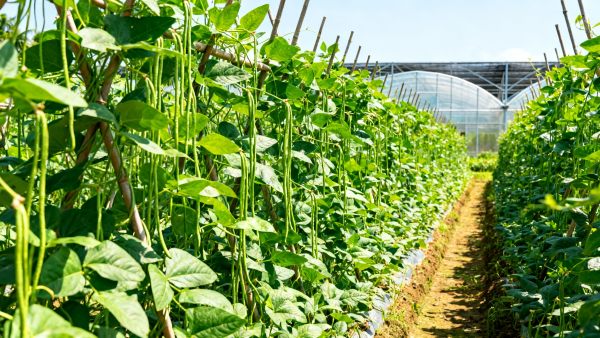
Hainan's Green Cultivation Technology for String Beans Attracts Procurement Intentions from Vietnam and Cambodia, Reducing Pesticide Use by 35% and Increasing Yield by 18%
Introduction
On March 27, 2026, the Hainan Comprehensive Test Station of the National Bulk Vegetable Industry Technology System announced the successful integration of green cultivation technology for string beans using single-row trellising. This innovation has achieved a 35% reduction in pesticide use and an 18% increase in yield at demonstration bases in Haikou. Notably, agricultural authorities from Vietnam's Binh Duong Province and Cambodia's Kampong Cham Province signed letters of intent to procure this technology, including its simplified trellis system, biological pest control solutions, and technical training services. This development marks a significant step in China's agricultural technology exports and highlights opportunities for related industries.
Event Overview
The technology, developed by the Hainan Comprehensive Test Station, focuses on sustainable string bean cultivation through single-row trellising. Key achievements include a verified 35% decrease in pesticide application and an 18% rise in per-unit yield at Haikou demonstration sites. Vietnam and Cambodia have expressed formal interest in adopting the system, signaling cross-border demand for eco-friendly agricultural solutions. The agreements cover hardware exports (trellis systems) and soft services (training and pest management protocols).
Impact on Sub-Sectors
Agricultural Technology Exporters
The immediate beneficiaries are providers of integrated cultivation solutions. The Vietnamese and Cambodian procurement plans validate market demand for bundled offerings combining hardware (trellises) with knowledge transfer (training). Companies with similar packaged technologies may find new export opportunities in Southeast Asia's vegetable sector.
Biological Input Manufacturers
With pesticide reduction being a core selling point, suppliers of biopesticides and organic fertilizers referenced in the technology should monitor adoption rates. Increased uptake in Southeast Asia could drive orders for compatible biological products from Chinese manufacturers.
Regional Vegetable Traders
Higher yields from this method may affect string bean supply chains. Importers sourcing from Hainan or adopting regions should anticipate potential volume increases and possible quality standardization based on the technical parameters.
Key Focus Areas and Recommended Actions
Track Implementation Timelines
While letters of intent indicate interest, actual technology transfers require follow-up contracts. Industry players should monitor rollout schedules in Binh Duong and Kampong Cham to gauge market readiness.
Evaluate Technology Adaptability
Enterprises should assess whether the trellis system and pest management protocols can be modified for other climbing vegetables (e.g., cucumbers, bitter melons), potentially expanding applicability.
Prepare for Training Demand
Agricultural extension services and bilingual training providers may see increased requests from adopters. Developing multilingual training materials could position firms advantageously.
Editorial Perspective
From an industry standpoint, this development signals two trends: First, Southeast Asian markets are actively seeking yield-enhancing yet sustainable cultivation methods amid climate challenges. Second, China's agricultural technology exports are shifting from commodity sales to solution-based packages. However, actual impact depends on local adoption rates and scalability beyond demonstration plots. The technology's economic viability at smallholder farm levels remains to be verified.
Conclusion
This technology transfer initiative represents a concrete case of China's growing capability to export integrated agricultural solutions rather than isolated products. For stakeholders, the immediate significance lies in the validated market appetite for green cultivation systems in Southeast Asia. Prudent observers should track implementation progress while evaluating the model's replicability for other crops and regions.
Source Information
Primary source: Announcement by National Bulk Vegetable Industry Technology System Hainan Comprehensive Test Station (March 27, 2026). Pending verification: Detailed technical specifications and commercial terms of Vietnam/Cambodia procurement agreements.
Related Intelligence
- Smart GreenhouseMicrowave drying machine commercial units heat unevenly with dense meat blocks — here’s how to spot itSpot uneven heating in microwave drying machine commercial units—critical for meat smoking oven commercial, vacuum tumbler for meat & more. Diagnose fast, avoid FDA risk.
- Smart GreenhouseAquaculture installations with modular wiring show 37% faster commissioning—but at what integration cost?Aquaculture installations with modular wiring accelerate commissioning by 37%—but ensure biopharmaceutical equipment compatibility, biochemical standards compliance, and seamless integration across aquaculture modules, structures, materials, and machinery.
- Smart GreenhouseSmart Greenhouse Adoption in Forestry Nurseries: What’s Driving the Shift Beyond Traditional Propagation?Agri & Forestry nurseries adopt smart greenhouses for precision propagation—driven by climate resilience, labor gaps, and Aquaculture & Fishery-grade tech. Discover why institutional buyers now demand it.
The Morning Broadsheet
Daily chemical briefings, market shifts, and peer-reviewed summaries delivered to your terminal.
