

The Authority in Global Agricultural Chemistry & Bio-Resources
Portable sawmill manufacturer claims that deserve a closer look
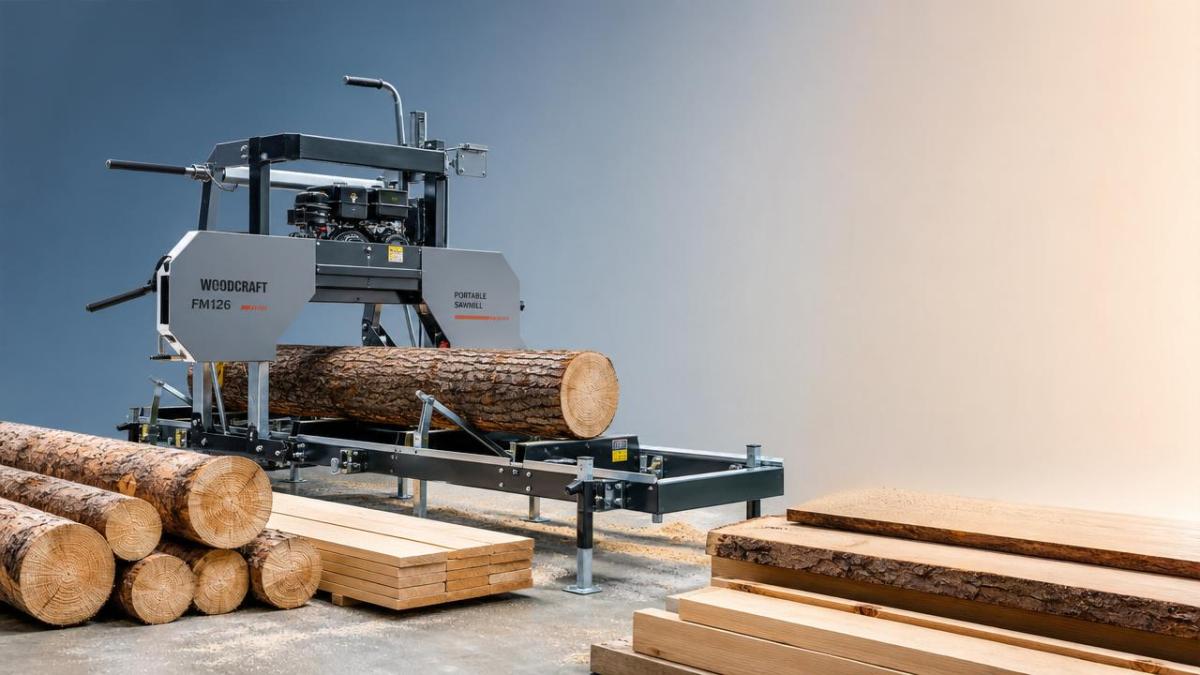
When evaluating a portable sawmill manufacturer, bold claims about cutting speed, durability, and output capacity can sound compelling—but not all stand up to technical scrutiny. For business assessors, a closer look at engineering standards, material quality, service support, and real-world performance is essential to separate marketing language from measurable value.
A checklist-based review is the fastest way to reach that distinction. In industrial buying, persuasive wording often compresses multiple variables into one attractive statement: “high-output,” “heavy-duty,” “precision-built,” or “low-maintenance.” For a business assessor, however, decisions are rarely made on slogans. They depend on whether a portable sawmill manufacturer can prove repeatable performance, support uptime in the field, document component quality, and maintain supply reliability over time. A structured review process reduces the risk of overvaluing headline claims while overlooking life-cycle cost, operator safety, and after-sales execution.
Why business assessors should start with a screening checklist
The portable sawmill market serves very different buyer profiles, from forestry contractors and agricultural operators to timber processors and remote-site project teams. That range creates wide variation in machine design, production expectations, and service models. A portable sawmill manufacturer may perform well in one environment yet underdeliver in another. A checklist helps assessors compare vendors on like-for-like terms, especially when brochures use similar language but differ significantly in technical substance.
It also aligns with how institutional buyers increasingly review industrial equipment: not only by purchase price, but by throughput consistency, spare parts lead time, compliance traceability, and risk exposure. In sectors covered by AgriChem Chronicle, procurement quality depends on evidence. The same principle applies whether a buyer is sourcing feed processing machinery, bio-extract equipment, or a portable sawmill manufacturer for forestry operations tied to agricultural estates and primary processing supply chains.
Core checklist: what to verify before trusting manufacturer claims
Before moving into pricing discussions, business assessors should verify the following points in a disciplined order. These checks help determine whether a portable sawmill manufacturer is presenting engineered capability or simply effective marketing.
- Cutting capacity definition: Confirm whether stated log diameter, board width, and maximum cut depth can be achieved under continuous operating conditions, not only under ideal demonstration settings.
- Frame and bed construction: Review steel grade, welding consistency, anti-corrosion treatment, and rigidity under transport and load. Lightweight portability is useful only if structural stability is preserved.
- Powertrain specification: Verify engine brand, horsepower rating, torque performance, fuel efficiency, and compatibility with local service networks. Ask whether performance data reflects softwood, hardwood, or mixed timber conditions.
- Blade system quality: Check blade guide design, tensioning accuracy, lubrication system, blade change time, and expected blade wear per cubic meter of processed timber.
- Automation level: Identify which functions are manual, hydraulic, semi-automatic, or digitally controlled. “Fast production” often depends more on handling efficiency than on motor power alone.
- Output evidence: Request field data on hourly or daily production by log species, moisture level, operator experience, and maintenance interval.
- Service capability: Determine spare parts stock availability, warranty terms, technical response time, remote troubleshooting support, and dealer coverage.
- Safety compliance: Inspect emergency stop placement, guarding, operator visibility, noise control, and documentation of safety procedures.
- Total cost of ownership: Compare acquisition cost with blade consumption, routine maintenance, downtime risk, training requirements, and transport logistics.
How to test common claims from a portable sawmill manufacturer
Claim 1: “High cutting speed”
Speed claims should never be evaluated in isolation. A portable sawmill manufacturer may highlight feed rate, but true productivity depends on loading time, log alignment, blade tracking stability, offloading efficiency, and frequency of blade changes. Assessors should ask for complete cycle time data, not just the fastest cutting pass. If a machine cuts quickly but requires repeated alignment corrections, overall output may fall below that of a slower but more stable competitor.
Claim 2: “Heavy-duty durability”
Durability should be validated through material specifications and stress points, not adjectives. Ask for evidence on bed rail wear, wheel bearing life, hydraulic hose quality, fastener grade, and resistance to vibration during road transport. A serious portable sawmill manufacturer should be able to explain where failures most commonly occur and how newer designs mitigate them. If no maintenance history or upgrade record is available, the claim deserves caution.
Claim 3: “Industrial output in a portable format”
This is one of the most attractive but most frequently overstated claims. Portability introduces trade-offs: lighter frames, transport constraints, shorter beds, and field setup variability. A portable sawmill manufacturer may deliver excellent mobile performance, but not necessarily at the same throughput or dimensional consistency as a fixed industrial line. Assessors should compare mobile and stationary benchmarks separately and avoid assuming parity where engineering limits are obvious.
Claim 4: “Low maintenance”
Low maintenance should mean fewer service interventions, simplified access, and predictable consumable replacement—not merely a short lubrication checklist. Ask whether maintenance intervals change under dusty, humid, or remote forestry conditions. A portable sawmill manufacturer with real field experience will discuss preventive maintenance by operating environment, not only by calendar schedule.
A practical comparison table for shortlist evaluation
Use the matrix below when comparing each portable sawmill manufacturer under consideration. It turns broad claims into auditable evaluation points.
Scenario-based checks: what matters most in different buying contexts
For forestry contractors
Mobility, setup speed, trailer robustness, and field serviceability should rank above maximum brochure output. A portable sawmill manufacturer serving this segment should demonstrate transport stability, easy site leveling, and access to critical replacement parts in remote conditions.
For agricultural estates and mixed primary processing operators
Integration with seasonal labor, varied timber dimensions, and moderate but dependable throughput often matter more than top-end automation. Here, the best portable sawmill manufacturer may be the one with simple controls, strong blade economy, and lower skill dependency.
For institutional buyers or distributors
The focus should expand beyond the machine itself to include manufacturing consistency, documentation quality, packaging standards, regional compliance, and spare parts planning. A portable sawmill manufacturer with weak documentation may create downstream problems even if the equipment performs acceptably in demonstrations.
Commonly overlooked risks that can distort the assessment
Several issues are frequently missed during preliminary review. First, demonstration conditions may be unusually favorable: straight logs, experienced operators, fresh blades, and controlled site conditions. Second, assessors may compare horsepower without reviewing cutting head stability or blade path accuracy. Third, portability may be mistaken for easy deployment, even though transport permits, towing requirements, and terrain conditions can materially affect usability. Fourth, after-sales promises may not reflect actual regional stocking capacity.
Another major oversight is underestimating data quality. If a portable sawmill manufacturer provides only generalized case studies rather than operating records tied to species mix, moisture range, and shift duration, projected economics remain speculative. In the same way ACC emphasizes verified intelligence across fine chemicals, machinery, and primary industries, equipment evaluation should favor traceable evidence over polished wording.
Execution advice: how to run a stronger manufacturer review process
- Define the use case first. Clarify timber type, expected daily volume, mobility requirements, operator skill level, and site conditions before engaging any portable sawmill manufacturer.
- Standardize vendor questions. Use the same technical and commercial questionnaire for every supplier so claims can be compared consistently.
- Ask for evidence, not only assurances. Request videos, production logs, maintenance schedules, parts lists, and customer references with similar operating profiles.
- Model total cost over time. Include consumables, downtime, training, logistics, and resale considerations in the assessment.
- Test support responsiveness early. Evaluate how quickly the portable sawmill manufacturer answers technical questions before purchase; this often predicts post-sale service quality.
FAQ for business assessors reviewing a portable sawmill manufacturer
What is the first claim to challenge?
Usually output capacity. It has the strongest effect on ROI models and is the easiest claim to overstate when operating assumptions are not disclosed.
Is a higher horsepower model always better?
No. The better portable sawmill manufacturer is often the one that balances engine power with frame rigidity, blade control, and efficient material handling.
How important is local service support?
It is critical. A strong machine without accessible parts and service can become a high-cost asset with poor uptime.
Should assessors prioritize price or lifecycle value?
Lifecycle value. The lower quote may become the more expensive option if blade wear, downtime, or component failure rates are higher.
Final decision guide and next-step questions
A credible portable sawmill manufacturer should be able to support claims with measurable production evidence, transparent component data, realistic maintenance expectations, and responsive commercial follow-through. For business assessors, the most reliable path is to score each supplier against a defined checklist, then validate the strongest candidates through reference checks and application-specific data review.
If your team is moving toward deeper evaluation, prioritize discussions around required capacity, log size range, site mobility needs, operator profile, service coverage, parts lead time, warranty scope, delivery timeline, and total budget. Those questions will reveal whether a portable sawmill manufacturer is truly aligned with your procurement strategy—or simply skilled at making bold claims sound convincing.
Related Intelligence
- Forestry EquipmentBIS Mandates Separate Certification for Drone & AI Modules in Forestry EquipmentBIS mandates separate certification for drone & AI modules in forestry equipment—key for Chinese exporters targeting India. Act now to avoid license invalidation by 30 Sep 2026.
- Forestry EquipmentPortable sawmill manufacturer claims that deserve a closer lookPortable sawmill manufacturer claims can sound impressive, but which ones hold up in real use? Discover a practical checklist to compare output, durability, service, and true lifecycle value.
- Forestry EquipmentCommercial stump grinders: what causes vibration to get worse fastStump grinders commercial crews use can develop severe vibration fast. Learn the top causes, warning signs, and maintenance checks to prevent downtime and costly failures.
The Morning Broadsheet
Daily chemical briefings, market shifts, and peer-reviewed summaries delivered to your terminal.
