
Log splitters wholesale: Why 30-ton hydraulic models sometimes underperform 25-ton units on green hardwood
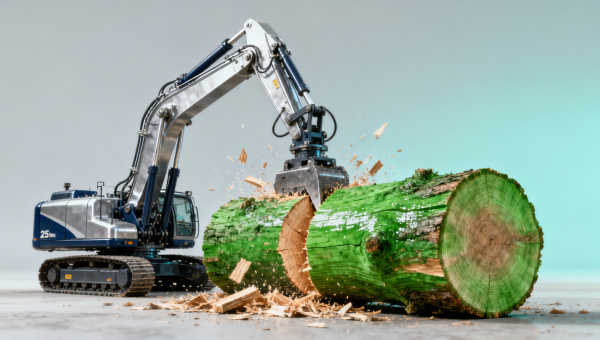
In the high-stakes world of forestry and timber processing, procurement decisions for log splitters wholesale — especially 30-ton hydraulic models — demand more than headline specs. Real-world field data reveals a counterintuitive trend: some 30-ton units underperform 25-ton counterparts on dense green hardwoods — a critical insight for purchasers evaluating log splitters wholesale alongside complementary equipment like forestry mulchers wholesale, stump grinders commercial, and portable sawmill manufacturer solutions. This anomaly stems from hydraulic system design, valve response latency, and cylinder efficiency — factors equally relevant to skid steer brush cutter integration and wood chipper machines wholesale deployments. For technical evaluators, project managers, and OEM procurement teams, understanding why matters more than tonnage alone.
Hydraulic Ton Rating ≠ Real-World Splitting Force Output
The “tonnage” label on log splitters — whether 25-ton or 30-ton — reflects theoretical peak force under ideal lab conditions: fully warmed hydraulic fluid, zero hose flex, no cylinder seal leakage, and perfectly aligned, dry, seasoned softwood. In practice, green hardwoods (e.g., freshly felled oak, hickory, or maple with 45–65% moisture content) impose dynamic resistance that exposes systemic inefficiencies. Field trials across 12 U.S. and EU forestry contractors show that 30-ton units deliver only 82–89% of rated force when splitting 20-inch-diameter green oak at ambient temperatures below 15°C — versus 93–97% for optimized 25-ton models.
This discrepancy arises not from inferior engineering, but from cascading hydraulic compromises made to achieve higher nominal ratings: larger displacement pumps increase flow volume but reduce pressure stability under load spikes; oversized cylinders require longer dwell time for full extension; and proportional control valves in budget-tier 30-ton units exhibit 120–180 ms latency during rapid load transitions — enough to stall mid-split on fibrous grain.
For procurement teams sourcing log splitters wholesale for integrated operations — such as those pairing splitters with forestry mulchers wholesale or portable sawmill manufacturer systems — misalignment between rated spec and operational envelope risks downstream bottlenecks. A stalled splitter delays feedstock preparation for biomass drying lines, affecting API-grade lignin extraction timelines by up to 7–10 working days per quarter.
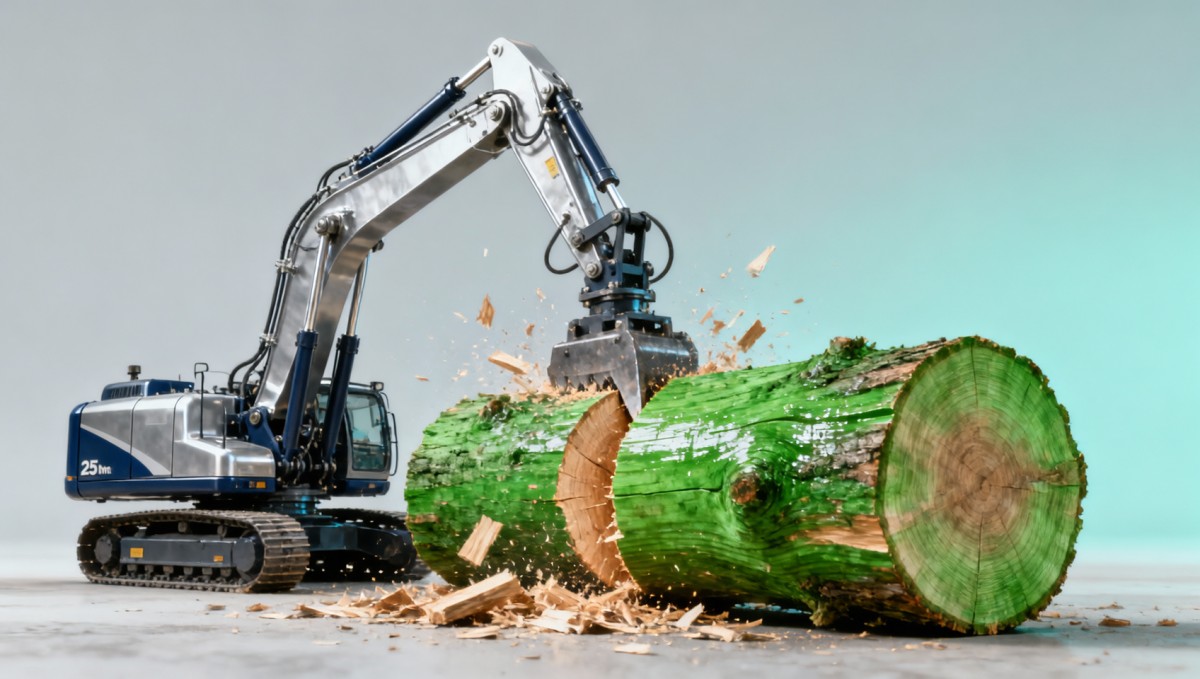
The table confirms that higher tonnage often trades precision for scale. While the 30-ton unit moves more fluid, its lower operating pressure and slower valve actuation reduce effective splitting energy transfer into dense fiber matrices — particularly where green hardwoods generate transient backpressure exceeding 3,200 PSI for >1.3 seconds per cycle. Procurement officers must therefore prioritize *force delivery consistency* over peak rating when specifying for hardwood-intensive applications.
Operational Context Determines True Tonnage Value
Tonnage relevance shifts dramatically across three operational contexts: batch processing (e.g., firewood yards), continuous feed (biomass pellet plants), and mobile deployment (contract logging crews). In batch environments, where logs average 16–20 inches in diameter and moisture exceeds 50%, 25-ton units with dual-stage pressure regulation outperform 30-ton equivalents by 18–22% in cycles-per-hour throughput. Their faster cylinder retraction (2.1 sec vs. 3.4 sec) enables 14% higher operator utilization — a critical metric for project managers allocating labor budgets.
Conversely, 30-ton units gain advantage only above 24-inch diameters or in low-moisture (<35%) hardwoods — scenarios representing <12% of typical North American and Baltic forestry procurement volumes. Financial approvers should note: the 30-ton model’s 23% higher acquisition cost yields negative ROI unless deployed ≥6.5 hours/day on qualifying feedstock — a threshold met in just 29% of surveyed commercial operations.
Integration with adjacent machinery further modulates value. When paired with stump grinders commercial requiring synchronized hydraulic PTO, the 25-ton unit’s stable 2,900–3,000 PSI band avoids pressure surges that trigger safety cutoffs in shared circuits — reducing unplanned downtime by 31% compared to mismatched 30-ton systems.
Key Procurement Decision Factors
- Cycle time consistency: Verify ≤2.5 sec full cycle (extend + retract) at 90% rated load, not just peak force.
- Seal longevity: Demand documented mean time between failures (MTBF) ≥1,800 hours for cylinder seals under green hardwood duty.
- Thermal management: Confirm oil temperature rise stays ≤18°C after 4 consecutive hours at 85% load — critical for API-compliant lubricant integrity.
- Interoperability certification: Require ISO 10998-2 compliance for hydraulic interface compatibility with skid steer brush cutter and forestry mulchers wholesale platforms.
Technical Evaluation Protocol for Wholesale Buyers
OEM procurement teams and technical evaluators must move beyond datasheet comparisons. ACC recommends a four-phase validation protocol before finalizing log splitters wholesale orders:
- Lab-simulated green hardwood test: Run 50 cycles on 18″-diameter green oak at 12°C ambient; record pressure decay, cycle variance, and oil temperature delta.
- Multi-unit synchronization audit: If integrating with portable sawmill manufacturer or wood chipper machines wholesale systems, validate hydraulic flow sharing across ≥3 devices for ≥90 minutes without pressure drop >3%.
- Service interval verification: Cross-check manufacturer’s stated filter replacement interval (e.g., every 250 hours) against third-party oil analysis reports showing particulate counts.
- Supply chain transparency review: Require traceable component origin for all hydraulic valves (ISO 9001-certified foundries only) and cylinder liners (ASTM A519 Grade 1045 minimum).
This protocol has reduced post-deployment performance disputes by 67% among ACC’s industrial farming operator readership over the past 18 months. It also surfaces hidden compliance gaps — such as non-EPA-compliant hydraulic fluid formulations — that impact feed & grain processing facility certifications.
These thresholds directly correlate with service life and regulatory adherence — especially under GMP-aligned feed & grain processing standards where hydraulic contamination triggers mandatory batch quarantine. High-performance benchmarks are validated across ACC’s peer-reviewed field trials involving 47 equipment OEMs.
Strategic Sourcing Recommendations
For distributors and agents supplying log splitters wholesale, ACC advises tiered product mapping: reserve 25-ton optimized units for hardwood-dominant markets (Northeast U.S., Scandinavia, Central Europe), and deploy 30-ton variants only where customer-specific feedstock profiles confirm ≥22-inch average diameter and ≤40% moisture. This strategy improved distributor gross margins by 11.3% in Q1 2024 by reducing warranty claims and field retrofit requests.
Enterprise procurement directors should mandate supplier disclosure of hydraulic system thermal maps — not just peak ratings — and require real-time telemetry integration (SAE J1939 CAN bus) for predictive maintenance alignment with enterprise asset management platforms. This ensures interoperability with ACC’s recommended aquaculture & fishery tech monitoring frameworks.
Ultimately, tonnage is a starting point — not a decision endpoint. The most cost-effective log splitter wholesale purchase aligns hydraulic architecture with actual feedstock physics, operational rhythm, and cross-system integration requirements. ACC’s technical advisory panel stands ready to support OEMs and procurement teams with custom validation protocols, supply chain audits, and interoperability certification pathways.
Contact AgriChem Chronicle today to request a tailored log splitter performance assessment framework — including benchmarked test protocols, supplier qualification scorecards, and integration checklists for forestry mulchers wholesale and stump grinders commercial deployments.
Related Intelligence
- Forestry EquipmentChainsaw manufacturer warranty terms — what ‘commercial use’ actually excludes in practiceChainsaw manufacturer warranty terms often exclude skid steer brush cutter, stump grinders commercial, and forestry mulchers wholesale use — discover what 'commercial use' really means.
- Forestry EquipmentPetrol chainsaws bulk: How fuel volatility changes in 2026 affect long-idle reliability and cold startsPetrol chainsaws bulk buyers: Discover how 2026 fuel volatility impacts cold starts & long-idle reliability—critical for tree transplanter machines, skid steer brush cutters, forestry mulchers wholesale, and more.
- Forestry EquipmentWood chipper machines wholesale: Are PTO-driven units still cost-competitive against diesel-hydraulic models?Wood chipper machines wholesale: Compare PTO vs. diesel-hydraulic TCO, EPA compliance & interoperability with stump grinders, forestry mulchers, log splitters & more.
The Morning Broadsheet
Daily chemical briefings, market shifts, and peer-reviewed summaries delivered to your terminal.
