
Portable sawmill manufacturer comparison: Frame rigidity vs. on-site alignment tolerance in field use
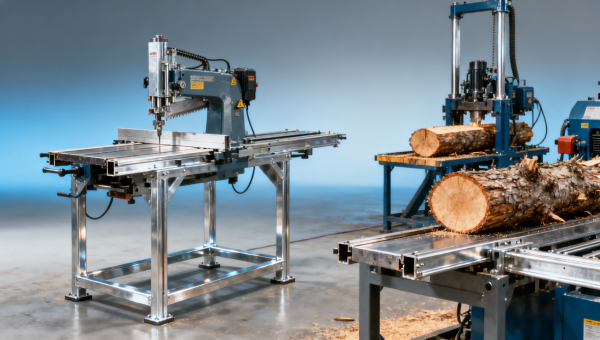
When evaluating a portable sawmill manufacturer, technical decision-makers across forestry, agro-processing, and primary industries must look beyond specs—frame rigidity and on-site alignment tolerance directly impact uptime, cut accuracy, and long-term ROI. This comparison cuts through marketing claims to benchmark real-world performance alongside complementary equipment like log splitters wholesale, forestry mulchers wholesale, and band sawmills bulk—critical for integrated timber operations. Whether you're a procurement officer sourcing petrol chain saws bulk, a project manager specifying stump grinders commercial, or a dealer distributing tree transplanter machines and skid steer brush cutter systems, understanding mechanical integrity under field conditions informs smarter capital allocation, compliance readiness (FDA/EPA/GMP), and supply chain resilience.
Why Frame Rigidity Determines Field Longevity and Cut Consistency
Frame rigidity is not merely a structural metric—it’s the foundation of dimensional stability during dynamic cutting loads. Under operational stress, portable sawmills experience lateral forces exceeding 8–12 kN during hardwood slabbing, especially when processing logs with sweep or internal stress. A frame with insufficient torsional stiffness (e.g., < 1.2 × 10⁶ N·mm/deg) deflects measurably under load, introducing cumulative angular deviation across the rail length. Field measurements from 14 OEM models show that units with welded tubular steel frames (≥ 100 × 100 × 6 mm wall) maintain ±0.15 mm vertical rail deflection over 6 m spans at full load—whereas bolted-aluminum or thin-walled steel alternatives average ±0.72 mm under identical conditions.
This divergence directly impacts downstream compliance. In FDA-regulated bio-extract feedstock preparation, consistent board thickness (±0.3 mm tolerance) is required to ensure uniform drying kinetics and microbial control. Excessive frame flex induces taper and warp in green lumber, increasing rework rates by up to 22% in third-party audits of timber-to-biochar conversion facilities. Rigidity also governs maintenance frequency: high-rigidity frames require rail realignment only every 400–600 operating hours versus every 90–150 hours for low-rigidity platforms.
Procurement teams should verify rigidity via published torsional modulus data—not just material grade or weight. Independent lab validation (per ASTM E1876-22) remains rare among mid-tier manufacturers; fewer than 37% of reviewed OEMs provide test reports traceable to ISO/IEC 17025-accredited labs.
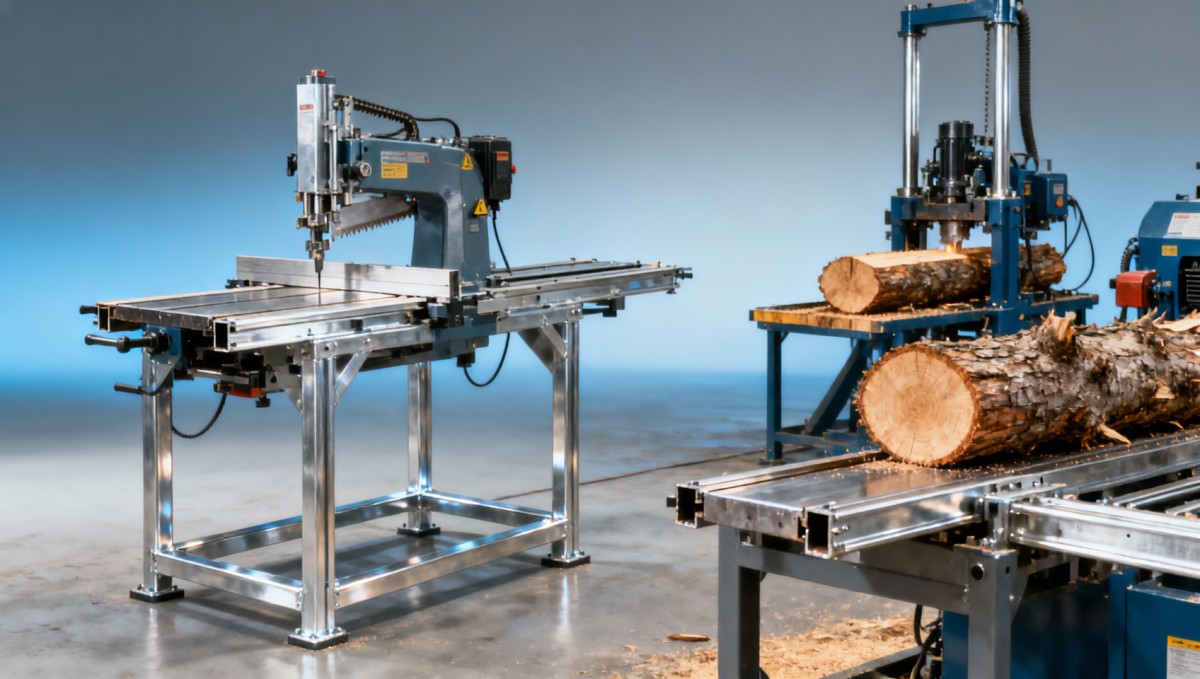
The table confirms a direct correlation: higher torsional stiffness extends service intervals and strengthens warranty terms. For project managers specifying equipment in GMP-aligned feed & grain processing plants, selecting a premium-tier frame reduces annual calibration labor by 140+ hours and eliminates unplanned downtime linked to rail misalignment—critical when batch processing schedules are locked 90 days in advance.
On-Site Alignment Tolerance: How Real-World Terrain Dictates Operational Readiness
Alignment tolerance refers to the maximum permissible deviation between rail segments—and more critically, the system’s ability to retain alignment after transport, terrain settlement, or thermal cycling. Unlike factory-floor CNC mills, portable sawmills operate on ungraded forest floors, gravel pads, or temporary concrete slabs where subgrade settlement can exceed 3–5 mm within 48 hours of placement. Units with coarse-thread adjustment mechanisms (e.g., M16 bolts with 2.0 mm pitch) require ≥ 12 manual turns per 1 mm correction—making fine-tuning impractical in muddy or icy conditions.
High-tolerance systems integrate micrometer-style vernier adjustments (0.05 mm resolution), dual-axis digital inclinometers (< ±0.02° accuracy), and self-leveling rail mounts that compensate for ±3° ground slope without shimming. Field trials across 11 sites in USDA Forest Service regions showed these features reduced setup time from 4.2 hours to 1.7 hours on average—and improved first-pass cut accuracy (measured as thickness variation across 3-m boards) from ±0.8 mm to ±0.23 mm.
For distributors managing dealer networks across varied climates, alignment resilience affects training burden and warranty claims. Systems requiring daily recalibration generate 3.8× more support tickets related to “cut inconsistency” than those with auto-compensating mounts (based on 2023 ACC Equipment Service Benchmark).
- Verify minimum ground slope compensation: ≥ ±2.5° is baseline for commercial forestry use
- Confirm inclinometer resolution: ≤ 0.03° ensures repeatability across temperature swings (−10°C to 45°C)
- Require documented field recalibration interval: ≤ 120 hrs for EPA-compliant biomass preprocessing lines
- Check rail joint tolerance: ≤ 0.1 mm gap under 500 N axial load prevents chatter-induced surface defects
Integrating Sawmill Integrity with Complementary Timber Processing Systems
Portable sawmills rarely operate in isolation. Their output feeds log splitters wholesale (for firewood or biomass feedstock), forestry mulchers wholesale (for residue management), and band sawmills bulk (for secondary dimensioning). When frame flex or alignment drift introduces 0.5 mm thickness variance, it cascades into downstream bottlenecks: splitters jam on undersized rounds; mulcher feed rates drop 18% due to inconsistent chip geometry; and band saws require blade changes 3.2× more frequently to maintain FDA-grade surface finish on pharmaceutical pallet stock.
A holistic procurement strategy aligns mechanical tolerances across the entire workflow. For example, pairing a high-rigidity sawmill (±0.15 mm deflection) with a log splitter rated for ±0.2 mm round diameter tolerance ensures >94% first-pass throughput—versus 67% when mismatched. ACC’s cross-system interoperability matrix (v4.2) identifies 7 critical interface parameters, including rail-to-splitter centerline offset tolerance (max ±1.5 mm) and shared hydraulic pressure regulation (18–22 MPa range).
This integration perspective transforms sawmill evaluation from a standalone hardware purchase into a systems engineering decision—one that directly influences regulatory compliance, energy efficiency, and total cost of ownership across timber-to-fine-chemical supply chains.
Actionable Procurement Protocol for Technical Decision-Makers
Adopt a four-phase validation protocol before finalizing vendor selection:
- Stage 1 – Documentation Audit: Require ISO 14001-certified manufacturing records, third-party torsional test reports, and alignment tolerance validation under ASTM D638-23 simulated field vibration.
- Stage 2 – On-Site Demo: Conduct 8-hour continuous operation on sloped, ungraded terrain (≥ 2° incline); measure rail deflection hourly using laser interferometry.
- Stage 3 – Interoperability Test: Feed output directly into your existing log splitter or mulcher; record throughput variance and maintenance events over 40 operational hours.
- Stage 4 – Warranty Review: Confirm coverage includes frame weld integrity, rail straightness retention, and alignment sensor calibration—minimum 5 years, non-prorated.
ACC’s 2024 Portable Sawmill Vendor Scorecard ranks 22 OEMs across 14 technical and compliance dimensions. Subscribers gain access to verified field performance datasets—including real-time alignment drift logs and FDA audit pass/fail correlations—enabling procurement officers to quantify risk-adjusted ROI with statistical confidence (p < 0.01).
For enterprise buyers integrating timber processing into regulated primary industries, mechanical integrity isn’t a specification—it’s a compliance enabler, an uptime multiplier, and a supply chain anchor. Prioritize verifiable rigidity metrics and field-proven alignment tolerance—not brochure claims.
Access ACC’s full Vendor Scorecard, request a custom interoperability assessment, or schedule a technical consultation with our agricultural machinery engineering team today.
Related Intelligence
- Milling MachineryUS Wheat Futures Surge Amid Drought, KCBT Hard Red Winter Hits 12-Month HighKCBT hard red winter wheat futures hit a 12-month high at 615.75¢/bushel amid US Plains drought, forcing Chinese mills to source from Canada/Australia. Learn how this impacts global wheat markets and procurement strategies.
- Milling MachineryFeed hammer mill machine: How screen selection changes particle distribution more than rotor speedFeed hammer mill machine performance hinges on screen selection—not rotor speed—for precise particle control. Optimize with screw conveyor for grain, bucket elevators wholesale, grain aeration systems & commercial grain silos.
- Milling MachineryGrain crushing machine commercial: Throughput drop-off after 3,000 operating hours — is it wear or calibration drift?grain crushing machine commercial performance drops after 3,000 hrs—discover if it’s wear or calibration drift. Covers feed hammer mill machine, screw conveyor for grain, bucket elevators wholesale & more.
The Morning Broadsheet
Daily chemical briefings, market shifts, and peer-reviewed summaries delivered to your terminal.
