

The Authority in Global Agricultural Chemistry & Bio-Resources
Brush cutters wholesale trends that signal better product lines
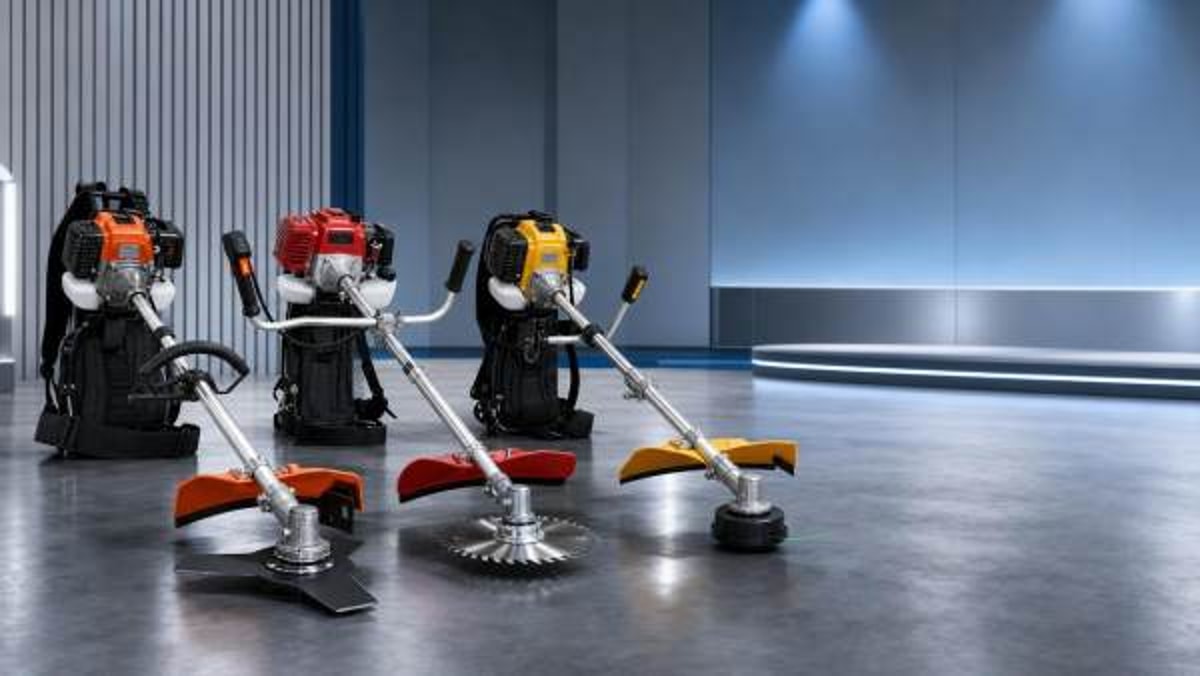
For distributors, agents, and wholesale buyers, tracking brush cutters wholesale trends is no longer optional—it is a direct signal of which product lines will stay competitive in a tighter, more specification-driven market. From shifting demand for fuel efficiency to stronger preferences for durability, parts support, and compliance-ready designs, today’s sourcing patterns reveal where profitable portfolio decisions are headed.
Why brush cutters wholesale is becoming a sharper market signal
In agricultural and land-management channels, brush cutters are no longer evaluated as simple commodity tools. The wholesale market is showing a more disciplined buying pattern, especially among distributors serving professional landscaping, forestry maintenance, municipal clearing, orchard management, and mixed-use farm operations. What is changing is not only what buyers want, but how they compare product lines before they commit shelf space, inventory capital, and after-sales resources.
The most important shift in brush cutters wholesale is the move from price-led comparison toward lifecycle-led comparison. Dealers and agents increasingly ask whether a model can hold up under frequent use, whether replacement parts are standardized, whether emissions requirements may affect future resale, and whether the supplier can maintain delivery stability during peak seasonal demand. That means the strongest product lines are not always the cheapest to source. They are the ones that create fewer downstream problems.
For the trade, this trend matters because wholesale demand often identifies durable market direction earlier than retail sentiment. End users may still ask about engine power first, but distributors are paying closer attention to repair intervals, fuel use, shaft durability, operator comfort, and the supplier’s documentation discipline. These are the signals that usually separate short-term sales spikes from long-term product line viability.
The current trend signals reshaping product selection
Several signals are appearing consistently across brush cutters wholesale conversations. None of them exists in isolation. Together, they point toward a market where product lines must be easier to support, easier to position, and better aligned with professional users who are under pressure to control labor, fuel, and maintenance costs.
The practical takeaway is clear: brush cutters wholesale decisions now favor lines that reduce uncertainty. If a product can be clearly matched to a user segment, documented properly, serviced predictably, and operated economically, it is more likely to retain distributor commitment.
Why these trends are forming now
Three forces are driving the shift. First, professional users have become more cost-aware. Contractors, growers, and maintenance crews face pressure from fuel prices, labor shortages, and tighter job timing. As a result, they no longer judge equipment only by initial power output. They want reliable daily productivity with fewer stoppages and lower maintenance disruption.
Second, channel risk has become more visible. Importers and distributors have learned that a low acquisition price can quickly lose value if replacement parts are inconsistent, packaging damages increase claims, or technical files are incomplete. In brush cutters wholesale, these hidden frictions can erode margin faster than a modest difference in ex-factory cost.
Third, product expectations are becoming more segmented. A brush cutter for occasional light clearing does not meet the same market need as a unit intended for roadside brush, dense weed control, or steep-slope maintenance. Wholesale buyers are therefore moving away from one-size-fits-all sourcing and toward portfolios built around clearer use cases.
This is especially relevant for the broader agricultural and machinery sectors covered by professional trade media. Buyers increasingly want equipment lines that align with operating environments, replacement cycles, compliance expectations, and after-sales logistics. Suppliers that understand these pressures can position their brush cutters wholesale offerings more effectively than those still competing mainly on unit price.
Which product features are gaining more wholesale value
The strongest product-line signals are usually found in the specification details that improve field performance and channel support. For distributors and agents, some features are now carrying more strategic value because they influence both sell-through and service burden.
1. Power-to-weight balance is outperforming raw power claims
Professional users still want cutting strength, but fatigue management matters more than before. A model that delivers dependable torque without excessive vibration or operator strain is often easier to place into professional accounts. In brush cutters wholesale, this improves reorder probability because end users experience practical efficiency, not just theoretical performance.
2. Durability of transmission components is under closer review
Drive shafts, gear cases, bearings, and clutch assemblies are increasingly important in line selection. Failures in these areas create reputational risk for the distributor, particularly in contractor or municipal channels. Wholesale buyers are therefore giving more weight to proven component quality and maintenance accessibility.
3. Spare-parts architecture is becoming a sales argument
A product line with rationalized consumables, interchangeable service parts, and clear exploded diagrams is easier to scale through dealer networks. This is one of the most underappreciated factors in brush cutters wholesale. A machine may perform well in demos, but if the service model is weak, channel confidence drops quickly.
4. Compliance-ready documentation now supports market access
Distributors do not want uncertainty around emissions, labeling, safety instructions, or technical files. Even where regulations vary by market, the broader trend is the same: better documentation lowers friction. This can accelerate onboarding with importers, larger resellers, and institutional buyers.
How the changes affect distributors, agents, and channel partners differently
The same trend does not affect every trade participant in the same way. Understanding who feels the pressure first helps explain why certain brush cutters wholesale patterns are strengthening.
For distributors, the core issue is portfolio stability. A brush cutter line that creates too many claims can block capital and weaken dealer confidence. For agents, the issue is message credibility. If the product’s field performance does not match the promise, account development becomes harder. For dealers, service simplicity may be more important than a small price advantage. And for importers, documentation quality can determine whether a line is easy or difficult to scale.
What better product lines now look like in brush cutters wholesale
In today’s market, a better product line is not defined by a single premium specification. It is defined by how well the line performs across the entire trade equation: product reliability, clear application targeting, parts support, training readiness, and regulatory confidence. In other words, the winning line is usually the one that is easiest to operate as a business, not only the one that is easiest to advertise.
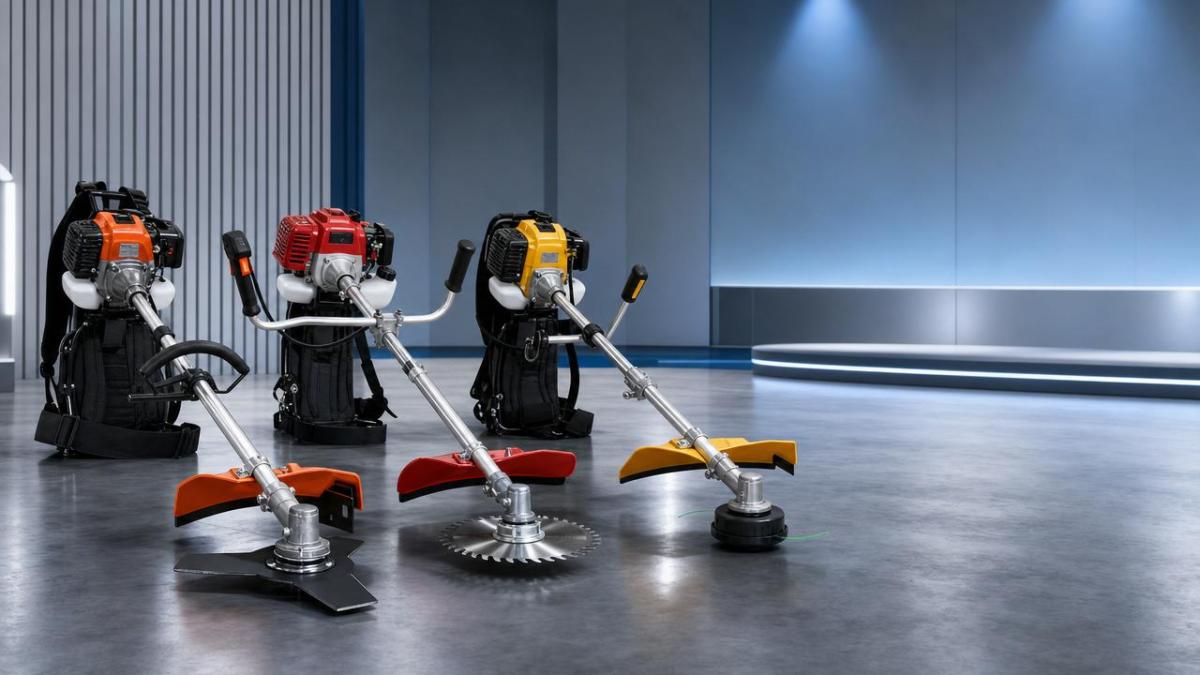
This has an important implication for brush cutters wholesale sourcing. Buyers should not judge a line only by sample inspection or price sheet comparison. They should also evaluate packaging consistency, manuals, accessory compatibility, lead-time realism, and supplier ability to support different handle styles, blade options, and harness kits for varied use cases. These details determine whether the product line can grow without creating hidden cost.
A better line also tends to support segmentation. Instead of offering many overlapping models with unclear differences, stronger suppliers present a cleaner range: entry professional, heavy-duty contractor, high-clearance vegetation unit, and perhaps a model optimized for extended runtime or ergonomic use. This structure helps distributors sell by scenario instead of relying on generic comparisons.
Signals worth tracking over the next buying cycle
Looking ahead, several indicators deserve close attention. One is whether demand continues moving toward lower-emission, lower-fuel-consumption equipment in regulated or urban-adjacent markets. Another is whether professional buyers begin requesting stronger vibration control and operator comfort features as labor retention becomes more difficult. A third is whether spare-parts standardization starts to influence channel preference more than cosmetic design updates.
Distributors involved in brush cutters wholesale should also watch for the increasing importance of technical transparency. Buyers may not always ask for engineering detail in early discussions, but as the account size grows, documentation quality becomes more influential. Product lines that can support institutional, municipal, or large-estate procurement tend to perform better when their technical files are organized from the start.
Another signal is channel consolidation. As weaker lines lose dealer support, stronger suppliers may gain disproportionate visibility. This does not automatically mean the market will become premium-only. Instead, it suggests a sharper divide between low-price lines with limited support and value-engineered lines designed for repeat commercial use.
How wholesale buyers should respond now
The most effective response is to refine evaluation criteria before the next sourcing round. Brush cutters wholesale procurement should include a structured review of product durability, after-sales burden, documentation quality, and application clarity. If a line cannot explain where it fits best, it may be difficult to sustain in a professional channel.
A useful approach is to compare suppliers against five practical questions. Can they support parts predictably? Can they explain model differentiation clearly? Can they provide compliance-ready files? Can they demonstrate durability in professional use? Can they maintain supply discipline during the seasonal peak? These questions reveal more about future line strength than a narrow focus on initial landed cost.
For distributors and agents expanding portfolios, it also makes sense to test fewer models more deeply rather than many models superficially. Field feedback, service data, and replacement-part behavior usually produce better forecasting than brochure-level feature comparison. In a changing market, better decisions often come from tighter product line discipline.
Final judgment for channel decision-makers
The strongest lesson from current brush cutters wholesale activity is that product-line quality is being defined by operational trust. Better fuel economy, stronger durability, clearer compliance support, and better parts systems are not isolated advantages. They are connected signals of whether a supplier can help the channel reduce friction while serving more demanding end users.
For any distributor, agent, or wholesale buyer trying to judge future portfolio direction, the most important next step is to confirm where each candidate line stands on durability, serviceability, documentation, and application fit. If a business wants to understand how these trends affect its own opportunities, it should begin by asking which current models generate the most service pressure, which user segments are becoming more specification-driven, and which suppliers are best prepared to support long-term channel growth.
Related Intelligence
- Forestry EquipmentBIS Mandates Separate Certification for Drone & AI Modules in Forestry EquipmentBIS mandates separate certification for drone & AI modules in forestry equipment—key for Chinese exporters targeting India. Act now to avoid license invalidation by 30 Sep 2026.
- Forestry EquipmentPortable sawmill manufacturer claims that deserve a closer lookPortable sawmill manufacturer claims can sound impressive, but which ones hold up in real use? Discover a practical checklist to compare output, durability, service, and true lifecycle value.
- Forestry EquipmentCommercial stump grinders: what causes vibration to get worse fastStump grinders commercial crews use can develop severe vibration fast. Learn the top causes, warning signs, and maintenance checks to prevent downtime and costly failures.
The Morning Broadsheet
Daily chemical briefings, market shifts, and peer-reviewed summaries delivered to your terminal.
