
What to Check Before Buying GMP Equipment in 2026?
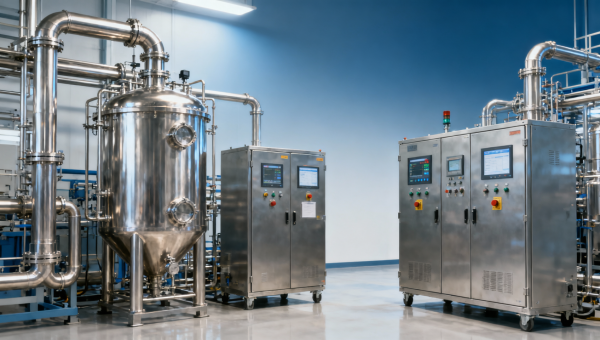
Before investing in GMP equipment in 2026, buyers must evaluate more than price and output. From GMP Chemicals and Pharma Raw Materials handling to biochemical equipment compatibility, compliance readiness, and Agri Supply Chain transparency, every detail affects performance and risk. This guide outlines the key checks procurement teams, operators, and decision-makers should review to secure reliable, future-ready systems.
For buyers in pharmaceuticals, fine chemicals, bio-extracts, feed processing, and regulated primary industries, GMP equipment selection has become a strategic decision rather than a simple capital purchase. A system that looks cost-effective on paper can create validation delays, cleaning failures, documentation gaps, or supply chain bottlenecks within the first 6 to 18 months.
That is why operators, procurement managers, quality teams, project leaders, and executive decision-makers need a structured review process. In 2026, the best purchasing decisions will come from checking compliance depth, process fit, lifecycle cost, digital traceability, service capacity, and installation risk before the purchase order is signed.
Start with Process Fit, Material Compatibility, and Regulatory Scope
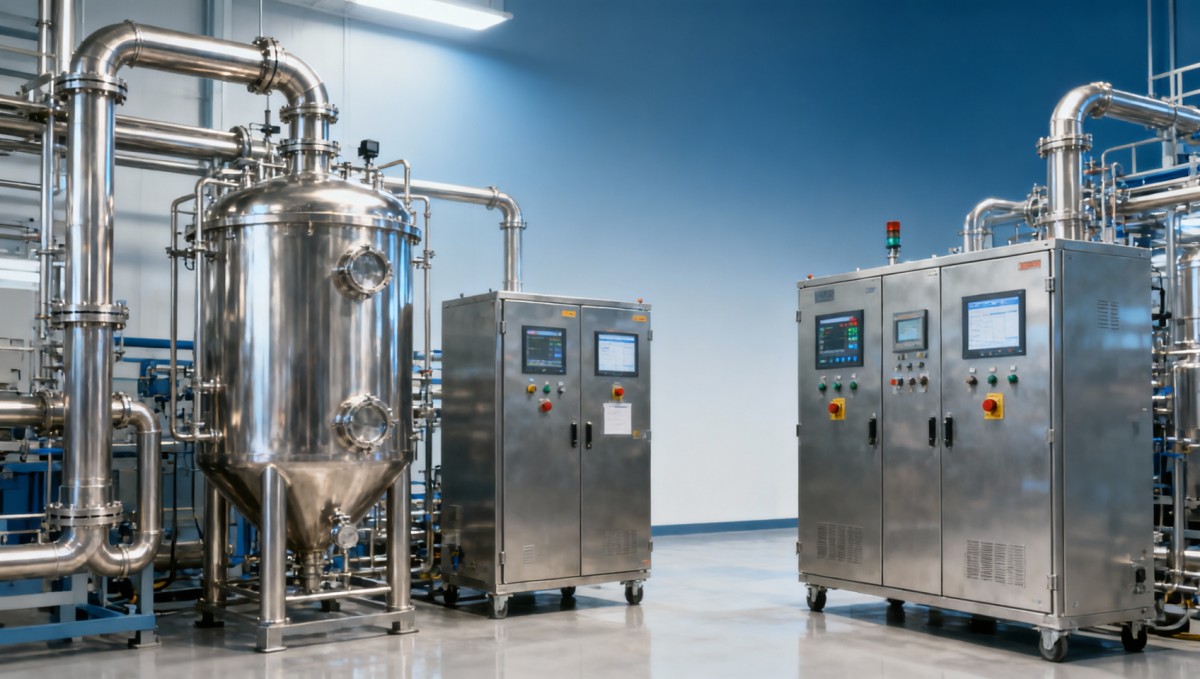
The first checkpoint is whether the GMP equipment actually matches the product, process, and regulatory environment it will operate in. This sounds basic, but many procurement failures begin with an output-focused comparison that overlooks viscosity range, cleanability, temperature tolerance, dust behavior, solvent exposure, or API sensitivity.
A vessel, reactor, transfer system, mixer, granulator, dryer, or filling line must be evaluated against the full process window. In regulated operations, even a mismatch of 5°C to 10°C in operating temperature, or an incompatible seal material, can affect batch stability, cleaning validation, and change control requirements.
For GMP Chemicals and Pharma Raw Materials handling, stainless steel grade, surface finish, gasket material, drainability, and dead-leg control matter as much as throughput. In biochemical equipment, contamination risks can increase if product-contact surfaces are not designed for repeatable cleaning cycles, especially when production switches between 2 to 4 formulations in a short campaign schedule.
Questions that define true equipment fit
- What product range will the line handle over the next 3 to 5 years: powders, liquids, slurries, corrosive intermediates, or heat-sensitive extracts?
- What is the required operating range for temperature, pressure, humidity, and cleaning frequency?
- Will the equipment support batch, semi-continuous, or continuous production without major redesign?
- Does the design align with the site’s GMP, FDA, EPA, or customer-specific audit expectations?
Buyers should also clarify whether the equipment will be installed in a pharmaceutical-grade environment, a fine chemical production area, or an adjacent agro-processing application with different hygiene and dust containment requirements. The same mechanical platform may be sold into several sectors, but the documentation package, finish standard, and validation burden can vary significantly.
Core technical checks before vendor shortlisting
Before comparing quotations, define at least 6 technical checkpoints: product-contact material, cleanability, operating range, containment level, automation interface, and documentation scope. This prevents the common mistake of comparing a basic industrial machine with a GMP-ready system as if they were equivalent offers.
The table below helps teams translate process needs into practical equipment review criteria before RFQ release.
The main conclusion is simple: equipment should be screened by process risk first, not brochure performance first. If the machine cannot support your real materials, cleaning methods, and future production plan, later upgrades will cost far more than any initial price difference.
Audit Documentation, Validation Support, and Data Integrity Cannot Be Optional
In 2026, compliant GMP equipment is not defined only by metalwork and mechanics. Documentation quality is now a purchasing criterion in its own right. Buyers should confirm what document set is included at base scope and what requires extra payment, because missing protocols can delay FAT, SAT, IQ, OQ, PQ, or site release by 2 to 8 weeks.
At minimum, regulated buyers should ask for equipment drawings, material certificates, weld records where relevant, instrument lists, calibration details, control narratives, spare parts lists, manuals, cleaning guidance, and maintenance schedules. For automated systems, alarm logic, recipe handling, user access levels, and data backup procedures are also important.
Quality teams should look beyond whether documents exist and examine whether they are usable. A 200-page manual with vague language is less valuable than a structured package that clearly supports qualification, operator training, preventive maintenance, and deviation investigation. Good documentation shortens startup time and reduces avoidable quality events.
Validation-related points to confirm before contract award
- Define whether FAT and SAT are included and how many working days are allocated.
- Clarify which qualification protocols are supplied and which must be generated by the buyer.
- Verify instrument calibration traceability and software version control procedures.
- Check whether the vendor can support change control during installation and commissioning.
This is especially relevant for multi-site groups and export-oriented manufacturers. If one facility must satisfy domestic regulations while another serves stricter pharmaceutical or specialty chemical customers, the same GMP equipment package may need 2 layers of documentation: operational documents for production and validation evidence for audit teams.
Documentation comparison framework
The following comparison can help procurement and QA teams identify whether an offer is documentation-light, standard, or validation-ready.
If your facility faces frequent customer audits or handles high-value batches, a validation-ready package often delivers better total value than a lower upfront bid. Documentation gaps can consume engineering hours, delay commercial production, and expose procurement teams to unnecessary contract disputes.
Review Total Lifecycle Cost, Utilities, and Maintenance Burden
A low purchase price does not guarantee a low ownership cost. For GMP equipment, total lifecycle cost should be assessed across at least 5 categories: capital cost, utilities, consumables, maintenance, downtime exposure, and compliance support. In many facilities, the cost difference between two machines over 3 years is driven less by purchase price and more by cleaning time, spare parts lead time, and line stoppages.
Utilities are a major example. A system may require more compressed air, purified water, chilled water, steam, or power than the site can reliably provide. If the existing infrastructure cannot support the equipment without upgrades, project cost can rise by 10% to 25%. This is common in retrofits where new GMP systems are added to older processing buildings.
Maintenance burden should also be reviewed at component level. Ask how often seals, filters, bearings, sensors, or probes need replacement, and whether critical spares are available in 48 to 72 hours. Equipment that requires a shutdown every 4 weeks for complex servicing may not be suitable for facilities running tight campaign schedules.
Lifecycle review points procurement teams often miss
- Cleaning cycle duration and the labor hours required for disassembly, verification, and restart.
- Consumable change intervals and whether replacements are standardized or proprietary.
- Expected mean time between maintenance events under actual production load.
- Availability of remote diagnostics, local service engineers, and multilingual support manuals.
For operators and plant managers, ease of maintenance is not a minor convenience. It directly affects safety, production continuity, and human error risk. If 1 maintenance task needs 3 technicians and 6 hours of downtime, the hidden cost can outweigh a cheaper initial machine price within the first year of use.
Decision-makers should request a 12-month to 36-month ownership estimate during vendor evaluation. Even if suppliers provide ranges rather than exact figures, the comparison will reveal which systems are truly efficient under real operating conditions.
Typical lifecycle cost categories
The table below can be used as a practical template during internal commercial review.
The most resilient purchasing decisions come from combining commercial price review with maintenance engineering input. A technically suitable machine that is difficult to service is rarely a smart long-term asset in regulated production.
Check Supplier Transparency, Supply Chain Stability, and After-Sales Capacity
As Agri Supply Chain complexity increases, supplier transparency has become a critical screening factor for GMP equipment buyers. Whether the system supports APIs, feed ingredients, bio-extracts, or chemical intermediates, procurement teams must understand where key components come from, how long replenishment takes, and what disruptions could affect startup or service continuity.
This matters because equipment projects often rely on motors, sensors, PLC components, valves, specialty seals, and stainless fabrications sourced through multiple countries. A supplier may assemble equipment locally but depend on imported control parts with lead times of 8 to 20 weeks. If that risk is not disclosed, installation and validation plans can slip badly.
Commercial evaluators should ask direct questions about manufacturing location, subcontracted components, preferred brands for critical parts, alternate sourcing plans, and after-sales staffing. A vendor that can explain these details clearly is usually easier to work with during commissioning and later deviation resolution.
Supplier due diligence checklist
- Confirm which components are made in-house and which are outsourced.
- Ask for normal lead times for critical spare parts and emergency replacements.
- Verify whether technical support is available on-site, remotely, or through channel partners.
- Review how the supplier manages revision control when parts are substituted.
- Check whether training is provided for operators, maintenance staff, and QA personnel.
For project leaders, after-sales support should be evaluated as carefully as the machine itself. A supplier that can offer commissioning support within 5 to 10 working days, remote troubleshooting within 24 hours, and preventive service planning each quarter will generally reduce operational risk compared with a vendor that only ships hardware.
Transparency also supports internal governance. Enterprise decision-makers increasingly need procurement files that justify supplier choice using risk controls, not only price comparison. Documented supply chain visibility, service response planning, and spare parts strategy make those decisions more defensible during internal reviews.
Common red flags before purchase
- Lead times are described as “fast” but not tied to a range such as 6 to 12 weeks.
- Critical parts brands are not disclosed until after contract signature.
- Service terms exclude travel, commissioning tests, or software support.
- Vendor responses on traceability or document control are vague or inconsistent.
When equipment is expected to support regulated output for several years, buyers should favor suppliers that demonstrate process knowledge, traceability discipline, and realistic service capacity. These are strong indicators of long-term partnership value, especially in sectors where downtime and compliance failures are both expensive.
Plan Installation, Training, and Future Expansion Before the Order Is Released
The final major check is implementation readiness. GMP equipment purchasing should not stop at technical approval and commercial negotiation. The project team needs to confirm layout fit, utility tie-ins, commissioning sequence, operator training, cleaning SOP development, and future capacity planning before release of the final purchase order.
A common mistake is to buy a technically sound system without allowing enough space for maintenance access, CIP connections, instrument calibration, or material flow segregation. In real facilities, an extra 800 mm to 1,200 mm of service clearance can make the difference between efficient upkeep and ongoing shutdown friction.
Training should be role-based. Operators need startup, shutdown, alarm response, and cleaning procedures. Maintenance teams need troubleshooting maps, parts replacement methods, and safety isolation points. QA and compliance staff need access control logic, documentation review points, and deviation-handling understanding. A single generic training session is rarely enough.
A practical 5-step implementation path
- Freeze user requirement specifications and utility assumptions.
- Conduct design review with engineering, production, QA, and EHS teams.
- Complete FAT with documented punch-list closure before shipment.
- Execute SAT, qualification support, and role-based training on-site.
- Review the first 30 to 90 days of operation for optimization and spare strategy.
Expansion planning is equally important in 2026. If your plant expects higher output, more SKUs, tighter traceability, or digital integration over the next 24 to 36 months, the equipment should be assessed for scalability now. That may include I/O reserve, software expansion capability, modular piping, extra sensor ports, or room for downstream automation.
FAQ: What buyers ask most before selecting GMP equipment
How long is a typical delivery and qualification timeline?
For standard-configured equipment, manufacturing may take 8 to 16 weeks, while customized systems can take 16 to 28 weeks. FAT, shipping, SAT, and site qualification can add another 3 to 10 weeks depending on complexity, country of installation, and readiness of utilities and documentation.
Which teams should be involved in vendor evaluation?
At minimum, involve procurement, production, maintenance, QA, and project engineering. For hazardous chemicals, sterile-adjacent processes, or environmentally sensitive applications, EHS and compliance specialists should join the review from the first technical meeting.
What is the most overlooked risk in GMP equipment purchasing?
One of the most common issues is underestimating documentation and service limitations. A machine may run well mechanically, yet still cause delays if FAT scope is weak, software support is limited, or replacement parts take more than 12 weeks to obtain.
Is it better to buy for current capacity or future expansion?
Most regulated facilities benefit from planning for modest expansion at the start. Buying a system with 15% to 30% room for process growth, digital integration, or recipe complexity is often more efficient than replacing or heavily modifying the equipment after qualification.
In practical terms, successful buyers in 2026 will treat GMP equipment as a compliance-linked production system rather than a standalone machine. The strongest results come from aligning process fit, documentation quality, lifecycle cost, supplier transparency, and implementation planning into one decision framework.
For organizations operating across fine chemicals, APIs, bio-based ingredients, aquaculture technologies, and primary processing, this structured approach reduces technical surprises and improves project confidence from evaluation to startup. If you are comparing suppliers or refining a procurement specification, now is the right time to build a more defensible shortlist.
To explore tailored equipment assessment criteria, supplier benchmarking, or market-focused procurement insights for regulated industrial sectors, contact us, request a customized solution, or learn more about ACC’s sector-specific intelligence and publishing support.
Related Intelligence
- Custom SynthesisANVISA Extends Custom Synthesis API Traceability to 3-Tier Upstream SuppliersANVISA extends Custom Synthesis API traceability to 3-tier upstream suppliers—key for pharma importers, CMOs & supply chain teams. Act now to avoid suspensions.
- Custom SynthesisANVISA Expands Custom Synthesis Review to 3-Tier Starting Material TraceabilityANVISA's new 3-tier traceability rule for custom synthesis imports demands full upstream documentation—act now to avoid delays, rejections, and compliance risks in Brazil.
- Custom SynthesisANVISA Extends Custom Synthesis Oversight to Tier-3 SuppliersANVISA Extends Custom Synthesis Oversight to Tier-3 Suppliers: New July 2026 rule mandates full traceability & English GMP docs for Chinese CMOs exporting to Brazil—act now to avoid delays.
The Morning Broadsheet
Daily chemical briefings, market shifts, and peer-reviewed summaries delivered to your terminal.
