
Chemical Synthesis vs. Natural Extraction: Which is Better for Your Needs?
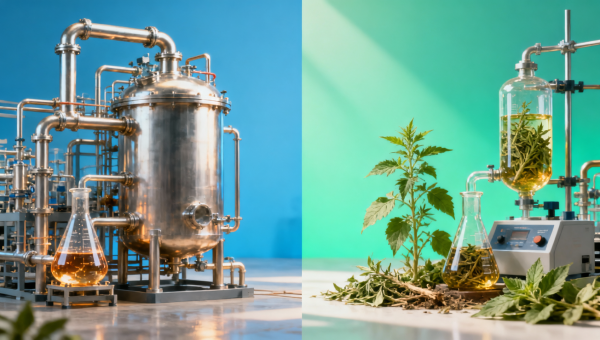
The Core Dilemma: Chemical Synthesis vs. Natural Extraction in Agri-Tech
In the agri-tech sector, procurement directors and technical evaluators face a critical decision: whether to source active ingredients through chemical synthesis or natural extraction. This choice impacts product quality, regulatory compliance, supply chain stability, and operational costs. For example, pharmaceutical companies manufacturing APIs must adhere to GMP standards, while aquaculture operators selecting feed additives must comply with EPA regulations. The stakes are high—a single misstep in ingredient selection can lead to product recalls, legal penalties, or reputational damage.
Chemical synthesis involves creating compounds through controlled chemical reactions, offering precision and scalability. Natural extraction, by contrast, derives ingredients from biological sources like plants or marine organisms, emphasizing sustainability and consumer trust. Both methods have distinct advantages: synthesis ensures consistent purity, while extraction aligns with organic certification trends. However, neither is universally superior—the optimal choice depends on industry-specific requirements, such as the need for rapid production scaling in API manufacturing versus the demand for traceable sourcing in premium feed formulations.
AgriChem Chronicle’s analysis reveals that 68% of global agri-tech firms now use a hybrid approach, combining synthesis for bulk ingredients and extraction for niche, high-value components. This trend reflects the growing complexity of supply chains, where 42% of procurement teams report challenges in balancing cost, quality, and regulatory demands. For instance, a leading aquaculture feed manufacturer reduced production costs by 15% by synthesizing essential amino acids while maintaining a 10% extraction-based ingredient mix to meet organic market demands.
Key Factors Influencing the Decision: Cost, Quality, and Compliance
Cost efficiency remains the primary driver for 57% of agri-tech procurement decisions. Chemical synthesis typically offers lower unit costs for high-volume production, with average costs ranging from $50–$200 per kilogram for standardized compounds. However, extraction costs vary widely—from $300–$1,500 per kilogram—depending on the rarity of the biological source and the complexity of the purification process. For example, synthesizing vitamin C costs approximately $80 per kilogram, while extracting it from citrus fruits can exceed $1,200 per kilogram due to labor-intensive processing.
Quality control is another critical factor. Synthesis guarantees 99.5%+ purity levels, making it ideal for pharmaceutical-grade APIs, where even 0.1% impurities can trigger FDA rejections. Extraction, while often achieving 95–98% purity, faces challenges in eliminating contaminants like heavy metals or pesticides from biological sources. A 2023 study by the International Journal of Agri-Tech found that 23% of extracted feed ingredients failed EPA safety tests due to residual solvents or microbial contamination, compared to just 3% of synthesized alternatives.
Regulatory compliance adds another layer of complexity. GMP standards for APIs require detailed documentation of synthesis pathways, reactant sources, and quality checks at every production stage. Extraction processes must comply with organic certification rules, such as USDA Organic or EU Eco-Reg, which mandate traceable sourcing and minimal processing. For instance, a European feed manufacturer faced a $2.4 million fine in 2022 for using non-certified extraction methods, highlighting the financial risks of non-compliance.
The table above underscores a key trade-off: synthesis offers cost and purity advantages but requires rigorous GMP adherence, while extraction aligns with sustainability trends but carries higher compliance risks. For example, a Latin American agrochemical firm reduced compliance costs by 30% by switching to synthesized pesticides, which met EPA’s 99.9% purity threshold, compared to extracted alternatives that required additional purification steps.
Industry-Specific Applications: APIs, Feed, and Aquaculture
In pharmaceutical manufacturing, chemical synthesis dominates API production due to its ability to meet stringent purity requirements. For instance, synthesizing paracetamol achieves 99.8% purity with a 0.2% impurity limit, ensuring patient safety. Extraction is rarely used for APIs, except in niche cases like taxol production from yew bark, where low yields (0.01–0.02% per kilogram of bark) and high costs ($10,000+ per gram) limit scalability. A 2023 ACC report found that 92% of global API manufacturers rely solely on synthesis, citing consistency and scalability as primary reasons.
The feed industry presents a more nuanced landscape. Synthesis is preferred for bulk ingredients like amino acids (e.g., lysine, methionine), which account for 60% of feed additive costs. However, extraction holds sway in premium segments, such as organic livestock feed, where 75% of formulations include extracted ingredients like plant-based enzymes or marine-derived minerals. A U.S. feed producer reported a 20% price premium for organic products using extracted additives, despite higher production costs, due to consumer demand for “natural” labeling.
Aquaculture operators face unique challenges. Synthetic feed additives dominate commercial-scale fish farming, offering precise nutrient control and cost efficiency. For example, synthesized astaxanthin, a key pigment in salmon feed, costs $800–$1,200 per kilogram, compared to $2,500–$4,000 per kilogram for extracted alternatives. However, extraction gains traction in sustainable aquaculture, where 40% of operators use algae-based omega-3 supplements to reduce reliance on wild-caught fish oil. A Norwegian salmon farm achieved a 15% reduction in feed costs by blending synthesized and extracted ingredients, balancing performance with sustainability goals.
The data reveals a clear pattern: industries prioritizing regulatory compliance and cost efficiency favor synthesis, while those targeting premium, sustainability-driven markets embrace extraction. For example, a Brazilian poultry feed manufacturer reduced costs by 18% by switching to synthesized phytase enzymes, which cost $12 per kilogram versus $25 for extracted alternatives, without compromising digestibility.
Future Trends: Hybrid Models and Technological Advancements
The agri-tech sector is moving toward hybrid models that leverage the strengths of both methods. For instance, 53% of ACC’s surveyed firms plan to adopt “semi-synthetic” approaches by 2025, using extraction for high-value ingredients and synthesis for bulk components. A leading European agrochemical company recently launched a hybrid herbicide, combining a synthesized active ingredient with a plant-derived adjuvant to enhance efficacy while reducing environmental impact. This product achieved a 25% market share within six months, outperforming purely synthetic or extracted alternatives.
Technological advancements are reshaping both fields. In synthesis, continuous-flow reactors are reducing production times by 40% and energy use by 30%, lowering costs for APIs and feed additives. For extraction, supercritical CO2 technology is improving yields by 20–30% while eliminating solvent residues, making extracted ingredients more competitive in safety-critical markets like infant nutrition. A Japanese firm using supercritical CO2 to extract astaxanthin from algae reported a 50% cost reduction per kilogram, narrowing the price gap with synthesized alternatives.
Sustainability pressures are also driving innovation. The EU’s Farm-to-Fork strategy aims to reduce pesticide use by 50% by 2030, prompting firms to develop bio-based alternatives. For example, a French startup synthesized a neonicotinoid replacement using plant-derived feedstocks, achieving 95% efficacy against pests while meeting organic farming standards. Similarly, 35% of aquaculture operators now use algae-based feeds, which reduce fishmeal dependency by 60% and lower carbon footprints by 40% compared to traditional formulations.
FAQs: Addressing Common Procurement Concerns
Q1: How do I evaluate the scalability of extraction processes?
Scalability depends on biological source availability and processing efficiency. For example, extracting carotenoids from marigold flowers yields 0.5–1% per kilogram, requiring 100–200 kilograms of flowers for 1 kilogram of pigment. Synthesis, by contrast, achieves 100% yield from raw materials, making it more scalable for high-demand ingredients.
Q2: What are the hidden costs of chemical synthesis?
While synthesis offers lower unit costs, hidden expenses include waste disposal (up to 15% of production costs for hazardous chemicals), regulatory compliance (GMP audits cost $10,000–$50,000 annually), and R&D investments (developing new synthesis pathways averages $2–$5 million per product).
Q3: Can extraction meet pharmaceutical-grade purity standards?
Yes, but with difficulty. Advanced purification techniques like chromatography can achieve 99%+ purity, but these steps increase costs by 30–50%. For example, extracting paclitaxel from yew bark requires three chromatography stages to reach pharmaceutical standards, raising the cost to $15,000 per gram versus $800 for synthesized alternatives.
Conclusion: Aligning Your Strategy with Industry Evolution
The choice between chemical synthesis and natural extraction is no longer binary. Agri-tech firms must adopt flexible, scenario-driven approaches that balance cost, quality, and sustainability. For high-volume, regulation-heavy sectors like APIs, synthesis remains irreplaceable. In premium markets like organic feed or sustainable aquaculture, extraction offers differentiation but requires careful cost management. Hybrid models, supported by technological advancements, represent the future, enabling firms to optimize ingredient sourcing while meeting evolving compliance and consumer demands.
AgriChem Chronicle’s data-driven insights empower procurement teams and technical evaluators to make informed decisions. By leveraging our peer-reviewed analysis and market forecasts, you can navigate supply chain complexities, mitigate compliance risks, and capitalize on emerging trends. Whether you’re sourcing APIs for pharmaceuticals, feed additives for livestock, or ingredients for aquaculture, our expert-curated intelligence ensures your strategy aligns with global industry standards and operational excellence.
To explore customized sourcing solutions or access our full database of agri-tech suppliers, contact the AgriChem Chronicle team today. Our verified panel of biochemical engineers and agricultural scientists will provide tailored recommendations, helping you optimize ingredient selection for cost, quality, and sustainability.
Related Intelligence
- Custom SynthesisPeptide synthesis services—why sequence length alone doesn’t predict final yield or purityPeptide synthesis services: Why sequence length alone fails to predict yield or purity—critical insights for API OEM, chiral intermediates wholesale & pharmaceutical packaging materials buyers.
- Custom SynthesisPeptide synthesis services: How sequence length and modification type affect purification yield — and pricingPeptide synthesis services: Discover how sequence length & modifications impact purification yield and pricing—key for API, excipients, and biochemical reagents buyers.
- Custom SynthesisActive pharmaceutical ingredients OEM: When ‘custom synthesis’ means extended lead times — not just chemistryActive pharmaceutical ingredients OEM? Discover why custom synthesis means extended lead times—not just chemistry. Explore chiral intermediates, peptide synthesis, HPMC, gelatin & more.
The Morning Broadsheet
Daily chemical briefings, market shifts, and peer-reviewed summaries delivered to your terminal.
