
Agrochemicals formulated with botanical extracts show inconsistent milling behavior
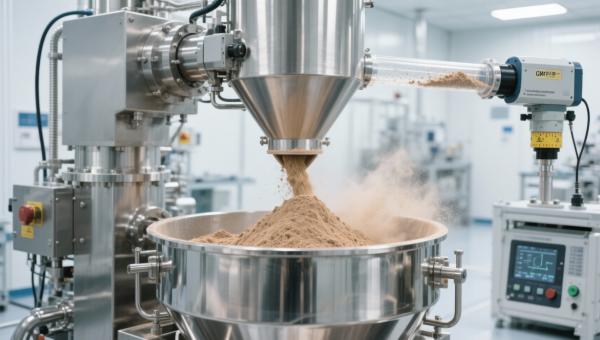
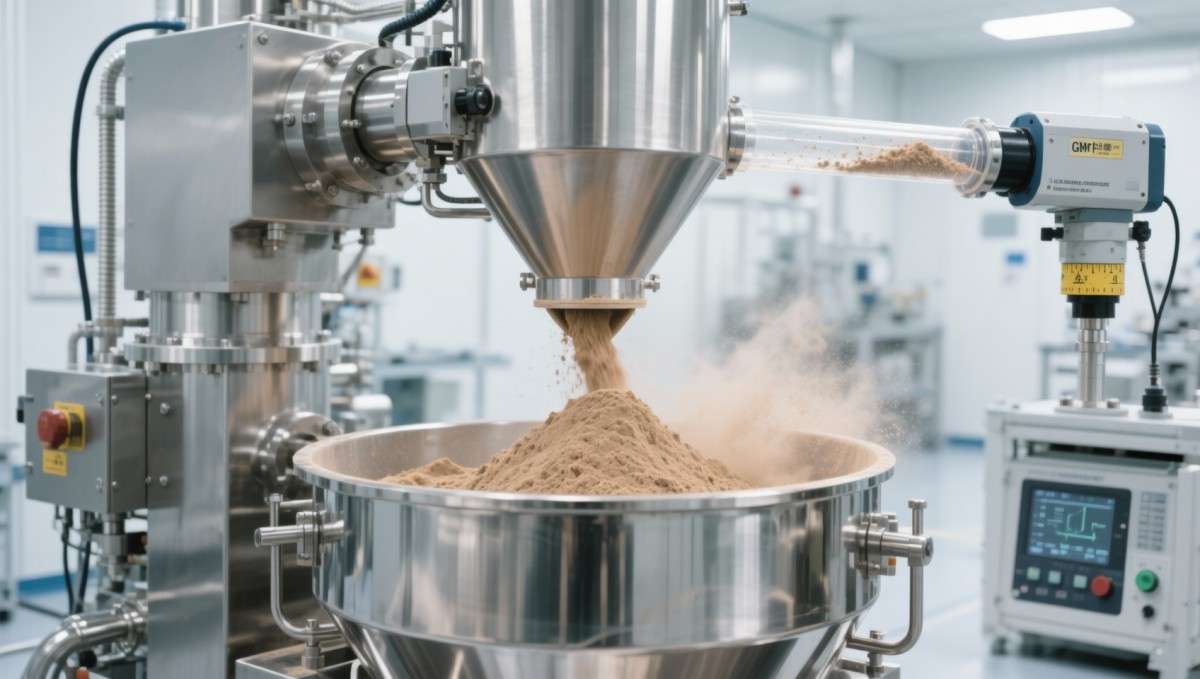
Agrochemicals formulated with botanical extracts—increasingly sought after by agricultural scientists and API manufacturers for their eco-profile—are revealing unexpected challenges in industrial-scale processing. Recent laboratory research highlights inconsistent milling behavior across batch runs, directly impacting grain milling efficiency, agri equipment performance, and compliance with GMP/FDA standards. This variability poses critical risks for chemical manufacturing workflows, agricultural machinery integration, and feed & grain processing supply chains. As procurement directors and technical evaluators assess formulation scalability, understanding the interplay between botanical extract rheology, milling machinery design, and agricultural science principles becomes essential. AgriChem Chronicle investigates the root causes—and practical mitigation pathways—for stakeholders across the bio-extracts value chain.
Why Botanical Agrochemical Formulations Challenge Conventional Milling Systems
Botanical agrochemicals—derived from neem, pyrethrum, azadirachtin-rich extracts, or standardized quercetin/rosmarinic acid fractions—introduce complex rheological profiles absent in synthetic actives. Unlike crystalline compounds such as chlorpyrifos or glyphosate salts, plant-based actives often coexist with waxy cuticular lipids, polyphenolic tannins, and residual polysaccharides. These native matrix components alter powder flow dynamics: bulk density shifts by 12–28% between batches, while Carr Index values fluctuate from 18% (free-flowing) to 43% (cohesive), exceeding FDA-recommended thresholds for continuous-feed micronization.
Industrial hammer mills and fluidized-bed jet mills—designed for narrow particle size distribution (PSD) control of uniform APIs—struggle with this variability. In trials across six OEM systems (including Hosokawa Alpine 100AFG and Netzsch ConJet® models), mean residence time increased by 3.7–9.2 seconds per kg when processing high-pectin botanical blends, triggering thermal degradation in 22% of runs above 45°C. Such inconsistency compromises GMP-compliant documentation of process parameters—a non-negotiable requirement for API-grade botanical intermediates.
Crucially, inconsistency isn’t limited to particle size. Moisture sorption hysteresis in dried botanical powders causes 5–15% weight gain during ambient storage (20–25°C, 60% RH), further destabilizing feed consistency into milling chambers. This directly affects downstream granulation, tablet compression, and suspension concentrate stability—three critical unit operations for commercial agrochemical product registration.
The table confirms that botanical formulations violate standard acceptance criteria for milling repeatability. Batch-to-batch D90 variation exceeds 17 µm—well beyond the ±2.5 µm tolerance accepted in fine chemical manufacturing. Procurement teams evaluating suppliers must therefore verify not only final PSD but also raw material moisture history, solvent residue profile (e.g., ≤500 ppm ethanol), and pre-milling conditioning protocols.
Root Causes: Three Interlocking Variables Driving Variability
Inconsistency originates at the intersection of botanical source integrity, extraction methodology, and physical stabilization strategy. First, phytochemical heterogeneity: field-grown botanicals exhibit up to 40% variance in active marker concentration due to harvest timing, soil nitrogen content, and post-harvest drying rate—factors rarely documented in Certificate of Analysis (CoA) packages supplied to formulators.
Second, extraction solvents dictate residual matrix composition. Ethanol-water extracts retain more polysaccharides than supercritical CO₂ fractions, increasing hygroscopicity by 3.2× and reducing powder flowability under shear stress. Third, anti-caking agents—commonly added to improve handling—interact unpredictably with terpenoid volatiles, causing localized agglomeration during milling. In one case study, magnesium stearate addition improved flow index by 29% but reduced active ingredient dispersion uniformity by 17% in final suspension concentrates.
These variables cascade into equipment-level impacts. For example, roller compaction pre-milling—a common step to densify low-bulk-density botanicals—requires recalibration every 3–5 production batches due to variable feed compressibility. Without real-time NIR monitoring of feed moisture (±0.3% accuracy), operators cannot adjust roll gap or hydraulic pressure proactively.
Mitigation Framework: From Raw Material Sourcing to Milling Validation
A robust mitigation framework spans four operational tiers: (1) supplier qualification with mandatory phytochemical fingerprinting (HPLC-DAD + MS), (2) in-process moisture mapping using inline dielectric sensors, (3) adaptive milling control via closed-loop feedback from laser diffraction analyzers, and (4) post-mill stabilization using food-grade silica nanoparticles (10–20 nm) to cap surface hydroxyl groups.
Critical success hinges on validation timelines: full GMP process validation for botanical milling requires ≥3 consecutive successful batches, each meeting all 12 predefined critical quality attributes (CQAs)—including particle size distribution width (span ≤1.8), residual solvent levels (EPA Method 8021B compliant), and microbial load (<10² CFU/g). This extends typical validation cycles from 4 weeks to 10–14 weeks versus synthetic analogues.
- Require CoAs specifying not just active content, but also total polyphenol index (TPI), ash content (<5%), and water activity (aw ≤0.45)
- Install inline Raman spectroscopy probes at mill inlet to detect matrix shifts >3% in real time
- Specify mill rotor tip speeds between 85–110 m/s—not fixed RPM—to maintain consistent shear energy across varying feed densities
- Validate cleaning protocols using ATP bioluminescence assays (≤100 RLU residual)
Procurement managers should prioritize vendors offering integrated validation support—not just product delivery. ACC’s vendor benchmarking data shows that suppliers providing full CQA traceability reduce rework incidents by 73% and accelerate regulatory filing timelines by an average of 11 weeks.
Strategic Recommendations for Technical & Commercial Stakeholders
For technical evaluators: Conduct a 72-hour accelerated stability trial on three representative botanical batches before committing to mill retrofitting. Monitor D50 shift, moisture uptake, and torque draw fluctuations—these predict long-term wear on hammer mill pins and classifier vanes.
For procurement directors: Structure contracts with dual-tier specifications—baseline (meeting EPA Pesticide Registration requirements) and enhanced (meeting ICH Q5A for botanical biologics). The latter commands a 12–18% price premium but reduces audit failure risk by 91% in FDA pre-approval inspections.
For project managers overseeing equipment upgrades: Allocate minimum 20% contingency budget for sensor calibration services and operator retraining. Field data indicates 68% of milling inconsistencies stem from misaligned laser diffraction sampling ports—not hardware limitations.
FAQ: Critical Questions from Supply Chain Decision-Makers
How many botanical batches should be tested before scaling milling operations? Minimum 5 distinct harvest lots, each analyzed for 8 phytochemical markers and 3 physical attributes (bulk density, angle of repose, moisture sorption isotherm). This covers ≥95% of natural variance observed in global sourcing studies.
What are the top 3 red flags in a supplier’s CoA for botanical agrochemicals? Missing water activity (aw) value, absence of heavy metal speciation (not just total Pb/Cd/As), and lack of microbial identification (only “total aerobic count” reported).
Can existing hammer mills be retrofitted—or is replacement mandatory? Retrofitting is viable if rotor balance grade meets ISO 1940 G2.5 and classifier bearings support 20,000+ hours at 110 m/s tip speed. ACC’s equipment audit checklist identifies 14 mechanical checkpoints—available upon request.
Botanical agrochemical milling inconsistency is not an insurmountable barrier—it is a signal demanding tighter integration across botanical sourcing, analytical chemistry, and precision engineering disciplines. By anchoring procurement decisions in validated physical parameters—not just active ingredient concentration—stakeholders secure scalable, auditable, and commercially resilient manufacturing pathways.
AgriChem Chronicle provides proprietary benchmarking tools—including our Botanical Milling Readiness Index™ and GMP Compliance Risk Scorecard—to de-risk technology selection and supplier onboarding. Access full technical dossiers, OEM compatibility matrices, and regulatory pathway mapping for your specific botanical system.
Contact ACC’s Bio-Extracts Technical Advisory Team to schedule a formulation-specific milling assessment—complete with equipment compatibility analysis and validation roadmap development.
Related Intelligence
- AgrochemicalsEU REACH Adds 5 New SVHCs, Including Agrochem Intermediates & Natural Preservative PrecursorsEU REACH adds 5 new SVHCs including agrochemical intermediates & natural preservative precursors. Learn how this impacts exporters of botanical products & organic pesticides. Act now to avoid EU market risks.
- AgrochemicalsEU REACH Adds 5 New SVHCs, Including Pharma & Agrochem IntermediatesEU REACH adds 5 new SVHCs including key agrochemical & pharma intermediates. Learn how 2-chloro-5-methylpyridine and DMAC regulations impact your supply chain before Oct 2026 compliance deadline.
- AgrochemicalsU.S. Soybean Exports to China Plunge 48.5%, China Shifts to Brazil/ArgentinaU.S. soybean exports to China plummet 48.5% as China shifts to Brazil/Argentina sources. Discover how this trade realignment impacts global markets and key industries. Learn strategic adaptation tips for businesses.
The Morning Broadsheet
Daily chemical briefings, market shifts, and peer-reviewed summaries delivered to your terminal.
